
Voice AI agents crossed a threshold most people felt before they read about it: the phone call that got answered instantly, understood the request, checked a system, and actually solved it. Two forces made that ordinary in 2026. Response latency fell into the range of natural conversation, and the economics got impossible to ignore, with industry analyses of contact center economics repeatedly showing human-handled calls costing dollars each while automated interactions cost cents.
The market moved accordingly. Gartner projects that by 2026 roughly 10% of agent interactions will be automated, up from an estimated 1.6% in 2023, and forecasts that by 2029 agentic AI will autonomously resolve about 80% of common customer service issues without human intervention, cutting operational costs meaningfully along the way.
This blog covers what voice AI agents development are, how the technology works, where they genuinely outperform humans and where they fail, the real costs, and how to deploy one without alienating your callers.
What Are Voice AI Agents?
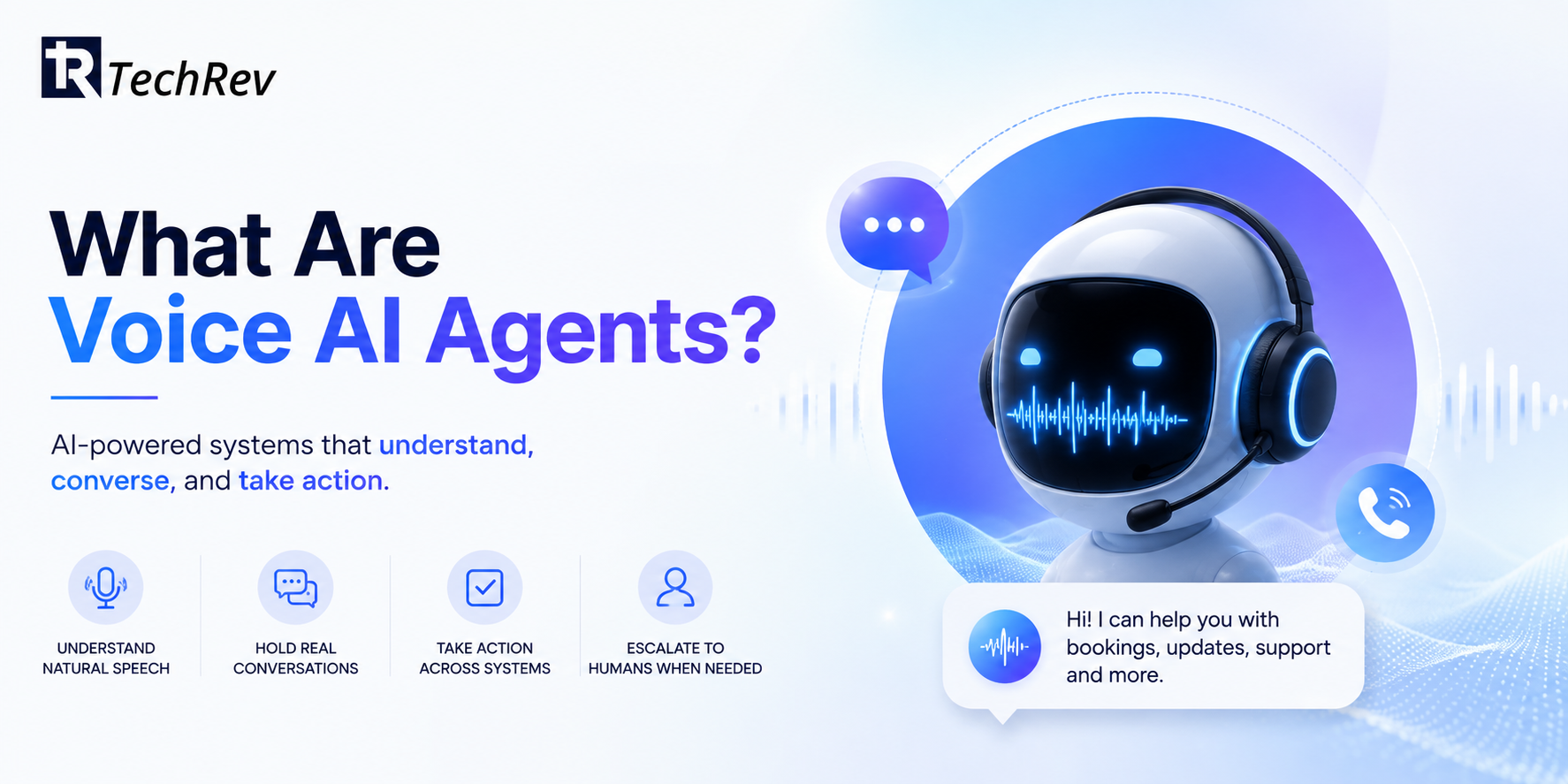
Voice AI agents are AI systems that hold spoken conversations and take action: they answer or place calls, understand natural speech, pull data from business systems, complete tasks like booking, rescheduling, qualifying, or updating records, and escalate to a human when the situation calls for it. Unlike the phone trees everyone hates, there is no menu; you say what you need in your own words and the agent handles it.
The dividing line worth knowing: a voice bot answers questions, while a voice AI agent completes outcomes, the same distinction that separates chatbots from enterprise AI agents in every other channel.
How Do Voice AI Agents Work?
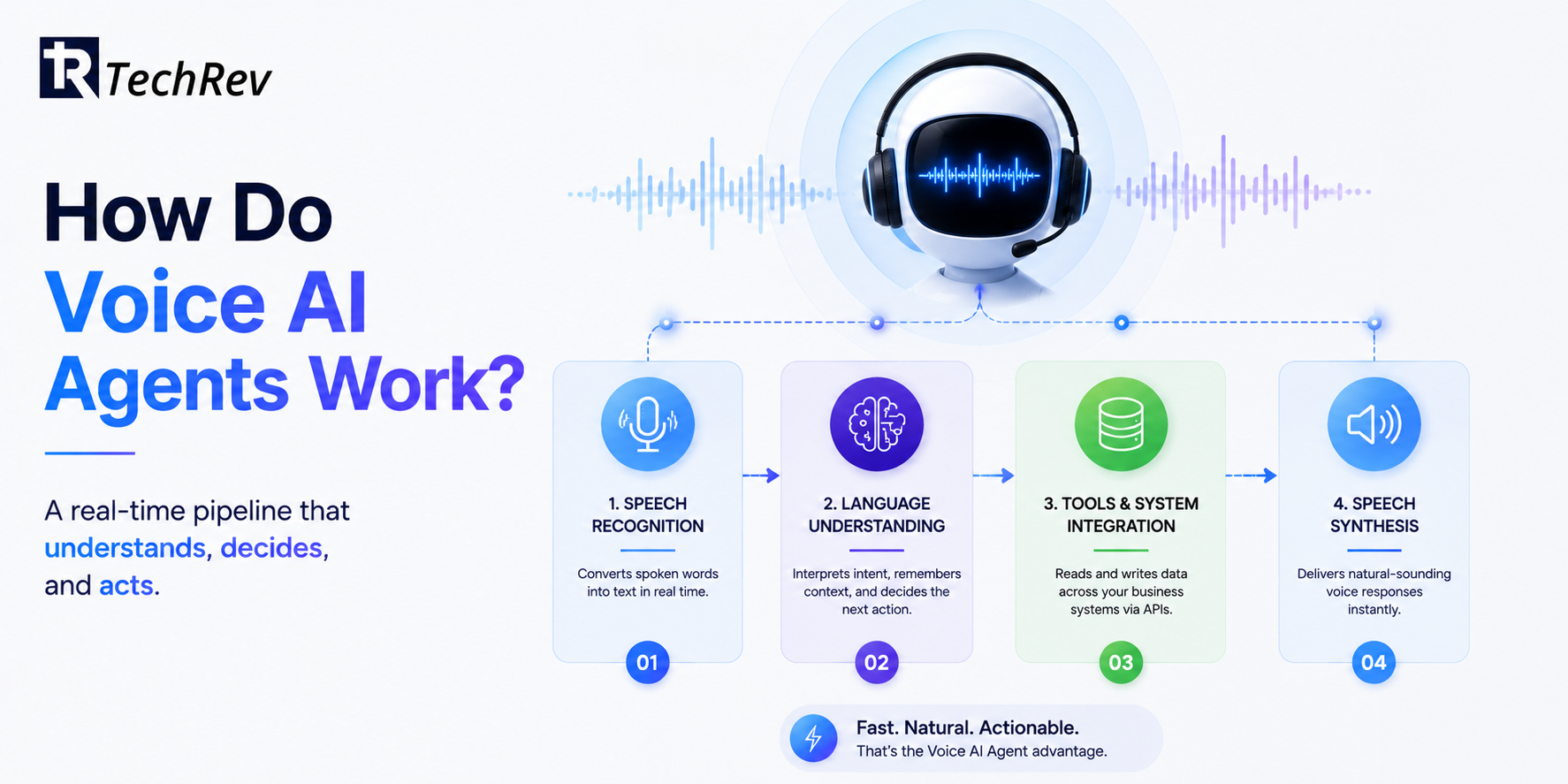
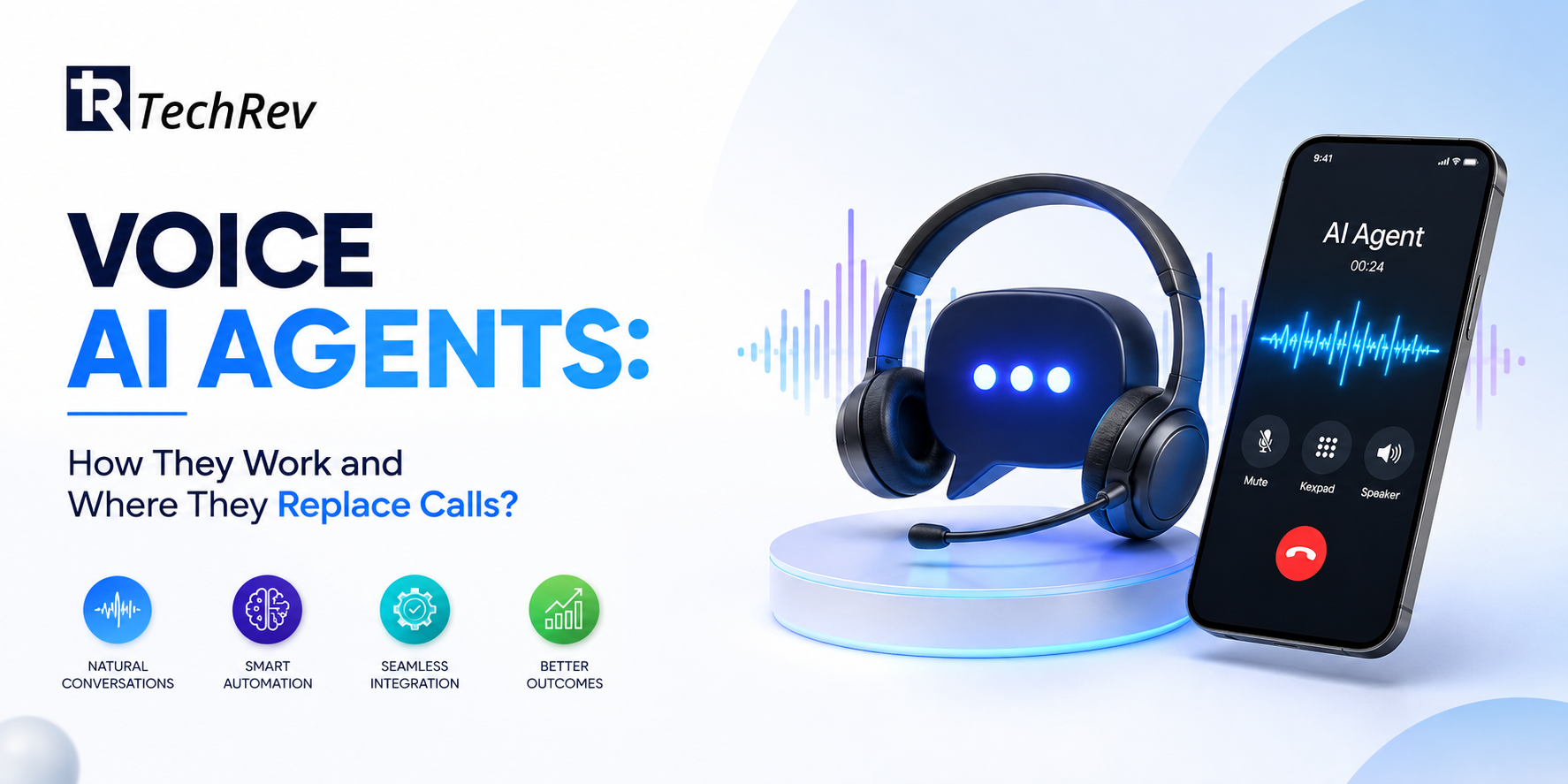
Voice AI agents work through a real-time pipeline with four stages: speech recognition converts the caller’s audio to text as they speak; a language model interprets intent, remembers context, and decides the next action; tool and system integration lets the agent read and write to your calendar, CRM, EHR, or ticketing system through APIs; and speech synthesis returns a natural-sounding voice reply, all fast enough that the caller experiences a conversation rather than a wait.
Three engineering realities decide quality. Latency must stay near natural turn-taking, which is why architecture and model routing matter more than model brand. Interruption handling (barge-in) has to work, because real people talk over each other. And integration depth determines whether the agent can actually resolve anything, since a voice agent that cannot touch your systems is an expensive answering machine, which is the core lesson from our AI integration services work.
Where Voice AI Agents Work Best: Use Cases by Industry?
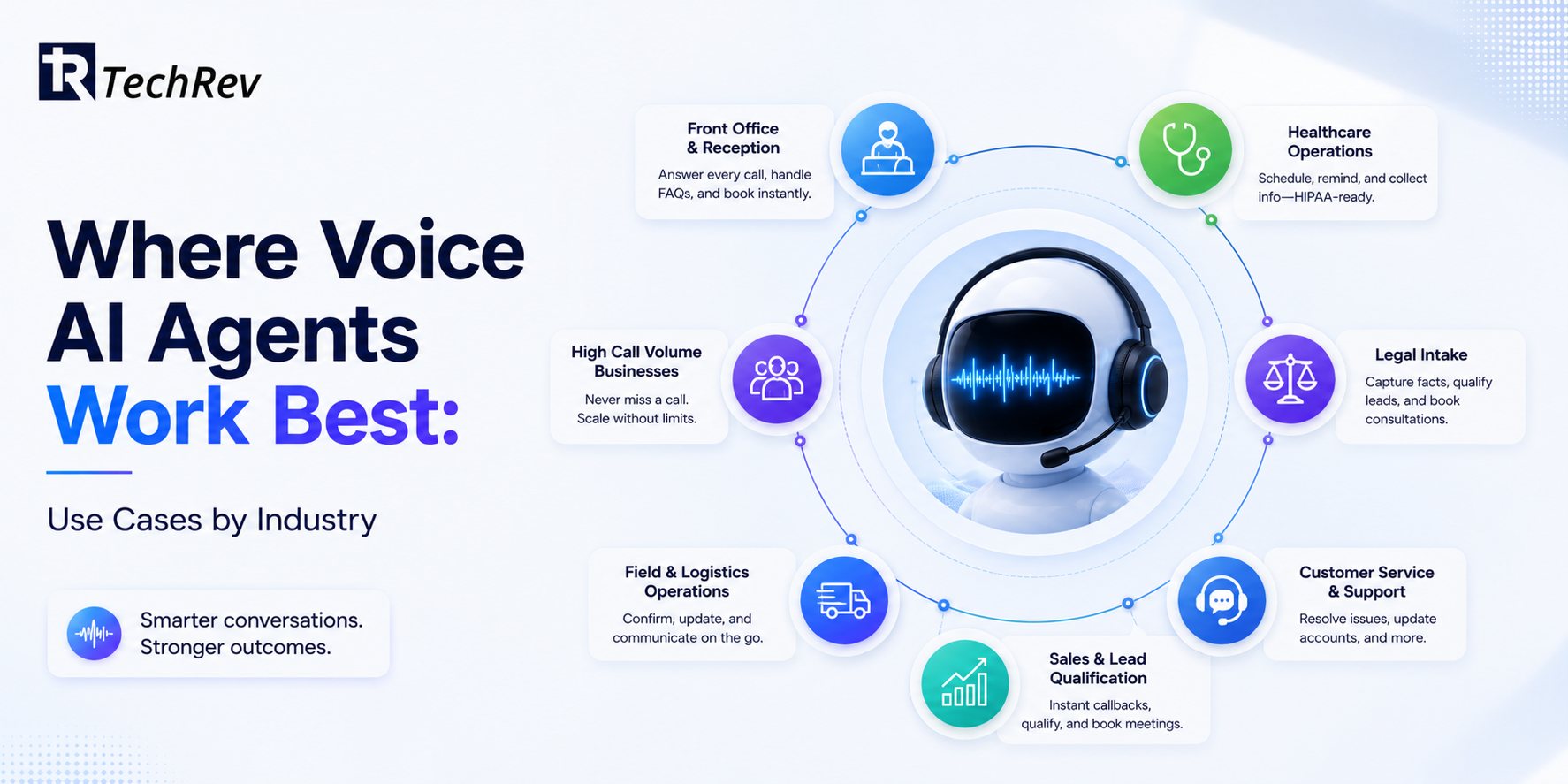
Front-office and reception: answering every call, handling FAQs, booking and rescheduling, and routing complex callers, effectively an AI receptionist that never takes lunch. Highest value where missed calls equal lost revenue.
Healthcare operations: appointment scheduling and reminders, prescription refill intake, and pre-visit information collection, feeding the same workflows covered in our patient engagement software guide, with clinical questions always routed to licensed staff.
Legal intake: first-contact conversations after hours, capturing case facts and screening against firm criteria before booking a consultation, where response speed decides signed clients, as detailed in our legal intake software guide.
Customer service and support: order status, account changes, billing questions, and tier-1 resolution across high call volumes, the category Gartner’s 80%-autonomous-resolution projection targets.
Sales and lead qualification: instant callbacks to inbound leads, qualification against your criteria, and calendar booking, the voice counterpart to an AI sales agent.
Field and logistics operations: dispatch confirmations, delivery windows, and status updates to drivers and sites where hands are busy and voice is the only practical interface.
Where Voice AI Agents Should Not Be Used
Three places, honestly: clinical or legal advice (information yes, judgment no), emotionally charged escalations where a frustrated caller needs a human immediately, and complex negotiations with many variables. The best deployments make escalation fast and obvious rather than hiding it, because the fastest way to destroy trust in voice AI is trapping someone who asked for a person.
Also Read = Custom AI Agent Development: Process, Tech Stack, Timeline
Voice AI Agents vs IVR vs Human Agents
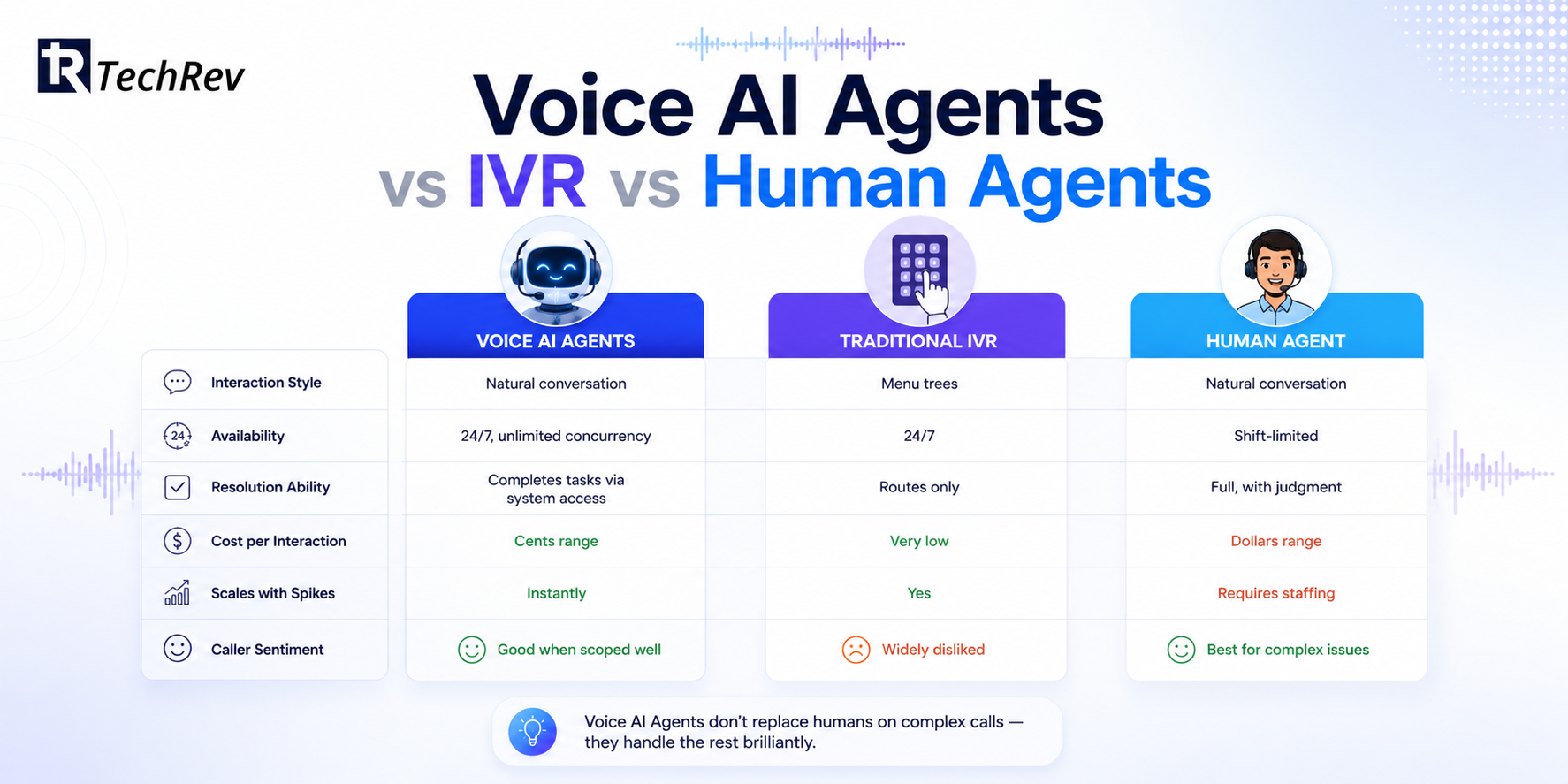
| Factor | Voice AI Agent | Traditional IVR | Human Agent |
| Interaction style | Natural conversation | Menu trees | Natural conversation |
| Availability | 24/7, unlimited concurrency | 24/7 | Shift-limited |
| Resolution ability | Completes tasks via system access | Routes only | Full, with judgment |
| Cost per interaction | Cents range | Very low | Dollars range |
| Scales with spikes | Instantly | Yes | Requires staffing |
| Caller sentiment | Good when scoped well | Widely disliked | Best for complex issues |
The honest read: voice AI does not beat a good human agent on hard calls. It beats voicemail, hold music, phone trees, and the calls nobody had capacity to answer, which is where most lost revenue actually lives.
What Do Voice AI Agents Cost?
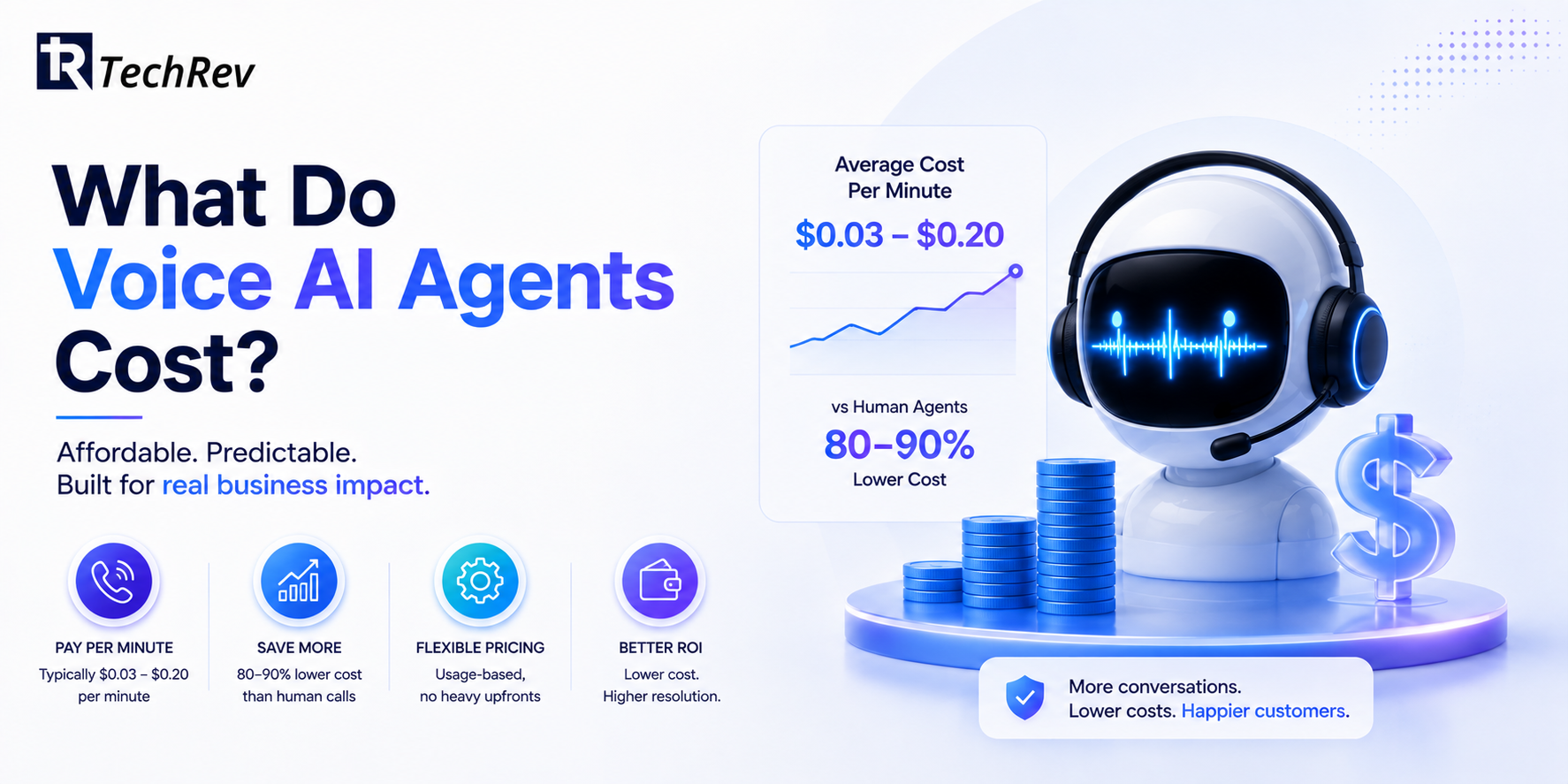
Commercial voice AI platforms typically price per minute, commonly in the range of a few cents to roughly $0.20 per minute depending on models, telephony, and features, plus platform fees, which is why the comparison against dollars-per-call human handling is so stark at volume. Custom voice AI agent development typically starts in the mid five figures for a scoped single-use-case agent with system integrations, scaling with languages, call volume, and compliance requirements, with ongoing per-minute model and telephony costs plus maintenance.
The number to demand from any vendor or builder: fully loaded cost per resolved call at your volume, not per minute. A cheap per-minute rate that resolves nothing is more expensive than a higher rate that closes the loop, and the same per-task economics discipline from our AI agent development cost guide applies directly.
Build vs Buy: Voice AI Platform or Custom Agent?
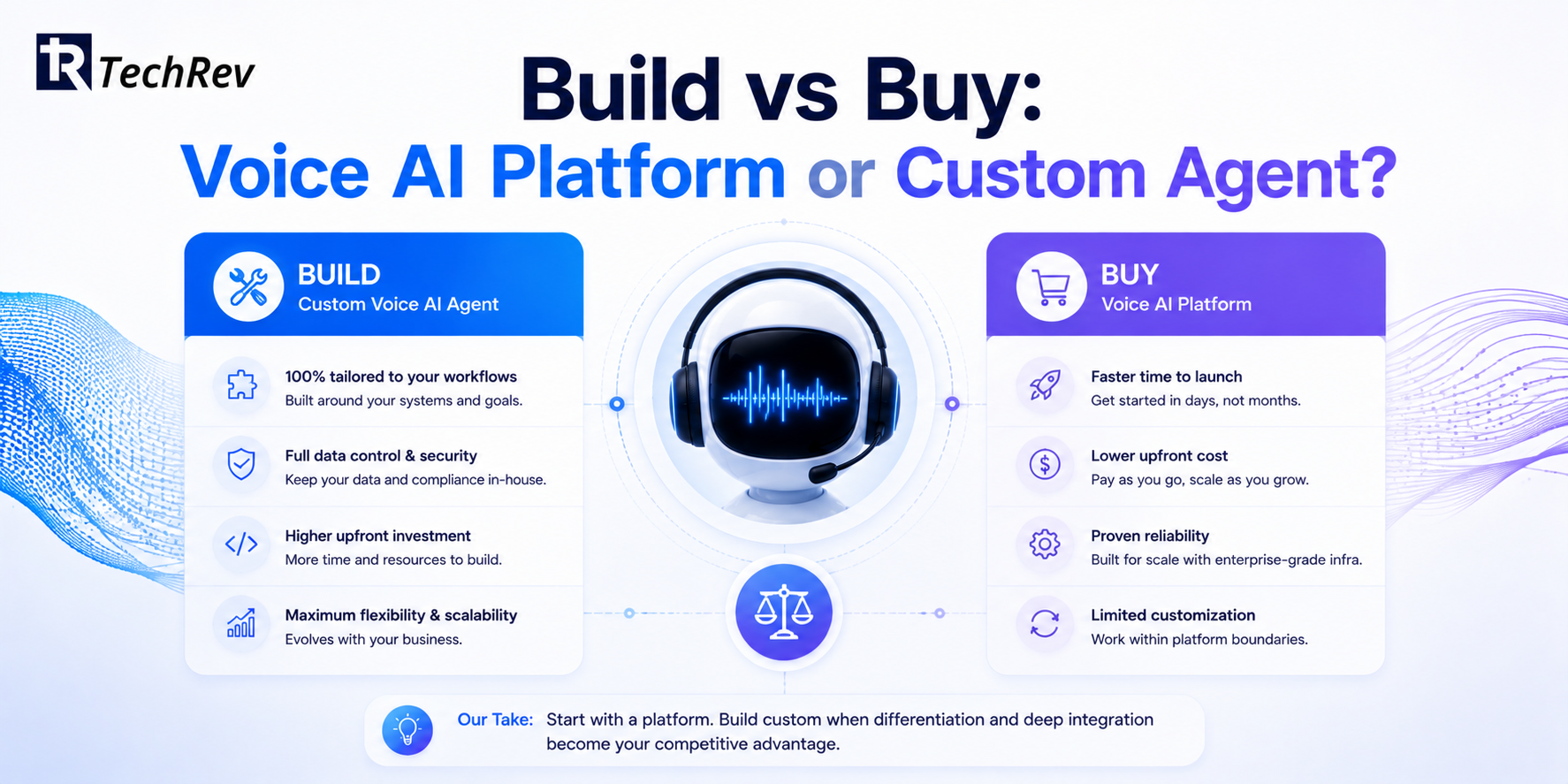
Buy a platform when your use case is standard (reception, scheduling, order status), volume is moderate, and the integrations you need are on the vendor’s list.
Build custom when any of four conditions hold: deep integration into EHR, case management, or proprietary systems the platforms do not reach; regulated data requiring HIPAA or SOC 2 architecture, BAAs, and audited call handling; volume economics, where per-minute pricing across thousands of monthly calls outruns an owned build; or product embedding, where voice capability belongs inside software you sell rather than rented alongside it.
Most successful deployments start narrow either way: one call type, one measurable outcome, then expansion.
Also Read – AI Automation Agency vs Custom AI Development: The Best?
How to Deploy Voice AI Agents Without Losing Callers?
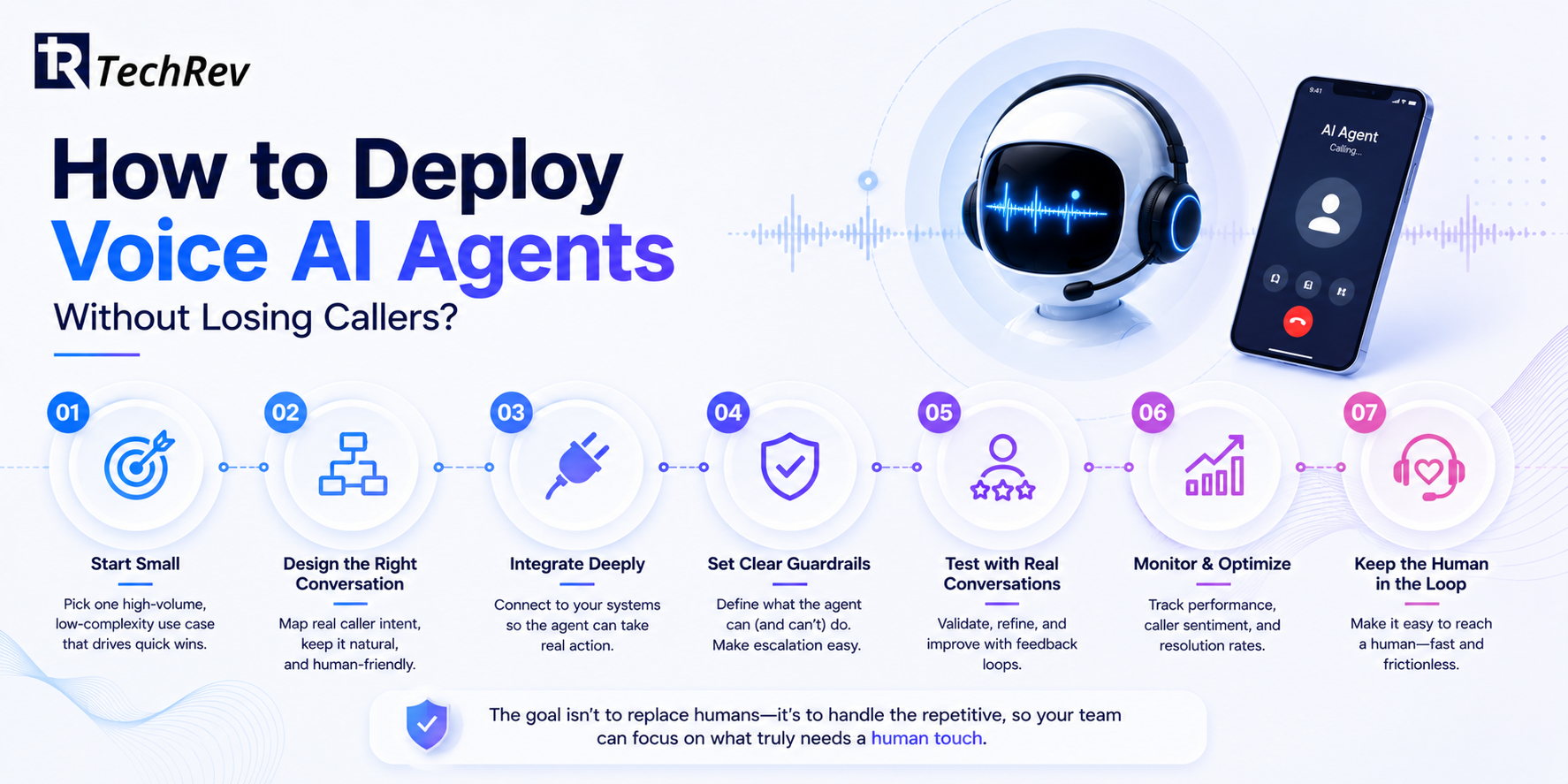
- Pick one call type with volume and rules. Scheduling and status calls before anything nuanced.
- Design the escape hatch first. One clear phrase reaches a human, always, and the agent hands over full context so the caller never repeats themselves.
- Integrate for resolution, not just conversation. If the agent cannot check and change the thing the caller wants, it is theater.
- Disclose and comply. Tell callers they are speaking with an AI assistant, handle recording consent by state law, and in regulated industries keep transcripts under the same HIPAA compliant discipline as any other PHI.
- Measure the right four numbers weekly: containment rate (resolved without a human), escalation quality, average handle time, and caller sentiment. Containment without sentiment is a vanity metric.
The MVP development rhythm applies exactly: one call type live in weeks, measured, then expanded on evidence.
How TechRev Builds Custom Voice AI Agents?
TechRev is a US-based AI development company building custom voice AI agents that plug into the systems businesses already run, delivered through generative AI development with regulated-industry architecture as the default.
Conclusion
Ten percent of interactions automated this year, an estimated 80% of common service issues autonomously resolved by 2029, cents-versus-dollars economics, and callers who now expect to be understood rather than routed: voice AI agents became infrastructure faster than almost any customer-facing technology before them. The organizations winning with them are not the ones that automated the most calls. They are the ones that automated the right calls, integrated deeply enough to resolve them, and made reaching a human effortless.
If your business is losing revenue to unanswered calls, talk to TechRev’s AI team. We will map your call types, pick the one worth automating first, and put containment and cost-per-resolved-call numbers on it before you commit.
Q1: What does TechRev build in a voice AI agent project?
The full conversational loop, engineered for resolution: real-time speech pipeline tuned for latency and barge-in, an agent layer with your business rules and escalation logic, and deep API integration into the scheduling, CRM, EHR, or case systems where the answer actually lives, so calls end with the task done rather than a message taken.
Compliance is architectural for regulated clients: consent capture, encrypted transcripts, role-based access, audit trails, and BAA-covered services.
We scope through MVP development, launching one call type with containment rate and caller sentiment measured from week one, and because per-minute economics decide long-term cost, we engineer model routing and call flows against your volume before the build, not after the invoice.
Q2: Can TechRev integrate a voice AI agent with our existing phone system?
Yes. We connect voice agents to your current telephony and business systems through APIs, so numbers, routing, and human escalation paths stay intact while the AI handles the volume.
Q3: Does TechRev build HIPAA compliant voice AI for healthcare?
Yes. Healthcare voice agents are built under HIPAA discipline: consent workflows, encrypted audio and transcripts, BAA-covered services, access controls, and clinical questions routed to licensed staff by design.
Q4: What results has TechRev delivered with AI-powered workflow automation?
For a hospital services vendor, TechRev’s AI-powered workflow and tracking system cut installation errors by 90% and recovered billing evidence that manual processes kept losing.
FAQs About Voice AI Agents Development
1. What is the difference between a voice AI agent and a chatbot?
Channel and capability. Chatbots handle text; voice AI agents handle spoken conversation in real time, which demands low latency, interruption handling, and speech quality. Both become genuinely useful only when integrated deeply enough to complete tasks rather than answer questions.
2. How much does an AI voice agent cost per minute?
Commercial platforms commonly land between a few cents and roughly $0.20 per minute depending on models, telephony, and features. Compare fully loaded cost per resolved call instead, since unresolved cheap minutes cost more than resolved expensive ones.
3. Are voice AI agents good enough to replace call center agents?
For high-volume, rules-based calls, increasingly yes, and Gartner projects agentic AI autonomously resolving about 80% of common service issues by 2029. Complex, emotional, and judgment-heavy calls remain human work, which is why escalation design matters as much as automation.
4. Do callers need to be told they are talking to AI?
Yes, disclose it. Beyond growing regulatory expectations and state recording-consent rules, disclosure improves outcomes: callers who know they are speaking with an AI assistant phrase requests more clearly and escalate appropriately when they need a person.
5. Can voice AI agents work in healthcare and legal settings?
Yes, with guardrails: scheduling, intake, reminders, and information handling work well, while clinical and legal judgment routes to licensed professionals. Regulated deployments require consent capture, encrypted transcripts, audit trails, and BAAs where PHI is involved.
6. How long does it take to deploy a voice AI agent?
Platform deployments for standard use cases run days to a few weeks. Custom voice agents with real system integration typically launch a first call type in 6 to 10 weeks, with additional call types phased after the first proves its containment and sentiment numbers.