

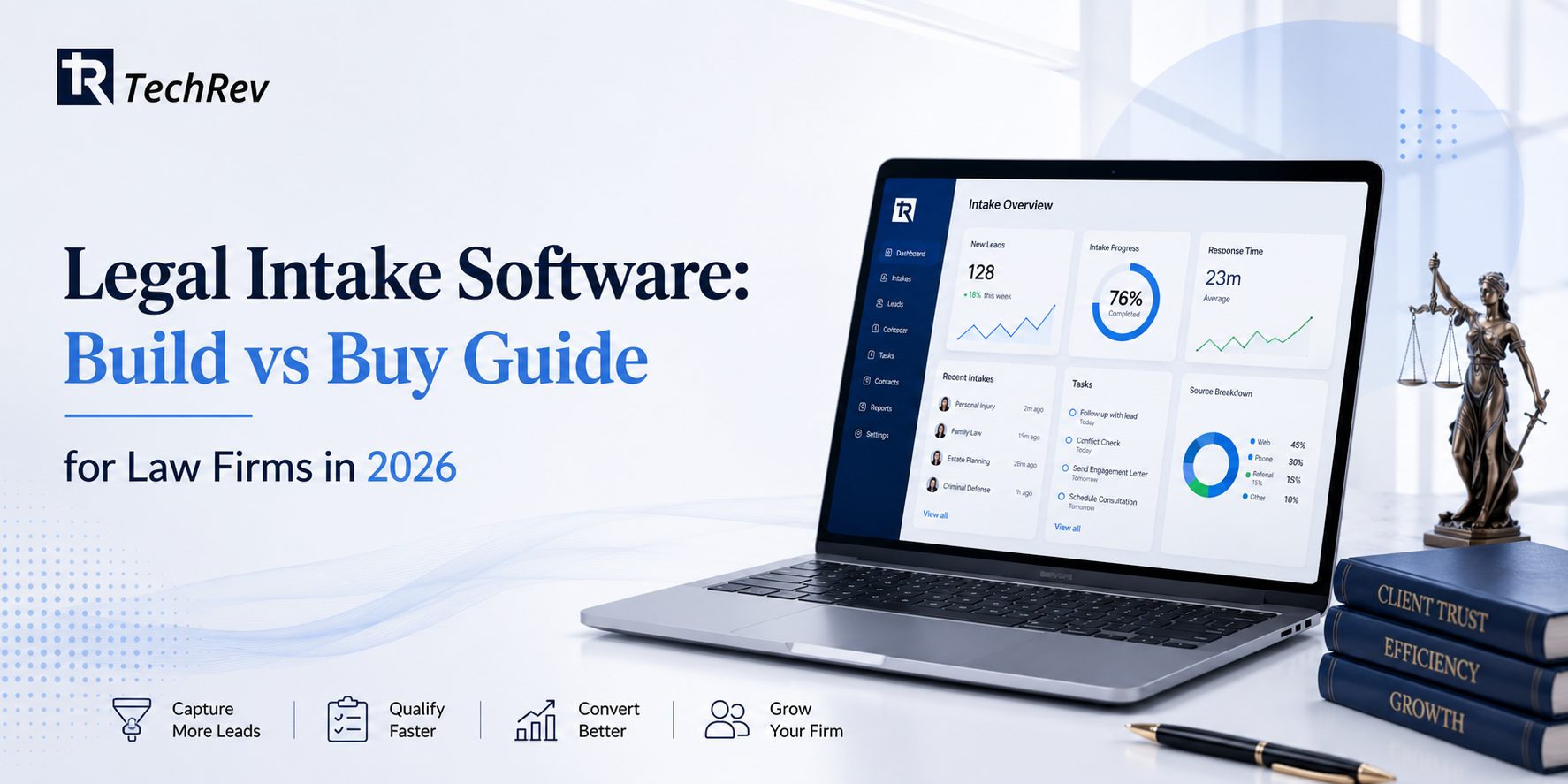
Legal intake software has quietly become the highest-leverage technology decision a law firm makes, because intake is where firms lose money they never see. The marketing budget generates the call. The intake process decides whether that call becomes a client or becomes someone else’s client.
Here is the uncomfortable math: research on lead response shows that contacting a prospect within the first hour makes you roughly 7 times more likely to have a meaningful conversation than waiting even one more hour. Meanwhile, most legal consumers expect a response within 24 hours, and plenty of firms take days. Every one of those gaps is a signed retainer walking to a competitor.
This blog breaks down what legal intake software does, the features that matter in 2026, whether your firm should buy an off-the-shelf tool or legal application development, and what each path really costs.
What Is Legal Intake Software?
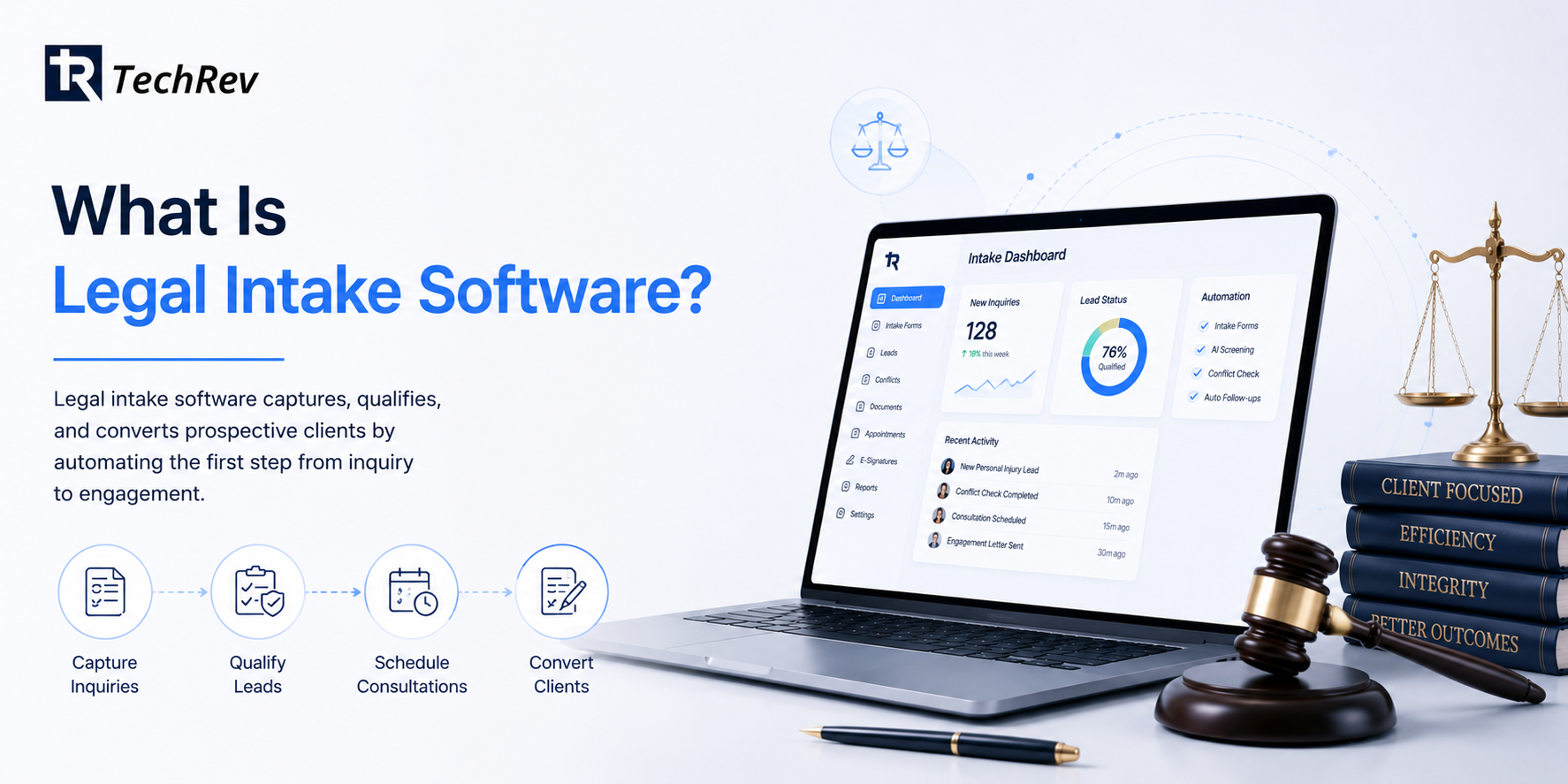
Legal intake software is technology that captures, qualifies, and converts prospective clients for a law firm. It handles the front door of the practice: intake forms, conflict checks, lead qualification, appointment scheduling, e-signatures on engagement letters, and handoff into the firm’s case management or legal CRM system.
Think of it as the difference between a receptionist with a notepad and a system that never sleeps, never forgets a follow-up, and never lets a Friday evening inquiry sit until Monday.
Why Does Client Intake Make or Break a Law Firm?
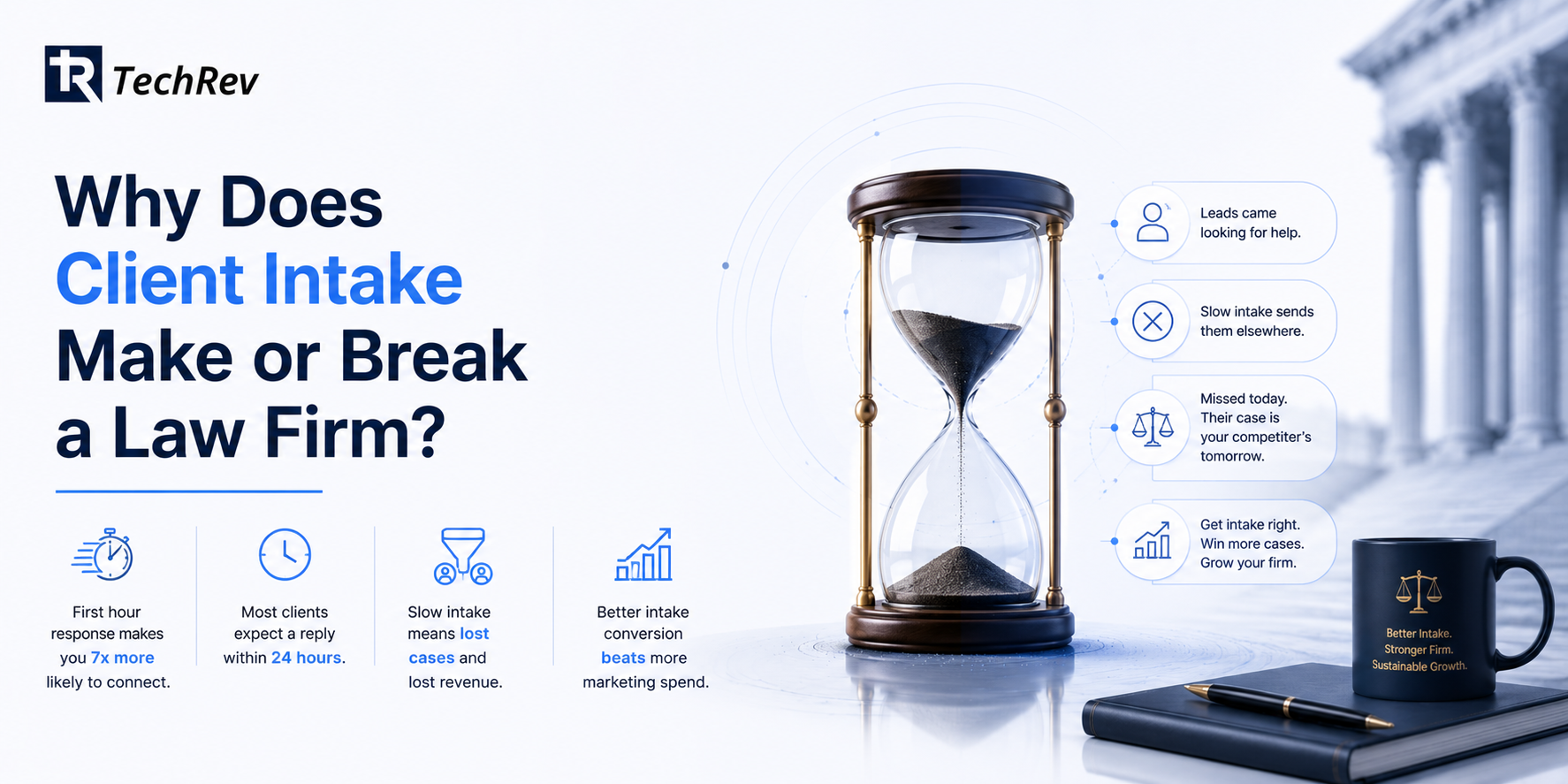
Because the numbers say intake, not lawyering, is where most firms leak revenue:
- Clio’s Legal Trends research has consistently found lawyers bill only around 3 hours of an 8-hour workday, with administrative work, including intake and follow-up, consuming much of the rest.
- The same research shows legal professionals’ AI adoption exploded from 19% to 79% in a single year, which means the firms you compete with are already automating.
- Lead response studies (including research published in Harvard Business Review) show response speed is the single biggest controllable factor in converting inquiries, with odds dropping dramatically after the first hour.
- Legal intake keywords carry some of the highest advertising costs in software, with cost per click above $60. Firms pay premium prices to generate leads, then lose them to slow follow-up. That is buying water for a leaking bucket.
The takeaway: improving intake conversion by even a few percentage points usually beats any comparable spend on more marketing.
What Features Should Legal Intake Software Include in 2026?
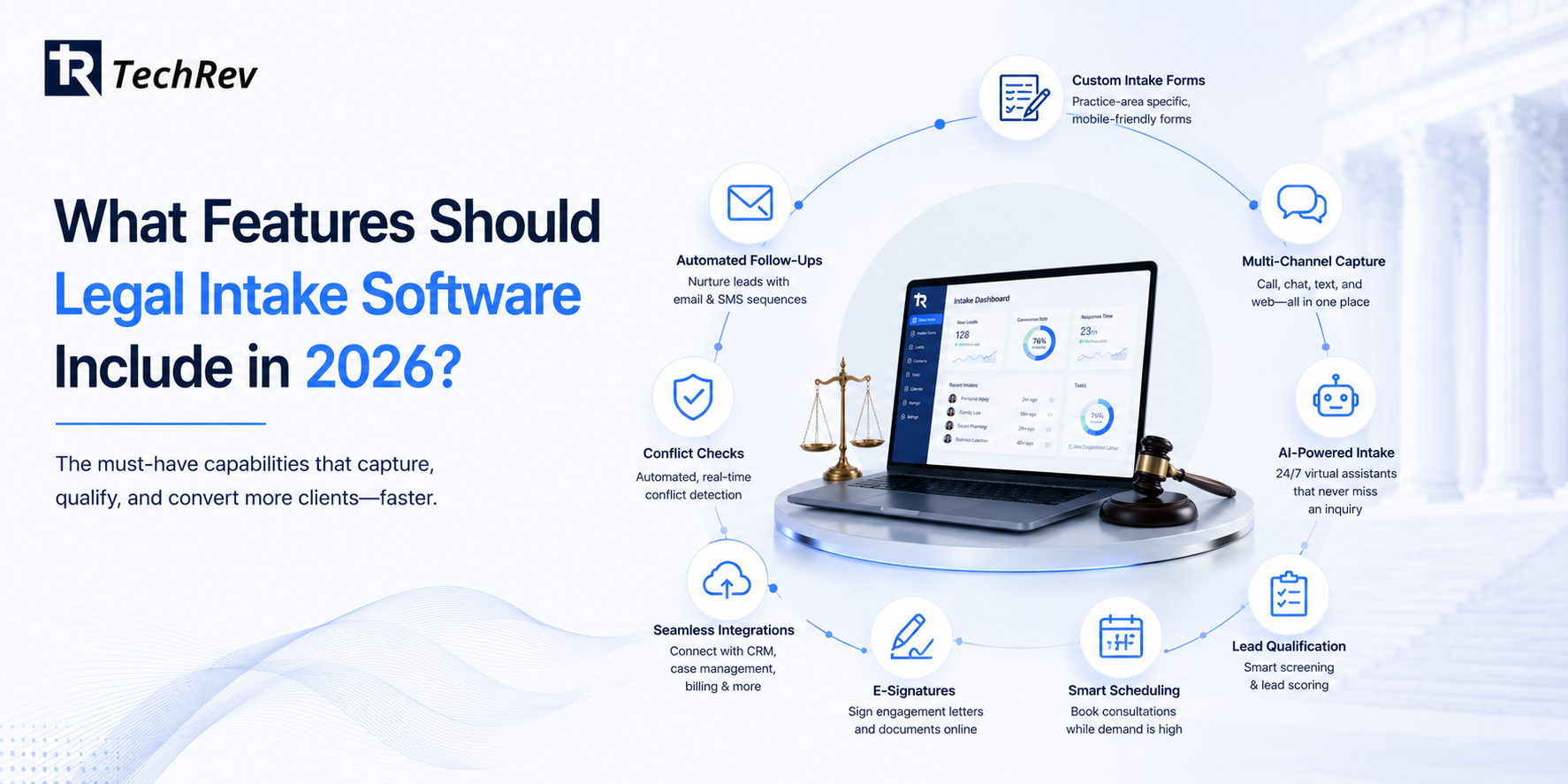
Strong legal intake software covers three jobs: capture, qualify, and convert.
Capture:
- Web intake forms tailored by practice area, mobile-friendly, because injured or stressed people fill out forms on phones
- Call, chat, and text capture so every channel lands in one queue
- After-hours coverage through AI intake assistants, since legal emergencies ignore business hours
Qualify:
- Practice-area screening questions that separate signable cases from referrals
- Automated conflict checks against existing clients and matters
- Lead scoring so your intake team calls the strongest cases first
Convert:
- Automated follow-up sequences by email and text, because most inquiries need more than one touch
- Online scheduling that books the consultation while interest is hot
- E-signature on engagement letters, cutting days off signup
- Clean handoff into case management, billing, and your law firm CRM, with no re-typing
Where Does AI Fit in Legal Intake?
AI legal intake tools now handle the first conversation: answering common questions, collecting case facts, screening against your criteria, and scheduling consultations around the clock.
The best implementations keep a human in the loop for judgment calls, so the AI does the gathering and your team does the deciding.
Given that intake calls arrive nights and weekends, an AI intake layer is often the cheapest revenue increase a firm can buy.
Build vs Buy: Which Legal Intake Software Is Right for Your Firm?
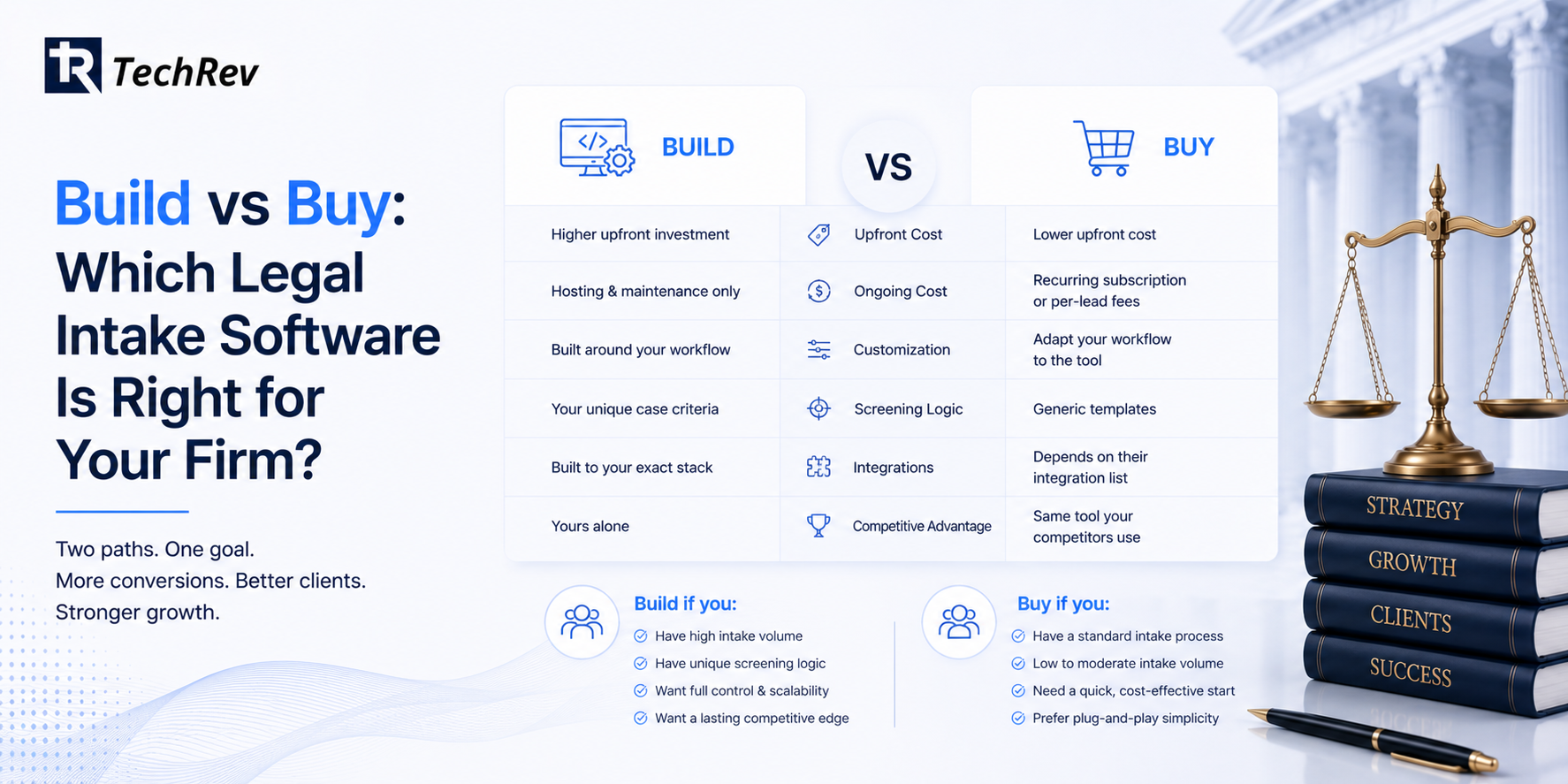
Here is the honest comparison:
| Factor | Off-the-Shelf Intake Tool | Custom Legal Intake Software |
| Upfront cost | Low (subscription) | Higher (one-time build) |
| Monthly cost | Per user or per lead, forever | Hosting and maintenance only |
| Fit to your workflow | You adapt to it | It adapts to you |
| Practice-area screening logic | Generic templates | Built around your case criteria |
| Integration with your systems | Depends on their integration list | Built to your exact stack |
| Competitive advantage | Same tool your competitors use | Yours alone |
| Best for | Solo and small firms with standard intake | Growing firms, high-volume practices, and legal service companies where intake IS the business |
The decision rule: if your intake process is standard and your volume is modest, buy. If intake volume is high, your screening logic is your secret sauce, or subscription fees keep climbing with your growth, custom legal intake automation pays for itself. Personal injury, mass tort, and immigration practices hit that threshold fastest because volume and speed decide everything.
How Much Does Legal Intake Software Cost?
Off-the-shelf legal intake software typically runs from tens of dollars per user monthly for basic tools to several hundred dollars monthly for AI-enabled platforms, with per-lead or per-minute charges on top for answering services.
Custom legal intake software development typically starts in the mid five figures for a focused intake system and scales with integrations, AI capability, and volume requirements.
The math firms should actually run: take your average case value, multiply by the number of inquiries you miss or lose to slow follow-up each month, and compare that leak against either price tag.
For most firms with meaningful volume, one additional signed case per month covers the software either way. The question is which option converts more of the leads you are already paying for.
Also Read – Building Custom AI Chatbot for Healthcare, Finance, and Legal!
How Do You Implement Legal Intake Automation Without Disrupting Your Firm?
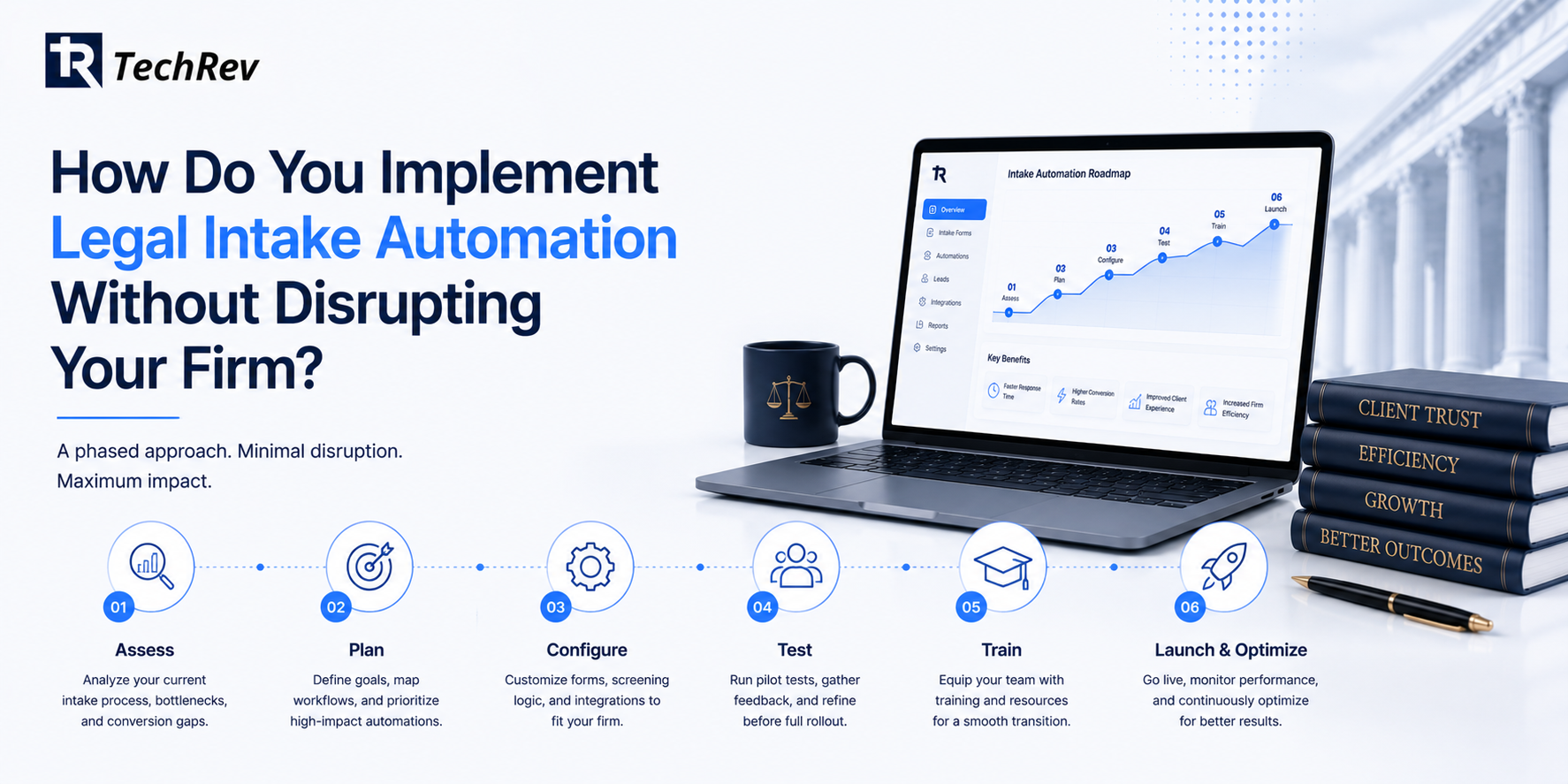
Five steps, in order:
- Map your current intake path honestly. Where do inquiries come from, who touches them, and where do they stall? Time-stamp a week of real inquiries and the leak will introduce itself.
- Fix response speed first. Automated instant acknowledgment plus fast human follow-up delivers the biggest conversion lift before any other feature.
- Automate qualification second. Screening questions and conflict checks that run themselves free your staff for the calls that matter.
- Integrate, do not duplicate. Intake should flow into your case management and CRM automatically. Systems that require re-typing get abandoned by month two.
- Measure weekly. Track response time, contact rate, consultation rate, and signed retainer rate. Four numbers, one dashboard, no debates.
Firms that follow this sequence see results quickly because intake improvements compound: faster response raises contact rates, which raises consultation volume, which raises retainers, all from leads already in the pipeline. It is the same MVP development logic that governs smart software projects: prove the core loop, then expand.
How TechRev Helps Law Firms Build Intake That Converts?
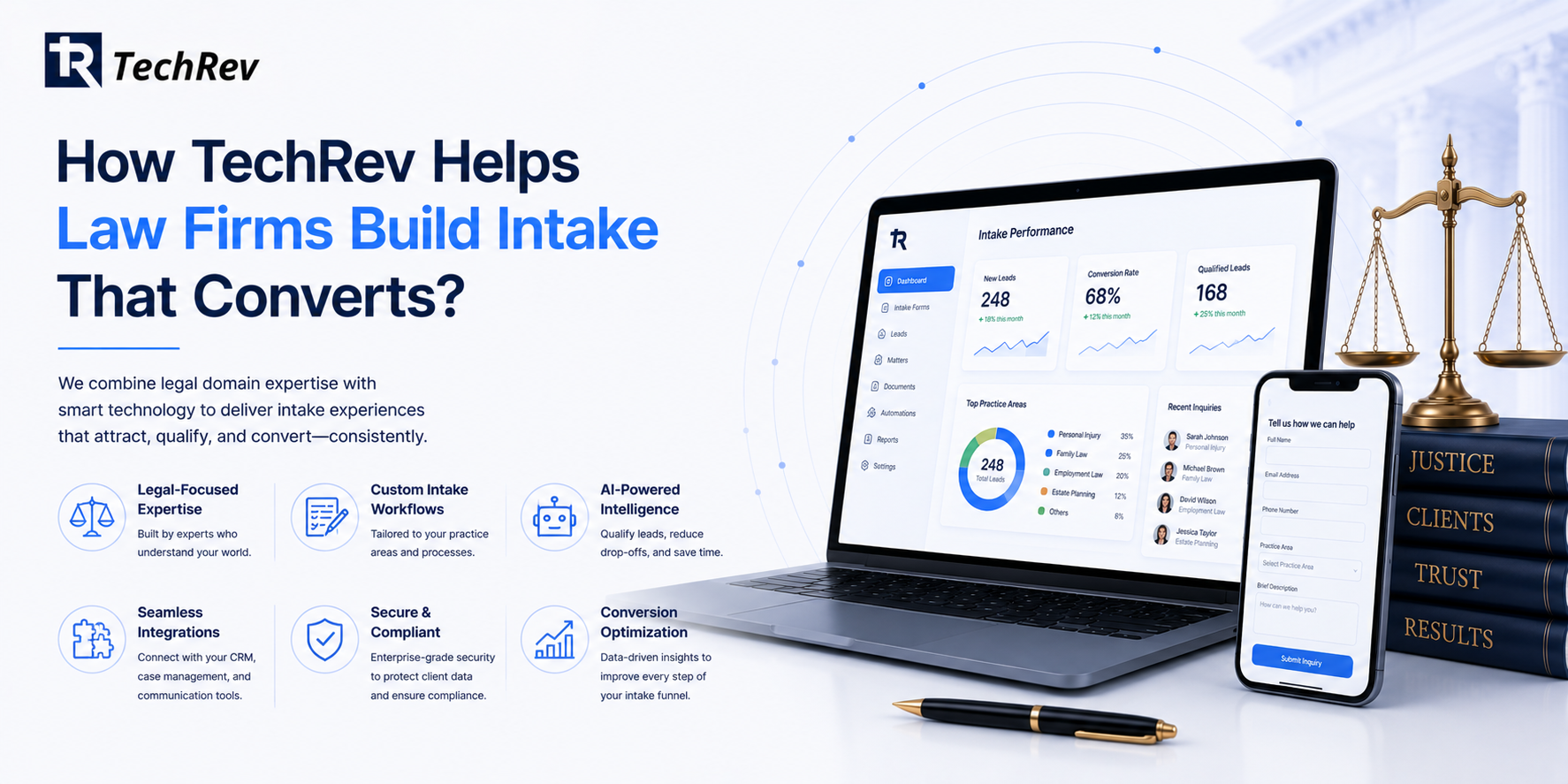
TechRev is a US-based software development company with a dedicated LegalTech practice, building custom intake systems, client portals, and AI-powered intake agents that plug into the tools law firms already use.
Q1: What does TechRev actually build for law firm intake?
We build the complete front door: practice-area intake forms, AI intake assistants that capture and screen leads around the clock, automated follow-up sequences, conflict checking, e-signature flows, and clean integrations into your case management and CRM systems.
Because TechRev builds custom, your screening logic reflects how your firm actually evaluates cases rather than a template’s guess. And because we scope MVP-first, most firms launch with response-speed automation in weeks, measure the conversion lift, then fund the rest of the roadmap from results.
Q2: Can TechRev’s intake systems work with our existing case management software?
Yes. TechRev’s integration-first approach connects custom intake to the case management, billing, and CRM tools your firm already runs, so nothing gets re-typed and nothing gets lost.
Q3: Does TechRev build AI intake assistants for law firms?
Yes. TechRev builds AI intake agents that answer inquiries, collect case details, screen against your criteria, and book consultations 24/7, with human review checkpoints your firm controls.
Q4: Is TechRev experienced with data security for legal clients?
Yes. TechRev builds SOC 2 aligned systems with encryption, role-based access, and full audit trails, the same security posture we bring to our regulated healthcare work.
Conclusion
Your firm already pays to make the phone ring. Legal intake software decides how much of that spend turns into signed clients, and in 2026, with AI handling first contact and consumers expecting instant response, the firms with automated intake are simply signing cases the slower firms generated.
If you want intake built around how your firm actually evaluates cases, talk to TechRev’s LegalTech team. We will map your intake path, show you where the leads leak, and scope the fix that pays for itself first.
FAQs
1. What is the best legal intake software for law firms?
The best legal intake software is the one that matches your volume and workflow: off-the-shelf tools suit solo and small firms with standard intake, while high-volume and specialized practices convert more with custom systems built around their own screening logic and integrated with their existing stack.
2. How does AI legal intake work?
An AI intake assistant engages the prospect immediately by chat, text, or voice, asks your screening questions, collects case facts, checks basic qualification criteria, and schedules a consultation. Your team reviews the structured summary and makes the human decisions. The AI never sleeps, which matters because legal inquiries spike outside business hours.
3. How long does it take to implement legal intake software?
Off-the-shelf tools deploy in days to weeks. A custom intake system typically launches its first phase, usually response automation and web capture, within 4 to 8 weeks, with integrations and AI screening following in later phases.
4. What is the difference between legal intake software and a legal CRM?
Intake software wins the client; the CRM manages the relationship afterward. Good intake systems hand off into the CRM automatically. Many firms run both as one connected pipeline, which is exactly how custom builds are architected.
5. Can small law firms afford legal intake automation?
Yes. Small firms usually start with off-the-shelf tools, and that is the right call at low volume. The switch point comes when subscription and per-lead fees climb past what a scoped custom build would cost, or when generic screening starts costing signable cases.
6. Why do law firms lose leads during intake?
Slow response is the top reason, followed by no follow-up after the first attempt and clunky signup friction. All three are automation problems, which is why intake software delivers conversion lifts that marketing spend cannot match.