
What Are the Biggest PPC Trends in 2026?
The biggest PPC trends in 2026 are not about writing more ads, adding more keywords, or manually changing bids every morning.
Google is pushing paid search toward an AI-led operating model.
AI Max is expanding how Search campaigns find queries and create ad assets. Smart Bidding continues to make auction-time decisions using machine learning. Performance Max is taking more responsibility for targeting, bidding, creative combinations, and channel allocation. At the same time, Google is placing ads around and inside AI-generated search experiences.
That changes the job of a PPC marketer. The question is no longer:
- How do I manually optimize every part of my campaign?
It is becoming:
How do I give Google’s AI the right data, constraints, creative, conversion signals, and business objectives so it can make better decisions?
That distinction matters.
Google says Smart Bidding evaluates auction-time signals and automatically sets bids based on the likelihood of conversion or conversion value. Google also recommends combining AI Max for Search with Smart Bidding when advertisers have reliable conversion measurement.
And this transition is not theoretical.
In April 2026, Google announced that Dynamic Search Ads are moving toward AI Max. Google later extended the automatic DSA transition timeline, with the DSA sunset and automatic upgrade now scheduled to begin in February 2027, while eligible campaigns using automatically created assets and campaign-level broad match settings are scheduled for automatic AI Max upgrades beginning in September 2026.
So yes, manual PPC is losing ground.
But the end of manual campaigns does not mean marketers are becoming irrelevant.
It means the valuable work is moving higher up the stack.
Strategy, measurement, offer positioning, creative direction, landing page quality, conversion architecture, data quality, and business judgment now matter more than manually adjusting a keyword bid from $4.20 to $4.35.
PPC Trends 2026: The Numbers Behind the Shift
Paid search remains a huge market.
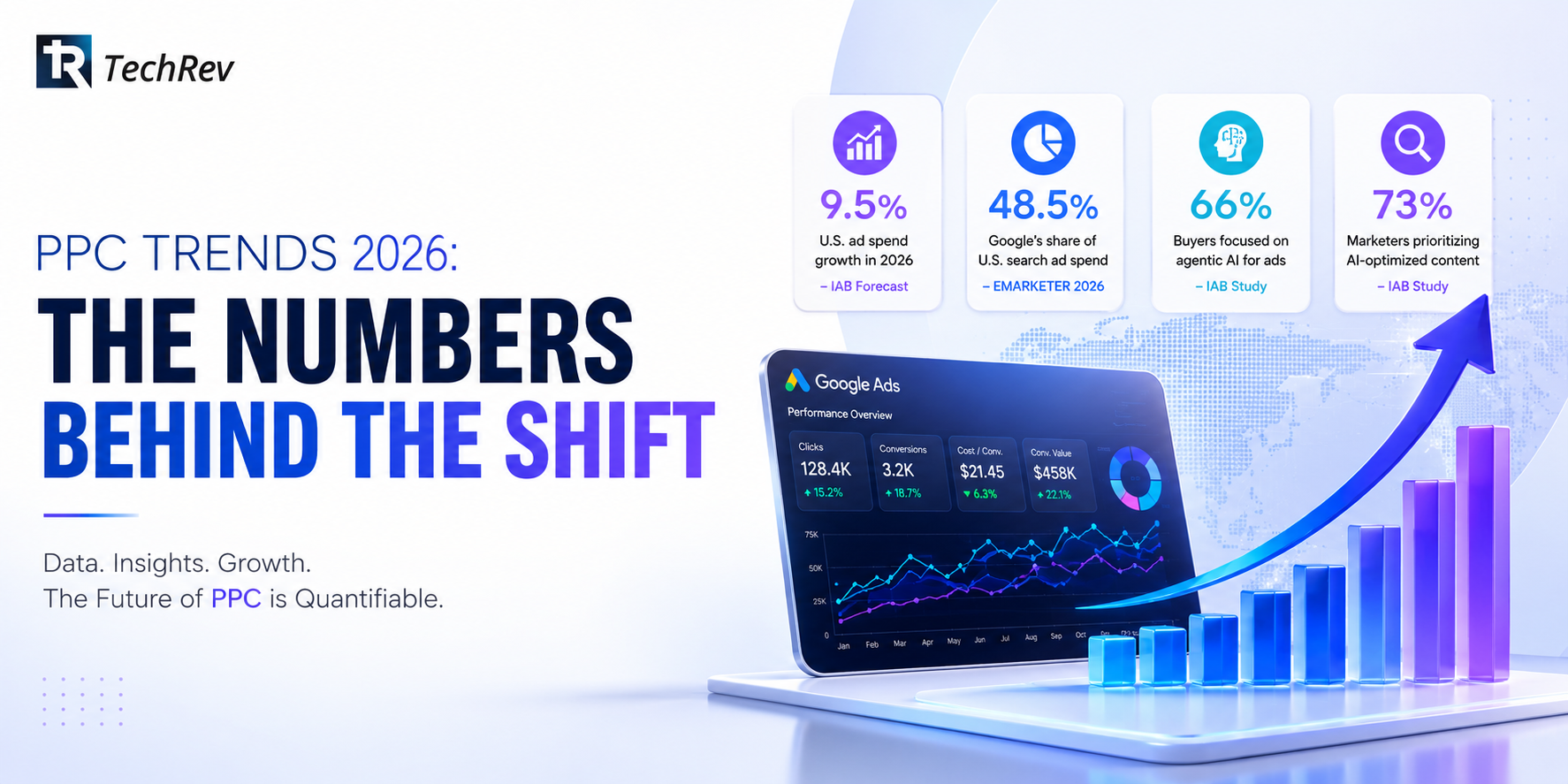
EMARKETER expects U.S. search advertising spending to continue growing in 2026, although growth is becoming more fragmented as advertisers distribute budgets across traditional search, retail media, and AI-driven discovery. Its 2026 forecast puts Google’s share of U.S. search ad spending at 48.5%, marking the first time in more than two decades that Google falls below half of the market.
That does not mean Google Ads is becoming irrelevant.
It means the definition of search is expanding.
Google’s own advertising ecosystem now stretches across:
- Traditional Search
- AI Overviews
- AI Mode
- Performance Max
- Shopping
- YouTube
- Discover
- Gmail
- Maps
- Demand Gen
- Conversational advertising experiences
The wider digital advertising market is also moving toward performance and automation.
The IAB forecasts U.S. advertising spend to grow 9.5% in 2026, while two-thirds of surveyed buyers are focused on agentic AI for ad buying and campaign execution. The same study reports that 73% of marketers are prioritizing content optimized for AI-generated answers.
That is one of the clearest signals for marketers:
AI is no longer simply another PPC tool. It is becoming part of the infrastructure behind paid media.
Trend 1. AI Max for Search Is One of the Biggest PPC Trends in 2026
If you only pay attention to one of the PPC trends 2026, pay attention to AI Max.
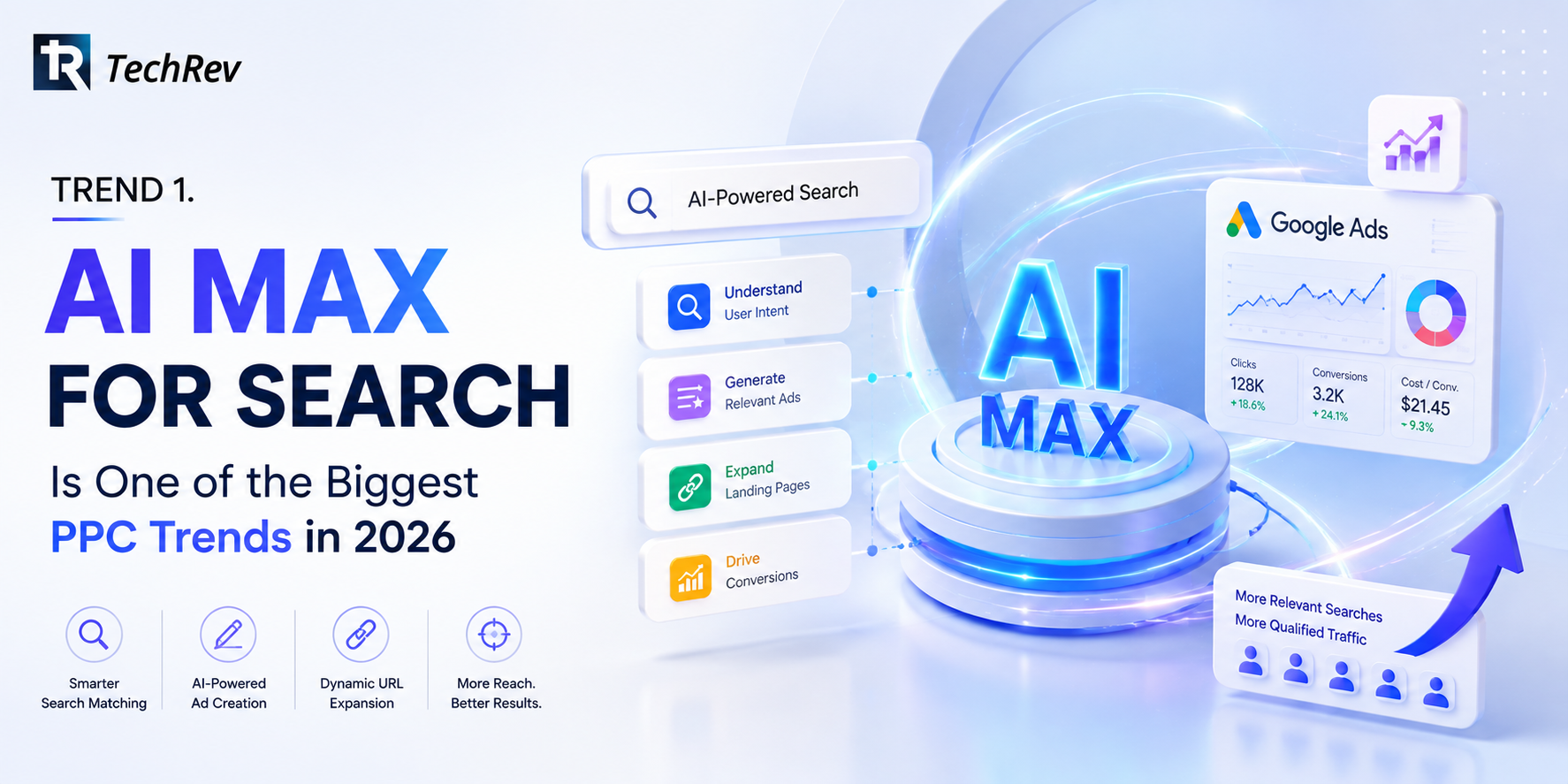
AI Max for Search is not a completely separate campaign type. It is an AI-powered enhancement layer for Search campaigns.
Google describes AI Max as a combination of targeting and creative capabilities designed to help Search campaigns expand reach, improve ad relevance, and connect users with more relevant landing pages. Its features include search term matching, text customization, and Final URL expansion.
In simple terms, Google is giving Search campaigns more freedom to understand what a user means instead of relying entirely on the exact keyword structure a marketer manually created.
What does AI Max actually change?
Three areas matter most.
1. Search term matching
AI Max can expand beyond the traditional keyword mindset.
Instead of expecting advertisers to predict every variation of a search query, Google’s AI can use keywords, landing pages, ad assets, and other signals to identify relevant searches.
This matters because users rarely search in perfectly predictable language.
Someone looking for an AI development company might search:
- AI development company USA
- artificial intelligence development services
- AI software development company
- custom AI solutions for business
- AI application development agency
- enterprise AI development services
A manually built campaign can cover these variations.
AI-powered matching can potentially discover additional variations that the marketer did not explicitly anticipate.
2. Text customization
Google can generate additional headlines and descriptions based on campaign context.
That means advertisers are increasingly moving from writing every possible variation manually to creating strong foundational messaging and letting AI adapt it to the search context.
Google says text customization uses a combination of extractive techniques and generative AI to create additional assets based on the domain, landing page, existing ads, and keywords.
3. Final URL expansion
AI can determine which page on a website may be more relevant to a particular search.
This creates an important lesson for SEO and PPC teams:
Your website architecture now influences advertising performance more than ever.
If your site has weak service pages, thin landing pages, confusing navigation, or generic content, AI has fewer useful destinations to work with.
A strong website gives Google’s systems better material to understand.
Is AI Max Better Than Traditional Search Campaigns?
Not automatically.
This is where many PPC articles oversimplify the story.
AI Max can expand reach and reduce manual campaign maintenance, but broader automation also means marketers need stronger controls.
Google reports that advertisers activating AI Max typically see 14% more conversions or conversion value at a similar CPA or ROAS, based on Google’s internal 2025 data for non-retail advertisers.
Google also reported in 2026 that the full AI Max feature suite produced an average 7% more conversions or conversion value at similar CPA or ROAS compared with search term matching alone.
Those are useful directional signals, but they are not guarantees for every business.
A B2B company with a $20,000 average contract and a long sales cycle has very different requirements from an ecommerce store selling $40 products.
The correct question is:
Can your conversion data tell Google’s AI what a valuable customer actually looks like?
If the answer is no, more automation will not magically fix the campaign.
Also Read – AI-First Cloud Services: Providers Delivery and Users Needs!
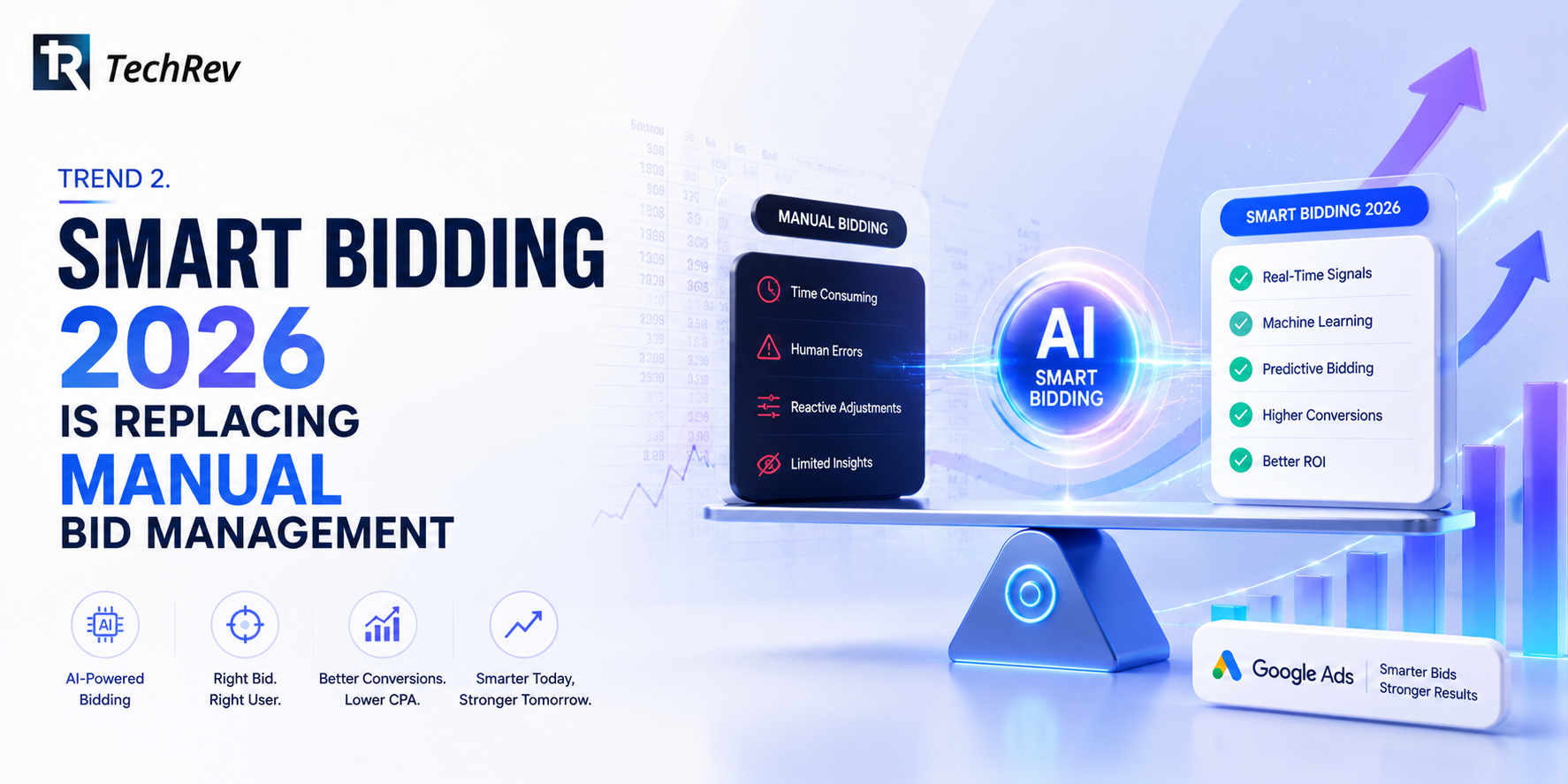
Trend 2. Smart Bidding 2026 Is Replacing Manual Bid Management
Another major PPC trend 2026 is the continued rise of Smart Bidding.
Google defines Smart Bidding as automated bidding that uses Google AI to optimize for conversions or conversion value at auction time. Strategies include Target CPA, Target ROAS, Maximize Conversions, and Maximize Conversion Value.
That means Google can make a bidding decision for each auction based on contextual signals.
These can include:
- Device
- Location
- Time of day
- Browser
- Operating system
- Language
- Remarketing information
- Search context
- Historical conversion behavior
- Combinations of signals
Google says Smart Bidding continuously updates its models and uses conversion data at query level and across an account to improve bidding decisions.
This makes manual bid management increasingly difficult to justify as a primary optimization strategy.
Does that mean manual bid changes are dead?
Not entirely. They are simply becoming less important. A marketer still needs to decide:
- What conversion should the system optimize for?
- What should that conversion be worth?
- Should the account optimize for volume or value?
- What CPA is economically sustainable?
- What ROAS actually produces profit?
- Which campaigns deserve more budget?
- Which queries should be excluded?
- Which landing pages need improvement?
- Which audiences are commercially valuable?
The marketer is moving from bid operator to performance architect.
Also Read – AI App Development Cost in 2026: Full Breakdown by App Type
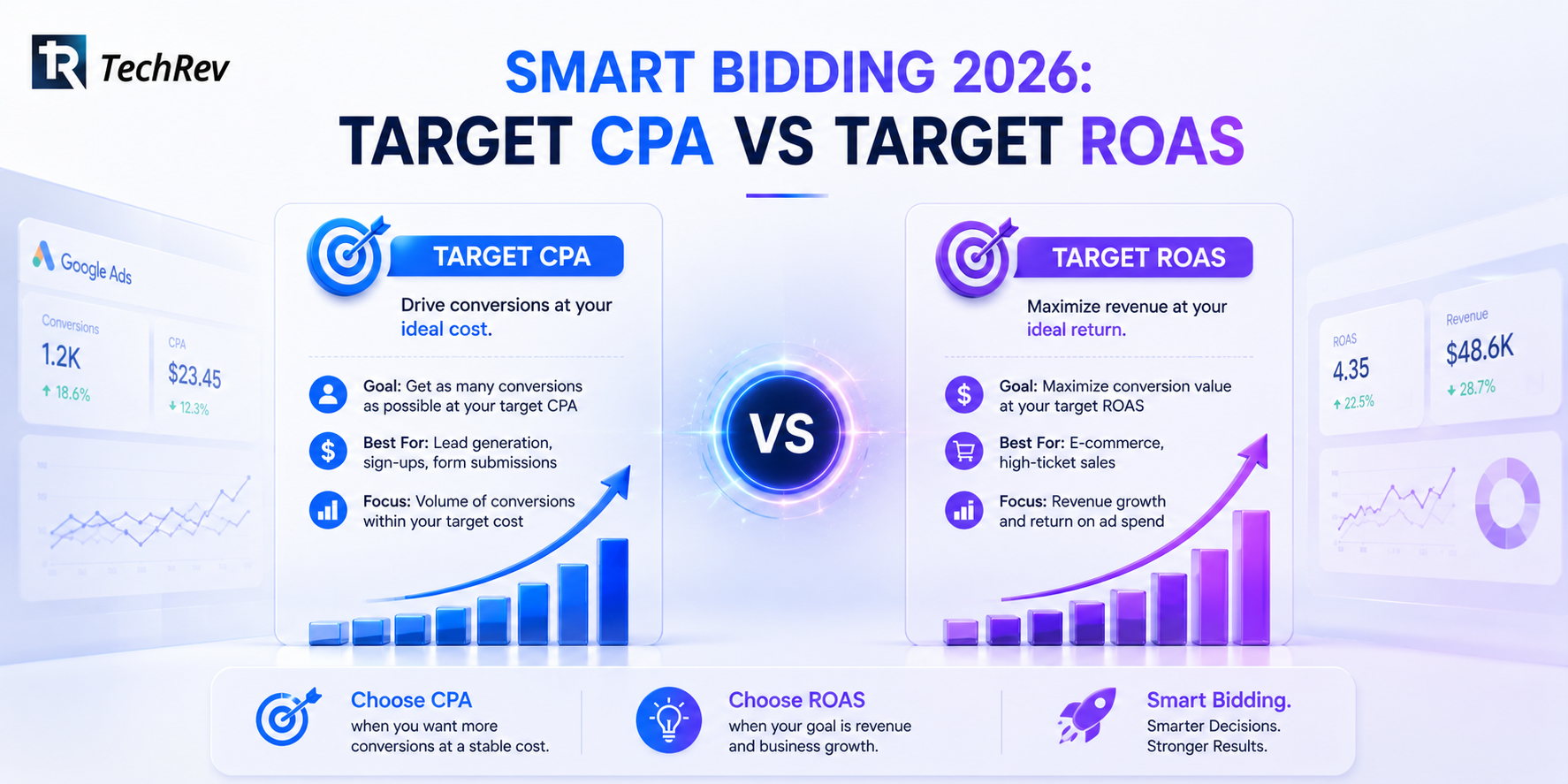
Smart Bidding 2026: Target CPA vs Target ROAS
Google is also changing how it labels some Smart Bidding strategies.
Starting in June 2026, Google began updating labels such as Maximize conversions with a Target CPA to Target CPA and Maximize conversion value with a Target ROAS to Target ROAS. Google says the underlying bidding behavior remains unchanged.
For businesses, the more important question is not the label. It is whether you should optimize for conversions or conversion value.
1. Conversion-based bidding
This approach makes sense when conversions have broadly similar economic value.
Examples:
- Demo requests
- Appointment bookings
- Phone calls
- Trial registrations
- Lead submissions
2. Value-based bidding
This becomes much more powerful when one lead can be worth dramatically more than another.
Imagine a B2B software company receives:
- 10 low-quality leads worth $100 each
- 3 qualified enterprise leads worth $10,000 each
Optimizing purely for lead volume could push the system toward the wrong outcome.
Value-based bidding gives the algorithm a better business signal.
Google describes value-based bidding as a way to optimize toward conversion value rather than simply maximizing conversion volume.
That is one of the most important PPC trends 2026 for companies selling high-ticket products and services.
Trend 3. Performance Max Strategy Is Becoming More Data-Driven
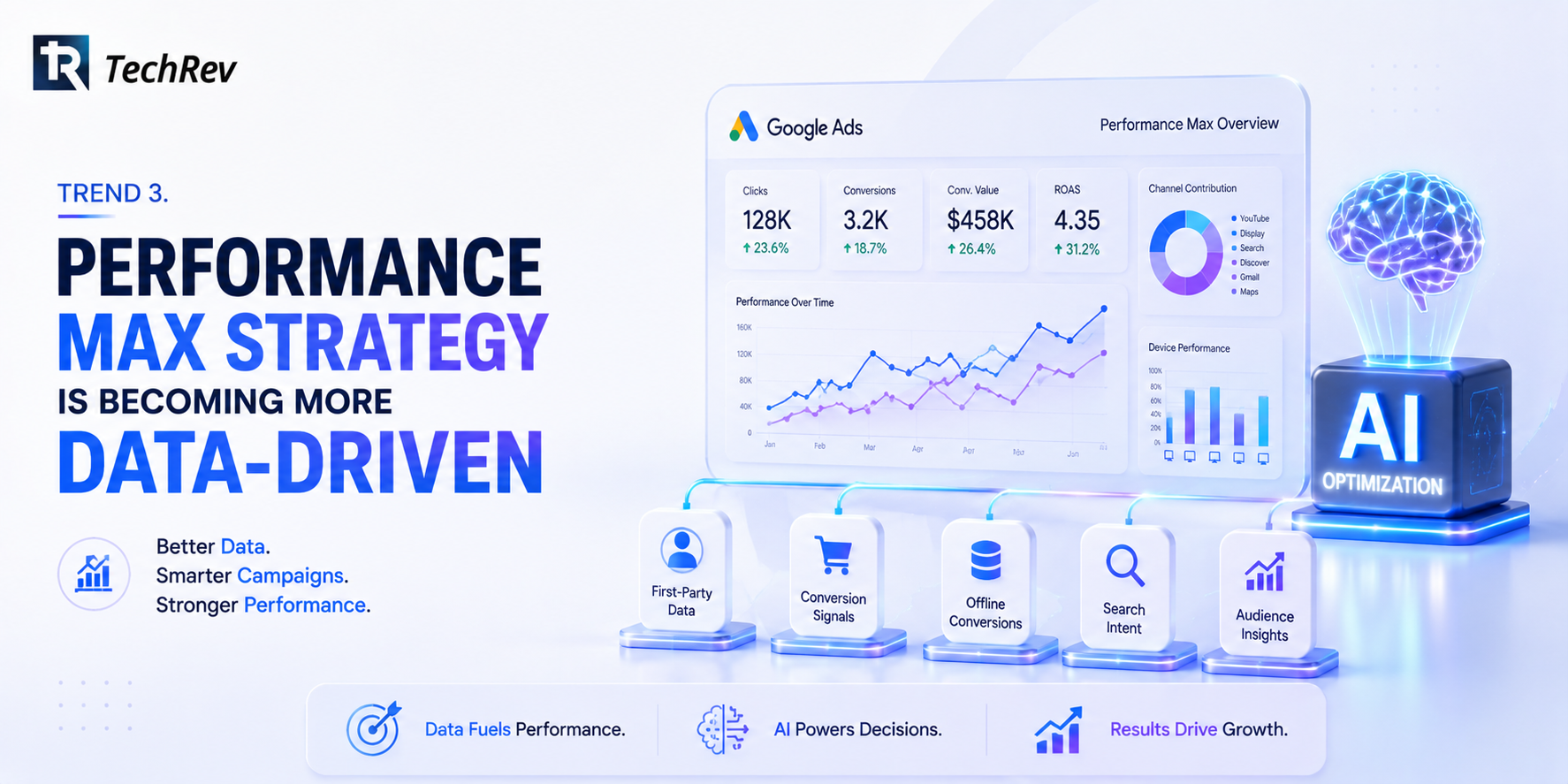
Performance Max is no longer an experiment.
It has become a core part of Google’s automated advertising ecosystem.
Performance Max can use Google AI across Google’s advertising inventory to optimize bidding, targeting, audiences, creative combinations, and placements.
Google says advertisers adopting Performance Max see an average 27% increase in conversions or conversion value at similar CPA or ROAS, based on Google’s cited internal data.
Again, this is Google’s internal data, not a universal benchmark.
But it demonstrates Google’s strategic direction.
The new Performance Max question
The old question was:
Should I use Performance Max?
The better 2026 question is:
What job should Performance Max perform inside my account?
That distinction changes campaign architecture.
For ecommerce, Performance Max can be extremely useful when you have:
- A healthy Merchant Center feed
- Strong product data
- Reliable conversion tracking
- Enough conversion volume
- High-quality images and video
- Clear product margins
- Meaningful conversion values
For B2B lead generation, the setup needs more discipline.
You need:
- Reliable lead tracking
- CRM integration
- Offline conversion imports where appropriate
- Qualified lead definitions
- Revenue or pipeline value signals
- Strong landing pages
- Enough data for meaningful optimization
Without those foundations, Performance Max may optimize toward whatever conversion signal you give it, even when that signal does not represent business success.
Also Read – Top Use Cases of Agentic AI in 2026 Across Sectors
Trend 4. Performance Max vs Search Campaigns: Which Wins in 2026?
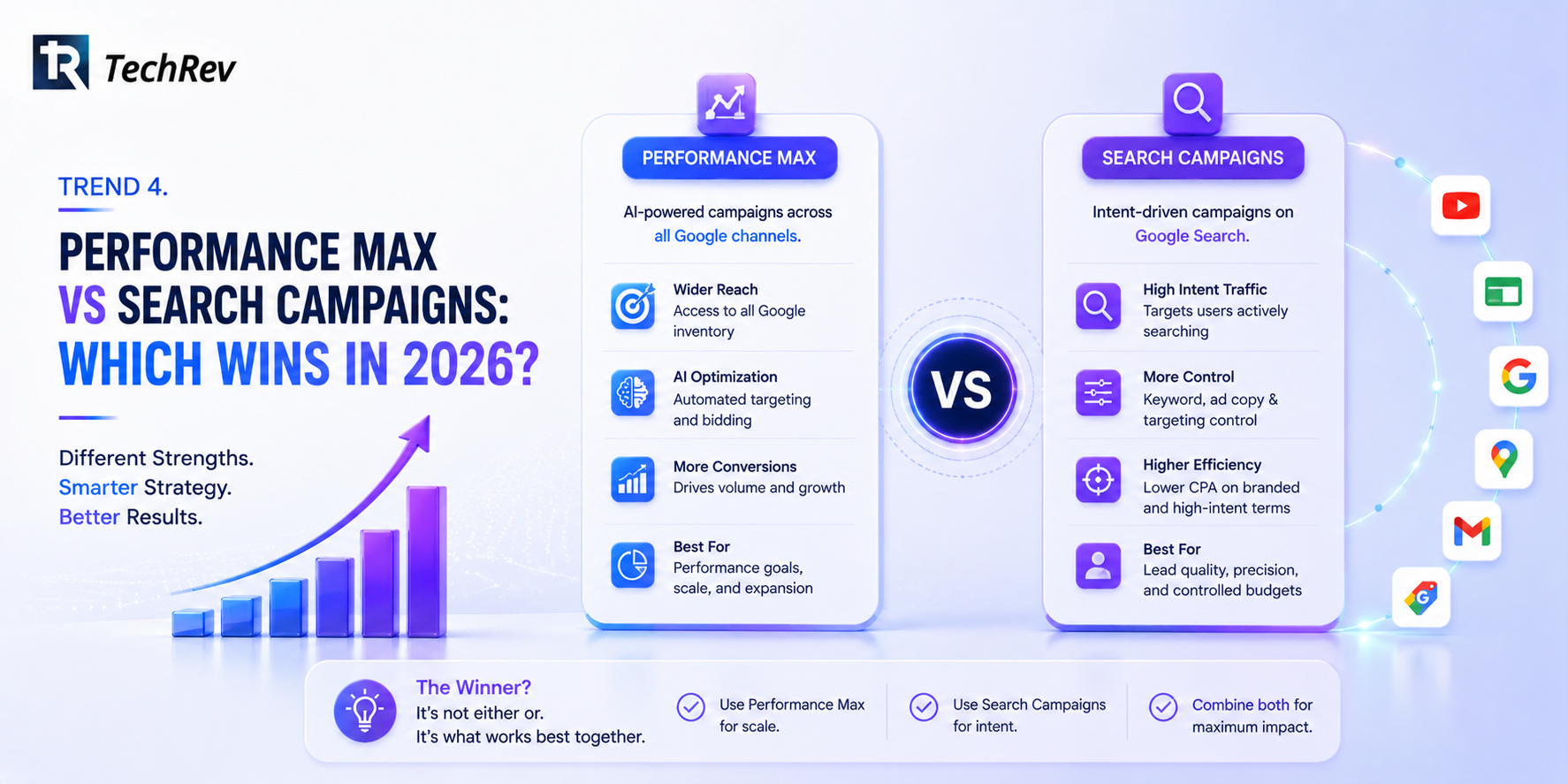
The performance max vs search campaigns debate has become much more interesting because AI Max has blurred the traditional line between automation and control.
Search campaigns provide more direct control over keywords, search intent, messaging, and search-term analysis.
Performance Max provides broader reach across Google’s inventory and gives Google’s AI greater responsibility for deciding where and how ads appear.
AI Max sits somewhere between those models.
Performance Max vs Search Campaigns
| Factor | Search Campaigns | Performance Max |
| Primary strength | Search intent and control | Cross-channel automation |
| Keyword control | High | Low |
| Inventory | Primarily Search | Multiple Google properties |
| Creative control | Higher | AI-assisted combinations |
| Search query visibility | Stronger | More limited |
| Best for | High-intent demand | Scale and broader reach |
| Ecommerce | Useful | Often highly valuable |
| B2B lead generation | Strong starting point | Better with strong data |
| Automation | Increasing rapidly | Very high |
| AI capabilities | AI Max | Core to campaign design |
Google’s own documentation says AI Max and Performance Max can overlap, and when both are eligible for a query, Google’s systems determine which candidate serves based on Ad Rank and campaign eligibility.
That means campaign structure matters.
You should not launch Search, AI Max, and Performance Max and simply hope the algorithm sorts everything out.
Give each campaign a clear role.
Trend 5. AI in PPC Is Moving Beyond Bidding
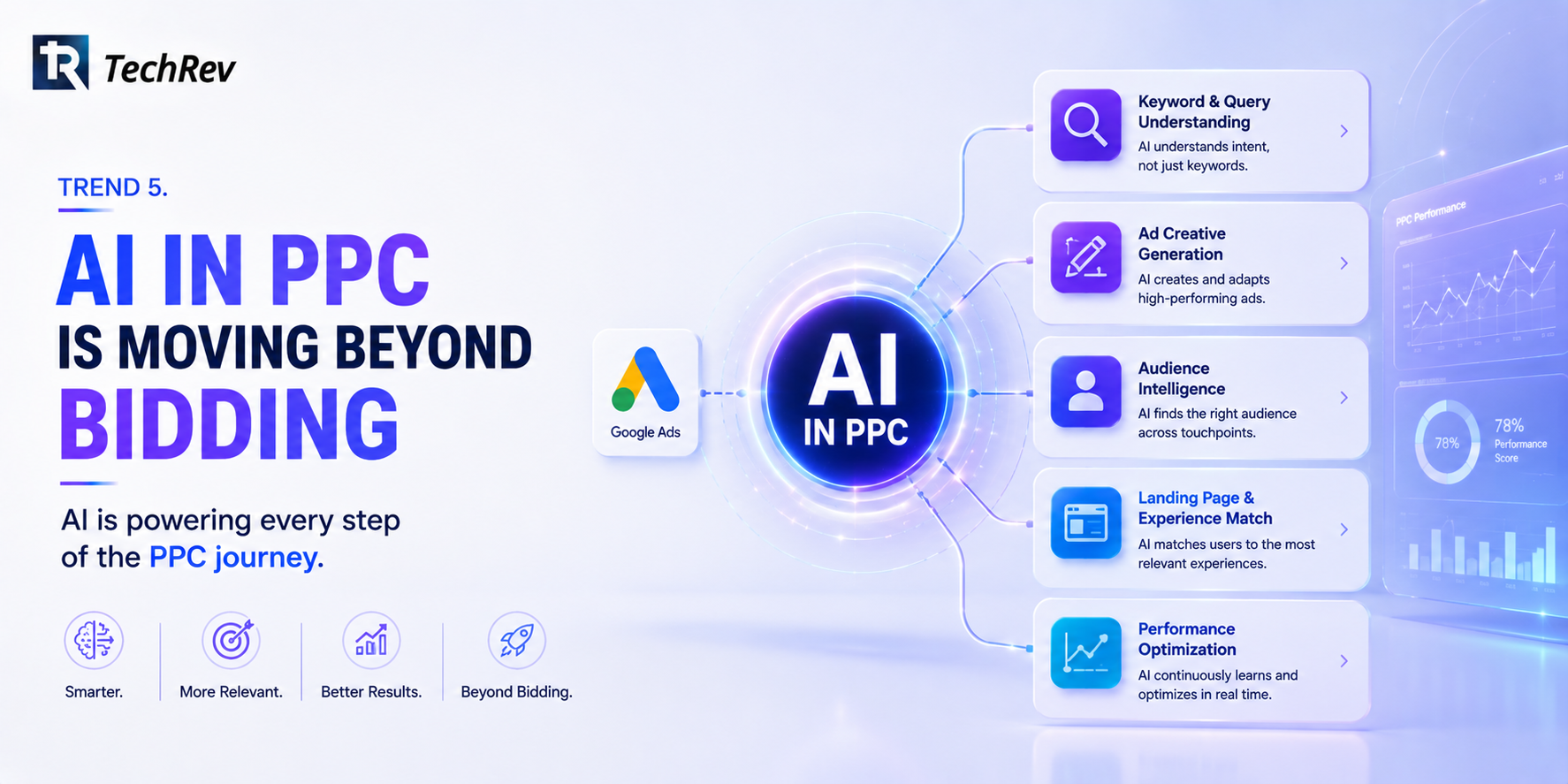
When marketers hear AI in PPC, they often think about automated bidding.
That is only one part of the story.
AI is now influencing:
- Keyword discovery
- Search term matching
- Ad copy
- Landing page selection
- Audience discovery
- Creative production
- Budget allocation
- Conversion prediction
- Customer value prediction
- Campaign diagnostics
- Performance analysis
- Forecasting
- Reporting
- Search experience design
Google’s 2026 advertising roadmap shows how broad this shift has become.
At Google Marketing Live 2026, Google announced new AI-powered advertising formats and Gemini-powered experiences designed to make ads more conversational and context-aware.
Google also reported that nearly 70 million creative assets were generated using Gemini in AI Max and Performance Max in Q4 2025, with a 3x increase in Gemini-generated assets created by advertisers during 2025.
That tells us something important:
Creative production itself is becoming part of the automation layer.
Trend 6. How AI Overviews Affect Google Ads in 2026?
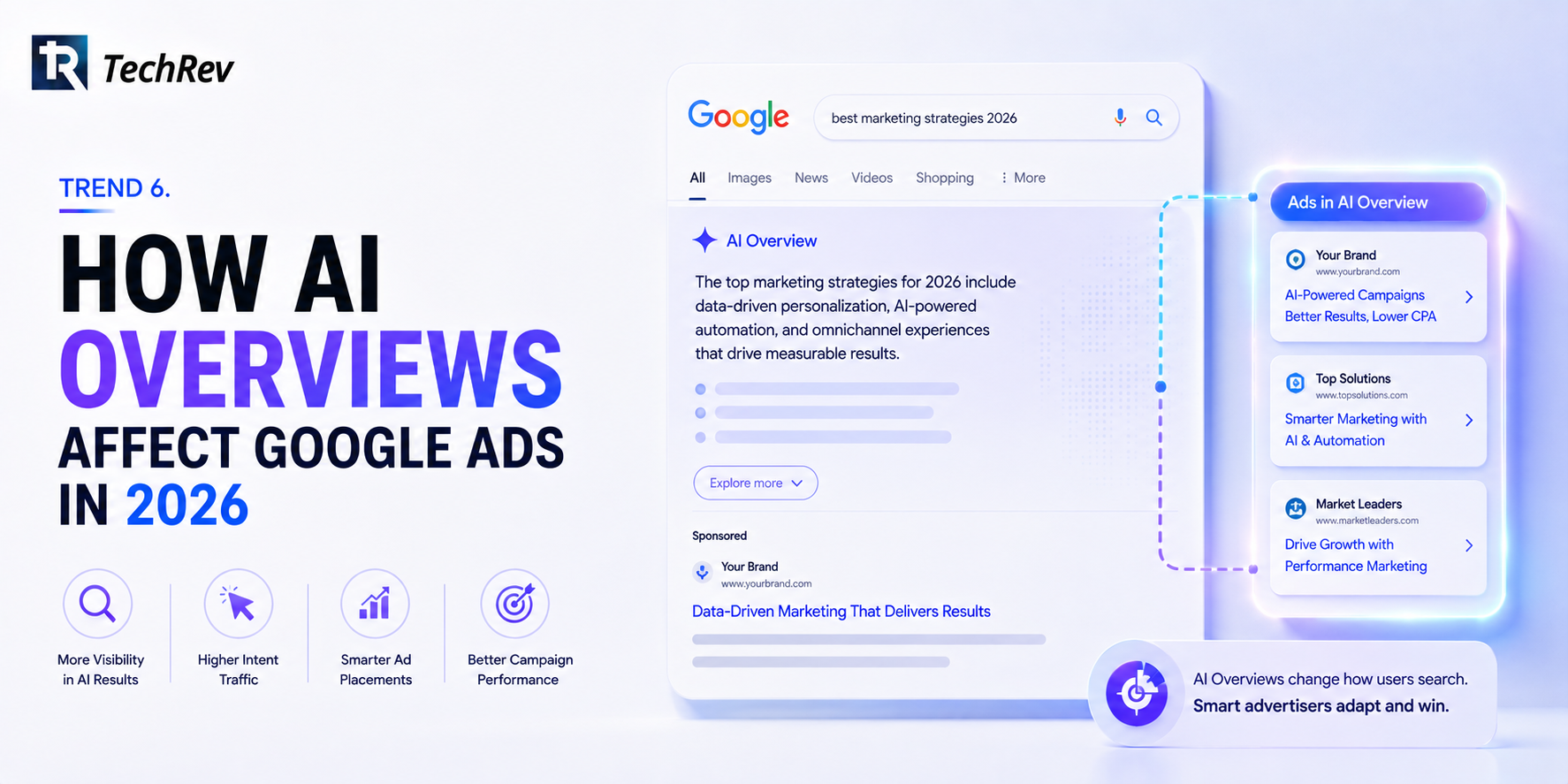
If you are researching how AI overviews affect google ads, this is one of the most important sections to understand.
AI Overviews have changed the shape of the search results page.
Instead of simply seeing:
Query → organic results → ads
users can now encounter:
Query → AI-generated answer → supporting sources → ads → deeper exploration
Google says ads can appear above, below, or within AI Overviews.
Ads within AI Overviews are currently available in English on mobile and desktop in markets including the United States, Canada, India, Australia, and several other countries. Existing Search, Shopping, and Performance Max campaigns can be eligible for these placements.
That has a major implication for PPC.
You cannot simply optimize for one exact keyword anymore.
The user’s query is only one part of the context.
Google says ads within AI Overviews can consider both the user’s query and the content of the AI Overview when determining relevance.
This makes semantic relevance increasingly important.
For example, a user might search:
best software for automating law firm documents
The AI Overview may discuss:
- legal document automation
- document workflows
- compliance
- contract generation
- law firm productivity
- document management
- AI assistants
An advertiser that only targets one narrow keyword may miss the broader context.
An advertiser with strong topical relevance, useful landing pages, broad but controlled targeting, and accurate conversion signals gives Google’s systems more information to work with.
Also Read – Enterprise AI Agents: What, Use Cases, and Benefits in 2026?
Trend 7. AI Overviews Are Changing Search Intent
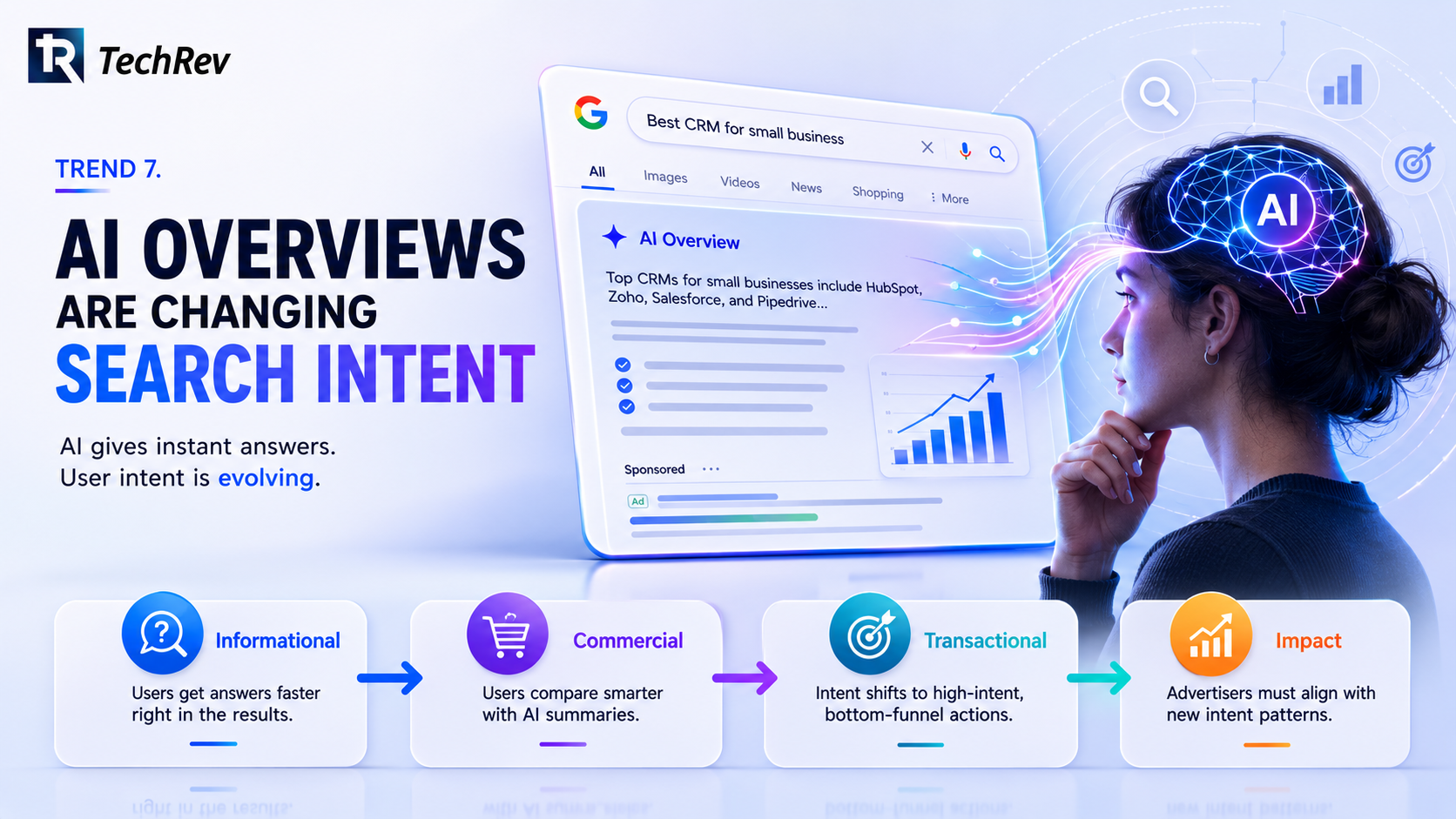
AI Overviews also encourage more complex searches.
Google reported that AI Overviews were driving more than a 10% increase in Google usage for the types of queries that trigger AI Overviews in major markets such as the U.S. and India.
This matters because more searching can create more commercial discovery opportunities. Users can move through a longer decision journey:
Question → comparison → recommendation → product/service → action
That means advertisers should not think only in terms of buy now keywords.
They should also consider:
- Problem-aware searches
- Comparison searches
- Solution searches
- Cost searches
- Feature searches
- Alternative searches
- Implementation searches
- Location-specific searches
- Best searches
- How to searches
This is where AI in PPC and SEO begin to overlap.
Trend 8. The End of Manual Campaigns Does Not Mean the End of Human Strategy
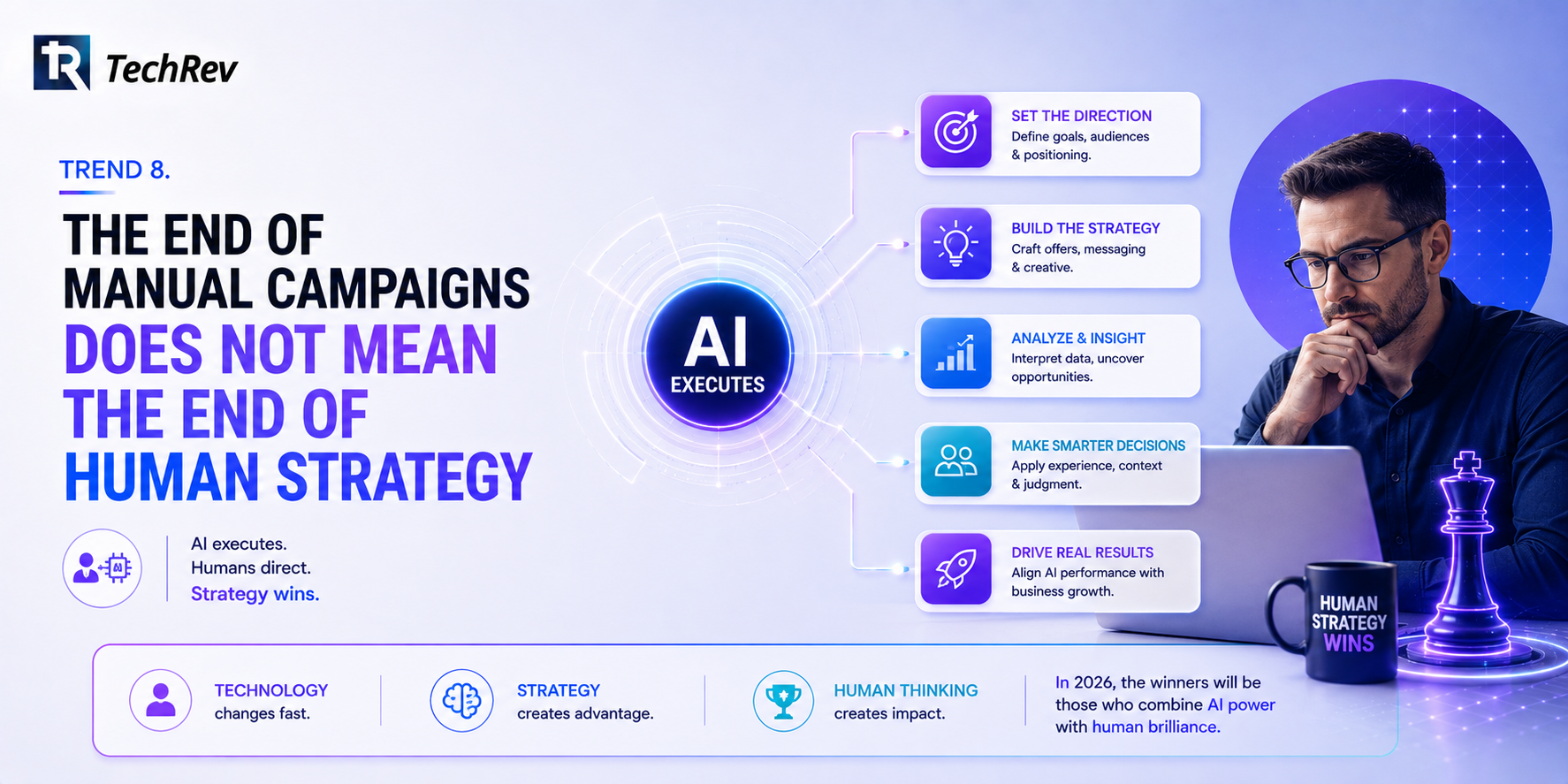
The phrase end of manual campaigns sounds dramatic. The reality is more nuanced.
Manual campaign management is shrinking. Manual strategy is not. In fact, strategic thinking may become more valuable.
Consider what Google AI cannot decide for you:
- Should your company target enterprise buyers or SMBs?
- Which customer segment produces the highest lifetime value?
- Is a $90 lead actually better than a $40 lead?
- Should you spend $20,000 on Google Ads or invest that budget into SEO?
- Does your landing page communicate your differentiator?
- Is your offer strong enough to beat a competitor?
- Should you expand into another market?
AI can process huge volumes of information. It still needs the right business context.
Also Read – Top 10 Cross-Platform App Development Frameworks of 2025!
Trend 9. Conversion Tracking Is Becoming the Real Competitive Advantage
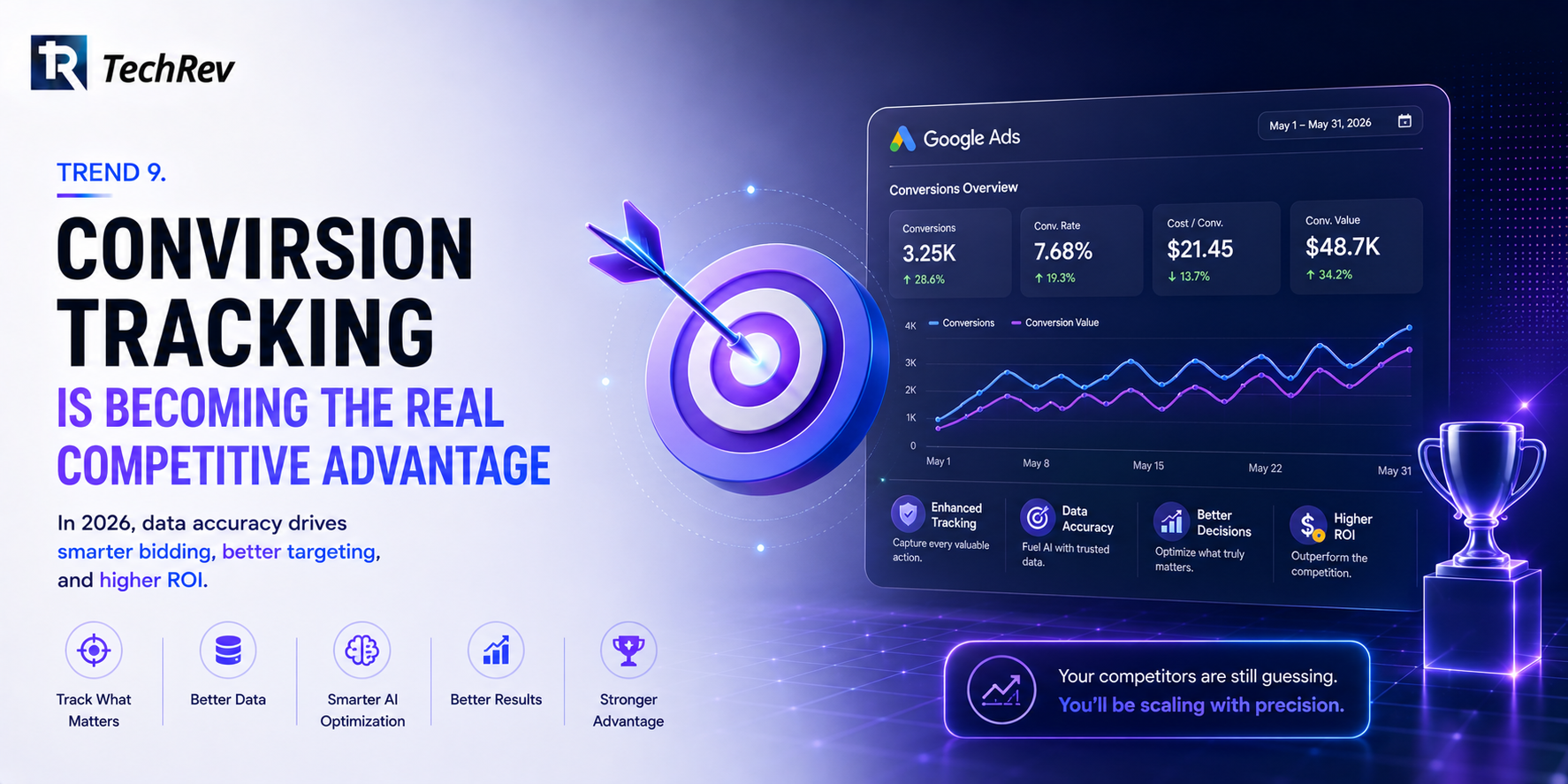
One of the most overlooked PPC trends 2026 is the growing importance of data quality. Automation only works as well as the data feeding it. If your campaign tells Google:
- A form submission is a successful conversion.
Google will try to find more people likely to submit forms. But what if 70% of those forms are junk?
You have trained the system to find junk.
That is why modern PPC accounts need a deeper conversion architecture.
Track more than form submissions
Depending on the business, you may want to measure:
- Qualified leads
- Sales-qualified leads
- Opportunities
- Closed deals
- Revenue
- Customer lifetime value
- Product margin
- Appointment completion
- Qualified phone calls
- Demo attendance
- Subscription value
This is particularly important for B2B.
A 2026 PPC campaign should not stop at:
Click → Form
The real journey is:
Impression → Click → Landing page → Lead → Qualified lead → Opportunity → Customer → Revenue
The closer your advertising platform gets to the final business outcome, the more intelligently automation can optimize.
Trend 10. First-Party Data Will Matter More in PPC
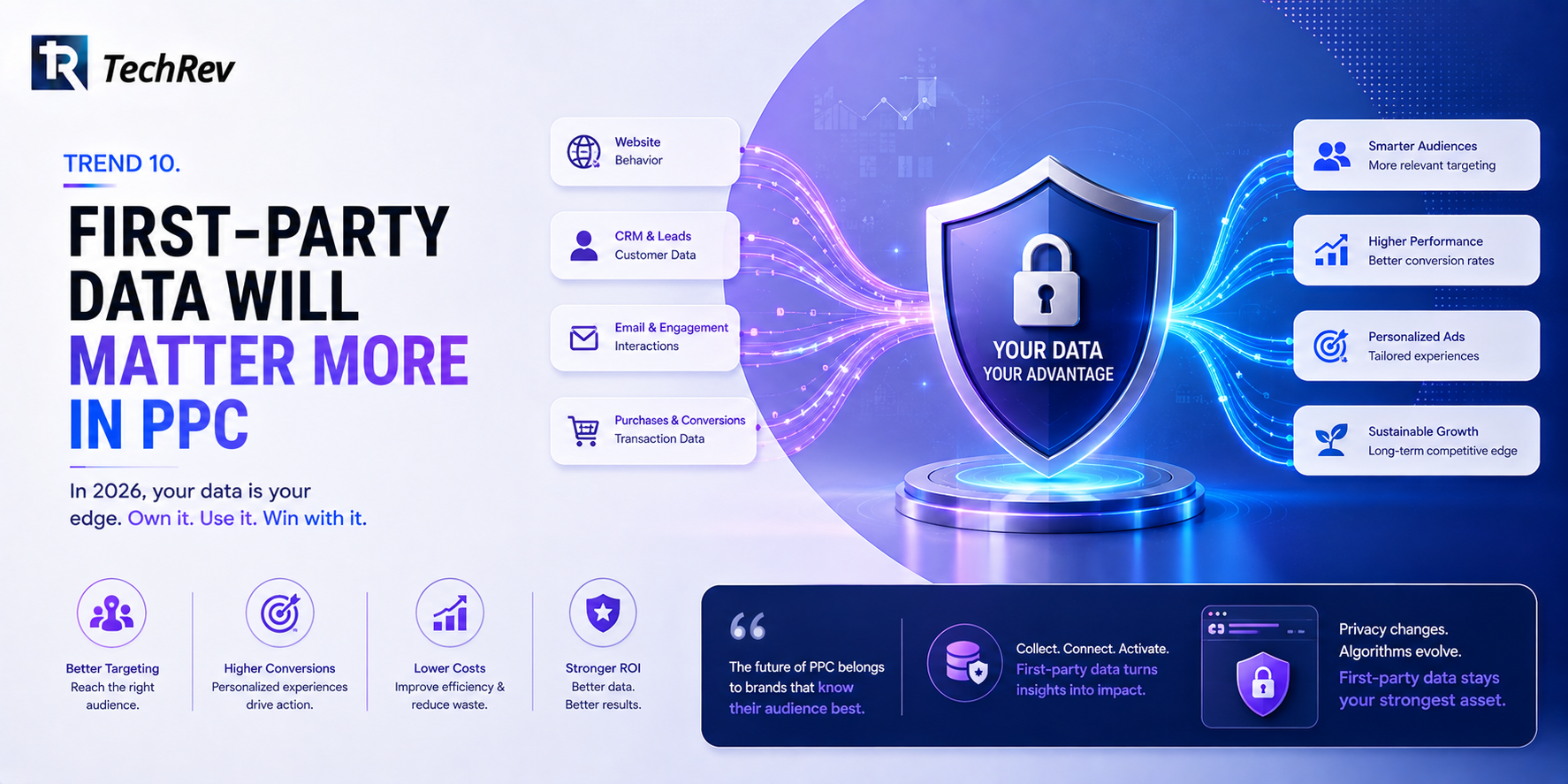
Privacy changes, fragmented journeys, AI search, and signal loss are all increasing the value of first-party data.
Your own customer data can help answer questions that generic audience targeting cannot.
For example:
- Which customers buy repeatedly?
- Which industries produce the highest revenue?
- Which leads become customers?
- Which customers churn?
- Which products have the best margin?
- Which locations generate the strongest demand?
- Which customer segment has the shortest sales cycle?
That information can influence your PPC strategy.
The future is not simply:
Google has AI.
It is:
Google has AI + your business has better data.
That combination is where the real advantage sits.
Trend 11. PPC Automation Tools 2026: What Should Marketers Actually Automate?
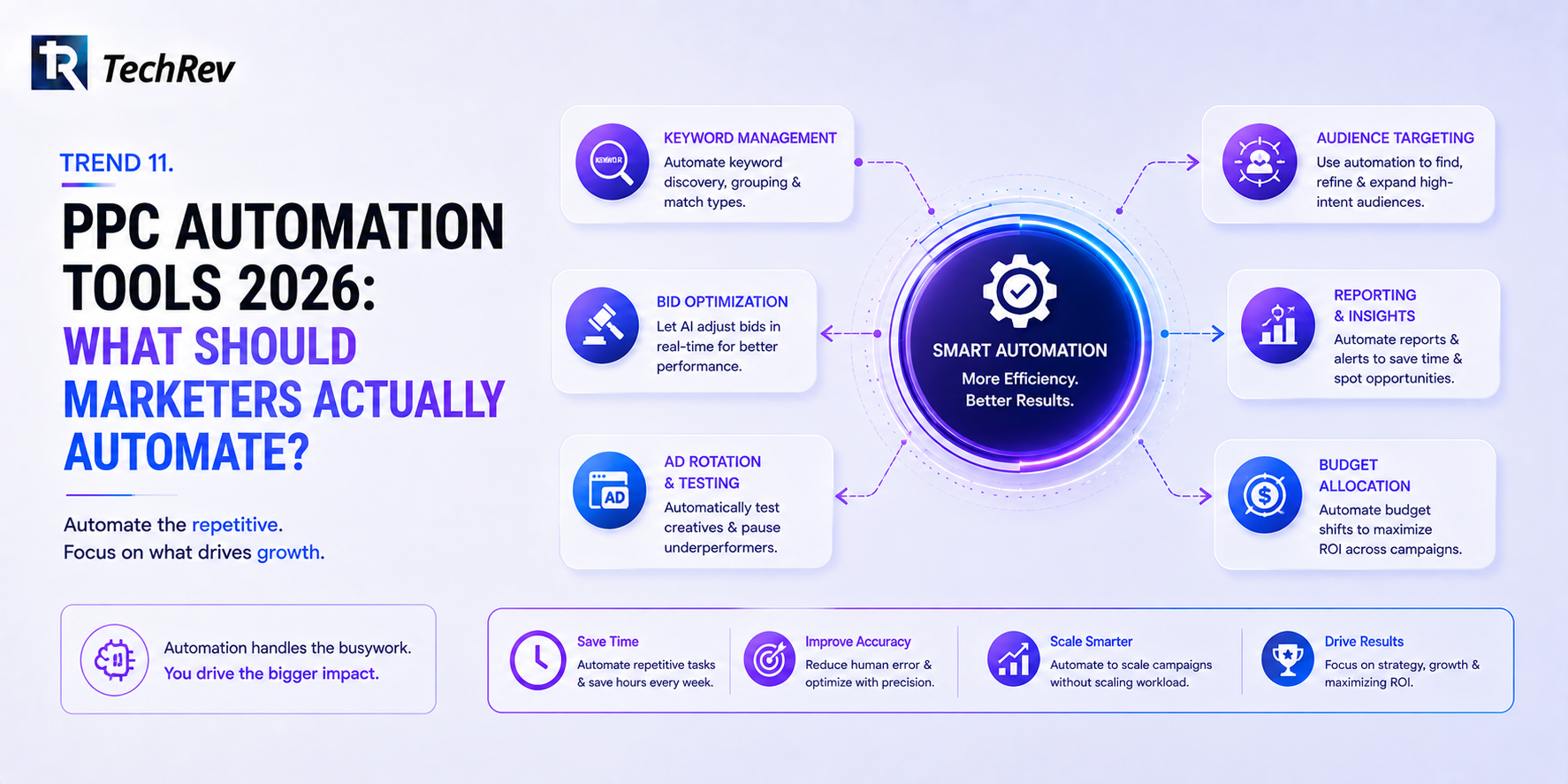
Searches around PPC automation tools 2026 are growing because marketers want to know where automation can replace repetitive work.
The answer is not to automate everything. Automate the repetitive work. Keep humans responsible for high-impact decisions.
Good candidates for automation
- Bid optimization
- Search term categorization
- Budget alerts
- Performance anomaly detection
- Reporting
- Creative variation
- Negative keyword recommendations
- Landing page recommendations
- Audience analysis
- Conversion data synchronization
- Performance summaries
Keep humans involved in
- Brand positioning
- Offer strategy
- Pricing decisions
- Market selection
- Compliance
- Customer segmentation
- Budget approval
- Creative direction
- Landing page strategy
- Business-level KPI selection
The best PPC teams in 2026 will not compete with automation. They will design systems around it.
Also Read – MERN Stack Development in 2026: Is It Best for Your Business?
Trend 12. Google Ads Automation Requires Better Landing Pages
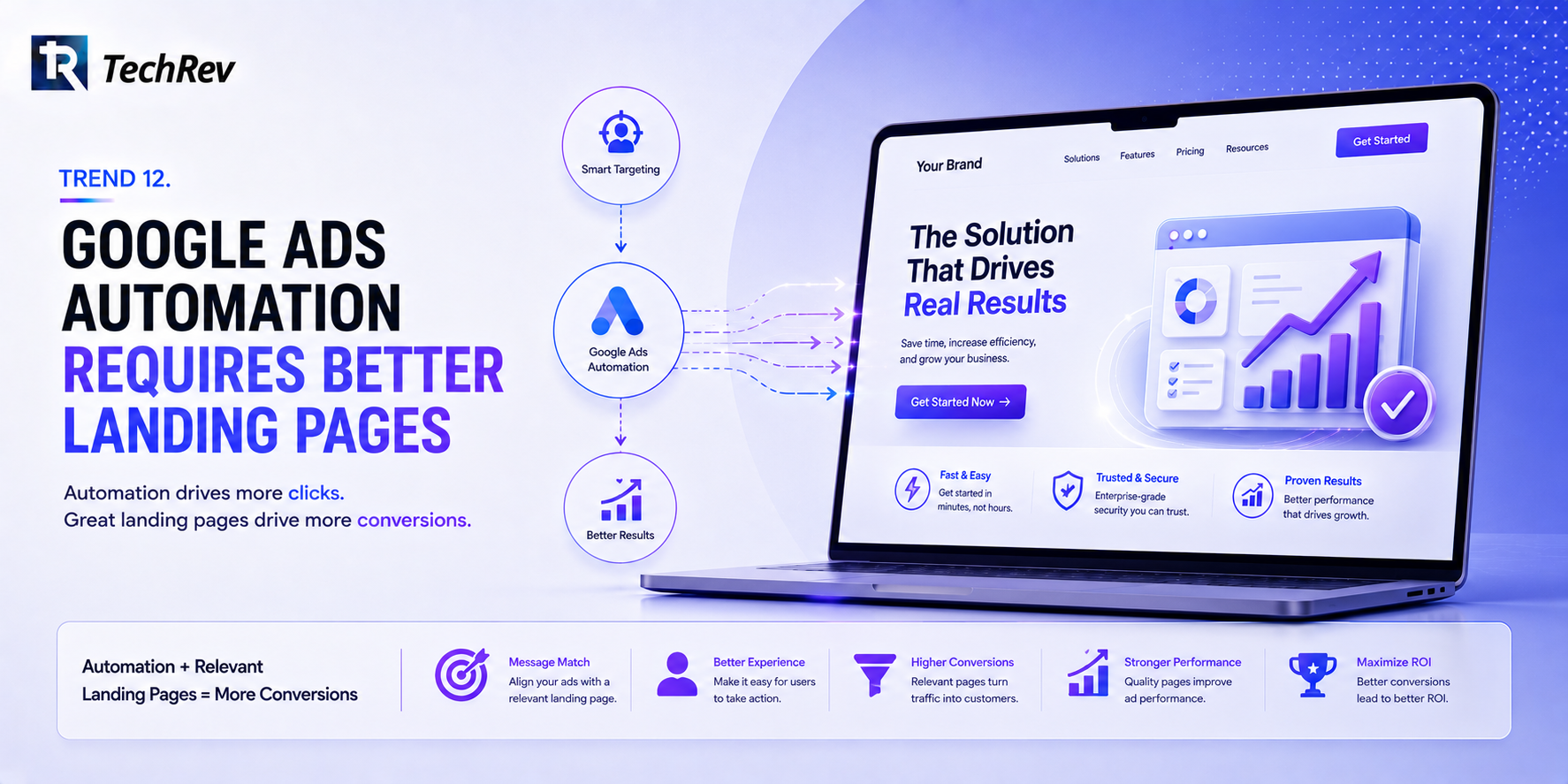
This is where many advertisers get the equation wrong. They automate their campaigns but leave their website unchanged.
That creates a bottleneck. Suppose AI Max expands your reach. Great. Now users arrive on your website.
But your landing page has:
- A generic headline
- Weak proof
- No clear CTA
- Slow loading
- Poor mobile UX
- No pricing context
- No trust signals
- No industry-specific messaging
Your PPC system may generate more qualified traffic, but the website will waste it.
This is why modern PPC strategy must connect:
Paid media + landing pages + website development + analytics + conversion optimization
For a technology company such as TechRev, this connection is particularly important because paid campaigns can feed directly into custom landing pages, web applications, analytics systems, and AI-enabled marketing workflows.
TechRev’s digital marketing services offering covers PPC advertising alongside SEO, social media marketing, AI-driven marketing automation, performance tracking, and strategic growth planning.
Trend 13. AI-Generated Ad Creative Will Become Normal
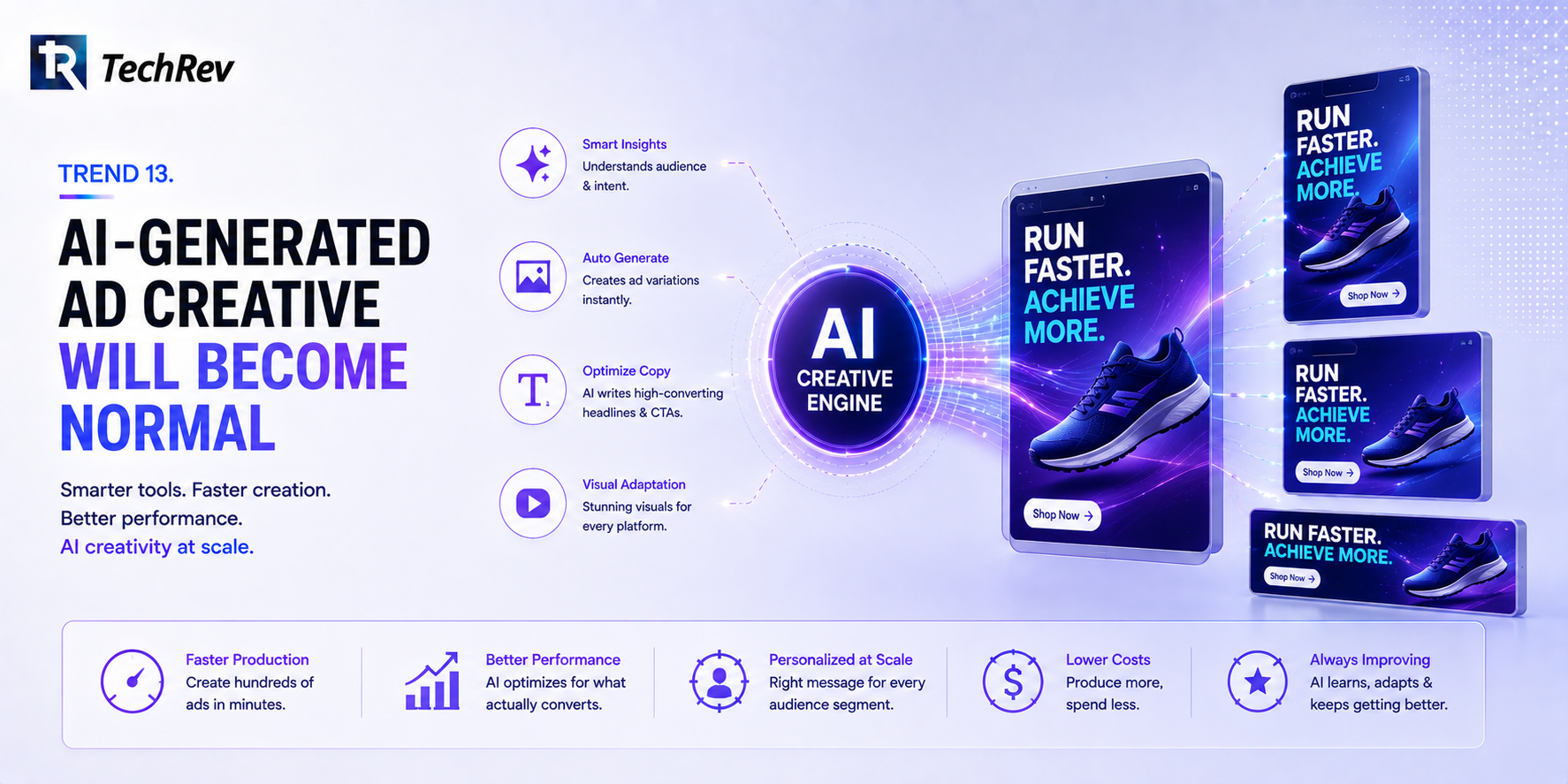
Another major PPC trend 2026 development is the normalization of AI-generated creativity.
Google has already expanded AI capabilities for ad creation.
At the same time, Google introduced additional transparency tools in July 2026, including a How this ad was made panel that can show when generative AI was used to create or alter advertising content.
That creates an important balance. AI can help create more variations. But more variations do not automatically mean better advertising.
You still need a strong creative concept.
For example:
Weak AI-generated approach
Grow your business with innovative technology solutions.
Better strategic direction
Still losing qualified leads because your website, CRM, and sales team work in separate systems?
The second message starts with a recognizable business problem.
AI can generate variations.
Humans should define the idea.
Trend 14. Creative Testing Is Becoming a Data Problem
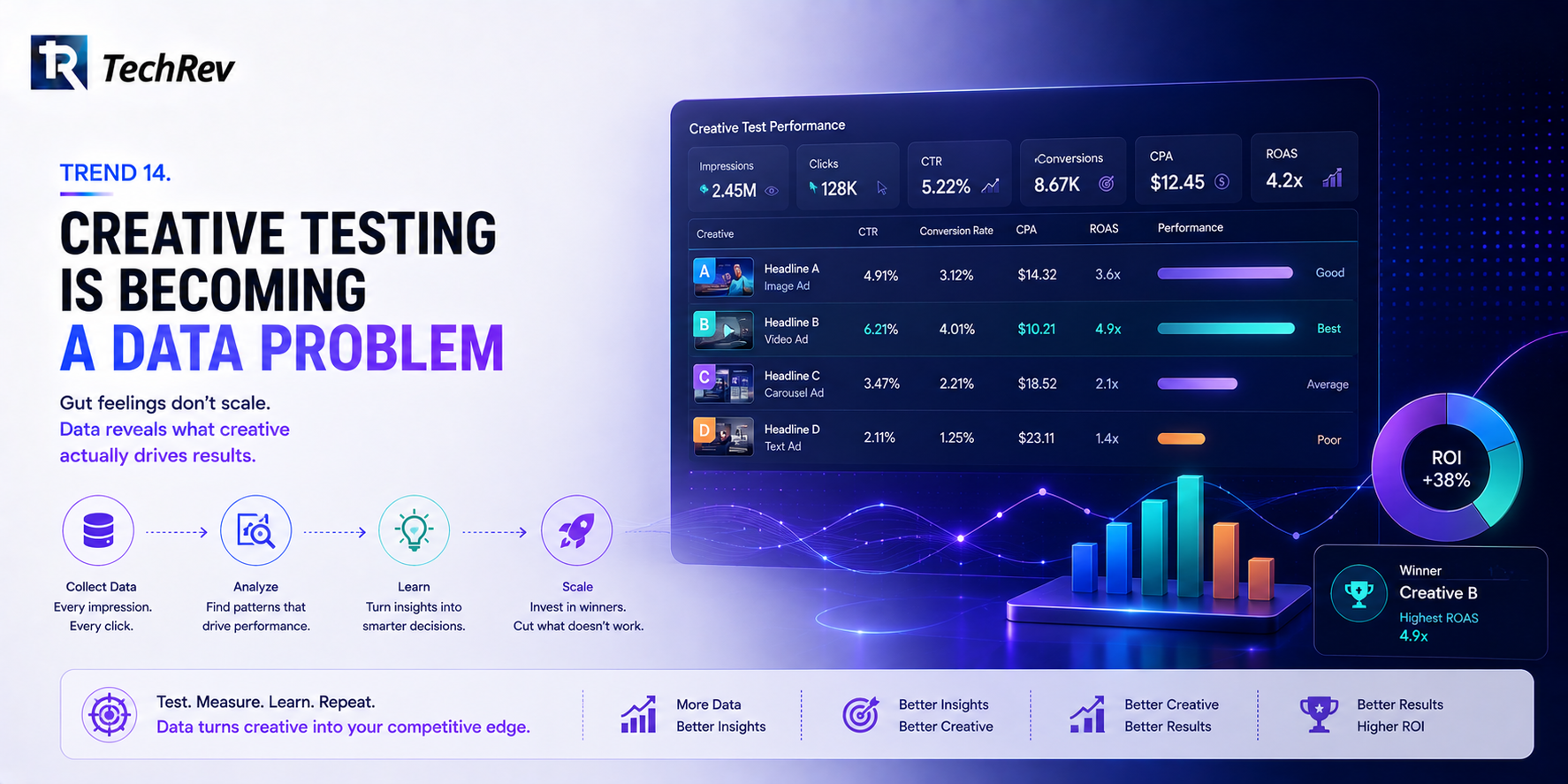
In traditional PPC, a team might create three ads and compare CTR.
In 2026, the testing opportunity is much larger.
You can test:
- Headlines
- Descriptions
- Offers
- CTAs
- Landing pages
- Images
- Videos
- Audience signals
- Search themes
- Value propositions
- Industry messaging
- Geographic messaging
- Product positioning
But testing more variables creates another problem:
How do you know what actually caused the improvement?
This is why clean experimentation matters.
Do not change ten things at once and then call the campaign optimized.
- Create a hypothesis.
- Test it.
- Measure the right business outcome.
- Document the result.
Then scale what works.
Also Read – Swift vs Kotlin: Native App Development Compared (2026 Guide)
Trend 15. Search Intent Matters More Than Keyword Volume
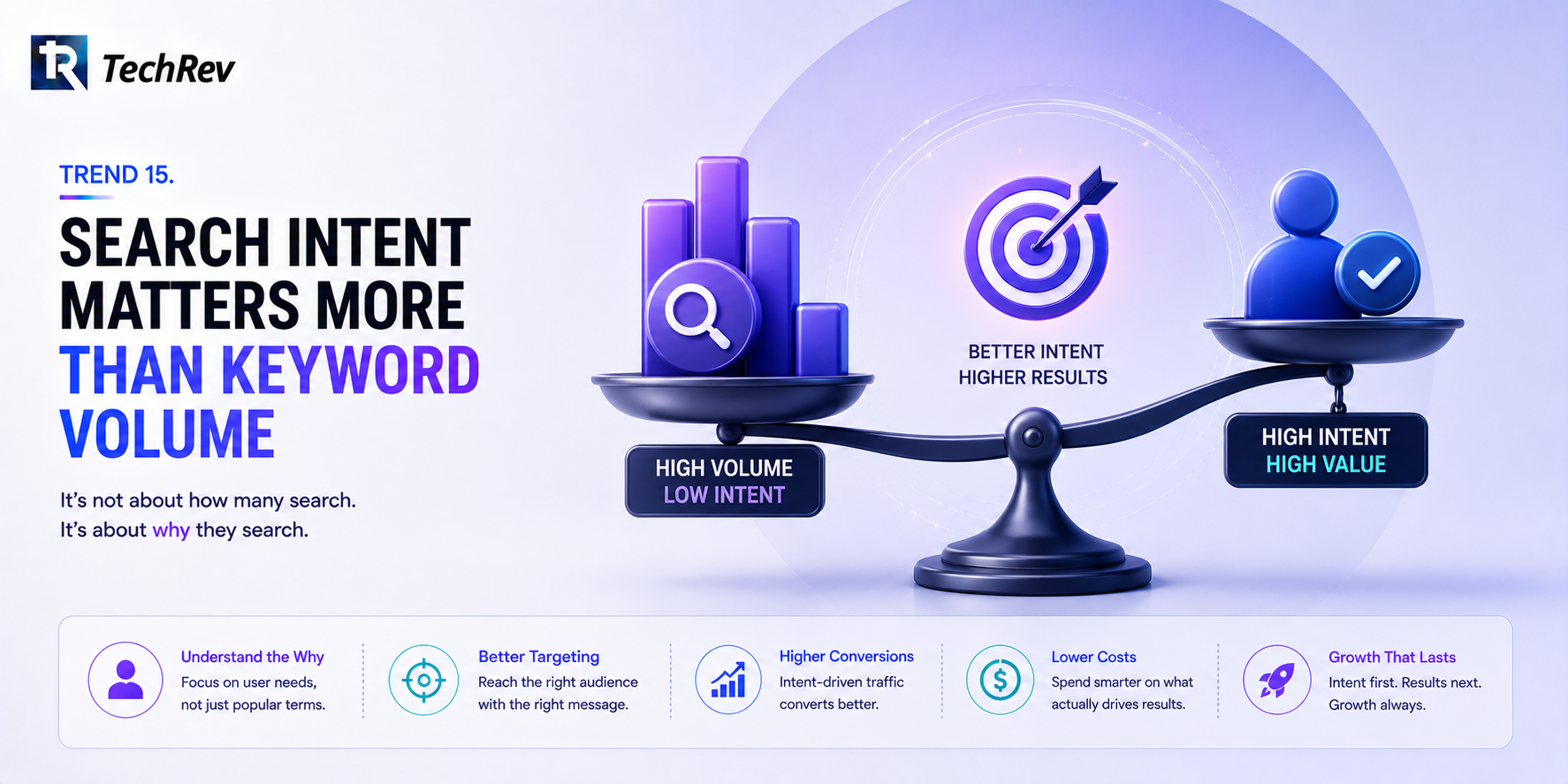
A keyword can have massive search volume and still produce terrible customers.
Consider these two searches:
AI
and
AI development company for healthcare USA
- The first has enormous potential volume.
- The second carries much stronger commercial intent.
- This is why modern AI in PPC strategy should not chase volume alone.
You want:
Relevant demand + commercial intent + acceptable economics
That is the combination that produces sustainable growth.
Trend 16. Broad Match Is Becoming More Important, But So Are Controls
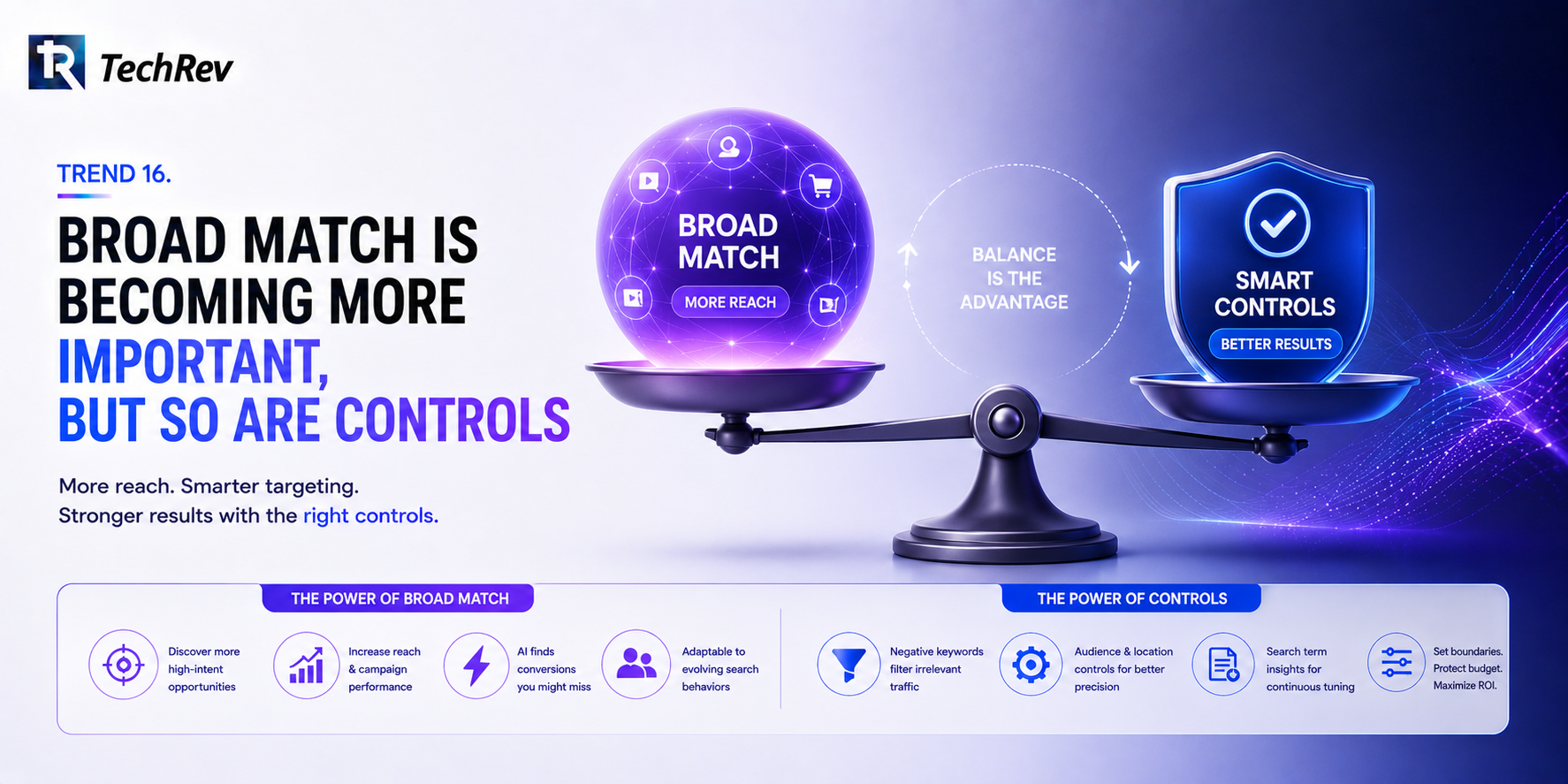
Broad matches have historically made many advertisers nervous.
The concern is understandable. If you give an algorithm broader freedom, you can attract irrelevant traffic.
But Google’s current strategy increasingly connects broad matches with Smart Bidding and AI-powered targeting.
Google says the campaign-level broad match setting is available with conversion-based Smart Bidding and that eligible campaigns using this setting are moving toward AI Max.
The correct 2026 approach is not:
Broad matches are always good.
Nor is it:
Broad matches are always bad.
It is:
Use broader targeting when your conversion signals, exclusions, budget, and measurement are strong enough to support it.
That is a much more useful rule.
Trend 17. What Happens to Exact Match in 2026?
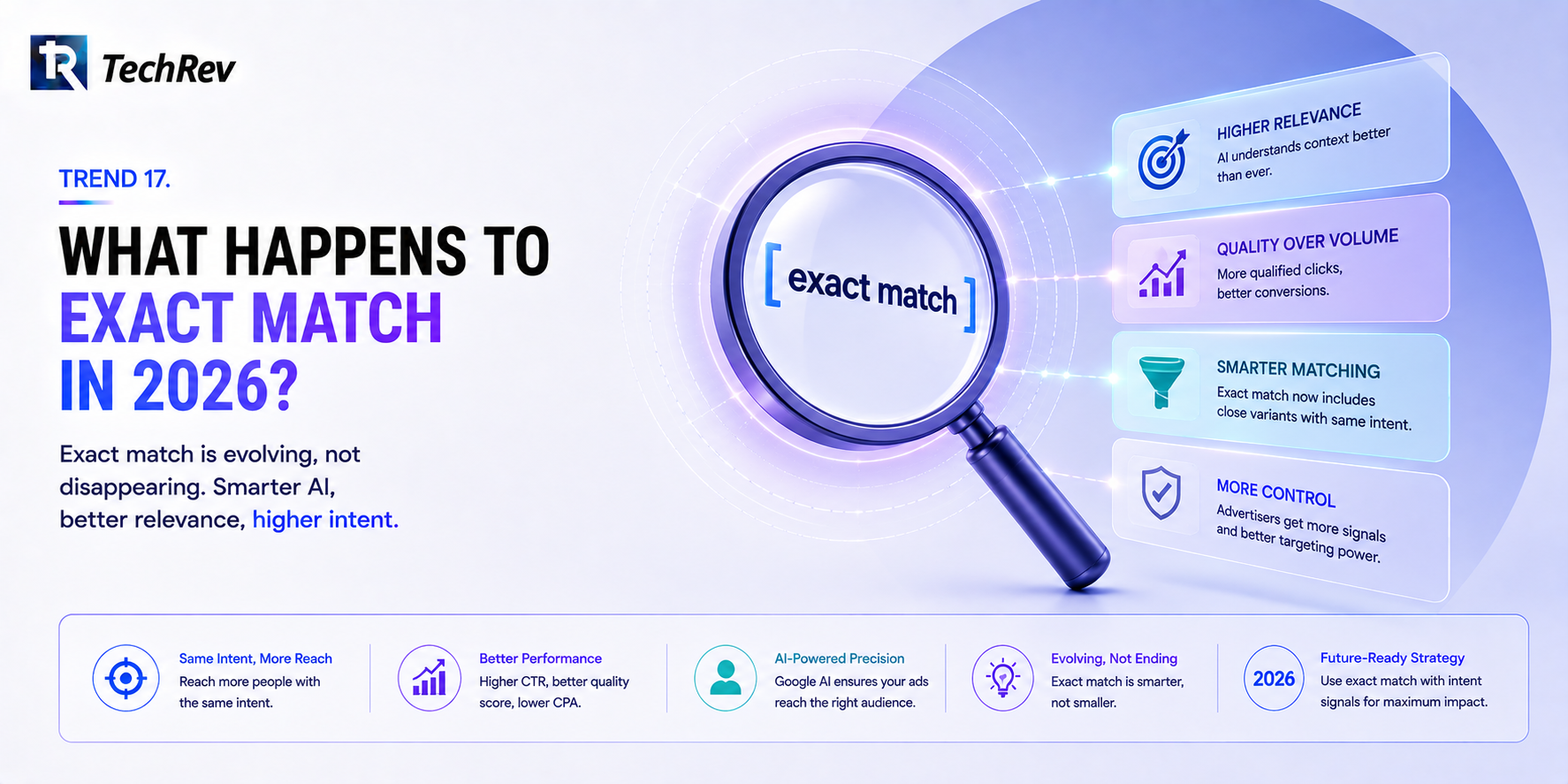
Exact matches still have an important role.
If you have a high-value commercial query, you may want stronger control around it.
Examples:
- Enterprise software development company
- AI integration services
- healthcare app development company
- custom web application development
- PPC management services
High-value terms deserve deliberate campaign architecture. You do not have to choose between:
Manual control
and
AI automation
You can combine them. Use your highest-value terms and business constraints as strategic guardrails.
Then allow AI to discover incremental opportunities around them.
Trend 18. Google Ads Is Becoming More Conversational
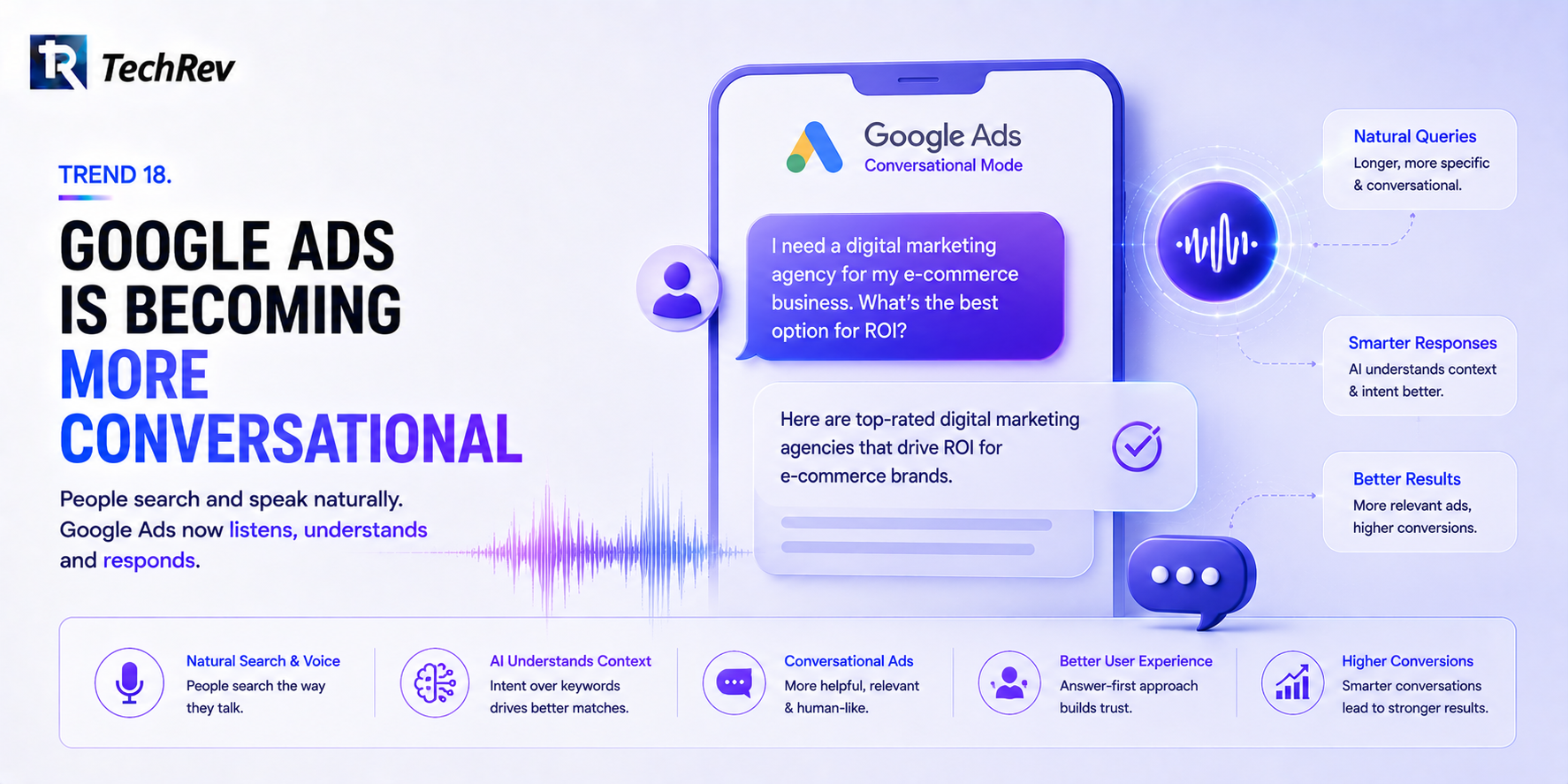
Search itself is becoming conversational.
Google says people are increasingly asking questions, brainstorming, using images, and interacting with Search in more natural ways.
That means advertisers should prepare for searches that sound less like keywords and more like conversations.
Instead of:
CRM software
you may see queries closer to:
What CRM should a 50-person B2B company use if its sales team needs automation?
Instead of:
app development company
users may search:
Who can build a healthcare app with HIPAA-compliant infrastructure and EHR integration?
That is a fundamental change.
Search marketing is moving from keyword matching toward intent understanding.
Trend 19. AI Mode Ads Will Create New PPC Opportunities
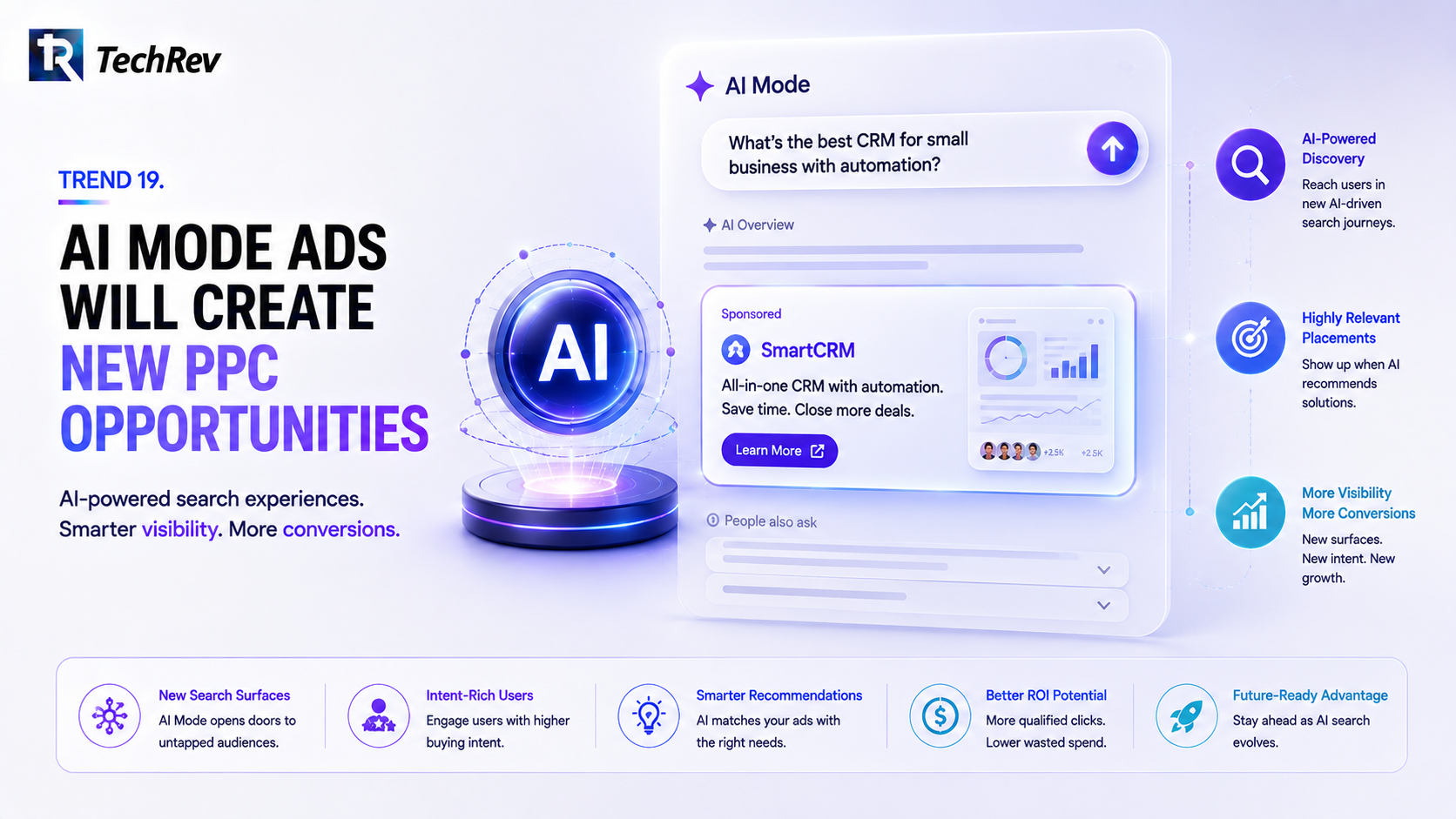
AI Overviews are not the only change.
Google is also building advertising experiences inside AI Mode.
Google announced new Gemini-powered ad formats in 2026, including conversational experiences designed to connect product or service information with more personalized user questions.
Google also says AI Mode creates new opportunities for businesses to appear during deeper research journeys.
That matters because traditional PPC often focuses heavily on the final commercial query.
AI search can expose brands earlier in the decision process.
A user might start with:
What is the best way to automate legal documents?
Then ask:
What does it cost?
Then:
Which companies can build this?
Then:
Compare three options.
The advertising ecosystem is moving toward this longer, conversational journey.
Also Read – What Does a HIPAA Compliant Cloud Cost in 2026?
Trend 20. The New PPC Funnel Is No Longer Linear
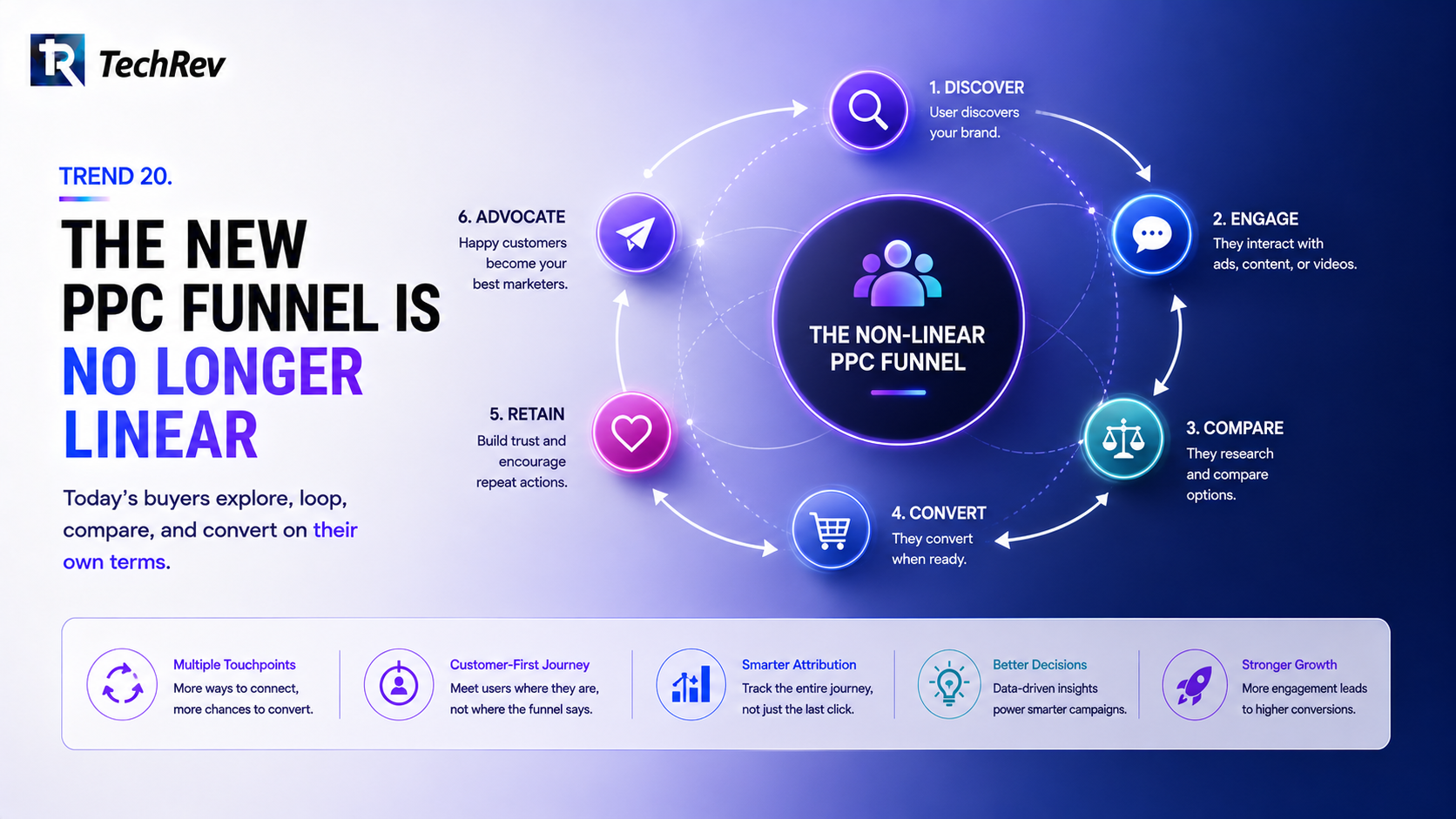
Traditional PPC thinking looked like this:
Keyword → Ad → Landing Page → Conversion
The 2026 model looks more like:
Question → AI answer → Search exploration → Ad → Website → Comparison → Retargeting → Sales conversation → Customer
This changes attribution.
A person may discover your company through an AI-assisted search experience, visit your website, leave, return through branded search, and convert later.
If you judge every interaction separately, the customer journey can look confusing.
If you analyze the full funnel, the story becomes clearer.
What Should a 2026 Performance Max Strategy Look Like?
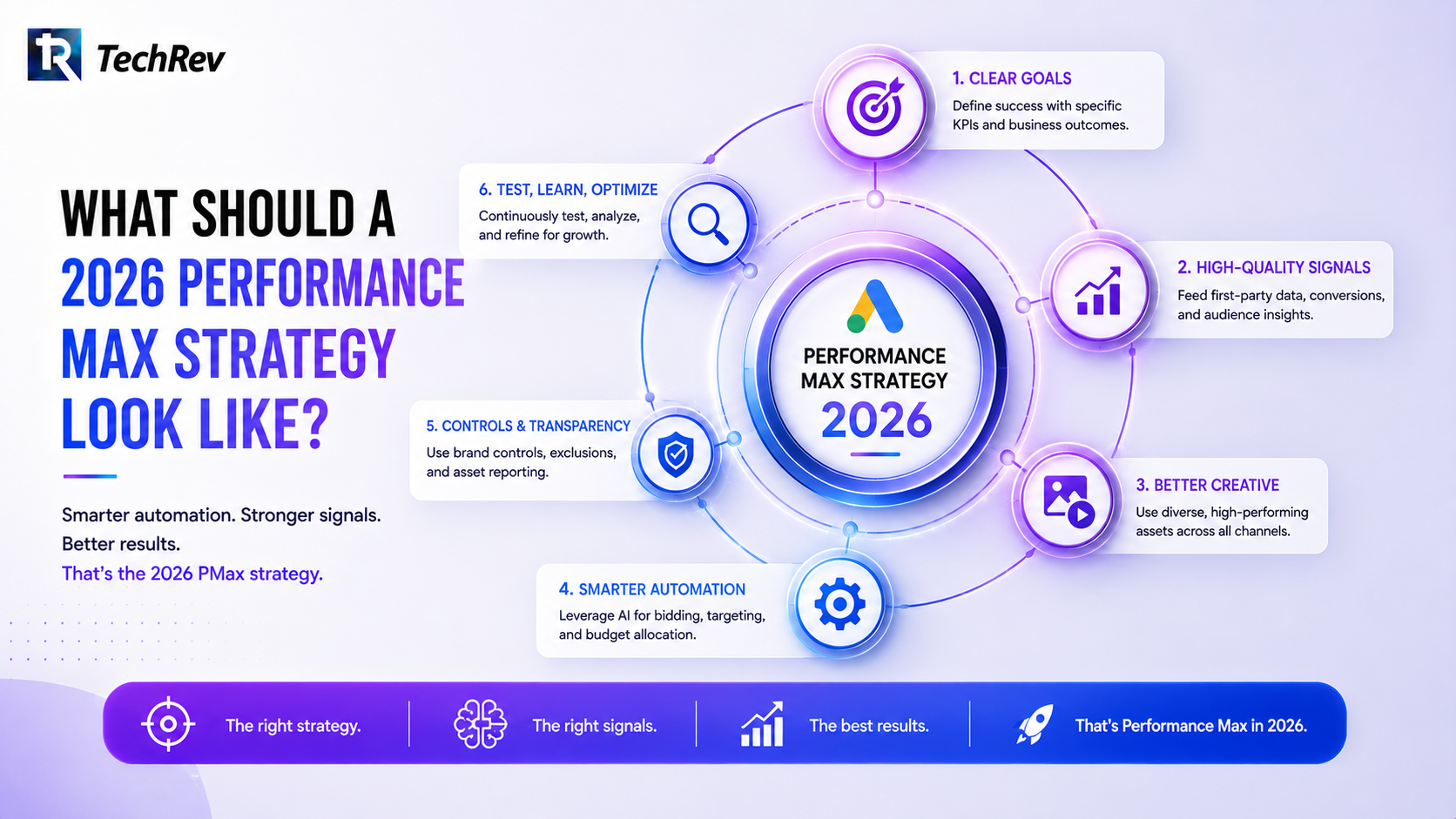
A practical performance max strategy should start with business fundamentals.
Step 1: Define the actual business goal
Do you want:
- More revenue?
- More qualified leads?
- More customers?
- Lower customer acquisition cost?
- Higher ROAS?
- Higher customer lifetime value?
Pick one primary outcome.
Step 2: Fix conversion tracking
Do not launch sophisticated automation on unreliable data.
Step 3: Give Google meaningful conversion values
A qualified enterprise opportunity should not necessarily carry the same value as a low-intent form submission.
Step 4: Build a strong asset library
Include:
- Headlines
- Descriptions
- Product images
- Service visuals
- Videos
- Logos
- Proof points
- Testimonials
- Offers
Step 5: Build a clean website
Your landing pages should match user intent.
Step 6: Create campaign roles
Do not let every campaign chase the same outcome without a reason.
Step 7: Protect high-value Search intent
Use Search campaigns where keyword and messaging control matter.
Step 8: Let Performance Max find incremental demand
Use PMax where broader reach can add value.
Step 9: Evaluate quality, not just conversion count
A campaign producing 200 low-quality leads can be worse than one producing 50 qualified opportunities.
Step 10: Feed better data back into the system
This creates a continuous optimization loop.
How TechRev Can Help Businesses Adapt to PPC Trends 2026?
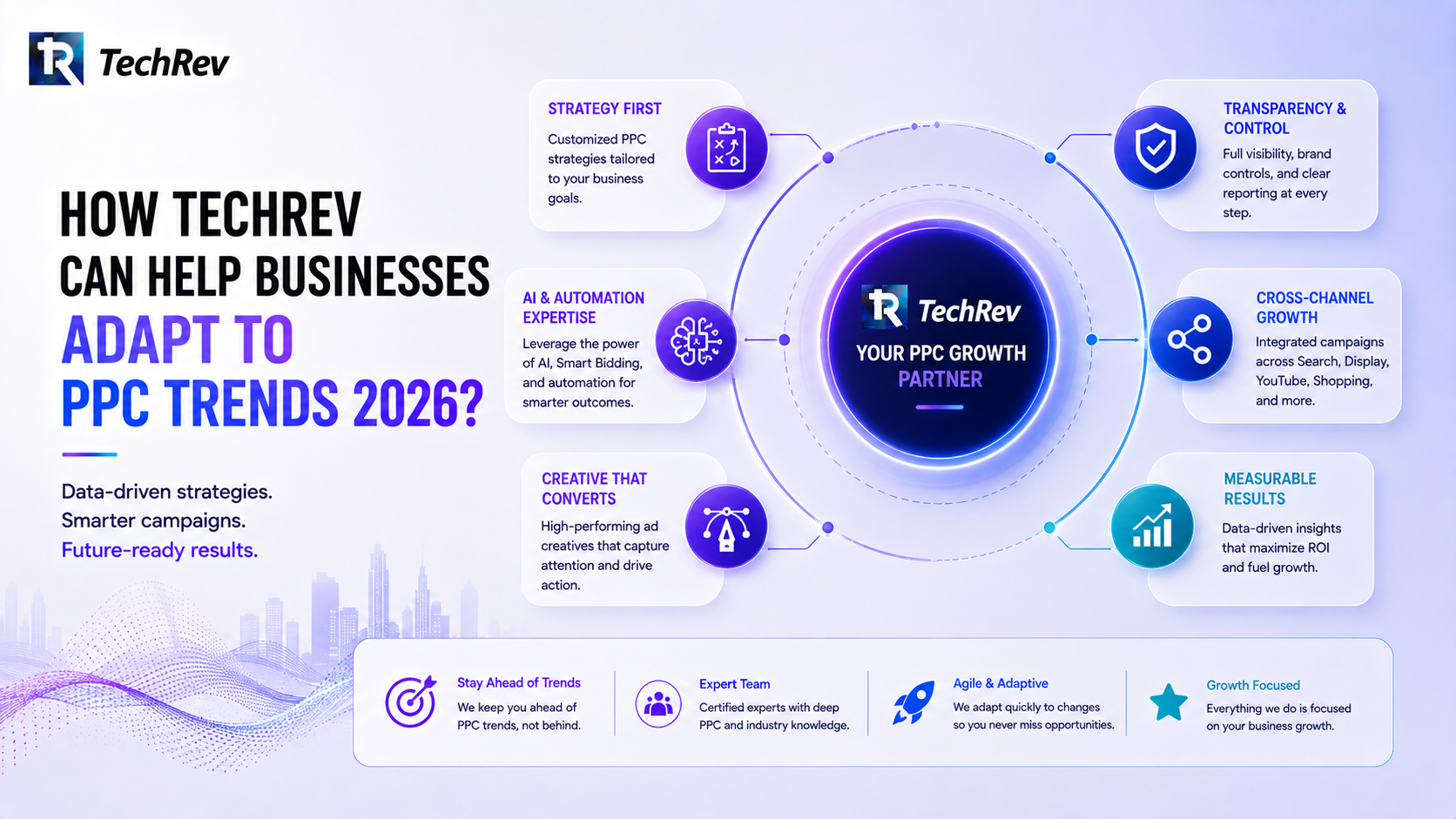
The shift toward AI-driven PPC creates an interesting problem. Most businesses do not need another person who knows how to click around Google Ads.
They need a system that connects advertising with business outcomes. This is where TechRev can help.
TechRev provides PPC advertising as part of its broader digital marketing services, with a focus on traffic quality, conversion rates, return on ad spend, performance tracking, audience intent, and continuous optimization.
The bigger advantage comes from combining marketing expertise with technology capabilities.
TechRev also works across AI integration, custom web applications, website development, and AI-enabled workflows. That matters because modern PPC increasingly touches the technology stack.
Can TechRev Help Reduce PPC Waste?
Yes, but the objective should not be to promise an arbitrary percentage reduction before auditing an account.
A responsible PPC strategy starts with the actual numbers.
For example, imagine a company spends:
$30,000 per month
and generates:
300 leads
The average lead cost is:
$100
But only 30 become qualified opportunities.
That means the business is effectively paying:
$1,000 per qualified opportunity
The optimization opportunity is not simply lower CPC.
The better question is:
How can the campaign produce more qualified opportunities without increasing acquisition cost?
TechRev can approach that problem through:
- Conversion tracking
- Landing page optimization
- Campaign restructuring
- AI-assisted campaign management
- Audience and intent analysis
- Creative testing
- PPC automation
- Website improvements
- Analytics
- AI-driven marketing workflows
That is a more meaningful approach to cost reduction.
How Much Can Better PPC Data Improve Business Performance?
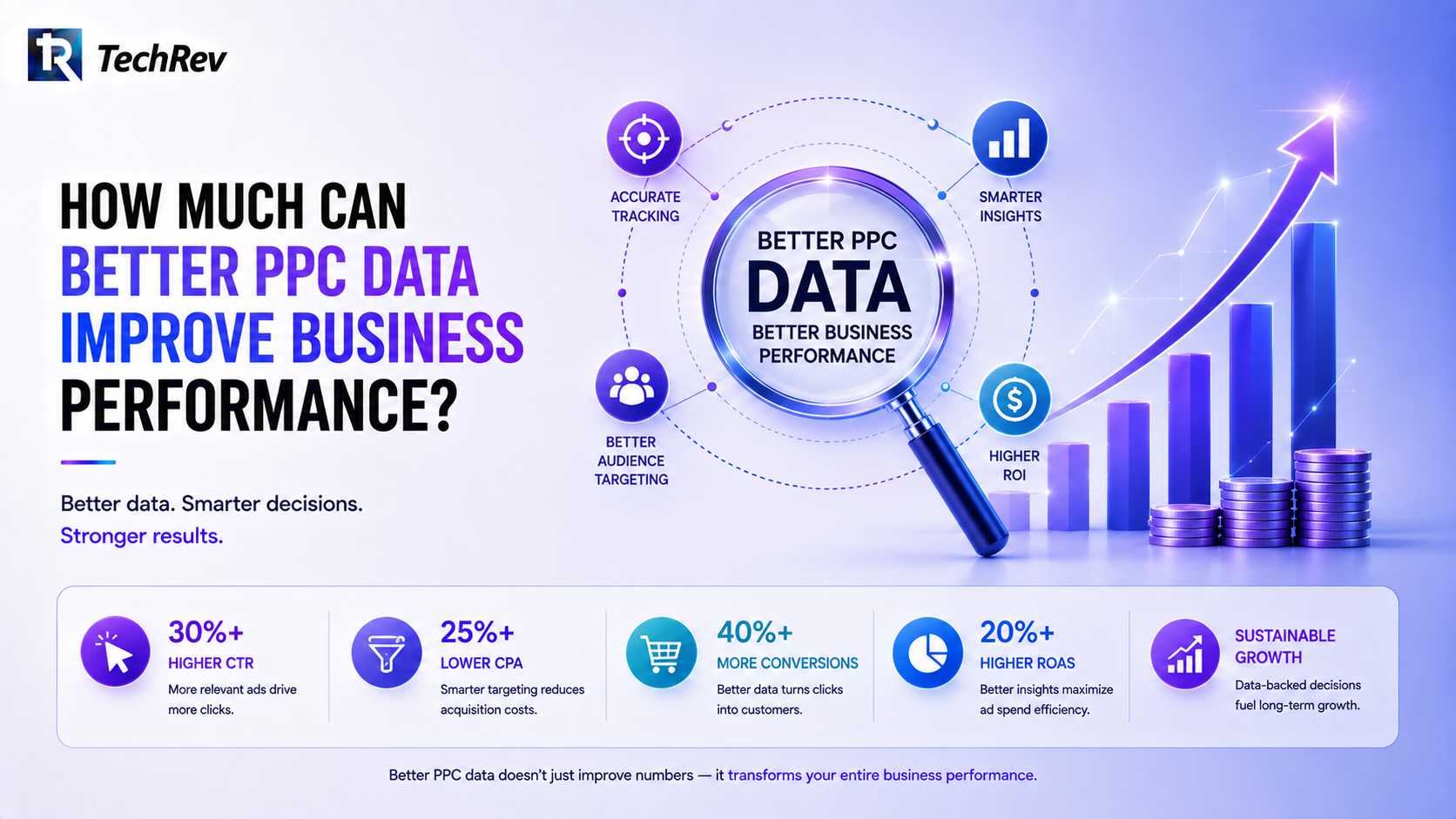
There is no responsible universal percentage. The outcome depends on the account.
But the economics are easy to model. Suppose your company spends:
$50,000/month
Current conversion rate:
5%
Clicks:
10,000
Conversions:
500
Now imagine better targeting, landing pages, conversion signals, and creative increase conversion rate to:
6%
The same 10,000 clicks now produce:
600 conversions
That is 100 additional conversions without increasing click volume.
If each conversion has an average business value of $500, the incremental conversion value would be:
$50,000
That is why PPC optimization should focus on the complete funnel.
A 10% improvement in a single metric can create a much larger business impact when the entire system works together.
What PPC Metrics Should Matter Most in 2026?
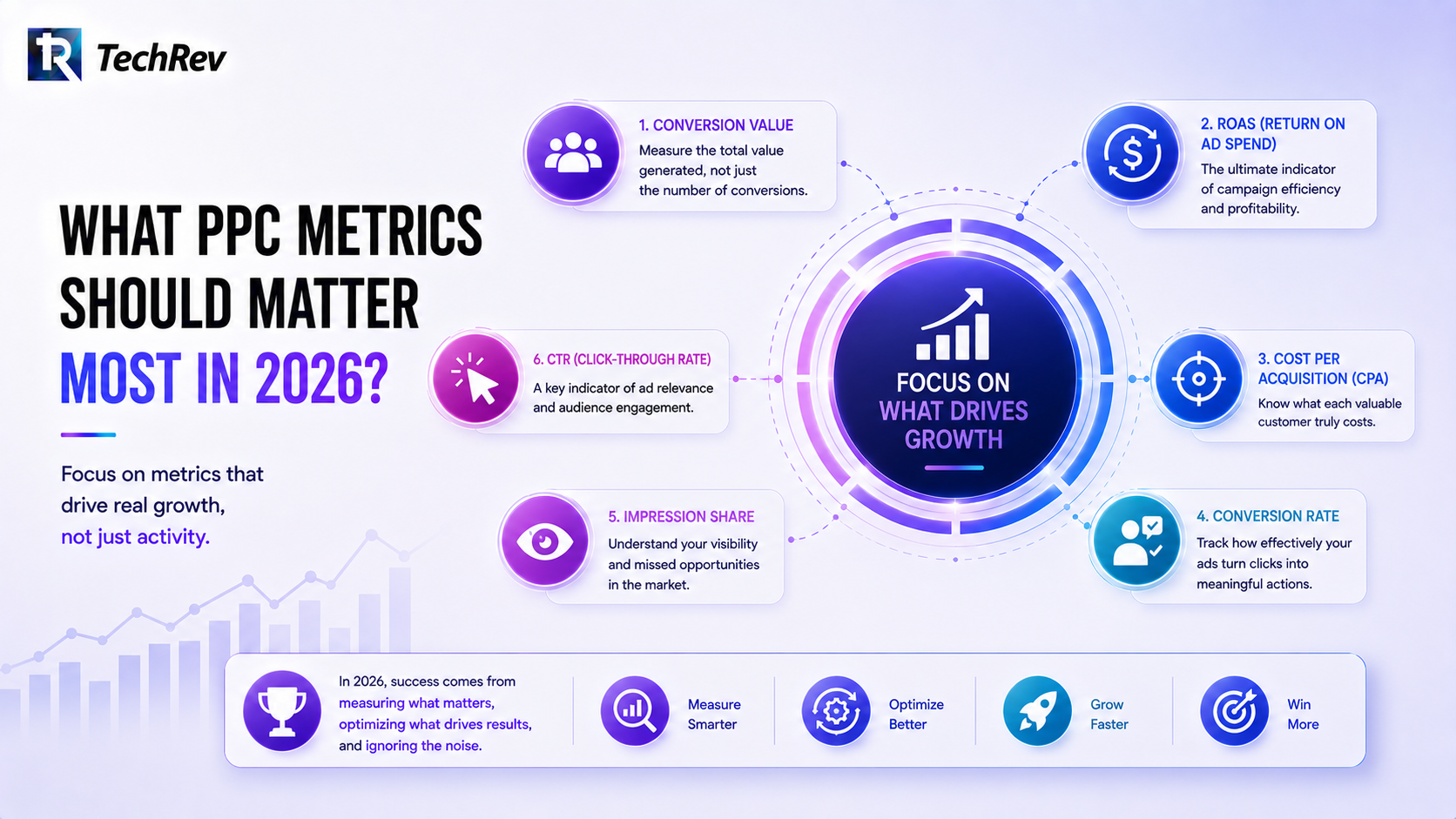
CTR still matters.
CPC still matters.
But neither should be your final KPI.
A modern PPC dashboard should include:
Traffic metrics
- Impressions
- Clicks
- CTR
- CPC
- Search impression share
Conversion metrics
- Conversion rate
- Cost per conversion
- Qualified lead rate
- Cost per qualified lead
Business metrics
- Pipeline value
- Customer acquisition cost
- Revenue
- ROAS
- Profit
- Customer lifetime value
AI and automation metrics
- AI Max performance
- Search term quality
- Asset performance
- Conversion value
- Budget utilization
- Campaign learning status
- Incremental conversion performance
The deeper your measurement becomes, the better you can judge whether automation is actually working.
What Will PPC Managers Actually Do in 2026?
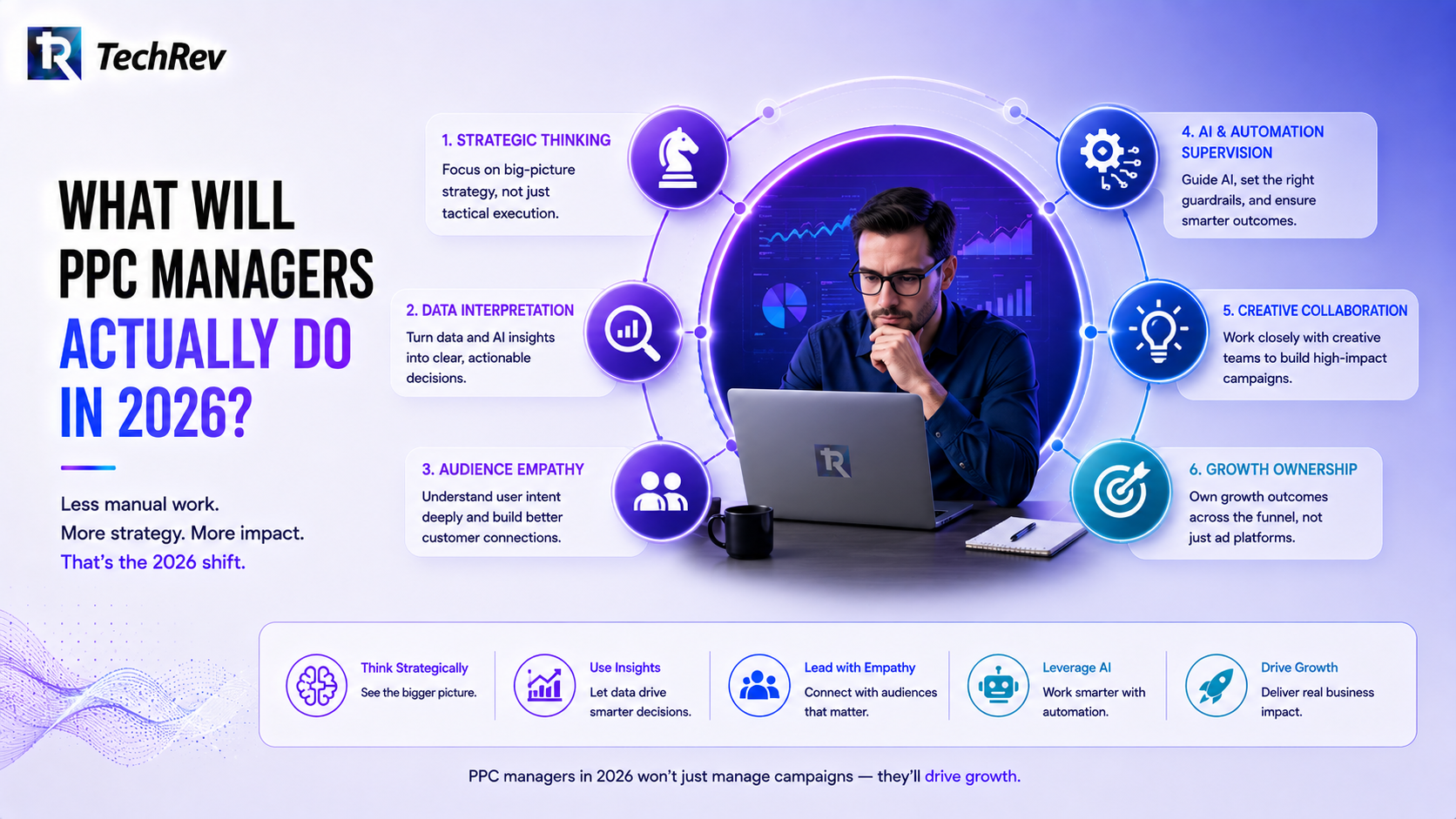
Their role will change. Less time will go into:
- Manual bid changes
- Building hundreds of keyword variations
- Writing endless ad combinations
- Spreadsheet-heavy reporting
- Manual campaign adjustments
More time will go into:
- Strategy
- Data analysis
- Creative direction
- Experimentation
- Conversion architecture
- Landing page optimization
- Customer research
- Offer development
- Budget allocation
- Business intelligence
This is not the death of PPC management. It is the evolution of PPC management.
Top PPC Trends 2026: What Businesses Should Stop Doing?
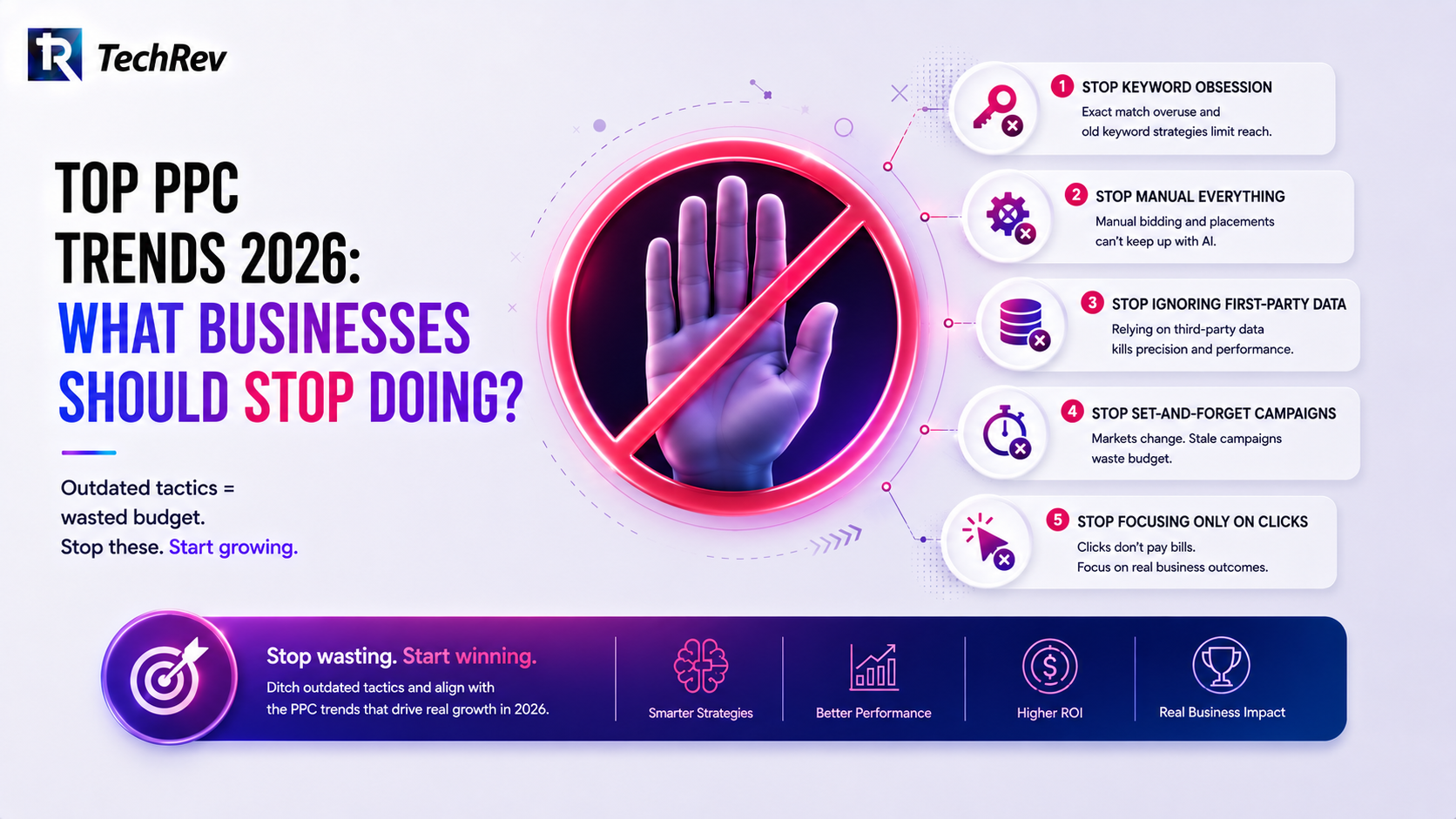
If you are still managing Google Ads the way you did in 2021, it may be time to rethink the account.
1. Stop optimizing only for clicks
Traffic without business value is not growth.
2. Stop treating every lead equally
Lead quality matters.
3. Stop creating campaigns for every tiny keyword group
Over-segmentation can fragment data and make automation less effective.
4. Stop ignoring AI Max
At minimum, understand what it does and test it intelligently.
5. Stop treating Performance Max as a magic button
It needs strong data, creativity, tracking, and strategy.
6. Stop judging campaigns only by platform-reported conversions
Look at downstream business results.
7. Stop sending every paid visitor to your homepage
Intent-specific landing pages generally make more strategic sense.
8. Stop ignoring AI search
AI Overviews and AI Mode are changing how people discover businesses.
Top PPC Trends 2026: What Businesses Should Start Doing?
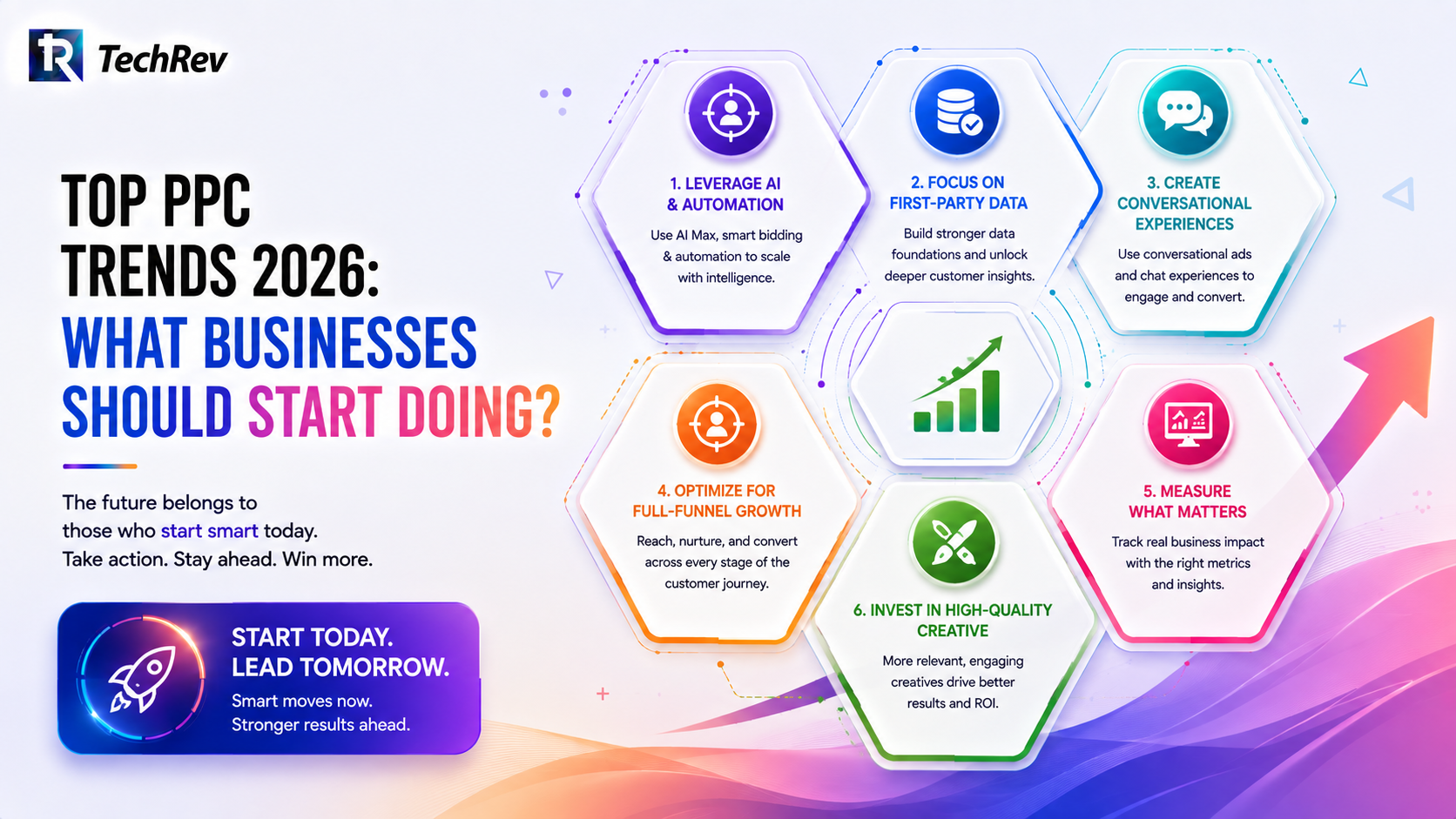
Start thinking about PPC as an intelligent growth system.
1. Build stronger conversion tracking
2. Import qualified lead and revenue data
3. Test AI Max strategically
4. Use Smart Bidding with reliable conversion signals
5. Give Performance Max a defined role
6. Build stronger landing pages
7. Produce more creative variations
8. Monitor search intent
9. Use first-party data
10. Measure profit, not just platform performance
11. Connect PPC with SEO
12. Prepare content for AI search experiences
This is the practical side of the PPC trends 2026 conversation.
Top PPC Trends 2026 by Business Type
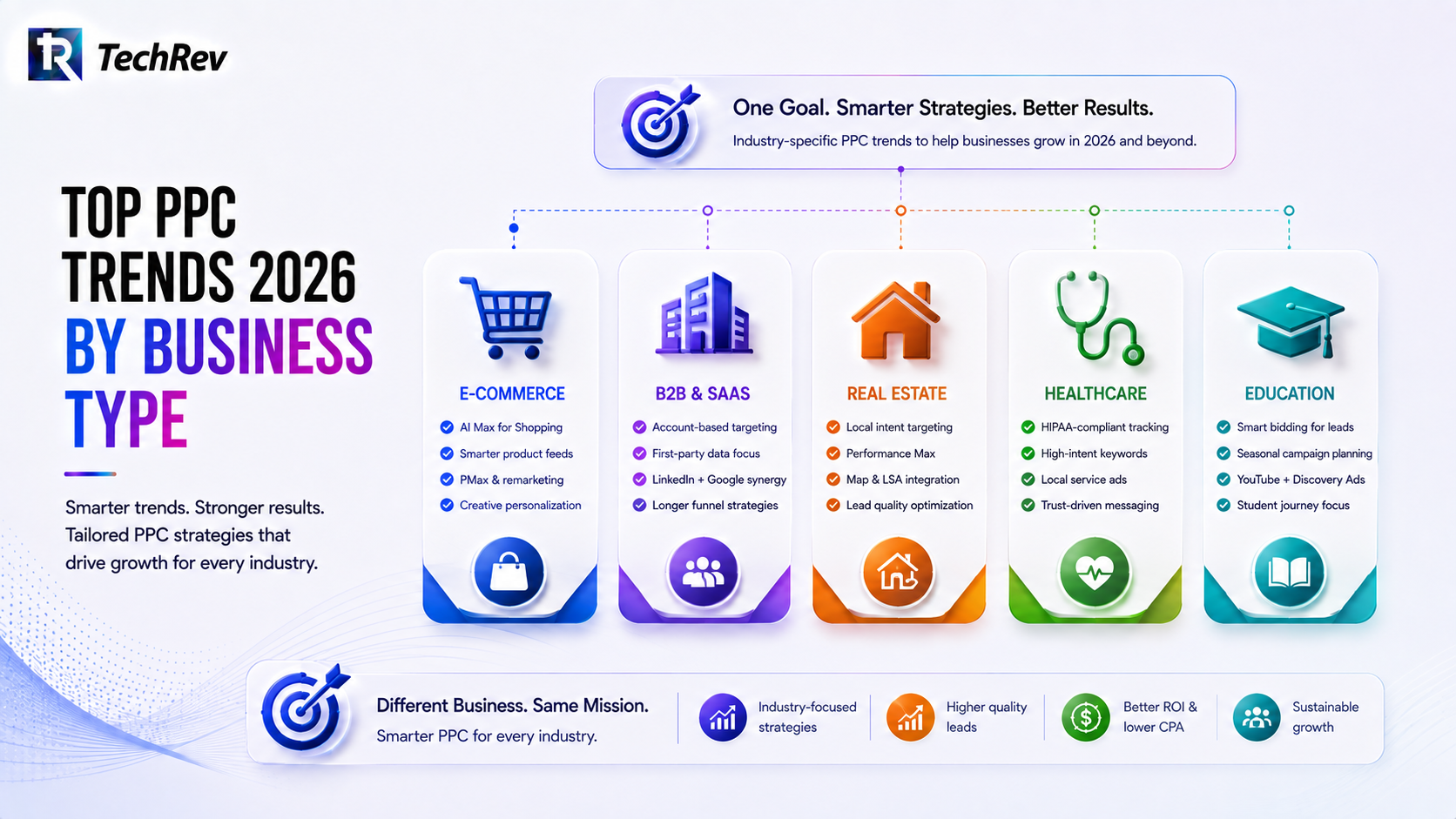
Not every business should use the same PPC structure.
1. B2B SaaS
Prioritize:
- Search
- AI Max testing
- Value-based bidding
- Offline conversion tracking
- CRM integration
- High-intent keywords
- Qualified pipeline measurement
2. Ecommerce
Prioritize:
- Performance Max
- Shopping
- Product feeds
- AI Max for Shopping
- Creative testing
- Conversion value
- Product margins
- Customer lifetime value
Google launched AI Max for Shopping in 2026, adding AI-driven text customization, Final URL Expansion, and format selection while retaining existing product targeting and bidding controls.
3. Professional Services
Prioritize:
- High-intent Search
- Location targeting
- Lead quality
- Call tracking
- Landing pages
- AI Max experiments
- Smart Bidding
5. Healthcare
Healthcare advertisers need additional care around policy, privacy, data handling, and eligible advertising categories. Google currently excludes sensitive verticals including healthcare from ads within AI Overviews.
6. Technology Companies
Prioritize:
- Search intent
- AI Max
- Content-led landing pages
- Technical SEO
- AI integration
- Lead qualification
- CRM data
- Long sales-cycle measurement
What Should Your 2026 Google Ads Strategy Look Like?
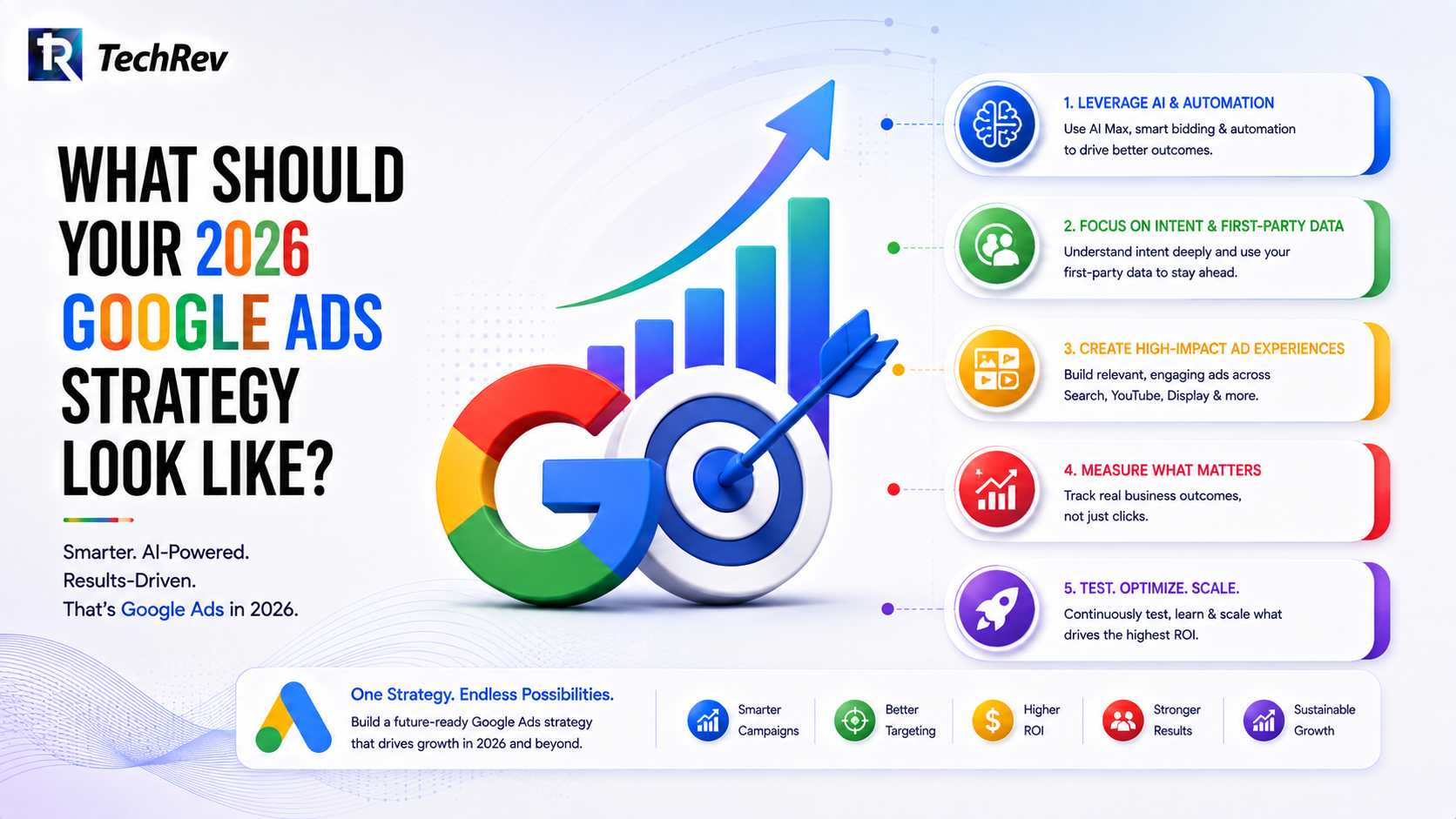
A strong strategy can be summarized in seven layers.
Layer 1: Business strategy
Know your:
- Customers
- Margins
- Offers
- Revenue goals
- Customer lifetime value
Layer 2: Measurement
Track:
- Leads
- Qualified leads
- Opportunities
- Revenue
- Conversion value
Layer 3: Search strategy
Build around:
- Intent
- High-value queries
- Brand protection
- Commercial categories
Layer 4: AI strategy
Evaluate:
- AI Max
- Smart Bidding
- Performance Max
- AI-powered creative
- Automated targeting
Layer 5: Website strategy
Improve:
- Landing pages
- Speed
- Mobile UX
- Trust
- Messaging
- Conversion paths
Layer 6: Creative strategy
Test:
- Offers
- Headlines
- Benefits
- Proof
- Visuals
- CTAs
Layer 7: Business optimization
Judge success using:
- CAC
- Qualified pipeline
- Revenue
- Profit
- ROAS
That is what mature PPC management looks like in 2026.
PPC Automation Checklist for 2026
Before increasing your Google Ads budget, ask:
- Is conversion tracking accurate?
- Are we tracking qualified leads?
- Do we know our real customer acquisition cost?
- Are conversion values meaningful?
- Are landing pages aligned with search intent?
- Have we tested AI Max?
- Are we using Smart Bidding appropriately?
- Does Performance Max have a clear role?
- Are we monitoring Search and PMax overlap?
- Are we using first-party customer data?
- Are we testing creative regularly?
- Are we measuring revenue instead of just leads?
- Can our website convert the traffic we are buying?
- Are we prepared for AI Overviews and AI Mode?
- Do we have a clear 90-day experimentation plan?
If several answers are no, adding more budget probably is not the first thing you should do.
Conclusion
The biggest PPC trends 2026 point in one direction. Manual campaign maintenance is losing importance.
AI Max is expanding Search. Smart Bidding is handling more auction decisions. Performance Max is managing more of the advertising journey. AI Overviews are changing the search results page. AI Mode is creating new advertising experiences.
Creative production is becoming increasingly automated. And conversion data is becoming more valuable than ever. But businesses should not interpret this as:
Google can run my advertising for me. The better interpretation is: Google can automate more execution if I give it better strategy and better data. That is the real shift. The winners in 2026 will not necessarily be the companies with the biggest PPC budgets. They will be the companies that connect:
Strong offers + accurate data + quality creative + relevant landing pages + AI automation + human strategy.
That is where PPC is heading.
And for businesses that want to make that transition without turning their Google Ads account into an automated black box, a technology-led partner such as TechRev can bring together PPC, AI automation, website development, analytics, and digital marketing into one connected growth system.
FAQs About Top PPC Trends 2026
1. What are the biggest PPC trends in 2026?
The biggest PPC trends 2026 include AI Max for Search, Smart Bidding, Performance Max, value-based bidding, AI-generated creative, AI Overviews ads, AI Mode advertising, first-party data, automated campaign management, and stronger integration between advertising, analytics, CRM, and revenue data.
2. Is Google Ads becoming fully automated?
Google Ads is becoming significantly more automated, but it is not completely autonomous. Google AI can increasingly manage bidding, targeting, creative variations, and campaign optimization. Humans still need to define business goals, conversion values, budgets, offers, messaging, compliance requirements, and strategic constraints.
3. What is AI Max for Search?
AI Max is an AI-powered enhancement layer for Search campaigns. It can expand search term matching, customize ad text, and use Final URL Expansion to connect users with more relevant pages. Google positions AI Max as a way to expand Search campaign reach while retaining important controls.
4. Will AI Max replace Search campaigns?
No. AI Max operates within Search campaigns. It changes how Search campaigns work rather than replacing the Search campaign format entirely.
5. Is Performance Max better than Search campaigns?
There is no universal winner in the performance max vs search campaigns debate. Search generally provides more direct control over high-intent queries and messaging. Performance Max provides broader Google inventory and more automated optimization. Many mature accounts can use both with clearly defined roles.
6. Should small businesses use Performance Max in 2026?
They can, but the decision should depend on conversion volume, tracking quality, budget, creative assets, product or service complexity, and business goals. Small businesses should not assume that Performance Max automatically performs better simply because it uses more AI.
7. How does Smart Bidding 2026 work?
Smart Bidding uses Google AI to optimize bids at auction time. It evaluates contextual signals and predicts the likelihood of conversion or conversion value before determining an appropriate bid.
8. What is the difference between Target CPA and Target ROAS?
Target CPA focuses on generating conversions around a desired acquisition cost. Target ROAS focuses on maximizing conversion value around a desired return on ad spend. The right choice depends on whether your conversions have similar or different economic values.
9. How AI Overviews affect Google Ads?
AI Overviews create additional advertising environments around AI-generated search responses. Google says ads can appear above, below, or within AI Overviews, and ads within AI Overviews can consider both the user query and AI Overview content.
10. Can advertisers target AI Overviews directly?
No. Google currently does not allow advertisers to directly target AI Overview placements. Ads become eligible through existing campaign types and Google’s auction and relevance systems.
11. Are AI Overview ads available in the United States and India?
Yes. Google currently lists the United States and India among the markets where ads within AI Overviews are available in English on mobile and desktop. Australia and Canada are also included in the current list.
12. What are PPC automation tools 2026 marketers should consider?
The most important automation capabilities include Smart Bidding, AI Max, Performance Max, automated creative generation, automated reporting, anomaly detection, conversion data synchronization, audience analysis, and AI-assisted campaign optimization.
13. Can AI reduce PPC costs?
AI can help improve bidding, targeting, creative, and campaign efficiency, but it does not guarantee lower costs. Better results depend on accurate conversion data, strong offers, relevant landing pages, competitive positioning, and correct campaign configuration.
14. How can TechRev help with PPC in 2026?
TechRev provides PPC advertising as part of its digital marketing services and combines paid media with SEO, social media, AI-driven marketing automation, performance tracking, and broader technology capabilities.
For businesses that need more than campaign management, TechRev can also support website development, custom web applications, and AI integration. That makes it possible to connect advertising activity with the technology and data systems behind lead generation and customer conversion.
15. Can TechRev build a landing page specifically for Google Ads?
Yes. TechRev provides custom website and web application development, which can support campaign-specific landing pages and conversion experiences rather than forcing every paid visitor through a generic website structure.