

Picture an installer standing beside a hospital bed at 8 a.m., digging through a trolley piled high with 50 to 80 curtains, hunting for the one that actually fits the track in front of them. Wrong size. Wrong pattern. Wrong hook. Try again. Multiply that by every track on every floor, and you get a visit that should take three hours stretching into five or six. This is not a rare bad day. For most facilities running on manual processes, it is Tuesday.
This is exactly the problem TechRev was hired to solve for CubeCare, a curtain servicing company operating across hospitals in the USA.
And what we built did not just shave a few minutes off a visit. It rewired how installers move, scan, and think, using a smart hospital curtain management system powered by AI agent development that already existed inside CubeCare’s own historical data.
Here is exactly how smart scan-and-install technology works, why it saves hours per visit, and how TechRev engineered it from the ground up.
What Is Smart Scan-and-Install Technology?
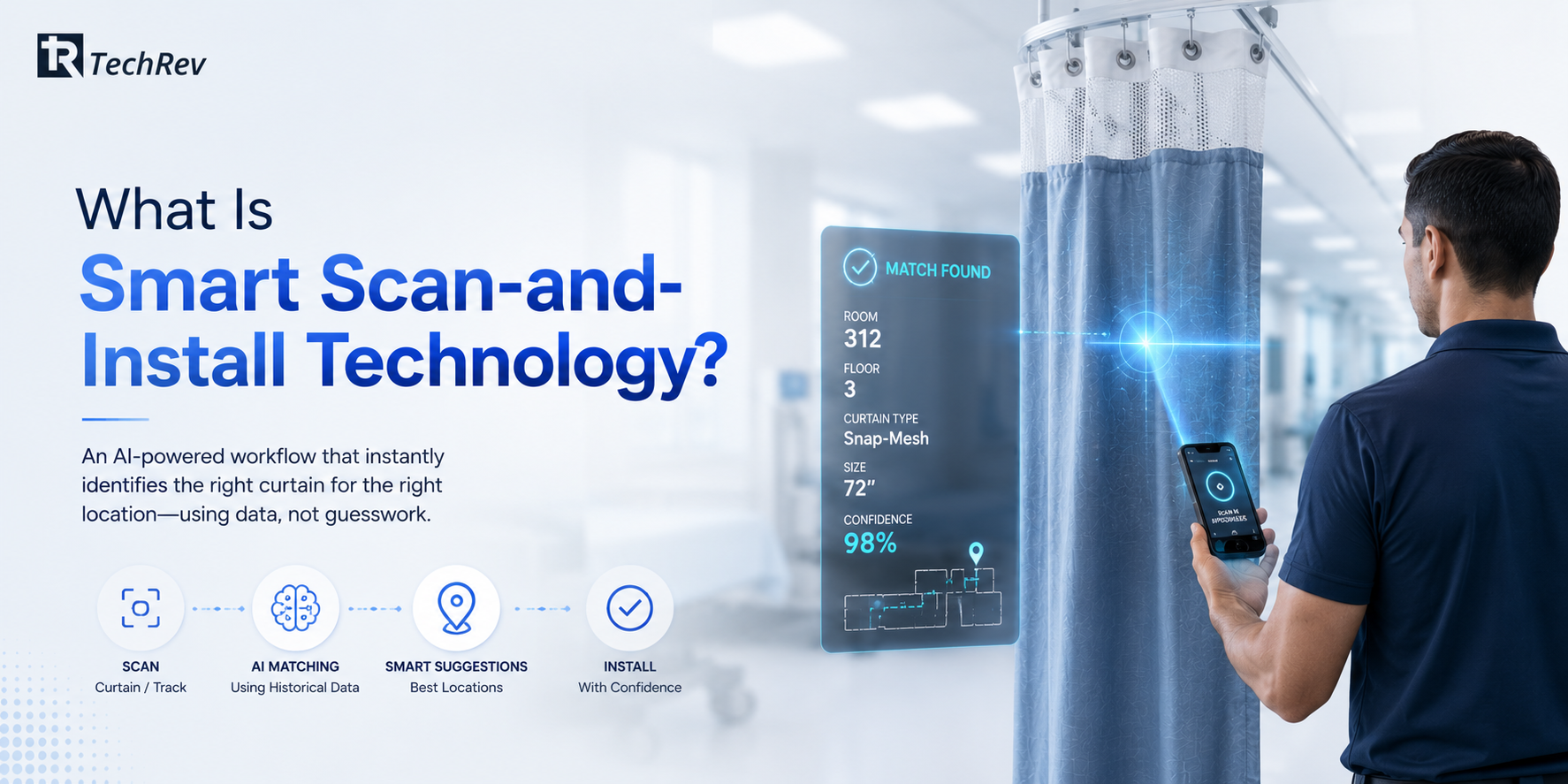
Smart scan-and-install technology is an AI-driven workflow that tells field technicians exactly where an item belongs and which item a location needs, using historical installation data instead of manual searching.
Instead of a technician hunting through a pile of mixed inventory, they scan one item, and the system instantly shows the best-matching destinations along with every similar item they are carrying. It replaces guesswork with a guided, validated, error-checked process.
In CubeCare’s case, that “item” was a hospital curtain, and the “destination” was a specific track inside a specific patient room.
But the same logic applies to any facility that manages high volumes of trackable inventory across multiple locations, which is why this same architecture powers modern hospital management system software development across the USA today.
The Real Cost of Manual Curtain Management in Hospitals
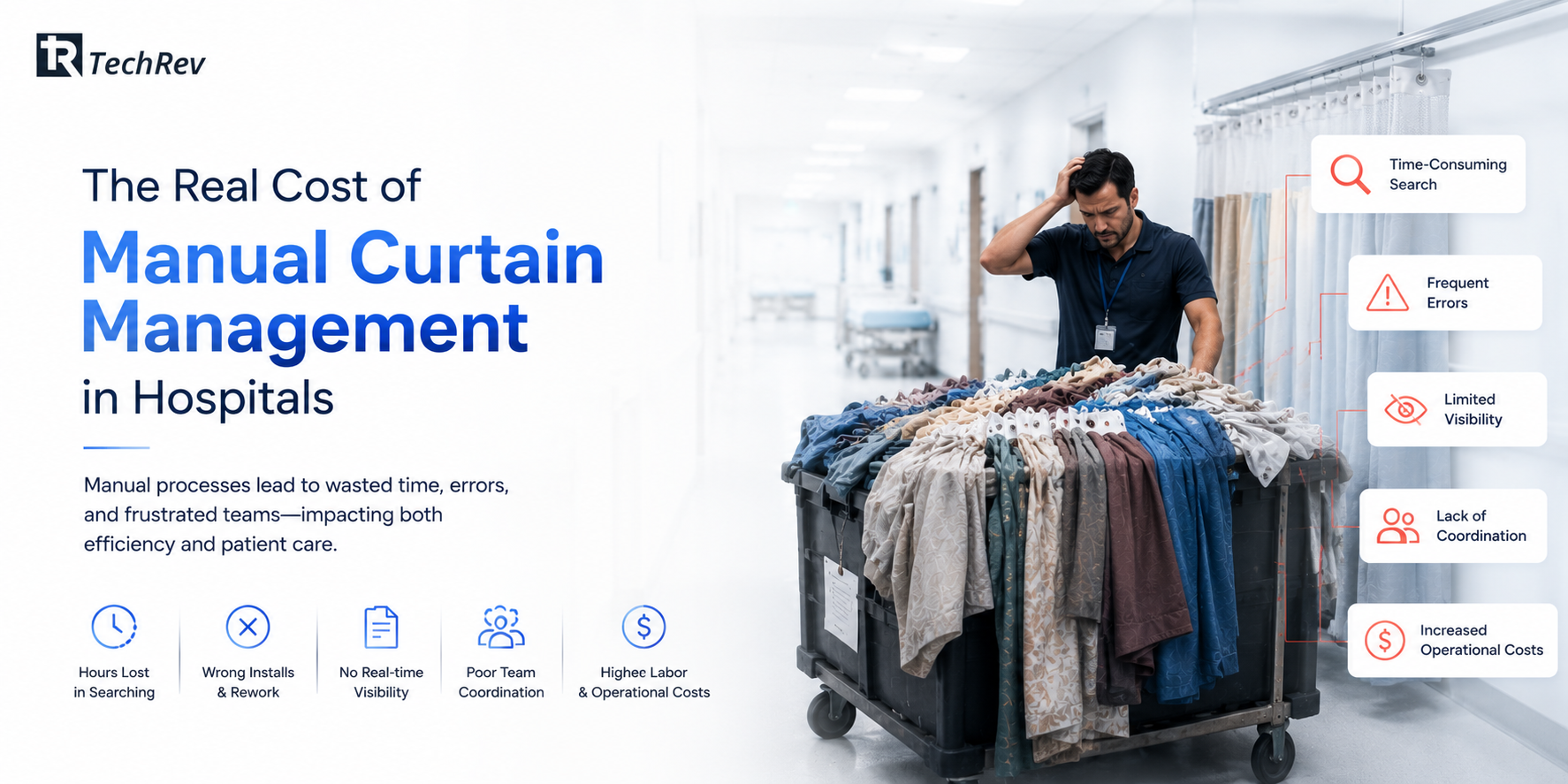
Before AI entered the picture, CubeCare’s installers followed a process that looked efficient on paper but bled time in practice.
Laundry teams packed curtains into bags by hospital, but never by size, room, or pattern. So a 72-inch snap-mesh blue curtain would sit right next to an 84-inch floral curtain meant for a completely different floor.
Here is what that created on the ground:
- The trolley search ate the most time. Installers dug through 50+ mixed curtains at every single track, dozens of times per visit.
- Wrong installs happened constantly. A standard-hook curtain forced onto a snap-mesh track, or a floral pattern hung in an ICU that required solid colors, triggered rejected scans and repeat trips.
- Spare curtains were invisible to the system, meaning the software had zero data to guide installers during a huge portion of every service cycle.
- No one had real-time visibility into how much of a hospital’s schedule cycle was actually complete.
- Multiple installers coordinated by shouting across floors, with no tracking of who did what.
Individually, each issue looks small. Added up across hundreds of hospitals on quarterly and monthly cycles, they translated into wasted labor hours, higher costs, and frustrated facility managers.
This is the exact gap that a purpose-built hospital inventory management software layer is designed to close, and it is the gap TechRev was brought in to fix.
Also Read – How AI Barcode Scanning Transforms Business Operations?
Curious how bad the numbers can get without a system like this?
Keep reading, the data below will surprise you.
Why Is This Problem Bigger Than One Company?
Hospital operations technology is not a niche concern anymore, it is one of the fastest-growing categories in healthcare IT.
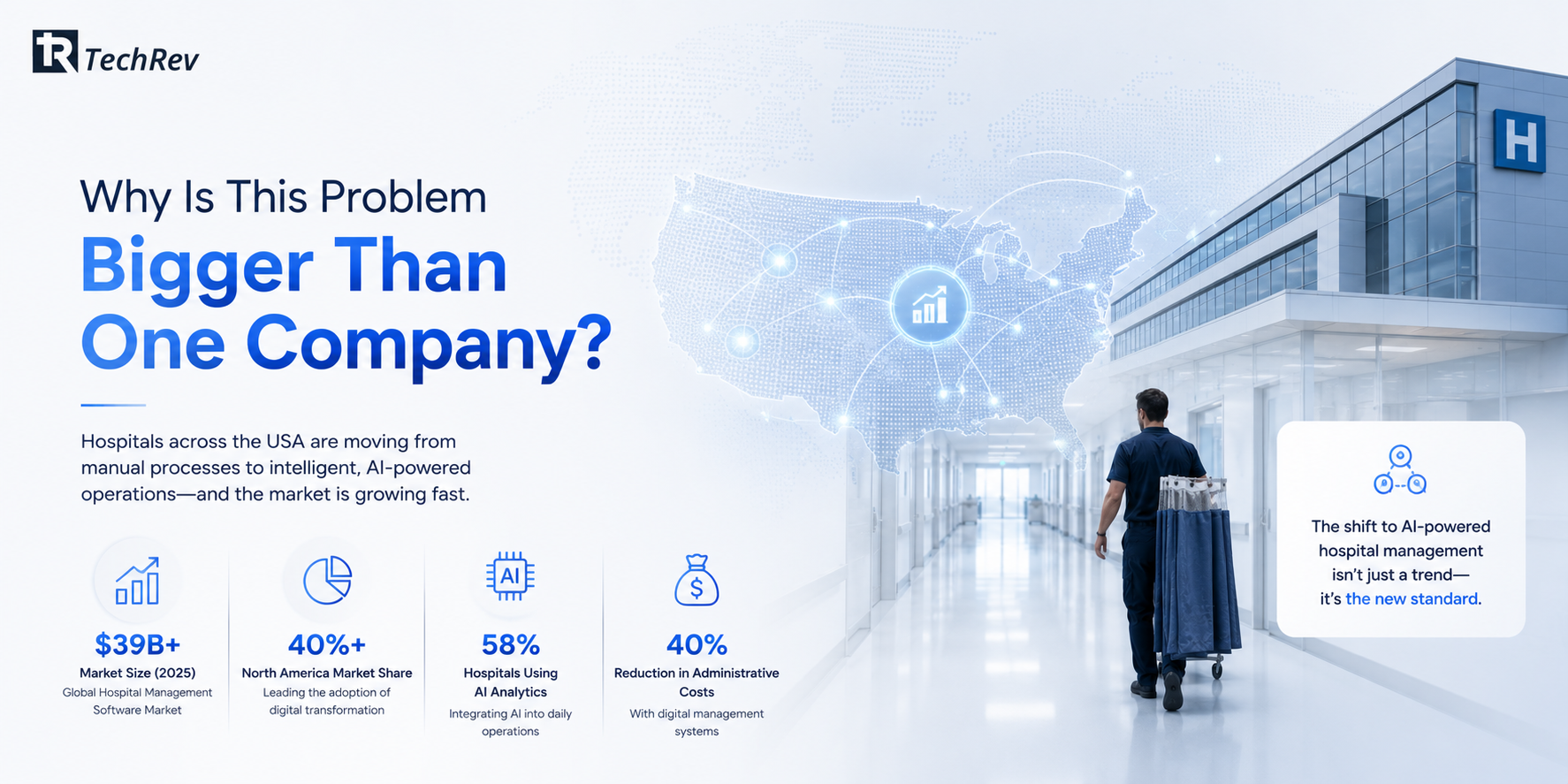
Industry research values the global hospital management software market at roughly USD 30 to 39 billion in 2025-2026, with projections showing it could climb past USD 80 billion by the mid-2030s, growing at a compound annual rate between 9% and 10.5% year over year.
North America alone commands well over 40% of that market share, driven largely by hospitals replacing manual, paper-based, or semi-digital tracking with intelligent, AI-assisted platforms.
Analysts also report that nearly 58% of hospitals are now integrating AI-driven analytics into daily operations, and facilities using digital management systems are seeing administrative cost reductions of up to 40%.
That is not a small efficiency bump. That is the difference between a service model that scales and one that quietly bleeds money every quarter.
This is precisely why demand for a reliable healthcare app development company in USA has surged. Hospitals and service vendors alike are realizing that spreadsheets and verbal handoffs cannot keep pace with the scale of modern facility operations.
How TechRev Engineered the Smart Scan-and-Install Solution?
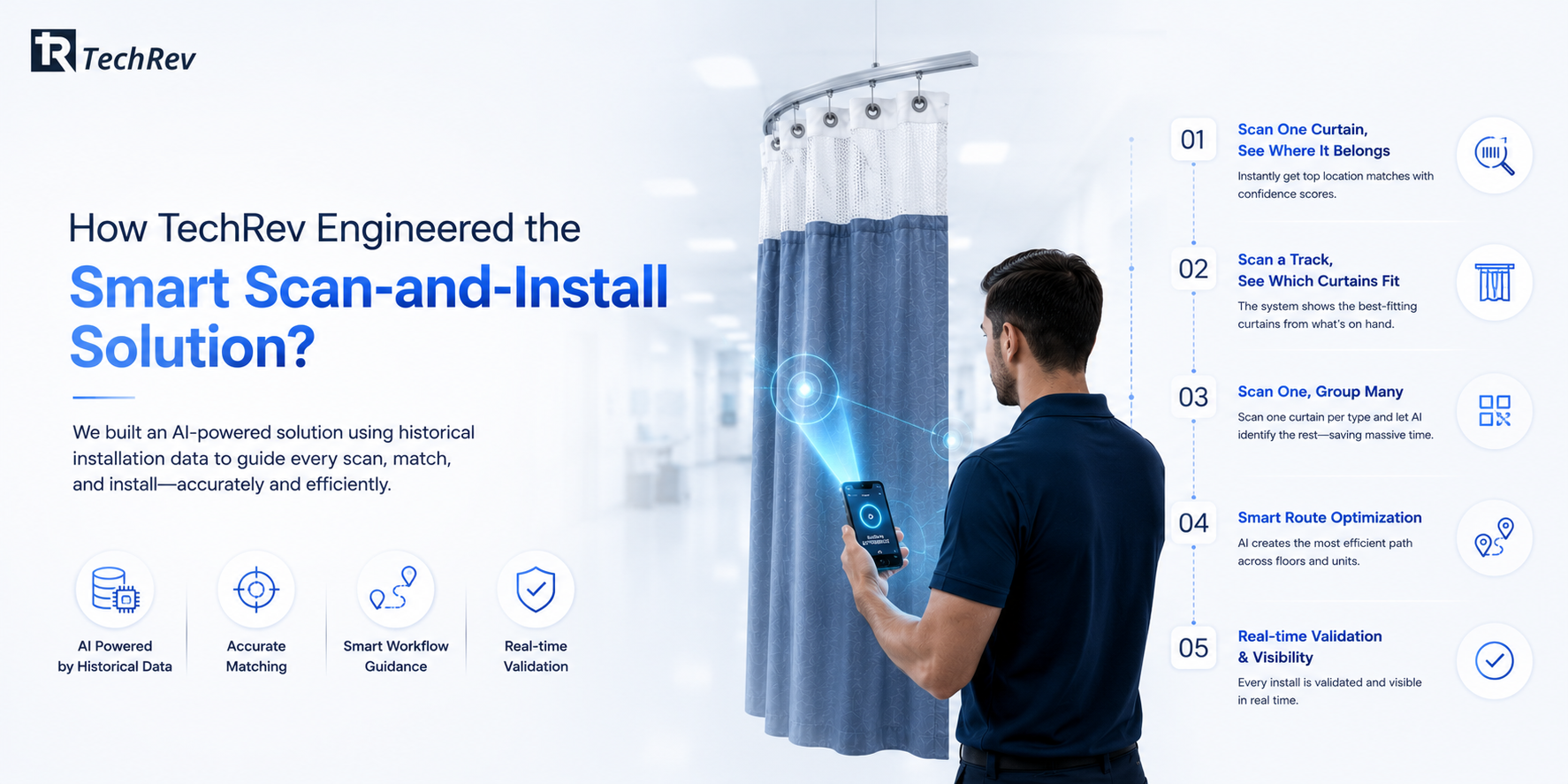
TechRev did not propose new hardware, new scanners, or a rip-and-replace overhaul. We looked at CubeCare’s existing installation history, the years of data showing which curtain type was hung on which track, and built an AI layer on top of it. Here is what that solution actually does.
1. Scan One Curtain, See Where It Belongs
An installer picks up any curtain from the trolley, scans it, and the app instantly surfaces up to three suggested locations, complete with building, floor, unit, room, and a confidence score (High, Medium, or Low). No more walking the floor hoping to get lucky.
2. Scan a Track, See Which Curtains Fit
Flip the workflow around. Scan the track first, and the system cross-checks every curtain in the visit for size, type, pattern, attachment, and remaining capacity, then color-codes the matches green, yellow, or red before a single wrong curtain gets hung.
3. “Scan One, Group Many” Trolley Pre-Sort
This is the single biggest time-saver in the entire build. Instead of scanning 50+ curtains individually, the installer scans just one curtain per visual type. The AI shows how many identical curtains exist in the bags and exactly where that whole group needs to go.
The installer visually pulls the matching pieces, no extra scanning required, and sorts an entire trolley into destination-based piles in roughly 1 to 3 minutes using only 3 to 6 scans.
4. AI-Generated Walking Routes
Once sorting is done, the app generates a floor-by-floor, room-by-room route that skips locked tracks entirely and adapts automatically depending on whether it is a spare visit or an original visit.
5. Real-Time Progress Dashboards
Operations managers can now see, at a glance, exactly how much of a hospital’s schedule cycle is complete, without waiting on a manual report. Spare phase at 100%, original phase at 60%, three of five visits done, all visible instantly.
6. Spare Bag Linking and Floor-Range Assignment
Two small taps close two large gaps. Linking spare bags to a visit makes previously invisible inventory fully trackable by the AI. Floor-range selection lets multiple installers split a hospital digitally instead of verbally, with zero overlap and full accountability.
Also Read – How AI in Healthcare Cut Installation Errors by 90%?
Problems Solved by TechRev’s Smart Scan-and-Install System
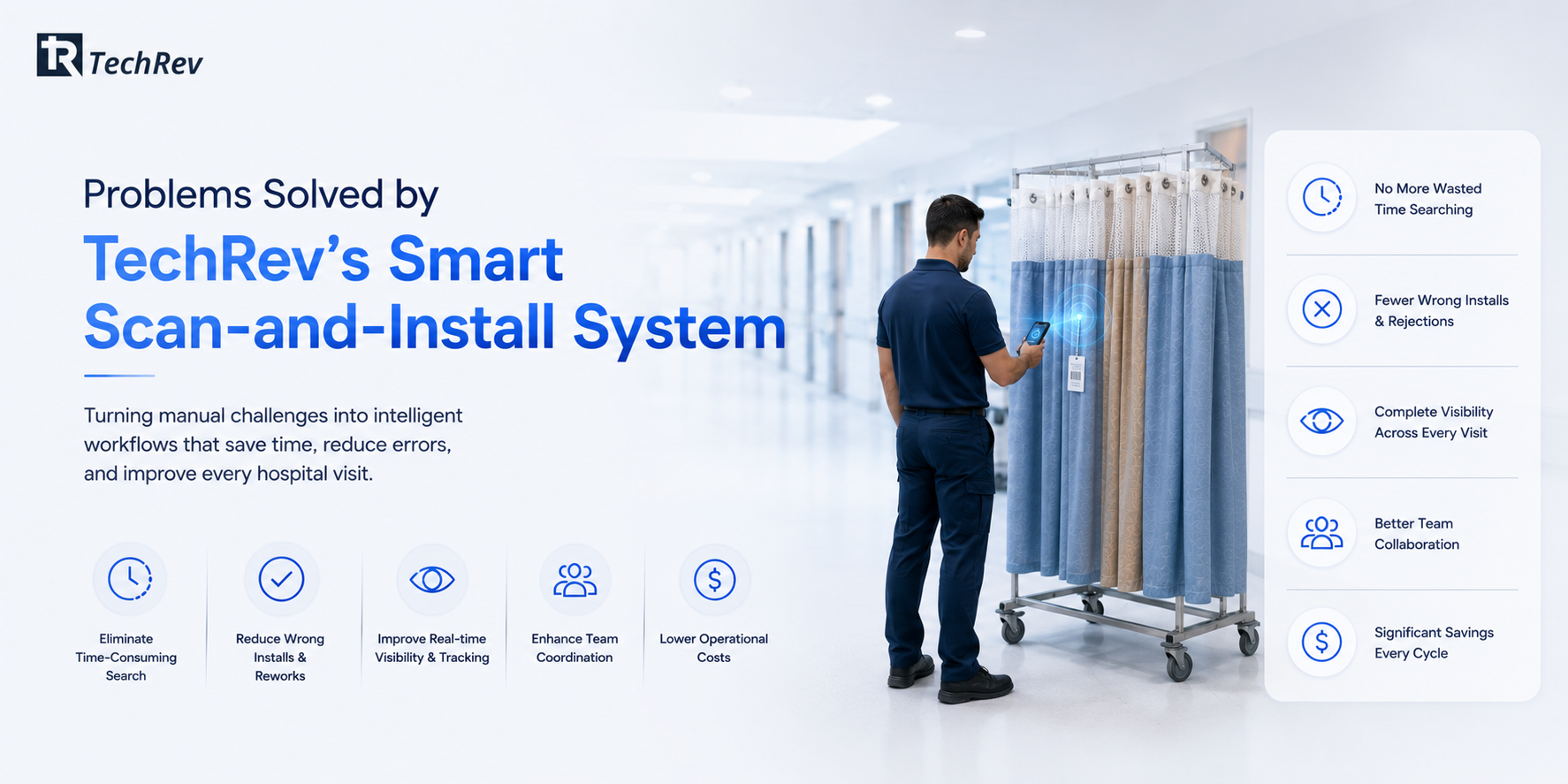
| Problem Before TechRev | AI-Powered Fix | Result |
| Digging through 50+ mixed curtains per track | Curtain-first scan + track matching | Trolley search nearly eliminated |
| No guidance on where curtains belong | AI-generated installation route | Faster, guided navigation |
| Wrong curtains hung, causing return trips | Color-coded compatibility checks | Near-zero wrong installs |
| Spare curtains invisible to the system | One-tap spare bag linking | Full inventory visibility |
| No visibility into cycle progress | Real-time dashboards | Instant reporting, zero manual work |
| Verbal floor splits between installers | Floor-range selection (2 taps) | Tracked, overlap-free coordination |
The Impact: Growth, Productivity, and ROI
Numbers matter more than promises, so here is what this kind of intelligent workflow delivers when implemented properly.
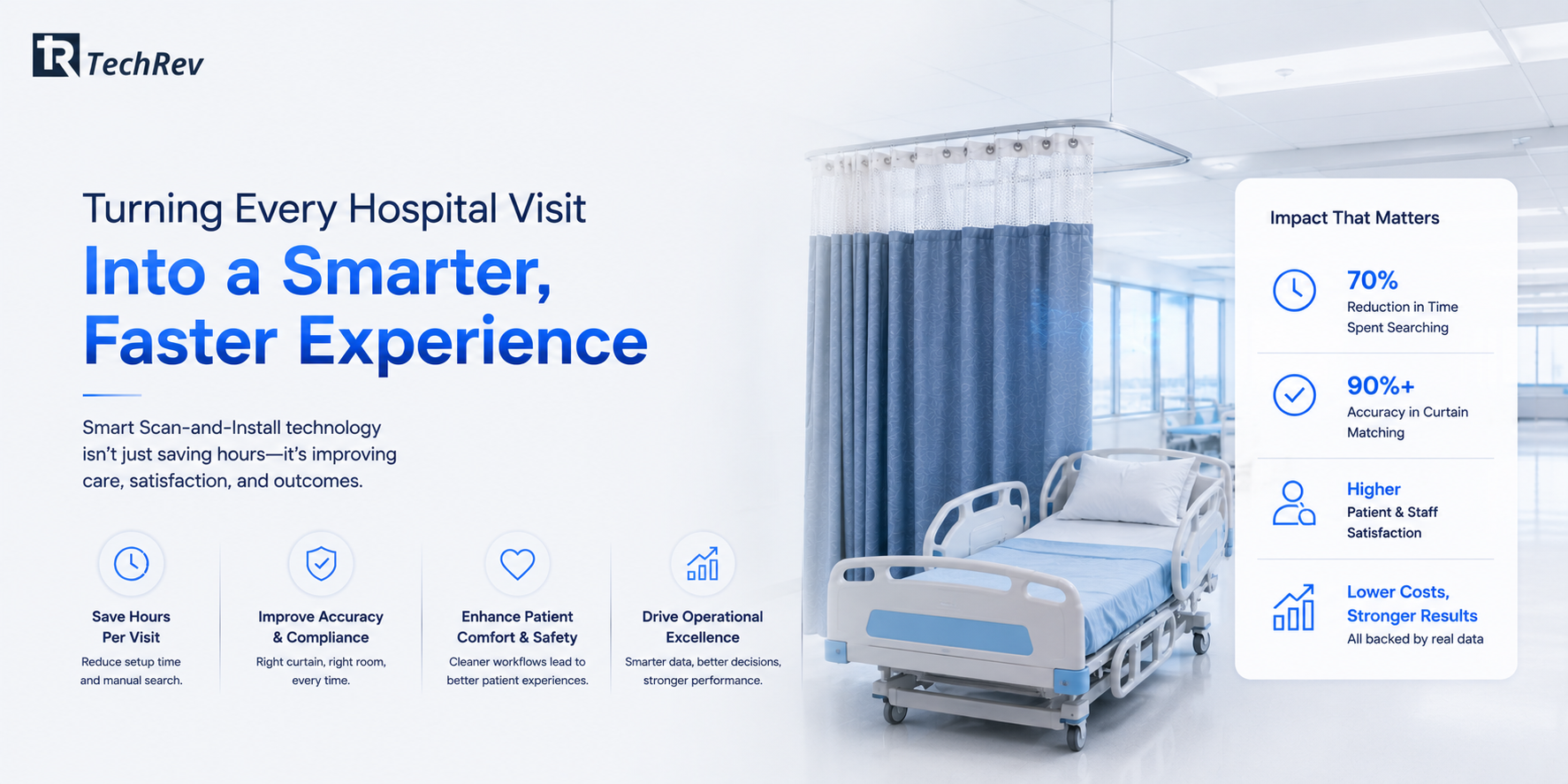
- Time savings per visit: Eliminating the trolley search alone typically saves 30 to 60 minutes per hospital visit, a direct increase in technician productivity of roughly 20% to 35% depending on hospital size.
- Reduction in wrong installations: Since every curtain is validated against type, pattern, size, and attachment before it is hung, wrong-curtain installs drop close to zero, cutting the need for costly, unplanned spare visits.
- Fewer return trips means lower cost per hospital served. Every avoided spare visit is a direct reduction in labor hours, fuel costs, and scheduling friction, translating into real, measurable cost reduction on the operations side.
- Faster onboarding for new installers. Because the AI guides every step, new hires reach full productivity in a fraction of the time it previously took, reducing training overhead and increasing overall workforce efficiency.
- Manager reporting time drops to zero, since dashboards replace manual, hospital-by-hospital status checks, freeing operations teams to focus on scaling instead of chasing updates.
Across similar operational AI deployments in healthcare facility management, businesses report productivity increases in the 20% to 40% range and administrative cost reductions as high as 40%, numbers consistent with what industry analysts are seeing across the broader hospital management software market.
When you stack time saved, errors avoided, and reporting effort eliminated, the ROI compounds fast, often within the first two to three service cycles.
Want a system that produces numbers like these for your operation? This is exactly the kind of work TechRev specializes in.
Also Read – The 15-Point Checklist Before Launching Your Field Service App
Why This Is Bigger Than Curtains: The Broader Healthcare Software Development Opportunity?
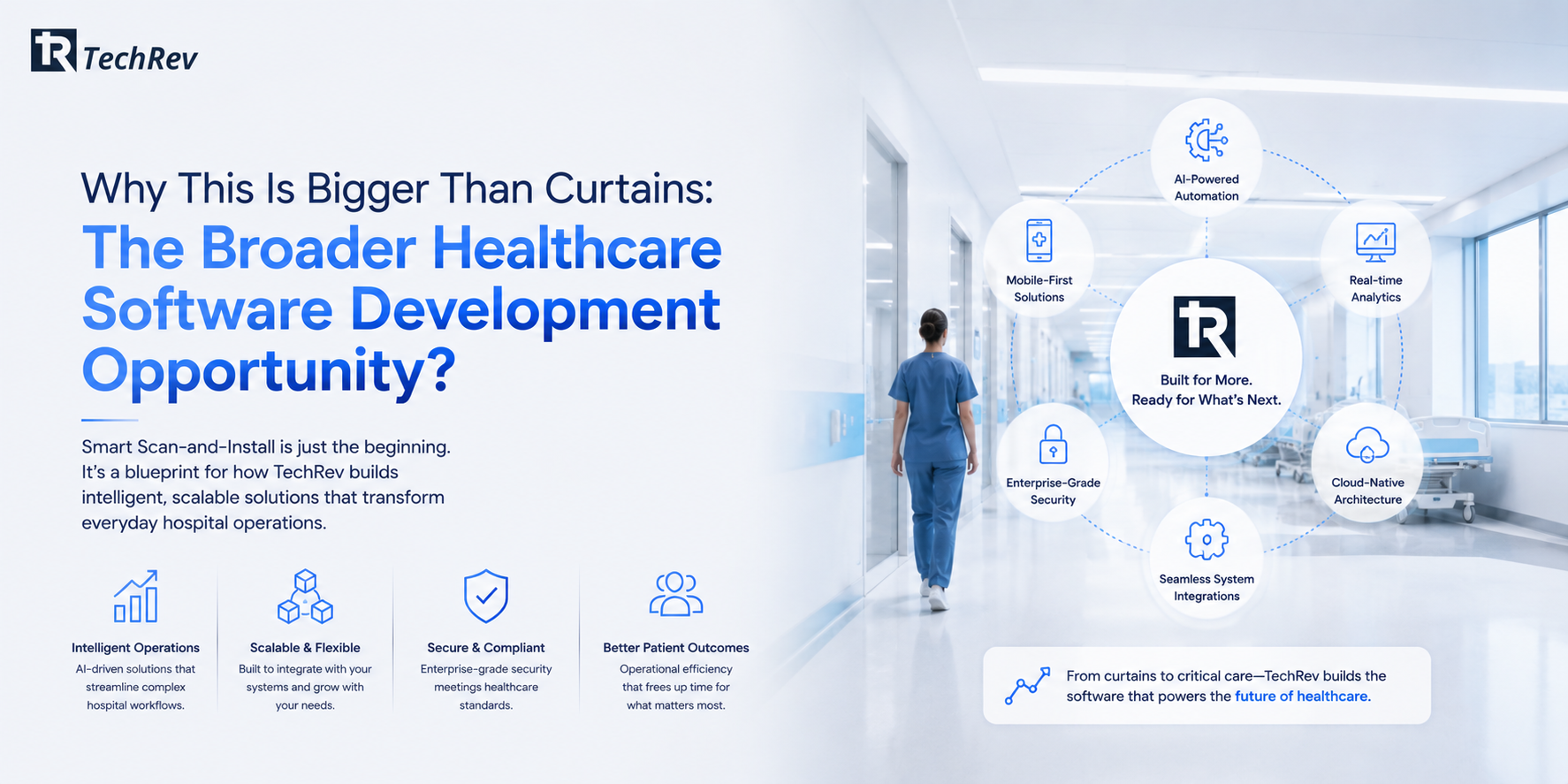
What TechRev built for CubeCare is a case study in a much larger trend. Hospitals and healthcare vendors across the country are realizing that legacy tracking, whether it is curtains, equipment, medication, or bed assignments, all suffers from the same root problem: valuable historical data sitting unused.
The fix is rarely new hardware. It is almost always smarter software layered on top of what already exists.
This is where Generative AI development and applied machine learning are reshaping facility operations. The same pattern-recognition approach used to predict where a curtain belongs can predict inventory reorder points, equipment maintenance schedules, staff routing, and more.
It is also why more healthcare vendors are actively searching for a trustworthy AI agents development company in USA rather than trying to bolt AI onto outdated systems themselves. A well-built AI agent does not just report data,
it makes a recommendation, checks it against real constraints like track capacity or curtain type, and adapts as new information comes in, which is exactly the behavior CubeCare’s installers now rely on every single visit.
TechRev approaches every engagement the same way we approached CubeCare: study the existing workflow deeply, find where historical data is being wasted, and build the smallest, smartest intervention that delivers the biggest operational return.
That is the difference between generic software and a genuinely custom hospital software development company in USA partner. As demand for autonomous decision-making tools grows across healthcare, hospitals are learning that hiring an experienced AI agent development company in USA early, before problems compound, is far cheaper than retrofitting AI onto a broken process later.
Is AI-powered hospital software expensive to implement?
Not necessarily. TechRev’s approach with CubeCare required no new hardware and only minimal process changes, a few extra taps and a short pre-sort routine, which kept implementation costs low while the productivity gains compounded over time.
Does this work for hospitals of any size?
Yes. The same AI logic scales from small facilities with a handful of tracks to large hospital networks with hundreds of rooms across multiple floors, since the system adapts its route and suggestions to whatever data volume it is given.
Also Read – How Digital Twin & AI Agents Improving Predictive Patient Care?
Where TechRev Fits Into Your Digital Transformation?
If your hospital, healthcare vendor, or facility services company is still relying on spreadsheets, verbal handoffs, or a generic off-the-shelf platform, you are almost certainly leaving productivity and revenue on the table.
TechRev builds real, working, ROI-driven software, not slideware, not vague promises.
Our team specializes in:
- Hospital management software built around your actual operational data, not a rigid template
- Hospital inventory management software that tracks every asset, curtain, or supply in real time
- AI app development services in USA for facility operations, patient logistics, and workforce coordination
- Generative AI development that turns years of historical data into predictive, actionable guidance
- AI agents development company in USA capabilities for autonomous scheduling, routing, and validation
- Hospital management system software upgrades for facilities still running on spreadsheets or outdated platforms
- Full-cycle builds as a custom hospital software development company in USA, from discovery through deployment and support
We are not a generic vendor reselling a template. We are a hospital custom software development company in USA that studies your specific bottlenecks first, the way we studied CubeCare’s trolley problem, before writing a single line of code.
Whether you need a full hospital management system software rebuild, a targeted hospital inventory management software module, or dedicated AI app development services in USA for a single workflow, TechRev scopes the engagement around your data, not a one-size-fits-all package.
Conclusion
The CubeCare’s smart scan-and-install system is not really about curtains. It is about what happens when a company stops accepting “that’s just how it’s always been done” and starts asking what its own historical data could do if someone finally put it to work.
TechRev found years of unused installation history sitting inside CubeCare’s systems and turned it into a guided, validated, real-time workflow that saves 30 to 60 minutes per visit, nearly eliminates wrong installations, and gives operations managers visibility they never had before.
If your hospital or healthcare service business is still fighting the same battles CubeCare faced, mixed-up inventory, invisible spares, no real-time progress, and installers wasting hours per visit, the fix is closer than you think.
TechRev has already proven the model works. The only question left is whether your operation is ready to stop guessing and start scanning smarter.
Whether you need standalone Generative AI development for a single bottleneck or a full engagement with a custom hospital software development company in USA, TechRev’s approach stays the same: study the workflow first, then build the AI around it, never the other way around. Our AI app development services in USA are built to plug into what you already have, not force a rebuild you did not ask for.
Ready to see what a custom hospital management software system could save your operation?
Talk to TechRev’s team today and get a real, data-backed plan built around your workflow, not a generic template.
FAQs
1. What is smart scan-and-install technology?
Smart scan-and-install technology is an AI-based workflow where scanning a single item instantly reveals its correct destination and every similar item nearby, replacing manual searching with guided, validated installation. It is most valuable in facilities managing large volumes of mixed inventory across multiple locations, such as hospitals.
2. How much time can a hospital curtain management system actually save?
Based on TechRev’s deployment for CubeCare, eliminating the manual trolley search alone saves an estimated 30 to 60 minutes per hospital visit, with near-zero wrong installations reducing costly return trips even further.
3. Do we need new scanners or hardware to use this technology?
No. TechRev’s smart scan-and-install system runs entirely on software, using data and scanning hardware that facilities typically already have in place. No new equipment investment is required.
4. Can this AI system work with spare or backup inventory too?
Yes, but only if that inventory is linked to the visit. A simple one-tap confirmation when spare bags are loaded makes them fully visible to the AI, unlocking guided suggestions even during spare-swap visits.
5. Why should we choose TechRev over another vendor?
TechRev builds systems around your actual historical data and real operational bottlenecks instead of forcing a generic template onto your workflow. Our CubeCare build proves the model: deep discovery, minimal process disruption, and measurable ROI within the first few service cycles.
6. Does TechRev only build software for hospital curtain tracking?
No. Curtain management was one specific use case. TechRev builds full hospital management system software, inventory tracking platforms, and custom AI tools for a wide range of healthcare and facility operations across the USA.