

If your installers, technicians, or field staff are still digging through carts, bags, or storage rooms looking for the “right” item before every single job, you don’t have a staffing problem. You have a software problem. And it is costing you more than you think.
Hospital service operations across the United States, whether it’s linen and curtain servicing, equipment maintenance, or supply replenishment, run on razor-thin margins and tight schedules.
When the underlying hospital management software can’t keep up with the complexity of the job, the cracks show up everywhere: wasted hours, wrong installations, frustrated staff, and hospitals that start asking uncomfortable questions about your service quality.
At TechRev, we recently worked with a linen laundry management facility on exactly this problem. What we found in their operations mirrors what we see across the hospital services industry again and again. So before you hire more installers or blame your team for being “slow,” ask yourself: does your current setup show any of these five signs?
By the end of this blog, you will know exactly what’s breaking in your operation, what the data says about the cost of ignoring it, and how a purpose of hospital custom software development can fix it without adding a single piece of new hardware.
What Is Hospital Management Software?
Hospital management software is a digital system that coordinates scheduling, inventory, staff assignments, and on-site workflows across a hospital or a hospital service provider’s operations. Most people think of it only in the context of patient records or billing.
But for service companies (linen, curtains, equipment, medical supplies), hospital management software plays an equally critical role: it decides whether your technician walks into a hospital and finishes the job in 40 minutes or 2 hours.
Why Does It Matter for Service Teams?
The global hospital management software market was valued at over USD 30 billion in 2026 and is projected to grow at a CAGR of roughly 9 to 10.5% through the next decade, according to multiple industry research firms.
That growth isn’t happening because hospitals suddenly have more budget to spend. It’s happening because manual, disconnected processes are no longer sustainable at the scale modern healthcare facilities operate at.
If your service team spends more time searching for the right item than actually installing or servicing it, if mistakes keep creating repeat visits, or if your manager can’t see progress without calling five people, you need smarter hospital management software.
Let’s break down the five signs in detail.
Sign #1: Your Team Wastes Hours Searching Through Mixed Inventory
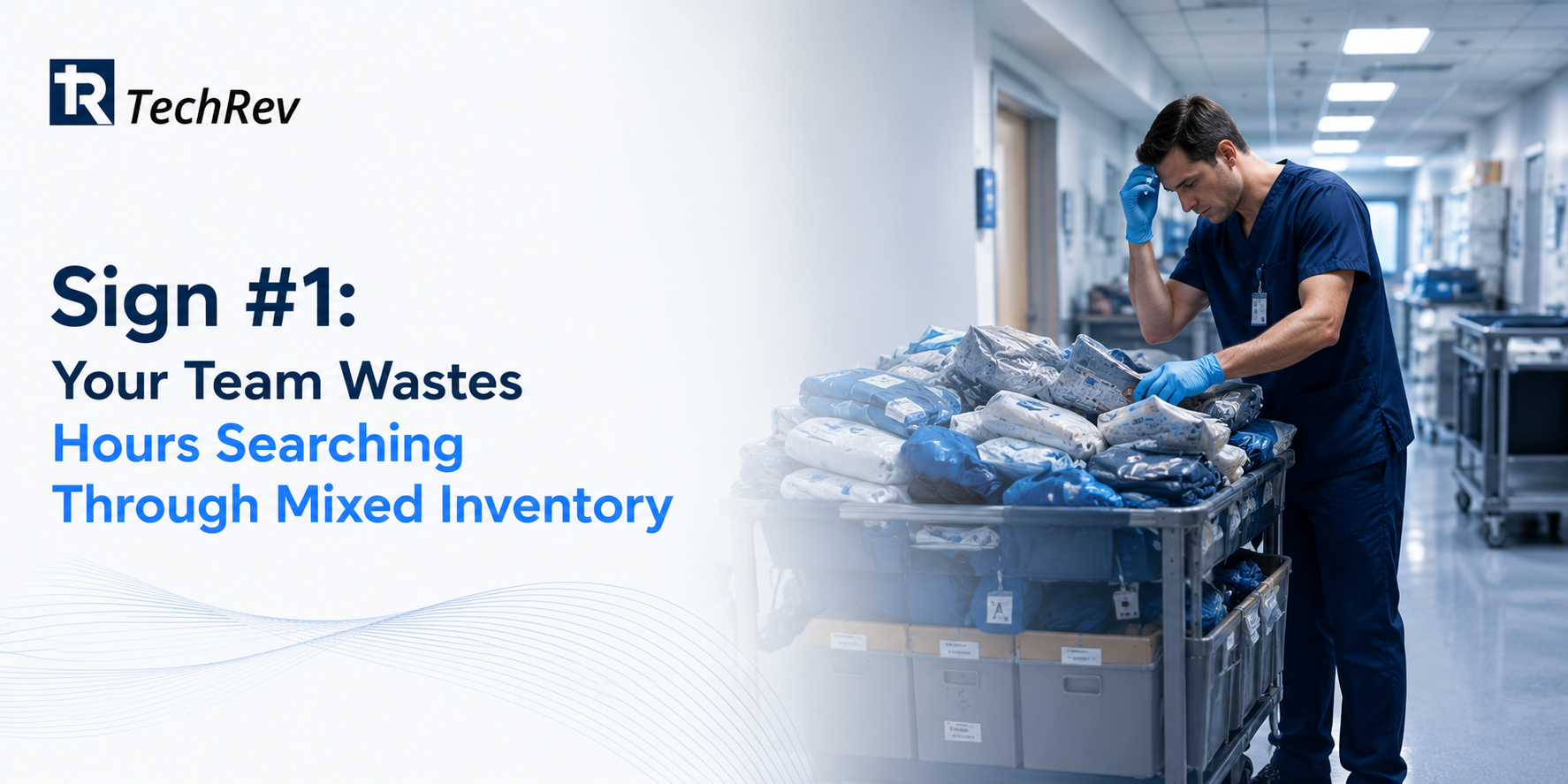
This is, without exception, the single biggest time drain we see in hospital service operations.
Picture a technician arriving at a hospital with 50 to 80 items on a cart, whether curtains, parts, or supplies, all mixed together with no sorting by size, type, or destination. At every single stop, they dig through the pile trying to find the one item that matches. Pick the wrong one, and it gets rejected during installation or inspection. Back to the pile. Again.
We saw this firsthand while studying CubeCare’s curtain servicing workflow. Installers were manually searching through 50+ mixed curtains at every hospital track, checking size, pattern, and attachment type by trial and error. On a 100-track hospital visit, this single bottleneck was consuming hours that should have gone into actual service work.
Why does this happen?
- Items are packed by hospital, not by floor, room, or destination
- There’s no system telling the technician which item goes where
- The team relies entirely on memory and experience, which fails at large facilities
What smarter hospital inventory management software does differently?
- Scan one item, instantly see how many similar ones exist in the batch and exactly where they need to go
- Physically group items by destination in minutes instead of searching cart-by-cart at every stop
- Cut a 100-stop visit down by 30 to 60 minutes per visit, based on real field data from TechRev’s own deployments
What is a hospital inventory management software system used for?
A hospital inventory management software system tracks medical supplies, linens, equipment, and consumables in real time, showing exactly what’s in stock, what’s assigned to a job, and where it needs to go, reducing waste and manual searching.
This is exactly the kind of workflow bottleneck a well-designed hospital curtain management system is built to eliminate. If your service model touches curtains, linens, or reusable medical inventory, a generic spreadsheet or an outdated hospital management software system will never solve this. You need a purpose-built layer of intelligence sitting on top of your existing data.
TechRev builds this exact layer. Our team designs AI-guided sorting and routing features that plug directly into your existing app, no new scanners, no new hardware, no disruption to your laundry or warehouse process.
Sign #2: Your Reports and Progress Updates Always Come Late
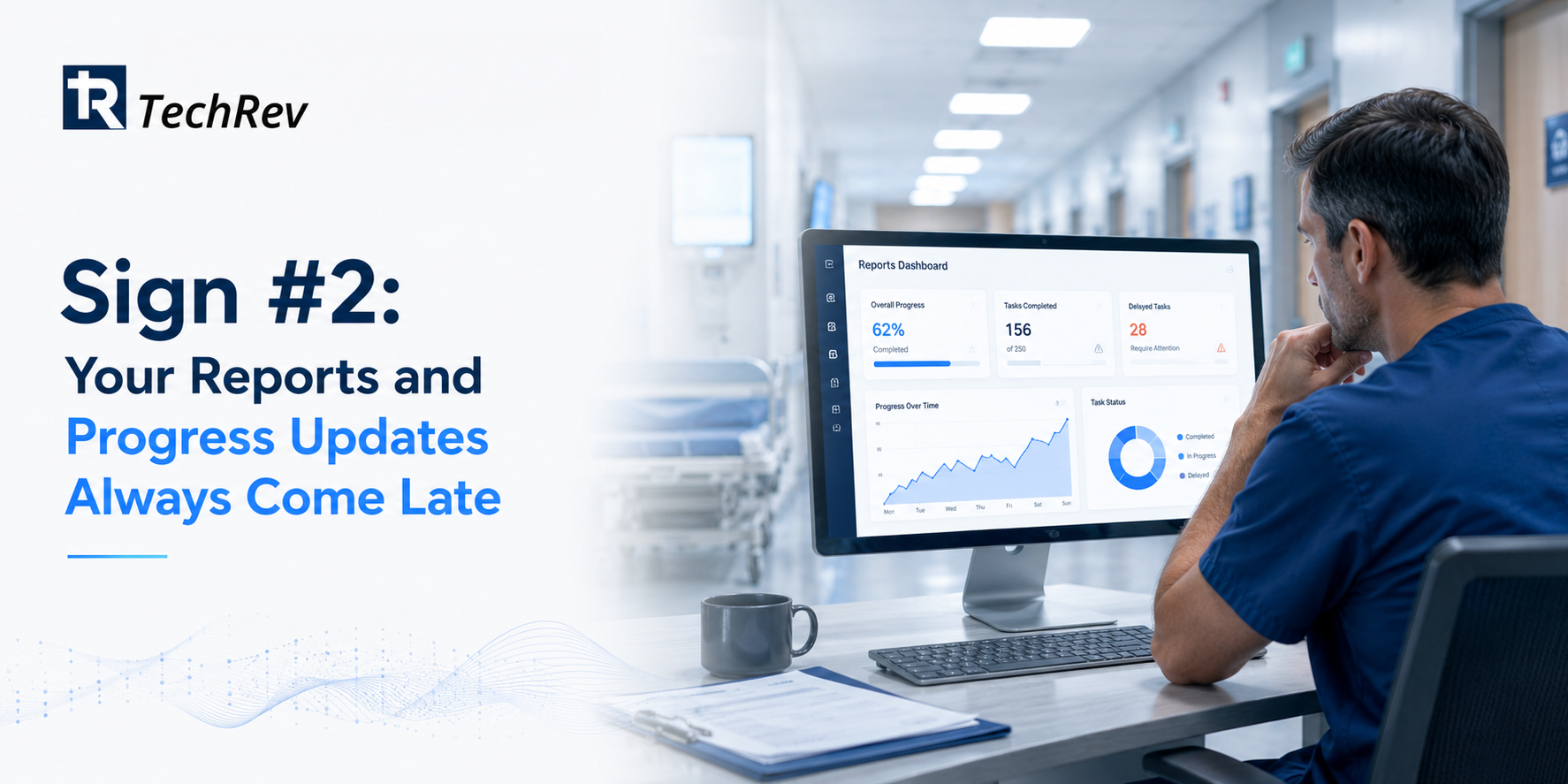
If your operations manager has to call five installers to find out how far along a hospital is in its service cycle, your system has a visibility problem, not a communication problem.
Modern hospital management system software should show real-time progress at every level: room, floor, building, and full schedule cycle, without anyone lifting a phone. Yet an alarming number of hospital service providers still rely on end-of-day paper logs or manual spreadsheet updates.
Industry data backs this up. According to market research on integrated hospital management platforms, hospitals and hospital-adjacent service providers using digital dashboards report operational efficiency improvements of up to 85%, along with inventory leakage reductions of up to 95% compared to manual tracking methods.
Here’s what that actually looks like in numbers when you compare a manual reporting workflow to an AI-powered one:
| Metric | Manual Process | With Smart Hospital Management Software |
| Time to generate a progress report | 2 to 4 hours (manual compilation) | Real-time, always available |
| Visibility into schedule completion | End of week or end of cycle | Instant, room-by-room |
| Errors in manual data entry | 10 to 15% of records | Near-zero (automated capture) |
| Manager time spent on status calls | 5 to 8 hours weekly | Under 1 hour weekly |
- Increase in Efficiency: Teams using real-time dashboards report a 40 to 50% reduction in the time managers spend chasing status updates.
- Cost Reduction: Eliminating manual reporting alone can save mid-sized service operations thousands of dollars annually in administrative overhead.
This was one of the exact problems we solved for CubeCare. Their operations managers had no way to see how complete a hospital was within its service cycle without running a manual report.
We built a two-level progress dashboard, visit-level and schedule-level, so managers could see “Spare Phase 100% complete, Original Phase 60% complete” instantly, without a single phone call.
Also Read – How AI in Healthcare Sorts 80+ Items in Under 3 Minutes?
Sign #3: New Hires Take Too Long to Become Productive
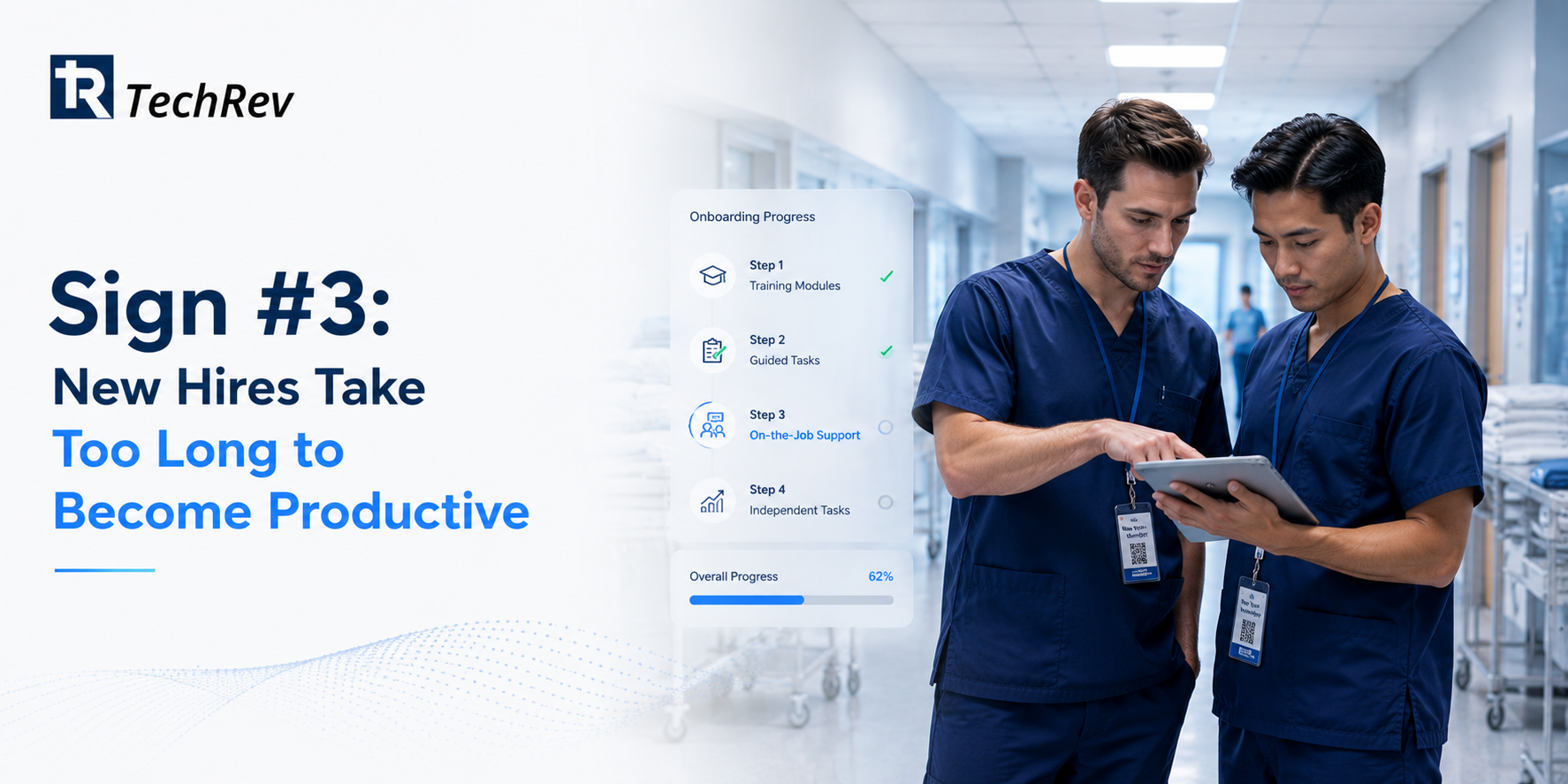
Every hospital service company deals with turnover. The question is: how fast can a new technician become useful?
If your only onboarding tool is “shadow someone experienced for two weeks,” your hospital management software isn’t doing its job. A well-designed system should guide new staff step by step, showing them exactly where to go, what to check, and what warnings to watch for, from day one.
This is where Generative AI development and modern AI agents development company in USA partners like TechRev bring real value. Instead of static instructions, an AI-guided app can generate a personalized, real-time route for each technician based on live hospital data, adapting instantly as work gets completed or reassigned.
What does this look like in practice?
- Step-by-step AI-generated routes showing exactly which room or track to go to next
- Automatic warnings before a mistake happens (wrong type, wrong size, locked location)
- Confidence-scored suggestions (“this item was used here 4 of the last 5 times”) so even a first-week hire makes accurate decisions
- Growth in Productivity: Companies that implement AI-guided workflows for field staff report new hires reaching full productivity 30 to 40% faster than under traditional shadow-training models.
Can AI really train new hospital service staff faster?
Yes. AI-guided apps built by an experienced AI app development services in USA provider give new staff step-by-step, on-the-job guidance instead of relying on memorized training, cutting ramp-up time significantly.
Sign #4: Mistakes Keep Creating Repeat Visits (And Repeat Costs)
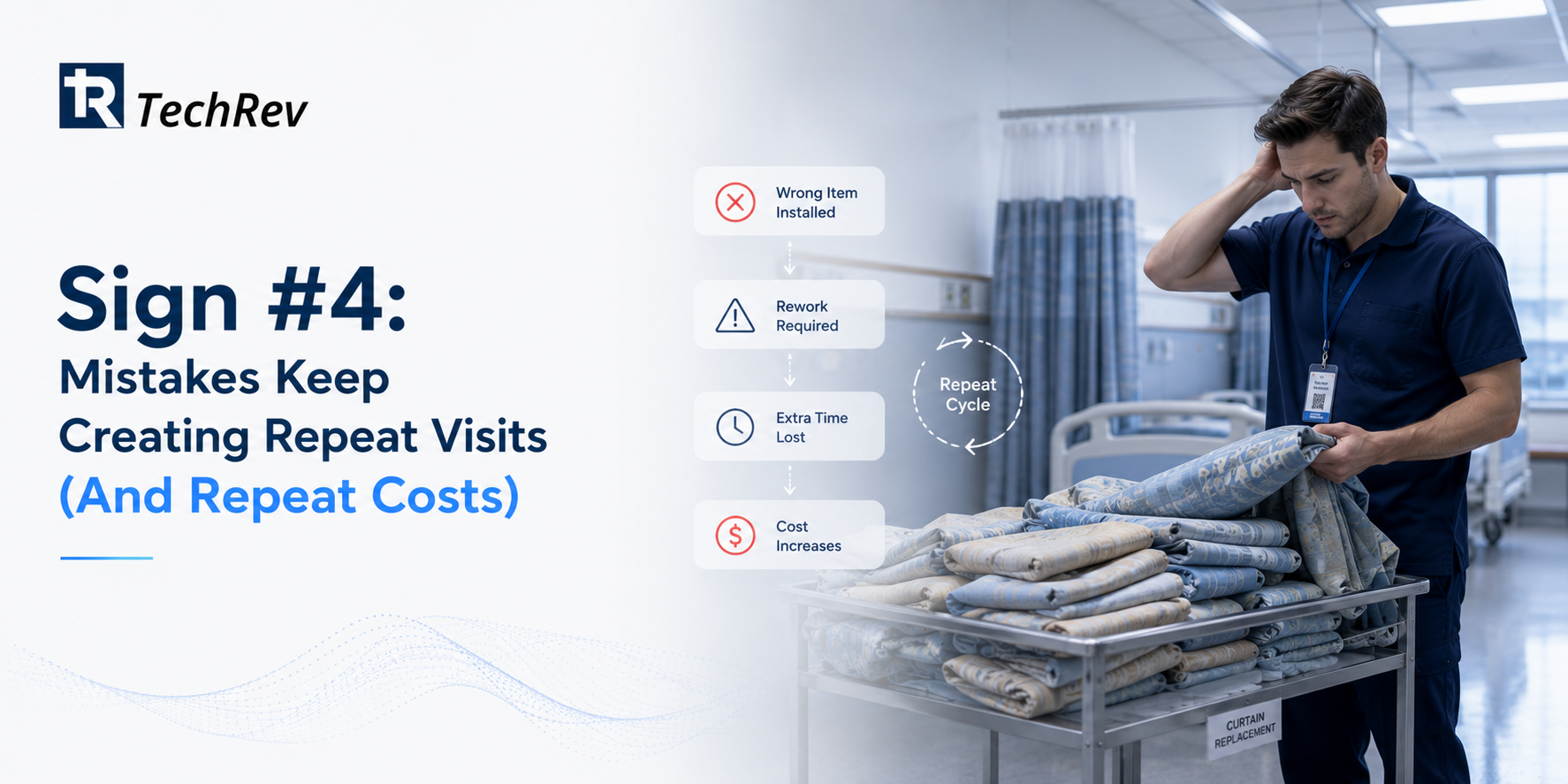
Every wrong installation, wrong part, or wrong item hung in the wrong place doesn’t just cost time. It costs an entire extra trip back to the hospital to fix it.
In CubeCare’s case, wrong-type or wrong-pattern curtain installations, like a standard-hook curtain going onto a snap-mesh track, were directly causing avoidable return visits. Multiply that across dozens of hospitals on a recurring service schedule, and you’re looking at a serious, ongoing cost leak.
This is precisely where a smart hospital management software system earns its keep. By validating every item against size, type, pattern, and location requirements before it gets installed, and by flagging capacity or lock-status issues in advance, the system catches mistakes before they become expensive.
The numbers tell the story:
- Facilities that adopted AI-driven validation report wrong-installation rates dropping to near-zero
- Return trips caused by errors saw significant reductions after AI warning systems were introduced
- ROI on this single feature alone often pays back the software investment within the first few service cycles, since every avoided return trip saves both labor hours and vehicle costs
This is exactly why hospital service companies are increasingly turning to a specialized healthcare app development company in USA rather than trying to patch together generic tools.
Generic project management apps were never built to understand track capacity, curtain compatibility, or hospital-specific compliance requirements. A custom-built system is.
TechRev’s approach: We use the historical installation data hospitals and service providers already have, years of “what went where,” and apply it through Generative AI development to predict, warn, and guide, all inside the existing app your team already uses.
Also Read – How Smart Scan-and-Install Tech Saves Hours Per Hospital Visit?
Sign #5: You Have No Way to Coordinate Multiple Teams or Track Individual Performance
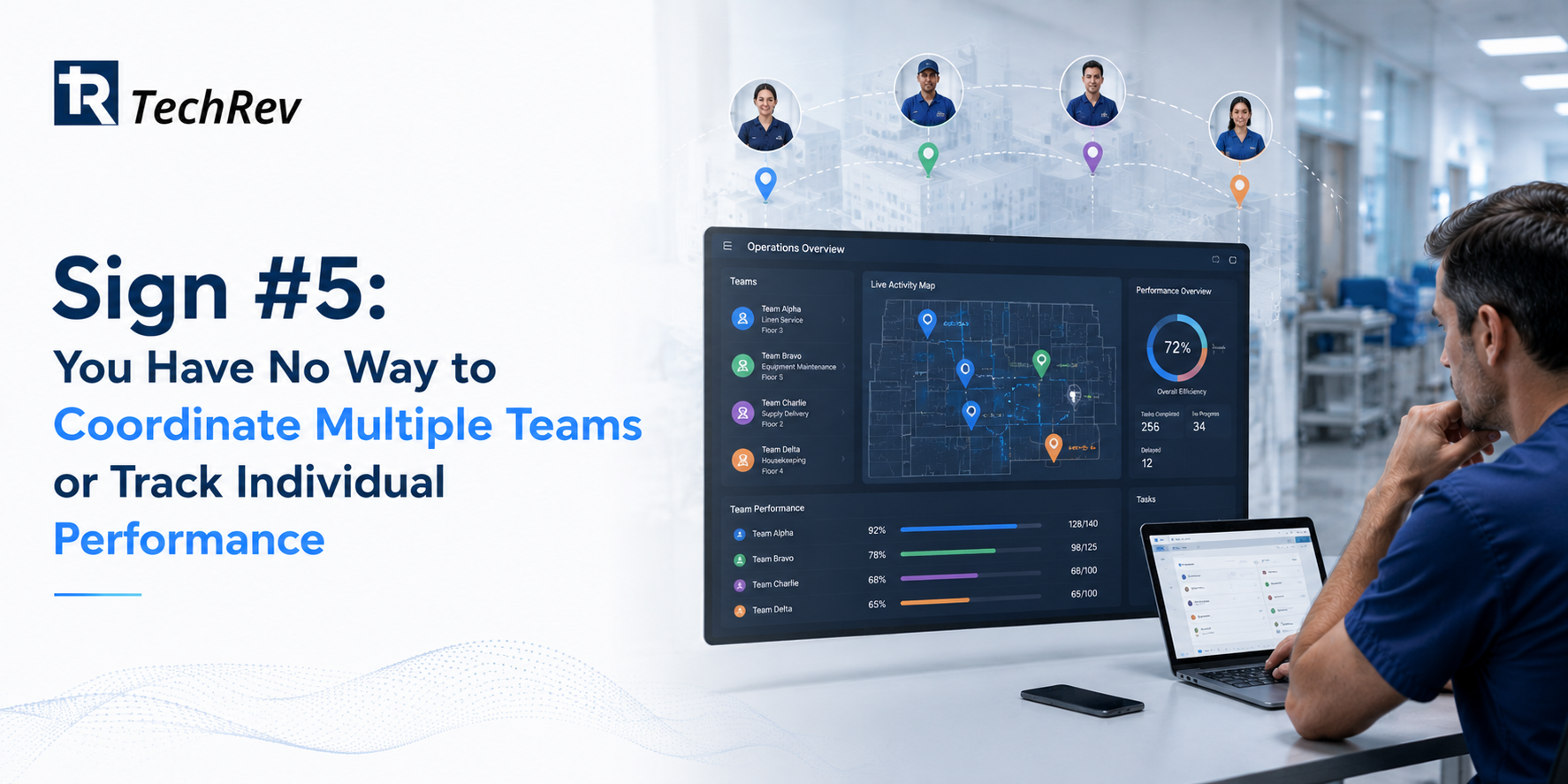
When two or more technicians work the same hospital, do they still split the work “verbally,” room by room, with zero tracking of who did what?
If yes, you have no way to prevent overlap, no way to know if a floor got missed, and no way to measure individual performance fairly. This isn’t a minor inconvenience. At scale, across dozens of hospitals and hundreds of technicians, it becomes a serious operational blind spot.
What properly built hospital management system software fixes?
- Floor or zone assignments become trackable inside the app (a couple of taps instead of a verbal agreement)
- Managers get real-time visibility into who is doing what, and how much each person has completed
- No missed rooms, no duplicated work, no disputes about “who did what”
We built exactly this for CubeCare with a floor-range selection feature. Two taps, and the AI route, item suggestions, and progress tracking all adjust automatically to each installer’s assigned zone. It replaced a purely verbal coordination system with a fully tracked one, at almost zero added effort for the field staff.
How does AI help coordinate multiple hospital service technicians on-site?
AI-powered hospital management software lets each technician select their assigned zone, then automatically adjusts routes, suggestions, and progress tracking to that zone, eliminating overlap and giving managers real-time visibility into who completed what.
The Real Cost of Waiting: Why This Isn’t a “Someday” Problem?
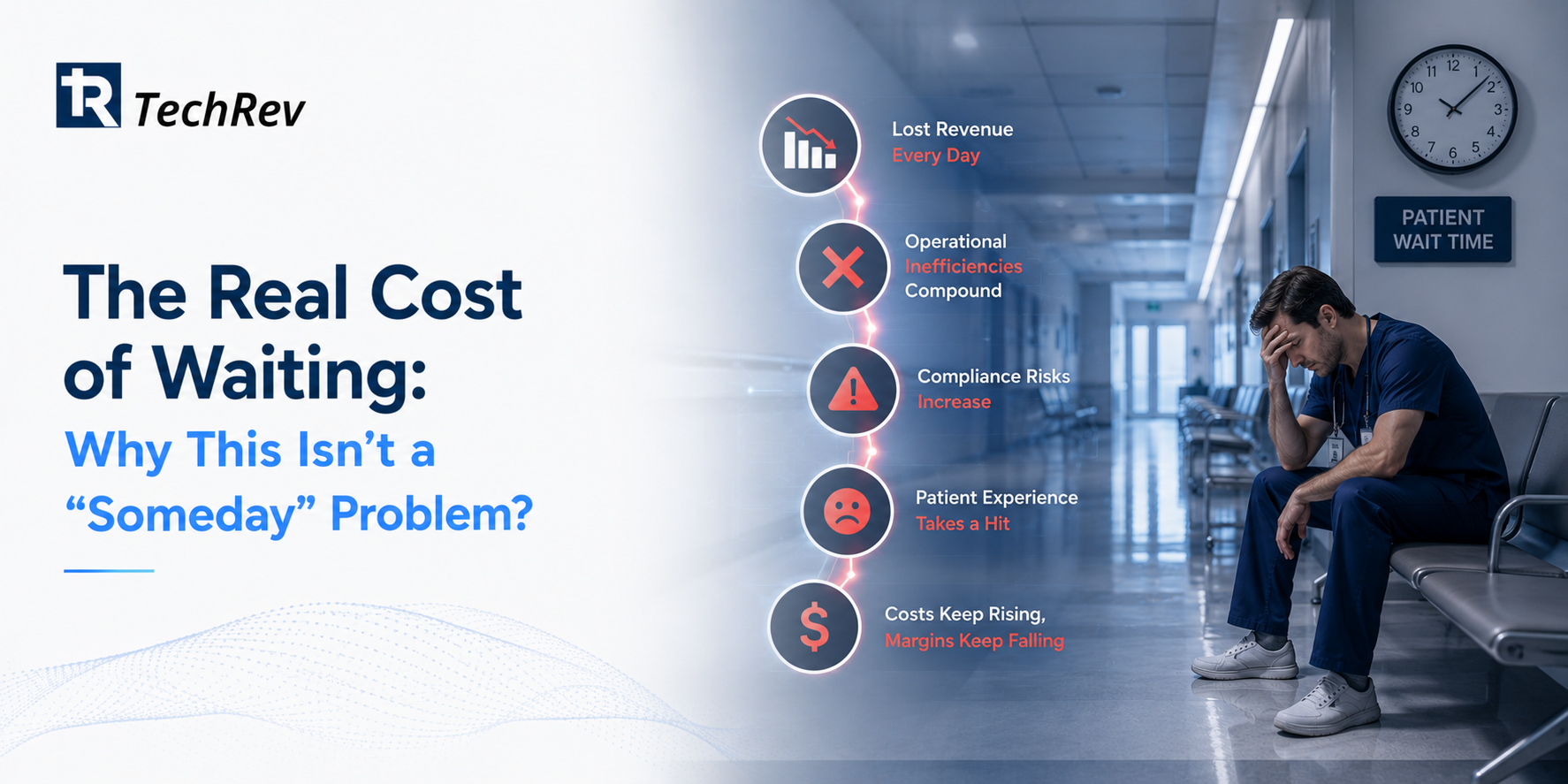
Here’s the uncomfortable truth. Every month your service team operates without a proper hospital management software layer, you are paying for it in ways that don’t always show up on a spreadsheet, until they do.
| Business Impact | Typical Result With Smarter Software |
| Time saved per hospital visit | 30 to 60 minutes |
| Reduction in wrong-item installations | Near-zero |
| New hire ramp-up time | 30 to 40% faster |
| Manager reporting workload | Reduced by up to 80% |
| Return/spare visits caused by errors | Significantly reduced |
| Overall operational efficiency gain | Up to 85%, per industry benchmarks |
The broader hospital inventory management software market alone is projected to grow from roughly USD 13.2 billion in 2024 to nearly USD 25 billion by 2032, a clear signal that hospitals and their service partners are actively investing in exactly these kinds of solutions right now.
Waiting means competing service providers who adopt smarter systems first will simply win the contracts you lose on service quality.
How TechRev Solved This for CubeCare?
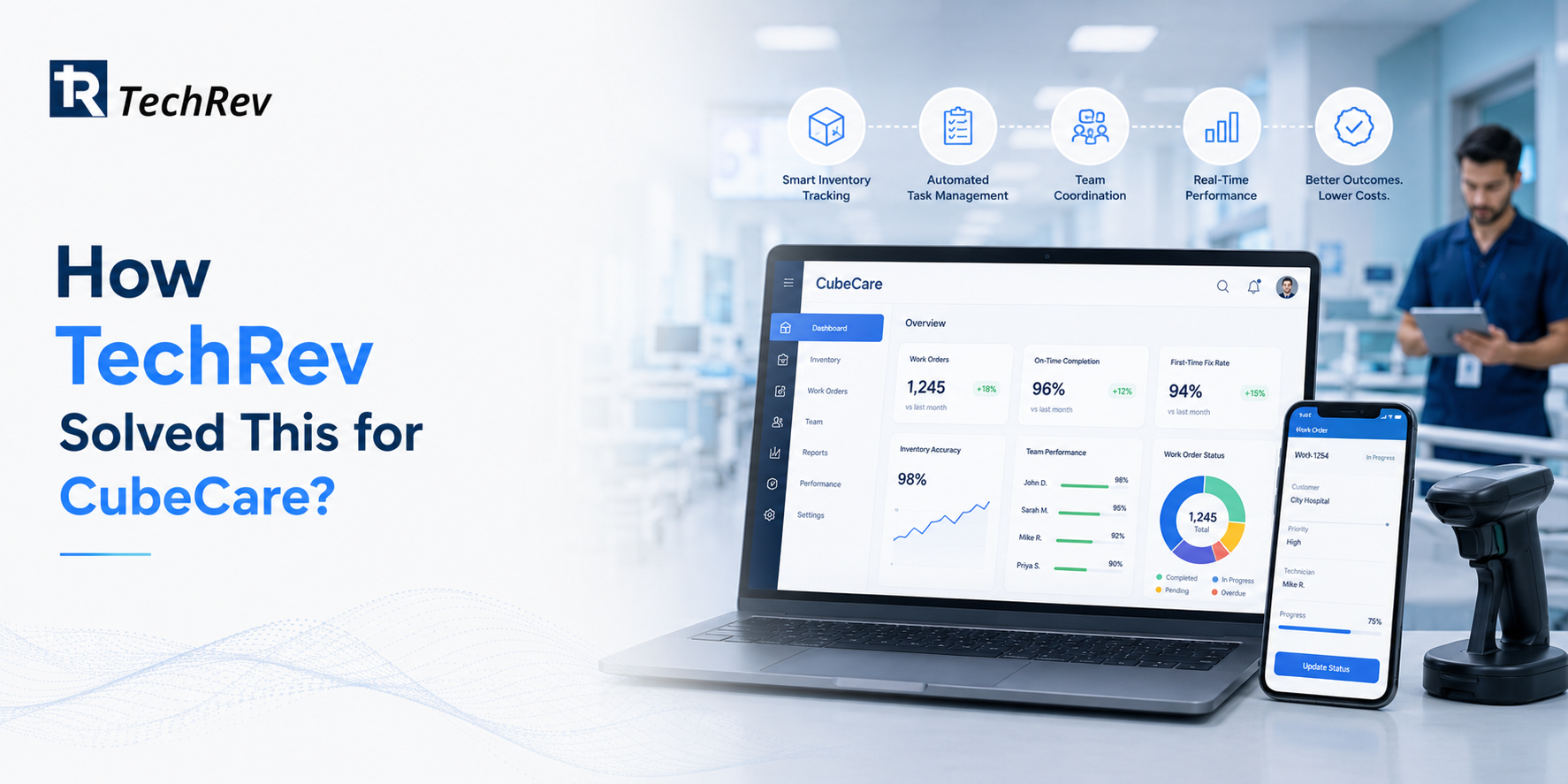
TechRev was brought in by CubeCare, a US hospital curtain servicing company, to fix a workflow that was losing hours per visit to inventory searching, generating avoidable spare visits from wrong installations, and giving operations managers zero real-time visibility.
What were we built, without adding any new hardware?
- Curtain-first scanning – Technicians scan any item and instantly see up to 3 suggested locations, ranked by confidence, based on historical installation data.
- Smart trolley pre-sort (“Scan One, Group Many”) – Instead of scanning 50+ items individually, technicians scan one per type and instantly see how many matching items exist and where they all belong. What used to take an hour of searching now takes 1 to 3 minutes.
- AI-generated installation routes – A step-by-step walking route adapted to each visit type, skipping already-completed locations automatically.
- Two-level progress dashboards – Real-time visibility at the visit level and the full schedule-cycle level, eliminating manual reporting entirely.
- Track-level warnings – Capacity, compatibility, and lock-status alerts shown before a technician ever walks to the wrong location.
- One-tap spare inventory linking and two-tap floor assignment – Minimal extra effort for the field team, but it made the entire spare inventory and multi-technician coordination visible to the system for the first time.
The results:
- 30 to 60 minutes saved per hospital visit
- Wrong-curtain installations reduced to near-zero
- A significant drop in spare (return) visits caused by mistakes
- Faster onboarding for new installers through AI-guided, on-the-job direction
- Manager reporting effort effectively eliminated through real-time dashboards
This is what happens when you bring in a genuine custom hospital software development company in USA that studies your actual operational data instead of selling you an off-the-shelf template.
Every feature above was built specifically around how CubeCare’s technicians, laundry team, and operations managers actually work, not a generic hospital software blueprint.
Why Do Hospital Service Companies Choose TechRev?
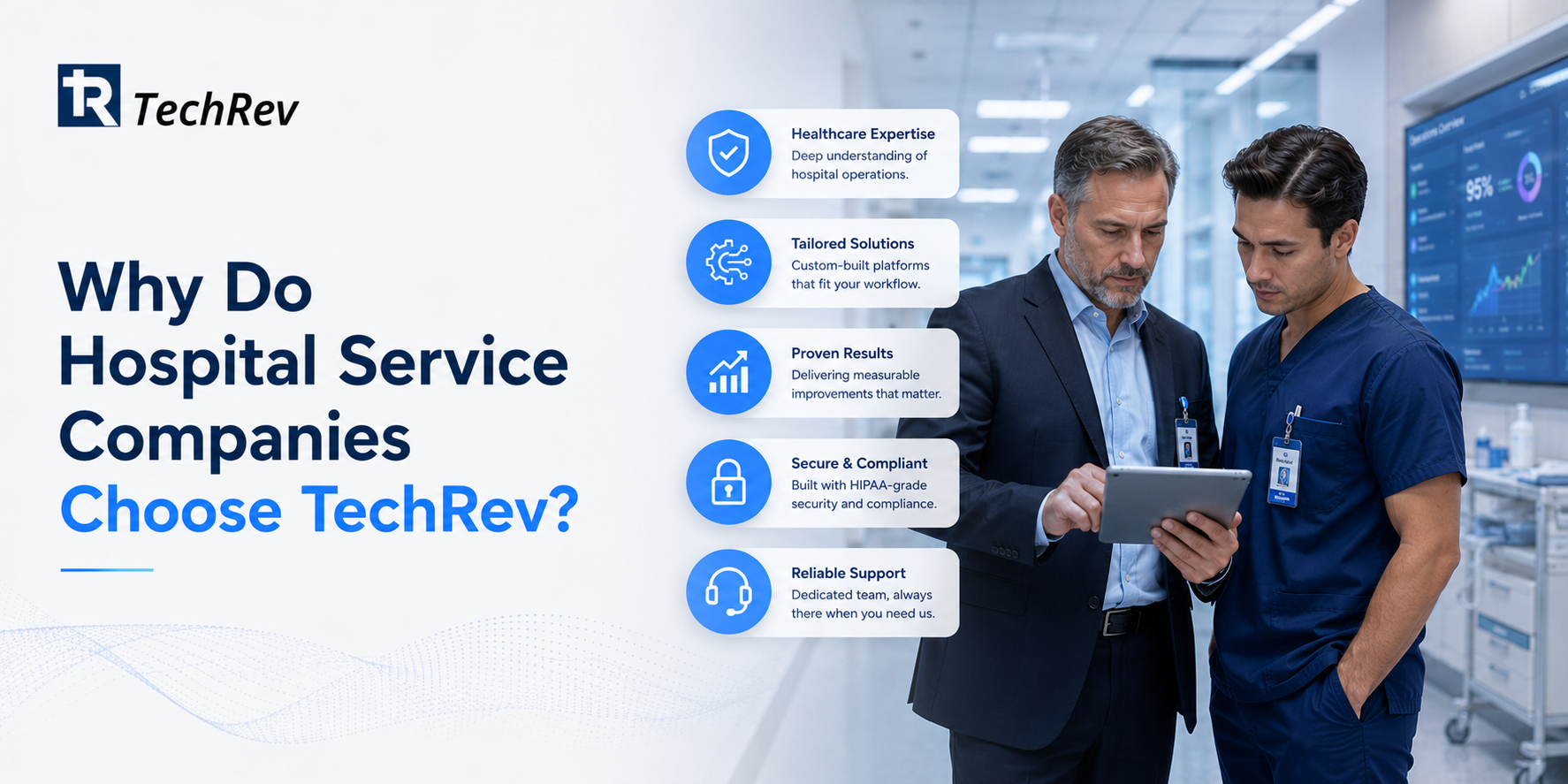
TechRev isn’t just another vendor selling pre-built software. We are a dedicated AI app development services in USA partner that specializes in solving operational problems unique to hospital service environments, curtains, linens, inventory, equipment servicing, and more.
What sets TechRev apart as a hospital software development company in USA:
- We start with your existing data. Years of installation history, inventory records, and service logs are treated as a goldmine, not a legacy burden.
- We build on top of what you already have. No forced hardware upgrades, no rebuilding your app from scratch, no retraining your entire workforce.
- We combine practical Generative AI development with real operational workflows, not AI for the sake of AI.
- As an experienced AI agents development company in USA, we design intelligent agents that guide field staff in real time, not just dashboards that sit unused.
- Every solution is custom. As a genuine custom hospital software development company in USA, we don’t force your operation into a generic template.
If your hospital service team is showing any of the five signs above, it’s time for a conversation.
TechRev can walk through your current workflow, identify exactly where time and money are leaking, and show you what a smarter hospital management software layer would look like for your specific operation.
Conclusion
Hospital service teams don’t fail because staff aren’t working hard enough. They fail because outdated systems force hardworking people to waste hours on searching, guessing, and fixing avoidable mistakes.
If your team shows even two or three of the signs covered in this blog, unsorted inventory searches, delayed reporting, slow onboarding, repeat error visits, or uncoordinated multi-team work, the fix isn’t more hours or more hires. It’s smarter hospital management software built specifically around how your team actually operates.
TechRev has already proven this approach in the field, turning CubeCare’s manual, error-prone curtain servicing workflow into a guided, data-driven process without adding a single piece of new hardware.
The same thinking can be applied to your hospital inventory management software, your equipment servicing app, or any hospital-facing operation your business runs.
Ready to see what this looks like for your team? Reach out to TechRev and let’s build the smarter system your hospital service operation deserves.
FAQs
Q1. What is hospital management software, and how is it different from a hospital curtain management system?
Hospital management software is a broad category covering scheduling, records, billing, and inventory across a hospital or hospital service business.
A hospital curtain management system is a specialized module within that broader category, focused specifically on tracking curtain inventory, installation schedules, track capacity, and service cycles for hospital privacy curtains.
Q2. How do I know if my hospital service team needs new software instead of more staff?
If your team’s biggest time loss is searching for the right item, if mistakes keep triggering repeat visits, or if managers can’t see real-time progress without manual reports, adding more staff will only add more of the same inefficiency. Smarter software fixes the root cause; more headcount just scales the existing problem.
Q3. Does adopting AI-powered hospital management system software require new hardware?
In most cases, no. TechRev’s approach, and the approach used in the CubeCare case study, works entirely on top of the existing app and scanning setup already in place. The intelligence comes from software and historical data, not new devices.
Q4. What kind of ROI can hospital service companies expect from smarter software?
Based on real deployments, service providers typically see 30 to 60 minutes saved per hospital visit, a significant drop in error-driven return trips, and faster new-hire productivity. Combined, these translate into measurable cost reduction within the first few service cycles.
Q5. Is TechRev only for curtain servicing companies, or does it work across other hospital service categories?
TechRev works across hospital service categories, including inventory management, equipment servicing, and facility operations. The CubeCare curtain servicing project is one example, but the underlying approach (using existing data plus AI guidance) applies to any hospital service workflow with repeatable, trackable tasks.
Q6. What does TechRev actually build for hospital clients?
TechRev builds custom hospital management software, AI-guided field apps, inventory systems, and Generative AI development solutions for hospitals and hospital service companies across the USA, all designed around each client’s real operational data.
Q7. How can I get started with TechRev?
Visit www.techrev.us and share your current workflow. TechRev’s team will review it, identify inefficiencies, and propose a tailored hospital management software or AI-powered solution suited to your specific operation.