
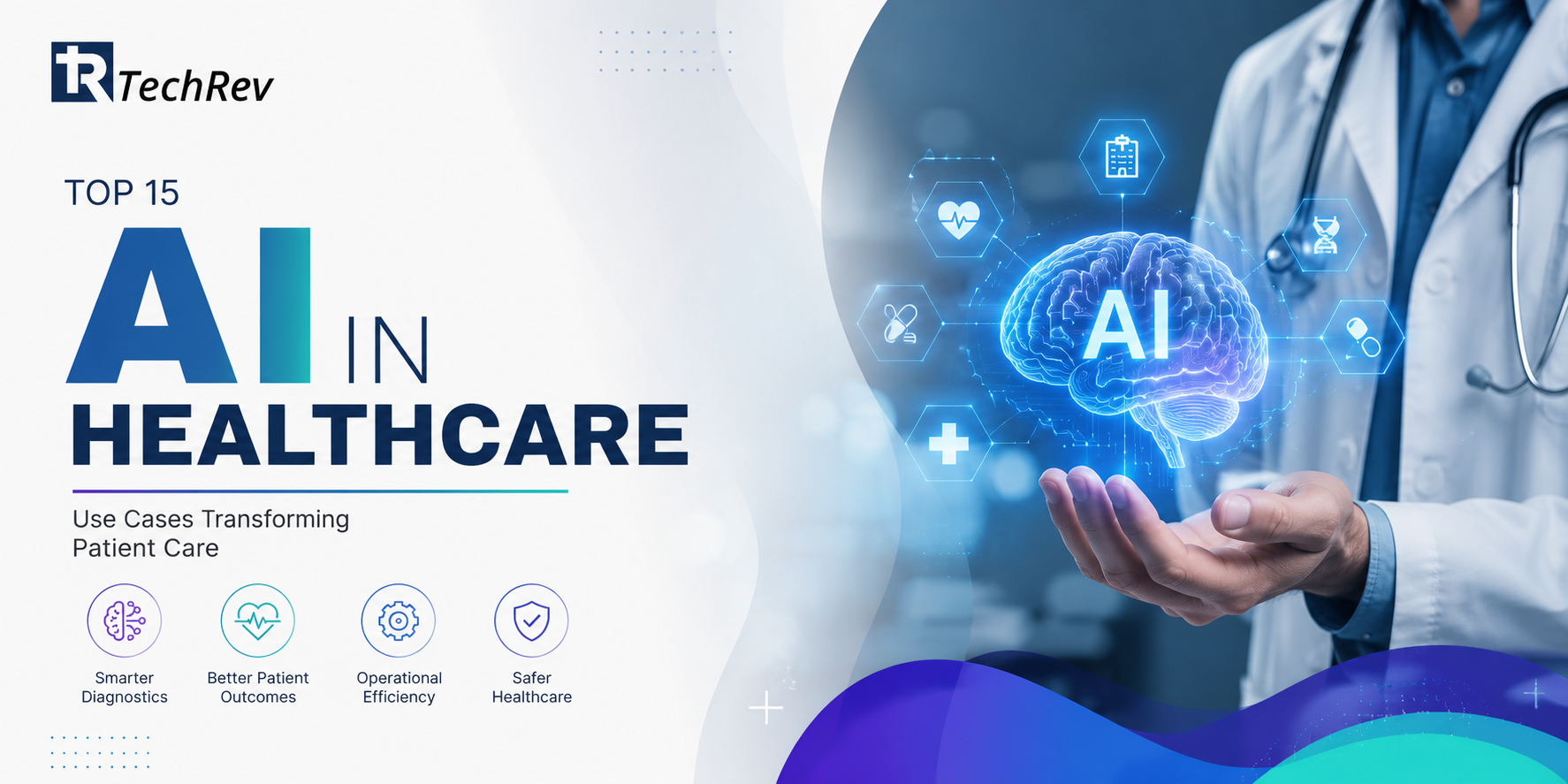
AI in Healthcare 2026 is moving far beyond experimental chatbots and futuristic hospital concepts. AI now helps clinicians summarize medical information, analyze images, monitor patients remotely, support clinical decisions, automate documentation, predict risks, and coordinate care.
That shift is showing up in physician behavior, healthcare technology investment, and the products hospitals and healthtech companies are building.
The American Medical Association reported in March 2026 that 81% of surveyed physicians use AI in their practice, more than double the 38% reported in 2023. Physicians are using AI for tasks such as medical research summaries, documentation, discharge instructions, and other clinical and administrative workflows.
The market is moving quickly too. Grand View Research estimates that the global AI in healthcare market reached $36.7 billion in 2025 and could reach $50.7 billion in 2026, with a projected CAGR of 38.9% through 2033. North America accounted for 54% of market revenue in 2025.
So, what does AI actually do inside healthcare?
The answer is much more practical than the hype suggests.
In this blog, we explore 15 AI in healthcare use cases, the technologies behind them, real-world examples, business benefits, security considerations, and what healthcare organizations should consider before an AI-powered healthcare app development
What Is AI in Healthcare 2026?
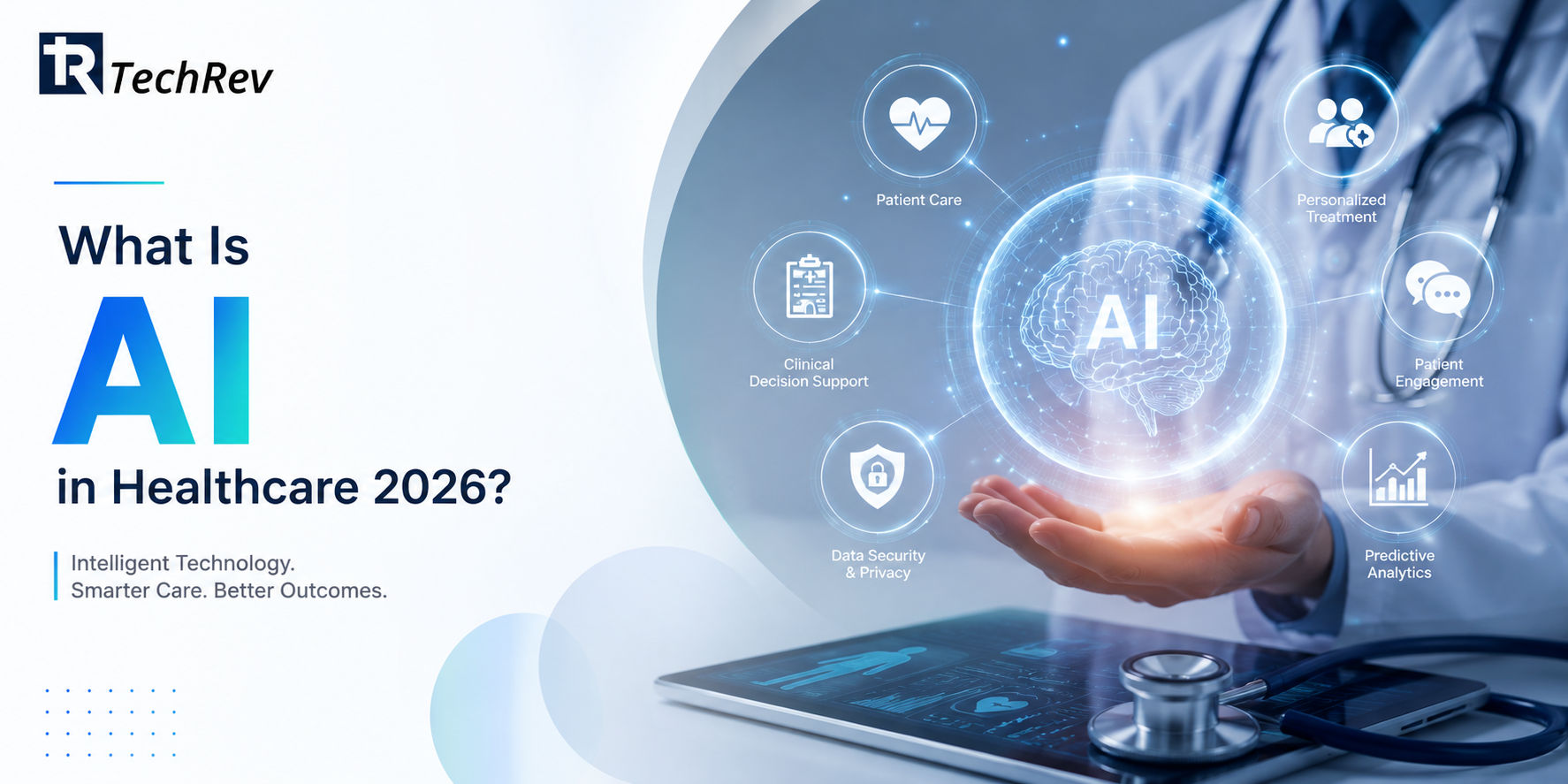
AI in healthcare 2026 refers to the use of artificial intelligence, machine learning, natural language processing, computer vision, generative AI, predictive analytics, and increasingly agentic AI to support healthcare delivery, clinical workflows, patient engagement, operations, and research.
AI in healthcare helps software identify patterns, understand information, generate useful outputs, make predictions, and automate defined tasks.
For example:
- A computer vision model can analyze medical images.
- A predictive model can identify patients at higher risk of deterioration.
- NLP can extract information from clinical notes.
- Generative AI can summarize a patient encounter.
- A conversational AI assistant can answer routine patient questions.
- An AI agent can coordinate several workflow steps under defined rules and human oversight.
- Remote patient monitoring systems can use machine learning to identify abnormal trends in patient data.
The important distinction is that AI should not automatically replace clinical judgment.
The strongest healthcare AI solutions usually work as decision support, workflow support, or automation layers around clinicians and patients.
The World Health Organization also emphasizes responsible governance, safety, equity, ethics, and human oversight as AI adoption expands across healthcare.
Why Is AI in Healthcare Growing So Fast in 2026?
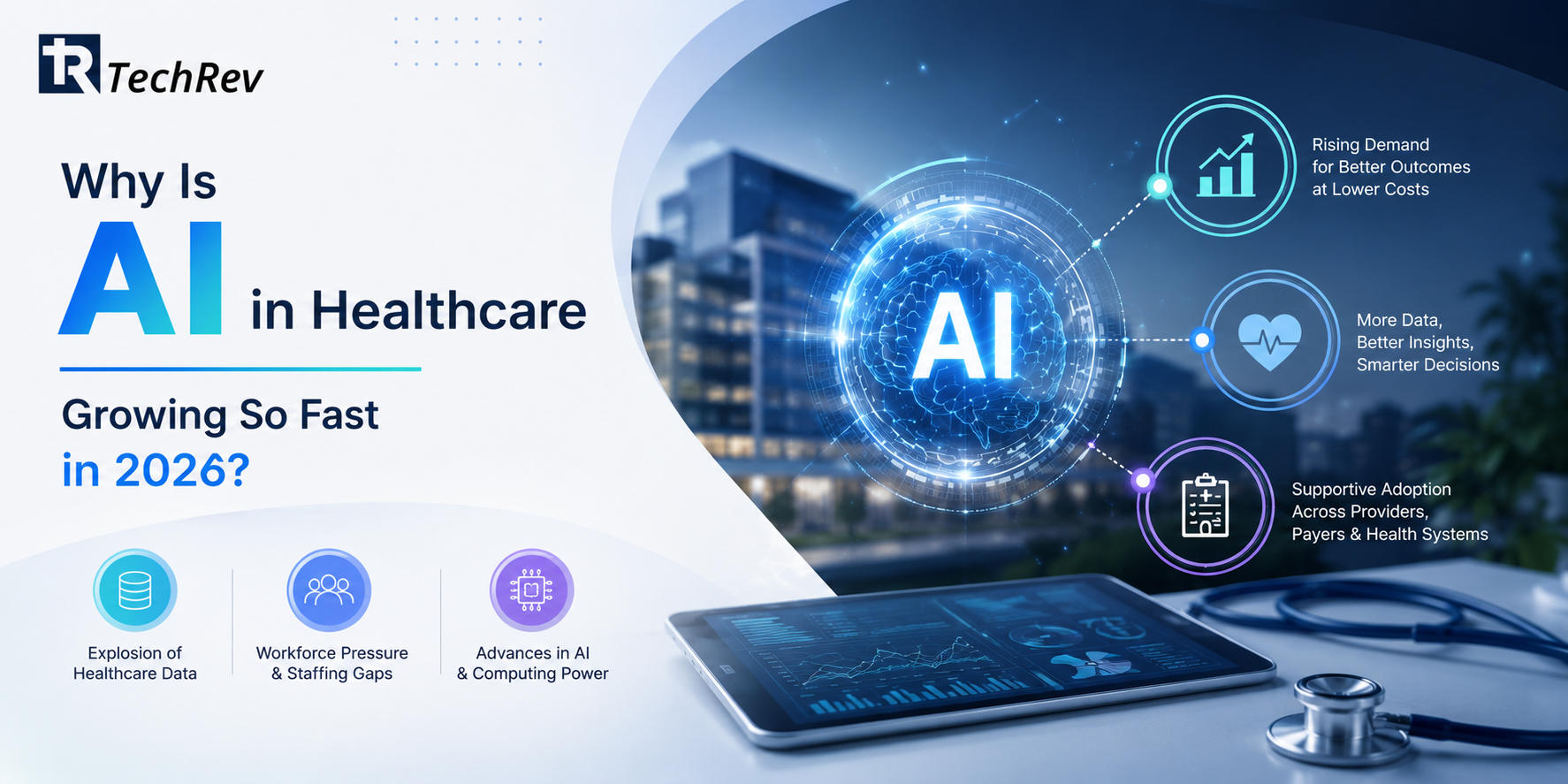
Three forces are pushing AI adoption forward: data, workforce pressure, and increasingly capable AI models.
Healthcare generates enormous volumes of information through electronic health records, medical imaging, laboratory systems, wearables, monitoring devices, claims, prescriptions, patient messages, and clinical documentation.
Yet much of that information remains difficult to process manually.
AI can help turn those data streams into useful signals.
At the same time, healthcare organizations face persistent administrative workloads and workforce constraints. That creates a strong business case for healthcare automation.
The adoption numbers reflect that shift.
In 2026, the AMA found that 81% of surveyed physicians use AI professionally. That represents a significant jump from 66% in its 2025 reporting based on 2024 usage.
McKinsey also found that 85% of surveyed healthcare leaders were exploring or had already adopted generative AI capabilities in its late 2024 survey.
The message is clear:
Healthcare organizations are no longer asking whether AI belongs in healthcare. They are asking where it can create measurable value without compromising patient safety, privacy, or clinical trust.
15 AI in Healthcare Use Cases Transforming Patient Care
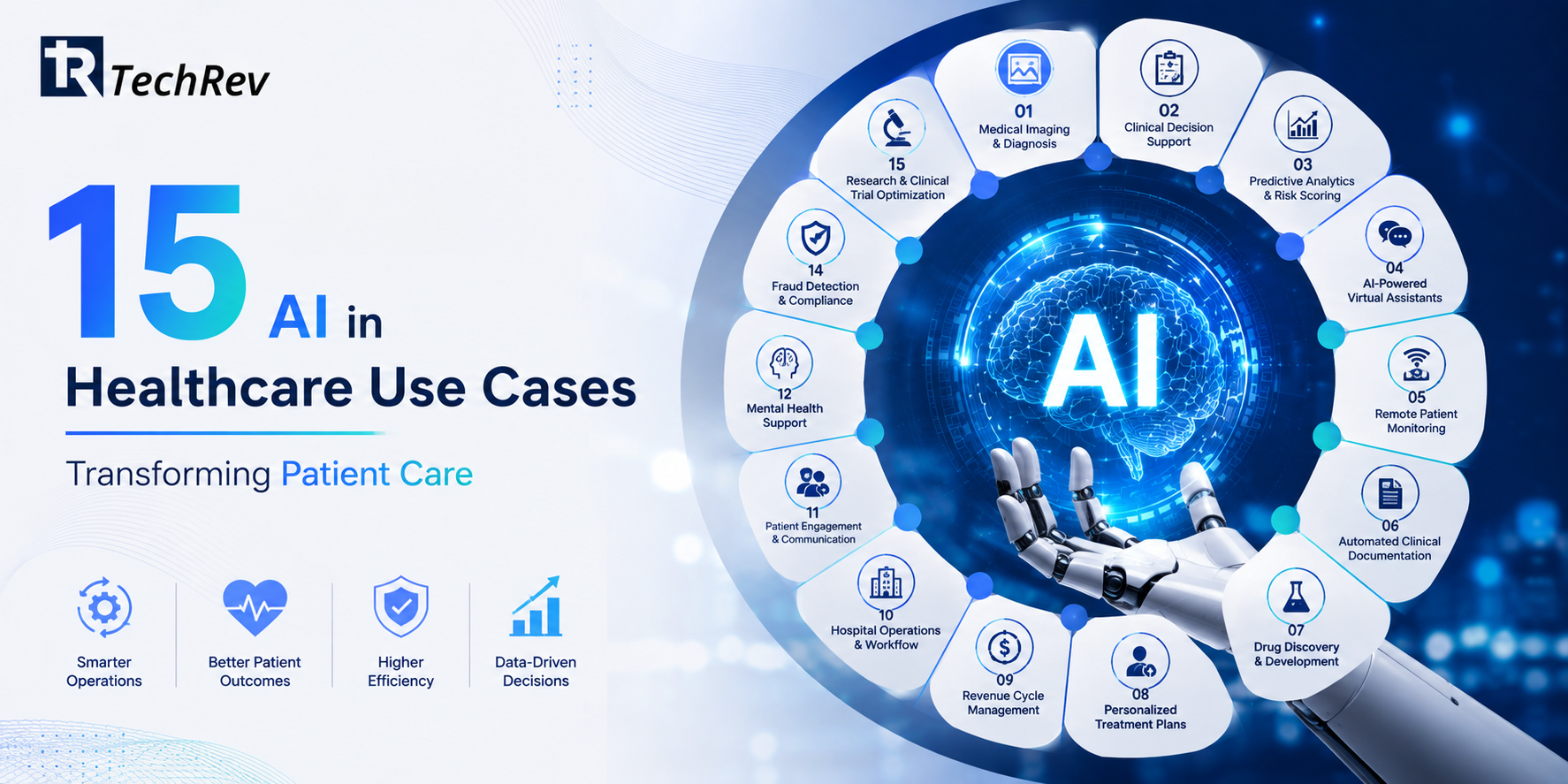
1. AI-Powered Medical Imaging and Diagnosis
Medical imaging remains one of the most established areas for AI in healthcare.
Computer vision models can analyze X-rays, CT scans, MRIs, mammograms, pathology images, and other diagnostic images to identify patterns that may require closer clinical review.
The goal is not necessarily to let an algorithm make the final diagnosis.
Instead, AI can:
- Flag suspicious findings
- Prioritize urgent scans
- Highlight regions of interest
- Compare imaging patterns
- Assist radiologists
- Reduce repetitive image review
- Support earlier intervention
The FDA maintains an AI-enabled medical device list for devices authorized for marketing in the United States. The agency notes that these devices undergo applicable premarket requirements related to safety and effectiveness.
This matters because AI medical diagnosis requires much more than an impressive model demo.
A healthcare AI system must consider validation, clinical context, data quality, bias, workflow integration, monitoring, and regulatory requirements.
Where does AI medical diagnosis fit best?
It works particularly well when the system helps clinicians process large volumes of structured or visual information and brings potentially important findings to their attention.
That makes computer vision a major component of modern AI healthcare solutions.
TechRev supports computer vision development as part of its AI engineering capabilities, including systems for recognition, monitoring, and automated analysis.
2. Clinical Decision Support Systems
What if a physician could review a patient’s relevant history, medications, laboratory results, previous encounters, and risk signals without manually searching through multiple systems?
That is where clinical decision support systems can help.
AI-powered clinical decision support systems can organize information and surface patterns that clinicians may want to consider.
Possible applications include:
- Risk scoring
- Treatment recommendations
- Drug interaction alerts
- Patient deterioration prediction
- Care pathway recommendations
- Clinical documentation support
- Relevant medical literature retrieval
The value comes from reducing information overload.
However, clinical decision support systems need careful validation because an incorrect recommendation can affect patient care.
AI should therefore support the clinician rather than quietly replace the clinician’s responsibility.
The FDA has also emphasized lifecycle management, transparency, bias considerations, and ongoing performance evaluation for AI-enabled medical devices.
3. AI-Powered Clinical Documentation
Documentation consumes a significant amount of clinical time.
A physician may spend part of a patient encounter listening, examining the patient, and making decisions, then spend additional time documenting what happened.
Generative AI can change that workflow.
An AI documentation system can potentially:
- Capture an authorized clinical conversation.
- Convert speech into text.
- Identify relevant clinical information.
- Generate a structured draft.
- Organize information into the appropriate documentation format.
- Allow the clinician to review and edit the output.
- Send the approved information into the appropriate healthcare system.
This is one of the most practical applications of generative AI in healthcare.
It also explains why documentation remains a major area of physician AI adoption.
The AMA’s 2026 survey specifically identified documentation among the professional uses physicians report for AI.
For healthcare organizations, the opportunity is straightforward: reduce documentation friction while keeping the clinician in control.
Also Read – Why Custom Healthcare Software Outperforms Off-the-Shelf Solutions?
4. AI for Remote Patient Monitoring
Remote patient monitoring creates another important opportunity for AI in healthcare 2026.
Patients can generate health data outside the hospital through connected devices, wearable technology, home monitoring equipment, and mobile applications.
A typical remote patient monitoring workflow may collect:
- Heart rate
- Blood pressure
- Blood oxygen
- Blood glucose
- Weight
- Temperature
- Activity
- Sleep patterns
- Other condition-specific measurements
The challenge is not collecting data.
The challenge is deciding which data actually deserves attention.
AI can analyze continuous streams and identify trends or anomalies.
For example, a system might detect that several measurements are moving in an unfavorable direction and escalate the case to a care team.
That turns remote patient monitoring from a passive dashboard into a more proactive care model.
TechRev has highlighted AI-powered remote patient monitoring as one of its healthcare technology capabilities, with its public portfolio describing real-time patient monitoring and clinician-ready workflows.
5. Predictive Analytics for Patient Risk
Healthcare providers often want to know what might happen next.
- Which patients face a higher risk of readmission?
- Which patients may deteriorate?
- Which patients need additional follow-up?
This is where predictive analytics in healthcare becomes valuable.
Machine learning models can analyze historical and real-time data to identify risk patterns.
Potential applications include:
- Hospital readmission prediction
- Patient deterioration prediction
- Sepsis risk alerts
- Appointment no-show prediction
- Chronic disease risk prediction
- Resource demand forecasting
- Length-of-stay prediction
Predictive analytics does not provide certainty.
It provides a probability or risk signal that can help a care team prioritize attention.
That distinction matters.
A responsible AI healthcare solution should communicate uncertainty rather than present predictions as guaranteed outcomes.
6. AI-Powered Patient Chatbots
Patients often ask simple questions:
“When should I take this medication?”
“How do I prepare for my appointment?”
“Where can I find my test results?”
“What should I bring to my consultation?”
Healthcare teams cannot always answer routine questions immediately.
An AI chatbot can provide a conversational interface for approved information and defined workflows.
Modern AI healthcare chatbots can potentially support:
- Appointment scheduling
- Frequently asked questions
- Patient onboarding
- Medication reminders
- Pre-visit instructions
- Basic navigation
- Administrative support
- Patient education
The technology becomes more powerful when it connects with authorized healthcare systems.
Instead of simply answering questions, the chatbot can retrieve appropriate information or initiate a workflow.
TechRev develops AI chatbot systems that combine NLP, LLMs, knowledge retrieval, workflow automation, and enterprise integrations.
7. AI for Personalized Patient Care
Healthcare is becoming increasingly personalized.
Two patients with the same diagnosis may respond differently to treatment because of differences in medical history, genetics, lifestyle, medications, age, and other factors.
AI can analyze multiple variables to support personalized care strategies.
Applications include:
- Personalized treatment recommendations
- Risk stratification
- Medication optimization
- Lifestyle recommendations
- Chronic disease management
- Personalized patient education
- Care pathway optimization
This is where machine learning and predictive analytics in healthcare can work together.
The model learns from patterns in relevant data and helps healthcare professionals understand which factors may influence outcomes.
The clinical team still needs to validate and interpret the recommendation.
8. AI for Drug Discovery and Clinical Research
AI in healthcare is not limited to hospitals and clinics.
Pharmaceutical companies and research organizations are using AI across drug discovery, clinical research, and development.
AI can help researchers:
- Identify potential drug candidates
- Analyze biological datasets
- Predict molecular interactions
- Support trial design
- Identify eligible participants
- Analyze clinical trial data
- Detect patterns across research literature
WHO recognizes AI’s potential in pharmaceutical development and delivery while also emphasizing the need to manage safety and ethical risks.
Generative AI and multimodal models could expand these capabilities further by connecting different types of scientific and clinical information.
That makes generative AI in healthcare relevant not only to patient-facing applications but also to the research pipeline.
9. AI for Patient Triage and Care Navigation
A patient does not always know where to go next.
- Should they schedule a primary care visit?
- Visit urgent care?
- Contact a specialist?
- Seek emergency attention?
AI-based triage tools can help organize symptoms and direct patients toward an appropriate care pathway based on predefined clinical logic and approved information.
The system should not present itself as a replacement for emergency medical assessment.
Instead, it can function as an intelligent navigation layer.
A well-designed patient triage platform can combine:
- Conversational AI
- Rules engines
- Clinical knowledge
- Risk scoring
- Appointment systems
- Provider directories
- Escalation workflows
This makes triage another strong application for AI in healthcare 2026, particularly as digital-first patient experiences continue to expand.
10. AI for Healthcare Administrative Automation
Not every healthcare AI use case involves diagnosis.
Some of the biggest efficiency opportunities sit behind the scenes.
Healthcare organizations handle large volumes of administrative work involving:
- Claims
- Scheduling
- Insurance verification
- Prior authorization
- Billing
- Coding
- Patient onboarding
- Referral management
- Documentation
- Data entry
AI can automate or assist with repetitive workflows.
For example, an NLP system can extract information from documents. An AI agent can route a request to the appropriate system. A predictive model can flag claims that may face problems.
This is where healthcare automation can produce measurable business value.
TechRev positions AI around measurable operational outcomes, including workflow automation, predictive models, AI agents, and intelligent enterprise systems.
11. AI for Medical Coding and Billing
Medical coding requires accuracy and consistency.
AI can assist coders by analyzing clinical documentation and identifying potential billing codes that require review.
AI-powered medical billing software can also support:
- Documentation analysis
- Code suggestions
- Claim validation
- Denial prediction
- Payment workflow automation
- Revenue cycle analytics
- Anomaly detection
The important point is that automation should not blindly submit everything generated by an AI system.
Healthcare organizations should create review workflows, validation rules, audit trails, and human approval where appropriate.
This approach turns healthcare automation into a controlled workflow rather than an uncontrolled black box.
12. AI for Medication Management
Medication errors can create serious patient safety risks.
AI can support medication management by analyzing patient information and identifying potential issues such as:
- Drug interactions
- Duplicate medications
- Allergy conflicts
- Dosage concerns
- Medication adherence patterns
- High-risk combinations
AI can also support patient-facing medication reminders and education.
The most effective implementation depends on integration with the appropriate clinical data sources and careful validation.
A HIPAA compliant AI architecture becomes particularly important when systems process protected health information.
Also Read – AI Avatar vs Digital Human for Modern AI App Development!
13. AI-Powered Mental Health Support
Digital mental health tools are another area where AI can provide support.
Conversational systems can help users access educational resources, journaling tools, structured exercises, appointment navigation, and other non-emergency support experiences.
However, this category requires unusually careful product design.
AI should not create the impression that a chatbot can replace a qualified mental health professional.
Responsible systems should include:
- Clear boundaries
- Escalation pathways
- Crisis handling
- Privacy safeguards
- Human oversight
- Appropriate clinical review
- Transparent communication about limitations
WHO continues to emphasize responsible governance and safeguards as AI expands into health-related applications.
14. AI for Healthcare Workforce and Resource Planning
Hospitals have to plan staffing, beds, equipment, operating rooms, appointments, and other resources.
Demand can change quickly.
Predictive AI can analyze historical patterns and operational data to support forecasting.
Potential applications include:
- Patient volume forecasting
- Staffing optimization
- Bed demand forecasting
- Operating room scheduling
- Appointment capacity planning
- Emergency department demand forecasting
- Supply planning
This is a less visible side of AI in healthcare, but it can have a direct effect on patient experience.
Better resource planning can reduce delays, improve utilization, and help teams prepare for demand spikes.
15. AI Agents for Healthcare Workflows
This is one of the most important emerging areas in AI in healthcare 2026.
Traditional software waits for a user to click a button.
A modern AI agent can interpret a goal, retrieve information, use approved tools, execute defined actions, and report the outcome.
Imagine a healthcare workflow where an authorized AI agent:
- Receives a referral.
- Extracts relevant information.
- Checks required documentation.
- Identifies missing information.
- Routes the referral.
- Updates the appropriate system.
- Notifies the responsible team.
- Records the workflow activity.
That does not mean giving an AI agent unrestricted access to patient systems.
Healthcare AI agents require permissions, auditability, workflow boundaries, monitoring, and human oversight.
TechRev’s AI agent development practice focuses on agents that can reason over context, use integrations, automate workflows, and operate with defined supervision.
For healthcare companies, this could become one of the biggest areas of healthcare automation over the next few years.
Also Read – Prior Authorization Automation: How AI Is Fixing Healthcare?
What Technologies Power AI in Healthcare 2026?
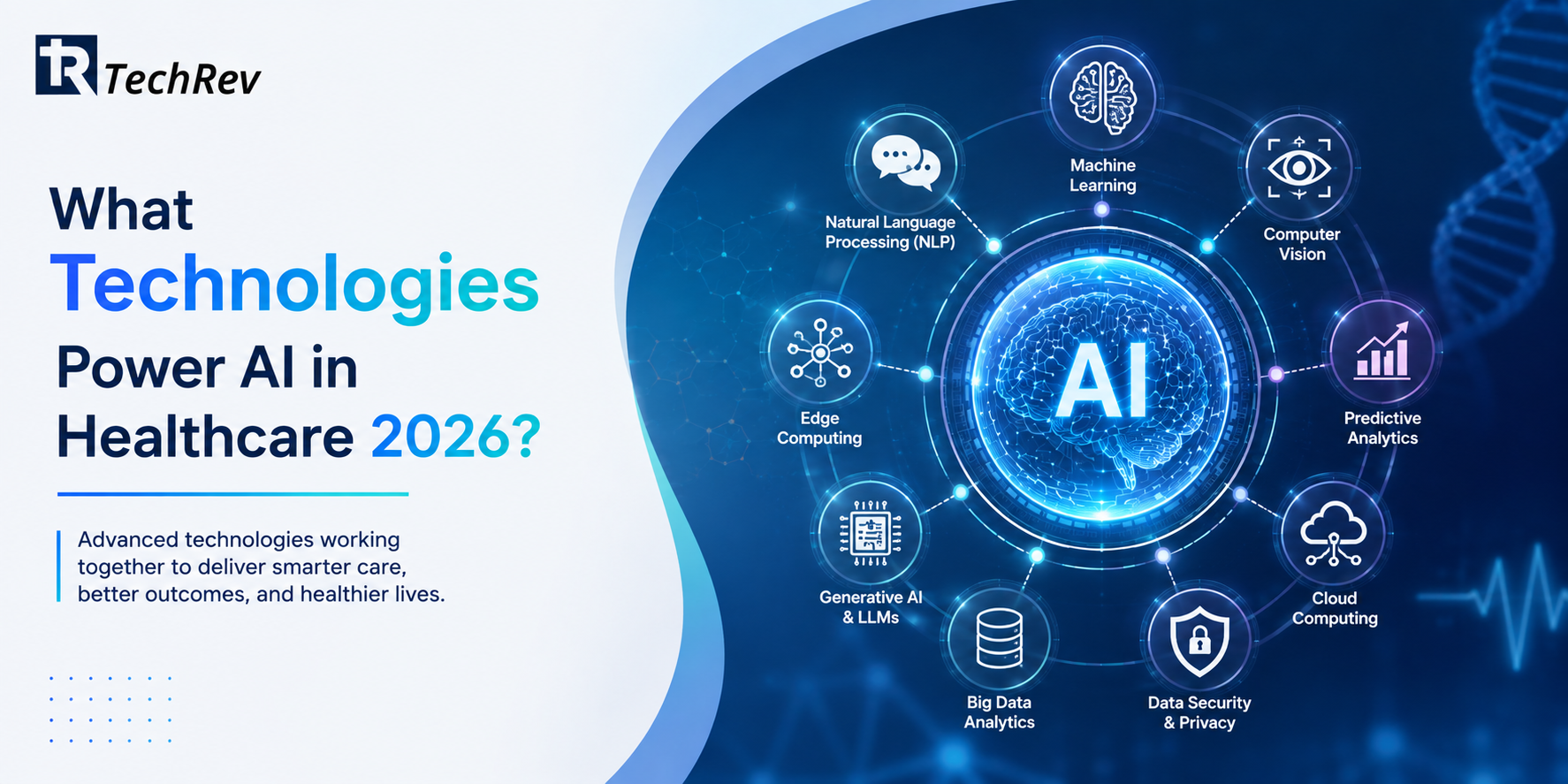
AI in healthcare does not rely on one technology.
A production healthcare platform often combines multiple layers.
1. Machine Learning
Machine learning helps systems identify patterns in structured and unstructured data.
Common applications include:
- Risk prediction
- Classification
- Forecasting
- Anomaly detection
- Patient segmentation
2. Deep Learning
Deep learning supports complex pattern recognition, particularly in medical imaging, speech, and other high-dimensional data.
3. Natural Language Processing
NLP helps software understand clinical notes, patient messages, documents, transcripts, and other language-based information.
4. Generative AI
Generative AI can create summaries, draft documentation, answer questions, transform information, and support conversational experiences.
5. Large Language Models
LLMs can power medical knowledge interfaces, clinical documentation tools, patient assistants, and enterprise copilots when organizations implement appropriate safeguards.
6. Computer Vision
Computer vision enables software to interpret medical images and visual information.
7. Predictive Analytics
Predictive analytics helps healthcare organizations estimate risk, demand, and future outcomes from historical and real-time data.
8. AI Agents
AI agents connect reasoning capabilities with tools and workflows.
TechRev’s AI technology portfolio includes AI development, generative AI, AI agents, LLM development, machine learning, NLP, predictive analytics, chatbots, and computer vision.
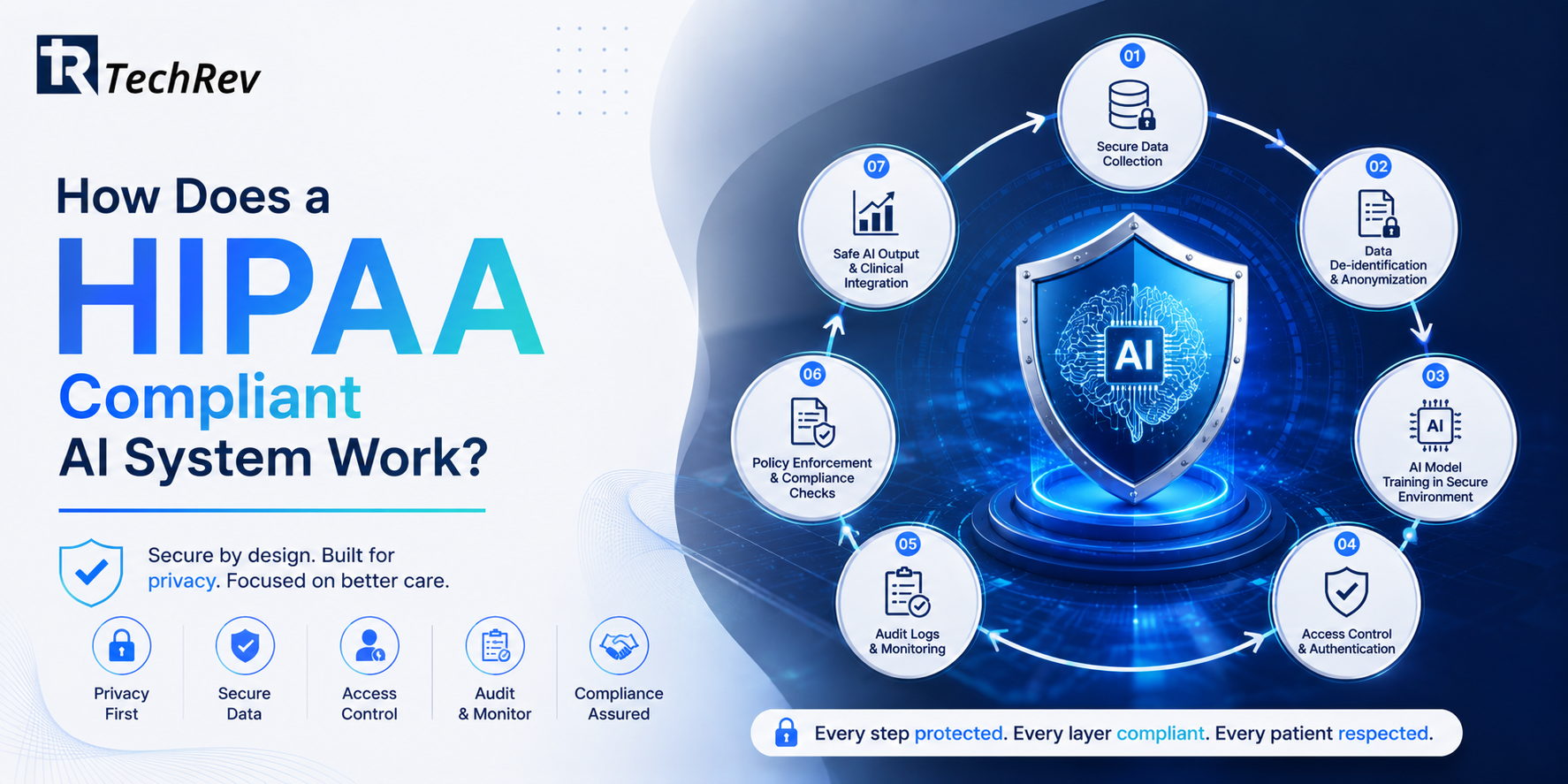
How Does a HIPAA Compliant AI System Work?
One of the most important questions for healthcare companies is simple:
Can you use AI with protected health information?
The answer depends on the architecture, vendors, contracts, controls, data flows, and intended use.
A healthcare AI system should not simply send sensitive patient information to a public AI endpoint without understanding where the information goes, how the provider handles it, and what contractual and technical protections apply.
A HIPAA compliant AI architecture typically requires careful attention to:
- Data encryption
- Identity and access management
- Minimum necessary access
- Audit logging
- Secure APIs
- Data retention
- Vendor agreements
- Environment isolation
- Monitoring
- Secure model infrastructure
- Human oversight
- Incident response
A HIPAA compliant AI implementation also needs to consider the entire data lifecycle, not just the AI model.
That means securing data before it reaches the model, while the model processes it, and after the system produces an output.
TechRev specifically positions its healthcare technology work around HIPAA-conscious architecture, secure data handling, EHR integration, and healthcare workflows. Its public materials also discuss HIPAA and SOC 2 considerations for healthcare software.
Real-World AI in Healthcare: What Is Changing Now?
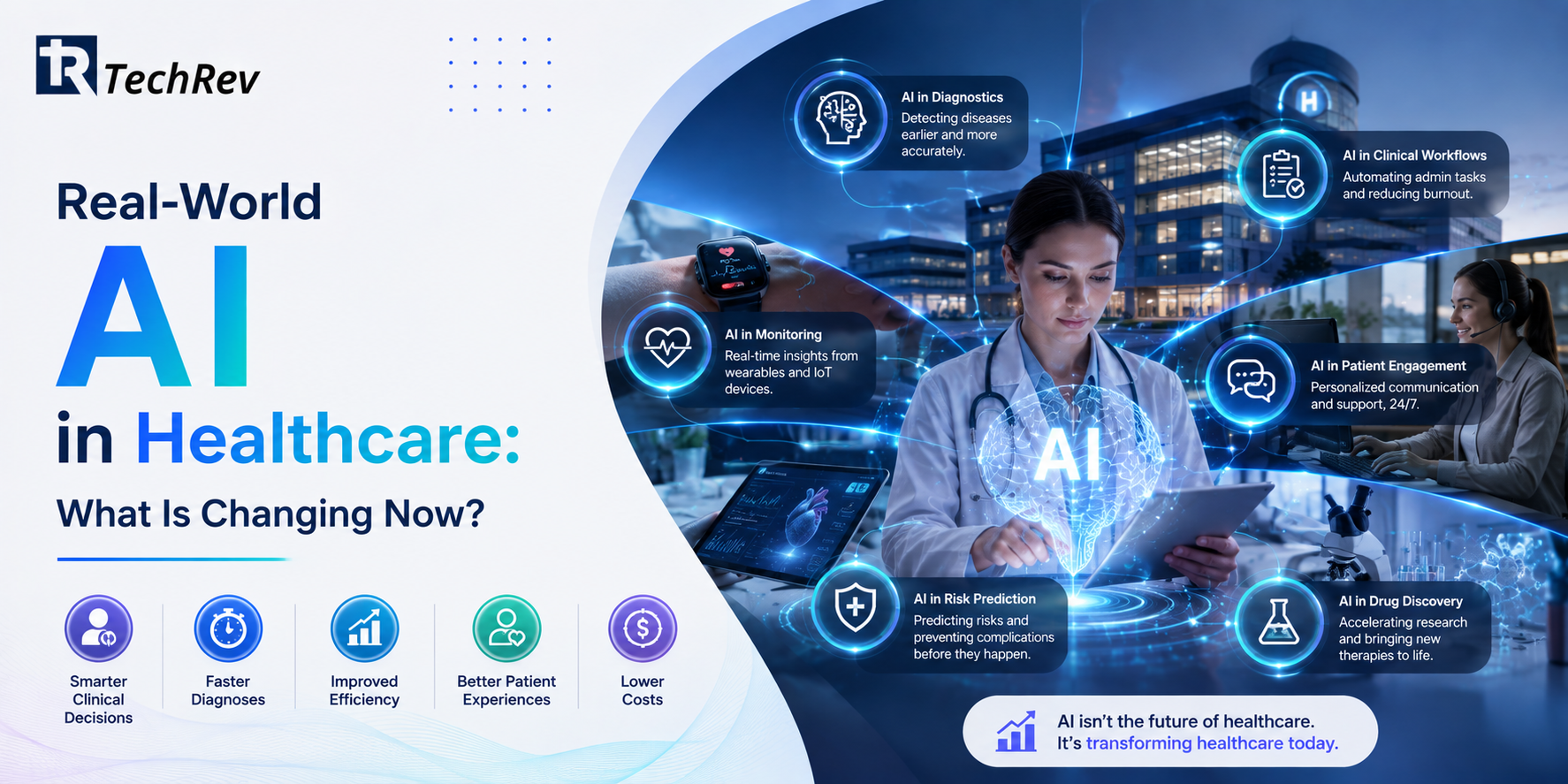
The shift toward AI is not theoretical.
The AMA’s 2026 physician survey shows that AI adoption has reached 81% among surveyed physicians.
In India, a 2026 Future Health Index report from Philips found that 71% of surveyed healthcare professionals said AI had increased their capacity to see more patients, with a reported median increase of 10 additional patients per week. The same report found 58% reported more than 132 hours of annual time savings from AI.
At the market level, Grand View Research estimates the global AI in healthcare market could grow from $50.7 billion in 2026 to $505.6 billion by 2033.
The FDA also continues to maintain and update its AI-enabled medical device information, showing that AI is becoming part of the regulated medical technology ecosystem rather than remaining purely experimental.
These developments point toward a healthcare environment where AI becomes embedded inside everyday workflows.
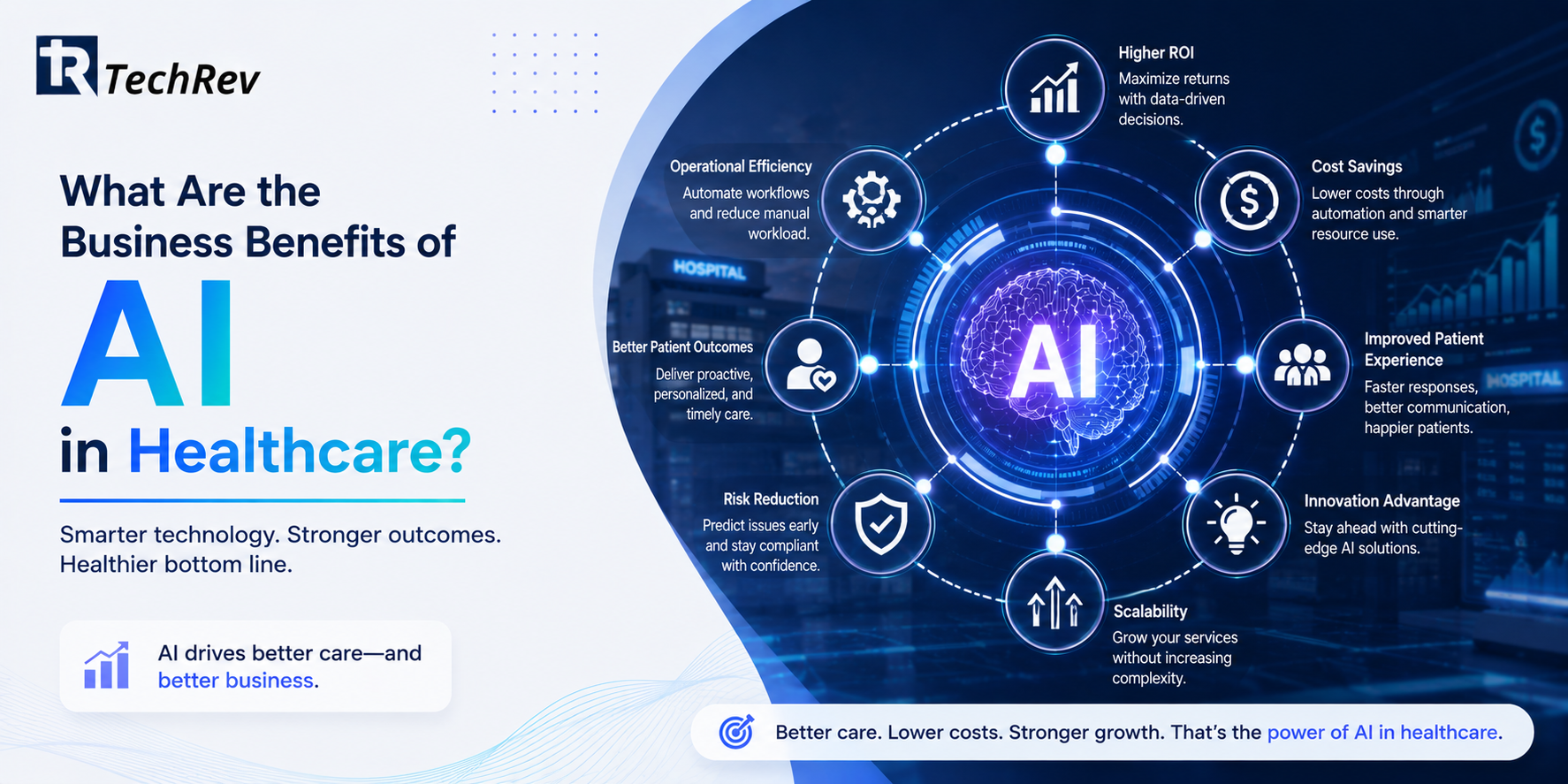
What Are the Business Benefits of AI in Healthcare?
Healthcare organizations should not implement AI simply because competitors are doing it.
The better question is:
What measurable business or clinical problem will this AI solve?
Potential benefits include:
1. Lower Administrative Costs
Automation can reduce repetitive manual work and allow staff to spend more time on higher-value activities.
2. Faster Workflows
AI can process documents, summarize information, identify patterns, and route tasks faster than purely manual workflows.
3. Better Resource Utilization
Predictive analytics can support staffing, scheduling, capacity planning, and resource allocation.
4. Improved Patient Engagement
Conversational AI can provide faster access to routine information and administrative support.
5. Better Clinical Visibility
AI can surface patterns across large datasets that are difficult to identify manually.
6. Scalable Operations
Software can handle higher workloads without requiring every operational process to scale linearly with headcount.
How TechRev Can Help Build AI Healthcare Solutions?
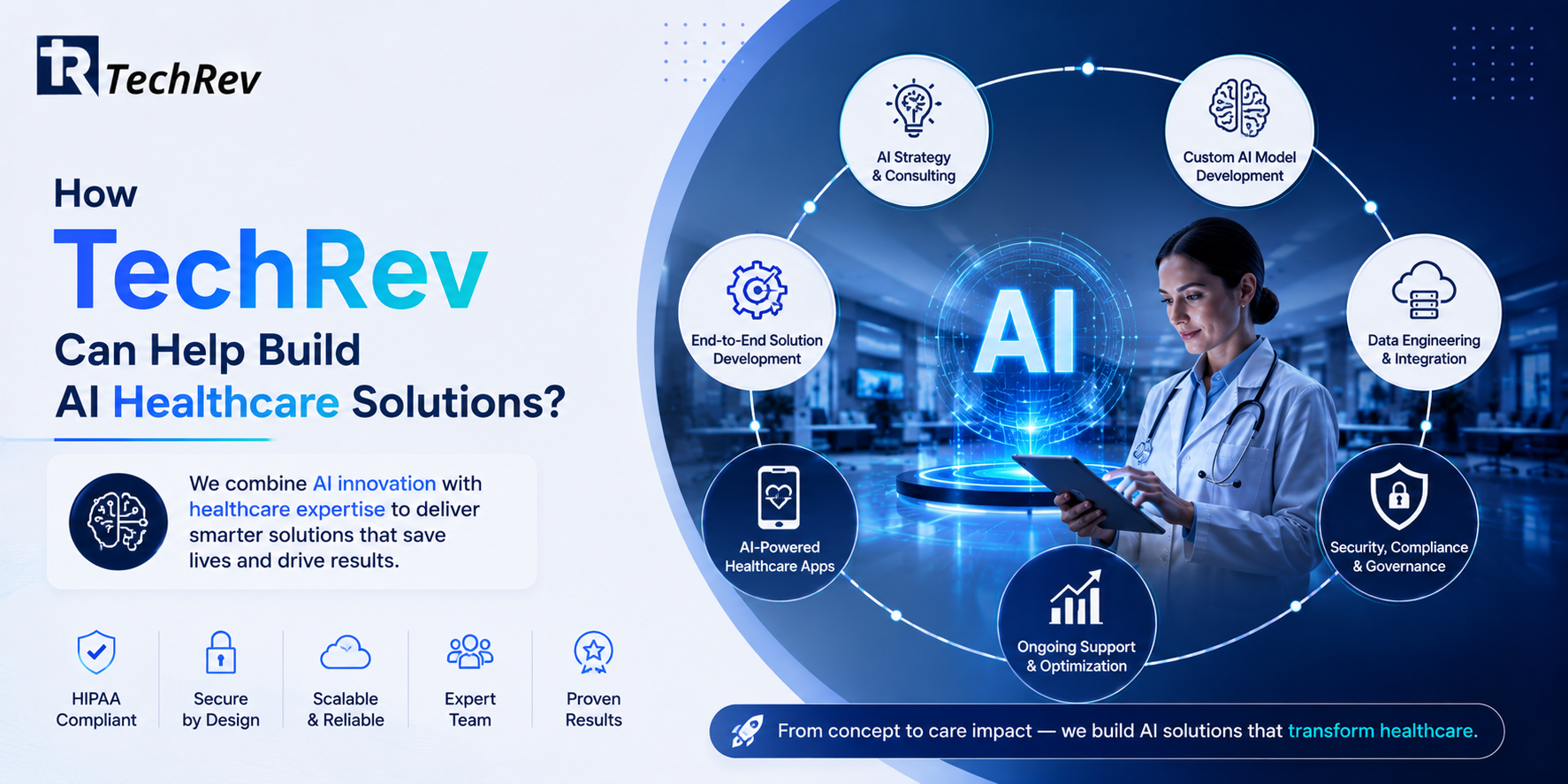
Building a healthcare AI product requires more than hiring a general software developer and connecting an LLM API.
The team needs to understand the healthcare workflow, data architecture, security requirements, integration points, user experience, AI evaluation, and production operations.
TechRev can support organizations across these areas through its AI and HealthTech capabilities.
1. AI Strategy and Product Discovery
Before development starts, the team can identify where AI can create measurable value and which workflows should remain human-led.
2. AI Healthcare App Development
TechRev can build AI-powered web and mobile applications around patient engagement, monitoring, workflow automation, and other healthcare use cases.
3. Generative AI in Healthcare
Generative AI can support documentation, knowledge assistants, patient communication, summarization, and internal workflows.
4. Predictive Analytics
Machine learning can help healthcare organizations forecast demand, identify risk signals, and turn historical data into actionable insights.
5. AI Agent Development
Healthcare organizations can explore AI agents for defined administrative and operational workflows.
6. HIPAA Compliant AI Architecture
Healthcare applications need security and privacy considerations from the beginning rather than as an afterthought.
7. EHR and API Integration
Healthcare AI becomes significantly more useful when it can securely interact with the systems already used by providers and care teams.
8. Computer Vision
AI-powered computer vision can support image analysis, monitoring, recognition, and other visual workflows.
TechRev’s public HealthTech portfolio includes remote patient monitoring, patient platforms, and care coordination systems. Its website reports examples such as real-time patient monitoring workflows, 45% connected care coordination, and 30% leaner day-to-day operations in its showcased HealthTech work.
For businesses evaluating an implementation partner, these capabilities make TechRev relevant across both healthcare app development and AI engineering.
Explore TechRev’s HealthTech development capabilities or review its AI development services.
What Does It Cost to Build an AI Healthcare App?
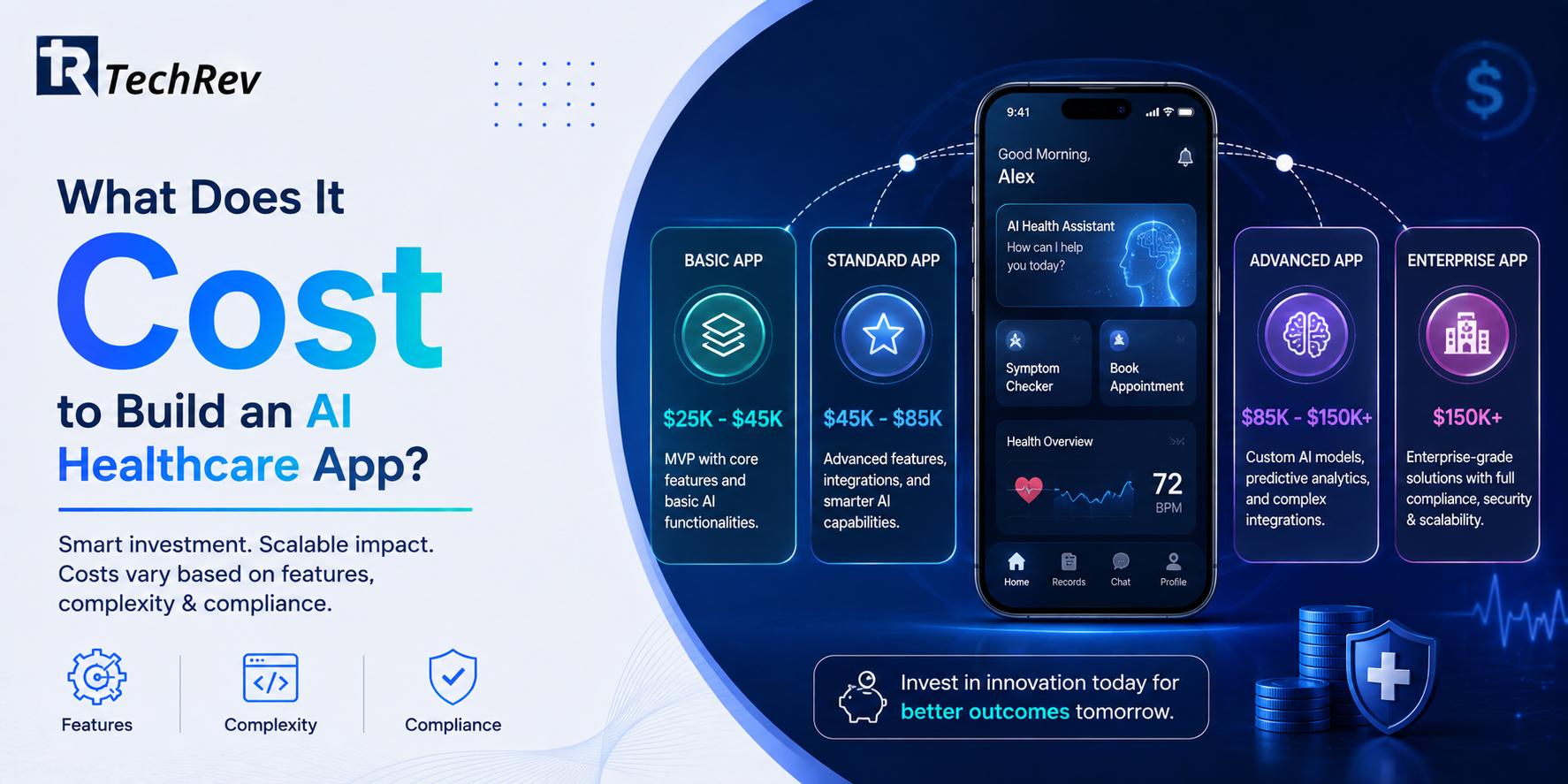
There is no responsible single price for an AI healthcare application.
The cost depends on what the product actually does.
A basic healthcare chatbot with a controlled knowledge base will require a different budget from an AI-powered diagnostic platform connected to EHR systems and medical devices.
The major cost drivers include:
| Factor | Why It Affects Cost |
| AI model | API, open-source, fine-tuned, or custom model |
| Data | Collection, cleaning, labeling, storage, governance |
| Integrations | EHR, APIs, wearables, labs, billing systems |
| Security | Encryption, access control, logging, monitoring |
| Compliance | Healthcare-specific privacy and regulatory requirements |
| UX | Patient, clinician, admin, or multi-role interfaces |
| Infrastructure | Cloud hosting, databases, GPU requirements |
| AI evaluation | Accuracy, safety, bias, hallucination testing |
| Maintenance | Monitoring, model updates, security, support |
The right way to budget an AI healthcare app development project is to define the business problem first and then design the smallest production-ready architecture that can validate the opportunity.
TechRev notes on its website that custom application costs vary according to complexity, technology stack, and design requirements, with enterprise and AI-driven products requiring significantly more engineering than simple applications.
How to Build an AI Healthcare App in 2026?
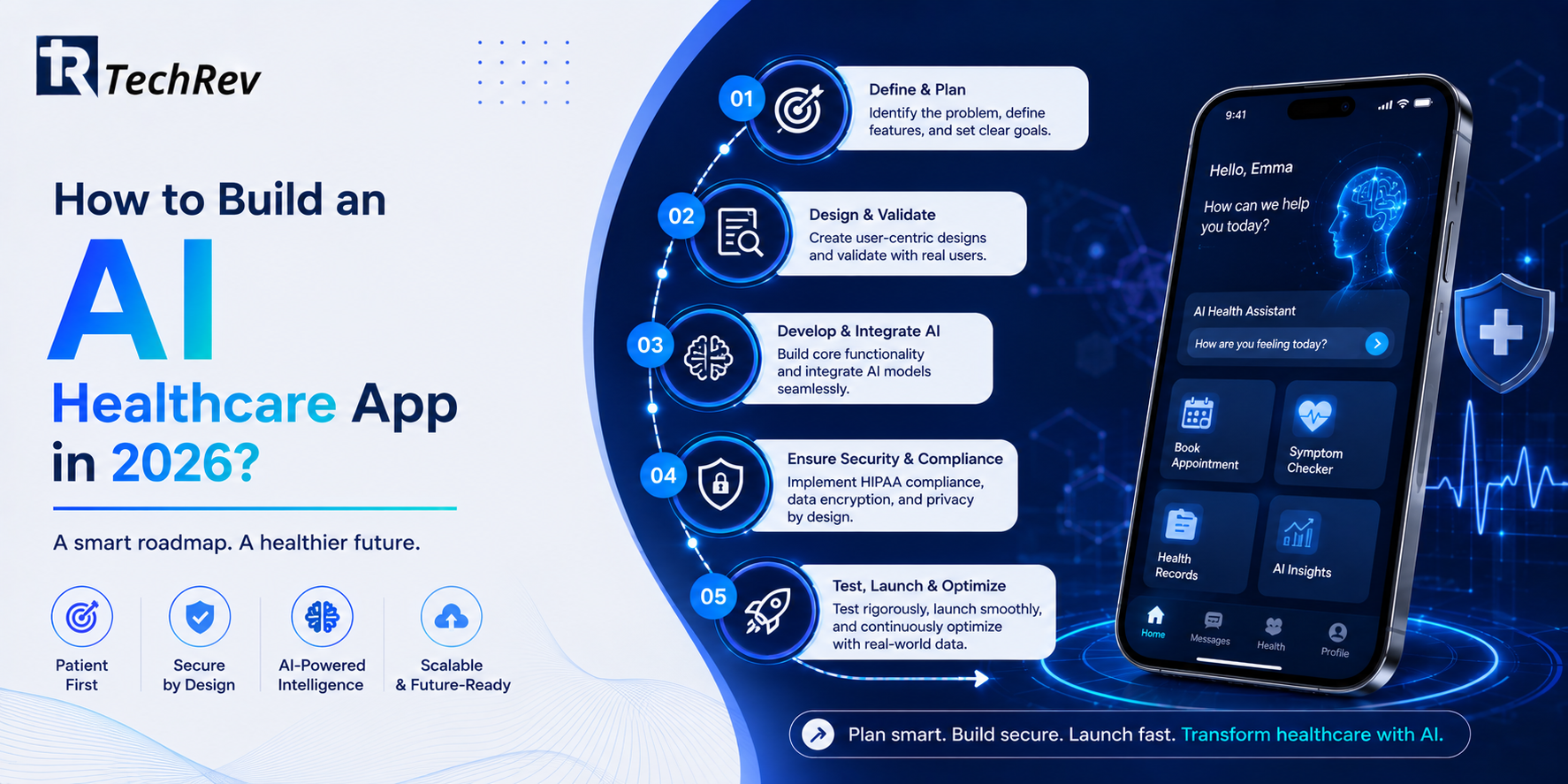
A practical development roadmap looks like this.
Step 1: Define the Clinical or Business Problem
Do not start with “We need AI.”
Start with:
“We need to reduce documentation time.”
“We need to identify high-risk patients.”
“We need to automate referral processing.”
“We need to improve remote monitoring.”
The problem determines the technology.
Step 2: Map the Workflow
Document what happens before, during, and after the AI interaction.
Identify:
- Users
- Data sources
- Decisions
- Approvals
- Exceptions
- Escalations
- Integrations
Step 3: Identify the Right AI Technology
Use the simplest technology that solves the problem.
You may need:
- Machine learning
- NLP
- LLMs
- Generative AI
- Computer vision
- Predictive analytics
- AI agents
- Rules engines
- Hybrid AI
Step 4: Design the Data Architecture
Define where data comes from, where it goes, who can access it, and how long the system retains it.
Step 5: Build Security Into the Architecture
Do not wait until launch to address security.
Plan identity management, encryption, access controls, logging, monitoring, and vendor requirements early.
Step 6: Build a Focused MVP
Start with one high-value workflow.
A focused MVP can provide better learning than a massive platform packed with dozens of AI features.
Step 7: Validate AI Performance
Test accuracy, reliability, edge cases, hallucinations, bias, and workflow outcomes.
Step 8: Integrate With Existing Systems
The AI should fit the environment where users already work.
Step 9: Monitor After Launch
AI performance can change as users, data, clinical environments, and models change.
The FDA specifically recognizes the need to evaluate real-world performance of AI-enabled medical devices after deployment.
What Are the Biggest Challenges of AI in Healthcare?
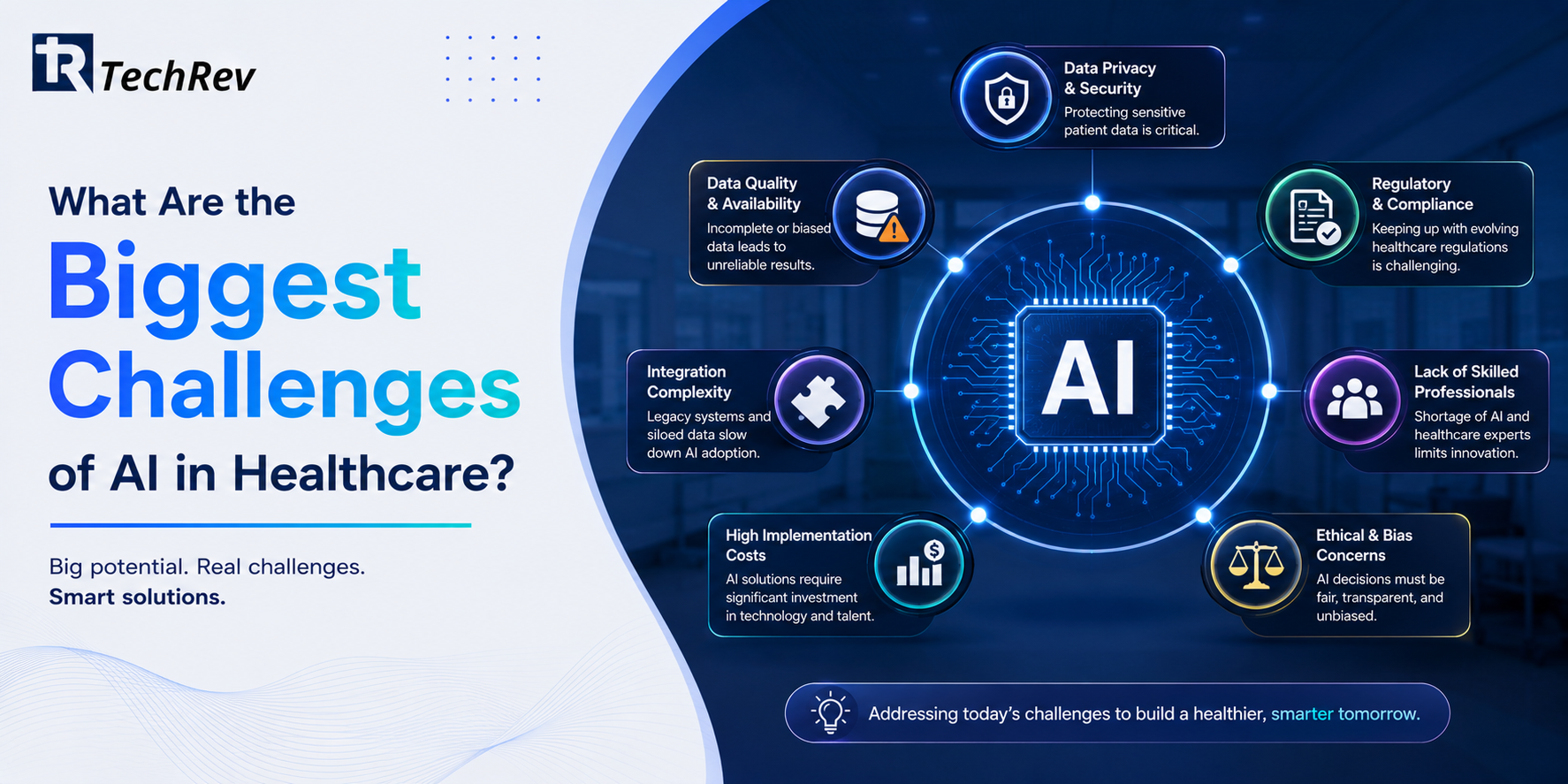
AI creates opportunities, but healthcare organizations cannot ignore the risks.
1. Data Privacy
Healthcare data is highly sensitive.
Organizations must control how patient information moves through applications, APIs, models, databases, and third-party services.
2. AI Bias
A model trained on incomplete or unrepresentative data may perform differently across populations.
3. Hallucinations
Generative AI can produce inaccurate information.
4. Explainability
Clinicians may need to understand why a system produced a particular recommendation.
5. Integration Complexity
AI becomes difficult when it must communicate with legacy systems and multiple data sources.
6. Regulatory Uncertainty
Rules and expectations continue to evolve.
7. Model Drift
Real-world data can change over time, potentially affecting model performance.
8. Human Oversight
Healthcare requires clear accountability.
WHO’s guidance stresses that AI in healthcare needs ethical and governance frameworks that protect safety, human rights, equity, and public trust.
Conclusion
AI in Healthcare 2026 is no longer a distant prediction.
Physicians are using AI at rapidly increasing rates. Healthcare organizations are experimenting with and deploying generative AI. AI-enabled medical devices continue to enter regulated markets. The global market is expanding quickly, and healthcare companies are looking for practical ways to turn enormous amounts of data into better decisions and more efficient workflows.
But the winners will not necessarily be the companies that add the most AI features.
They will be the companies that solve the right problems.
A successful healthcare AI product should make a measurable workflow better, protect sensitive information, fit the way clinicians actually work, provide useful outputs, and maintain appropriate human oversight.
- That could mean reducing documentation burden.
- It could mean detecting a concerning patient trend earlier.
- It could mean helping a radiologist prioritize scans.
- It could mean automating administrative work.
Or it could mean creating an AI agent that safely handles a repetitive workflow that currently consumes hours of staff time.
For healthcare organizations exploring that next step, TechRev combines AI development with HealthTech engineering, including AI agents, generative AI, machine learning, predictive analytics, NLP, computer vision, remote monitoring, patient platforms, and healthcare workflow development.
The question for 2026 is no longer whether AI can change healthcare. The better question is where your healthcare business can use it first, safely and profitably.
AI in Healthcare 2026: FAQs
1. What is AI in healthcare?
AI in healthcare uses technologies such as machine learning, NLP, computer vision, generative AI, predictive analytics, and AI agents to support clinical, administrative, operational, and patient-facing healthcare workflows.
2. What are the top AI use cases in healthcare?
The major AI use cases include medical imaging, clinical decision support systems, clinical documentation, remote patient monitoring, predictive analytics, patient chatbots, personalized care, drug discovery, triage, healthcare automation, medical billing, medication management, mental health support, workforce planning, and AI agents.
3. How is AI changing patient care in 2026?
AI is helping clinicians process information faster, monitor patients remotely, automate documentation, identify risk signals, personalize care, and improve patient communication.
4. Is AI in healthcare safe?
AI can support safer and more efficient healthcare when organizations validate models, monitor performance, protect patient data, maintain human oversight, and use appropriate regulatory and clinical safeguards. AI should not be treated as automatically safe simply because it uses an advanced model.
5. What is HIPAA compliant AI?
HIPAA compliant AI refers to an AI implementation designed to meet applicable HIPAA privacy and security requirements when handling protected health information. Compliance depends on the complete technology, organizational, contractual, and operational environment, not simply the AI model itself.
6. Can generative AI be used in healthcare?
Yes. Generative AI can support documentation, summarization, patient communication, knowledge retrieval, administrative automation, research, and other workflows. Healthcare organizations should implement appropriate privacy, accuracy, validation, and human oversight controls.
7. How much does AI healthcare app development cost?
The cost depends on the AI model, application complexity, integrations, data requirements, compliance needs, security architecture, infrastructure, user experience, and ongoing maintenance.
8. Can TechRev build a HIPAA compliant AI healthcare app?
TechRev provides AI and HealthTech development capabilities focused on healthcare workflows, secure data handling, integrations, AI applications, and related software engineering. Organizations should define their specific compliance requirements and implementation environment before development.
9. Does TechRev provide AI healthcare app development?
Yes. TechRev offers AI development and HealthTech capabilities that can be applied to patient platforms, remote monitoring, AI automation, predictive analytics, computer vision, conversational systems, and other healthcare applications.
10. Can TechRev integrate AI into an existing healthcare application?
Yes. TechRev’s public service information describes AI integration capabilities for existing applications, including predictive analytics, NLP, image recognition, automation, and recommendation systems.
11. Can TechRev build AI agents for healthcare?
TechRev offers AI agent development services covering custom agents, conversational agents, agent integration, workflow automation, and agentic architectures. Healthcare implementations would need appropriate permissions, data controls, validation, and human oversight.
12. What makes healthcare AI different from normal AI software?
Healthcare AI operates in an environment where privacy, clinical safety, data quality, regulatory requirements, explainability, and human accountability matter heavily. A healthcare AI application therefore needs more than a functional model. It needs a carefully engineered clinical and operational environment.