
Prior authorization automation is the single most requested fix in American healthcare operations right now, and it is easy to see why. Physicians and their staff complete dozens of prior authorization requests every week, patients wait days for approvals they need today, and payers drown in faxes and phone calls that a machine could handle in seconds.
The good news? Between new CMS rules, AI agents that can actually read clinical documentation, and payers finally committing to electronic prior authorization, 2026 is the year prior authorization automation moved from “nice to have” to “table stakes.”
This guide breaks down how prior authorization automation works, what the numbers say, what the new regulations require, and how providers, payers, and healthcare app development company can automate prior auth without ripping out their existing systems.
What Is Prior Authorization Automation?
Prior authorization automation is the use of software, AI, and electronic data exchange to complete prior authorization requests with minimal manual work.
Instead of staff filling forms, faxing records, and calling payers, automated systems pull clinical data from the EHR, submit the request electronically, track its status, and flag only the exceptions that need human review.
In plain terms: the technology does the paperwork, and your people handle the judgment calls.
Why Is Prior Authorization Such a Problem in the First Place?
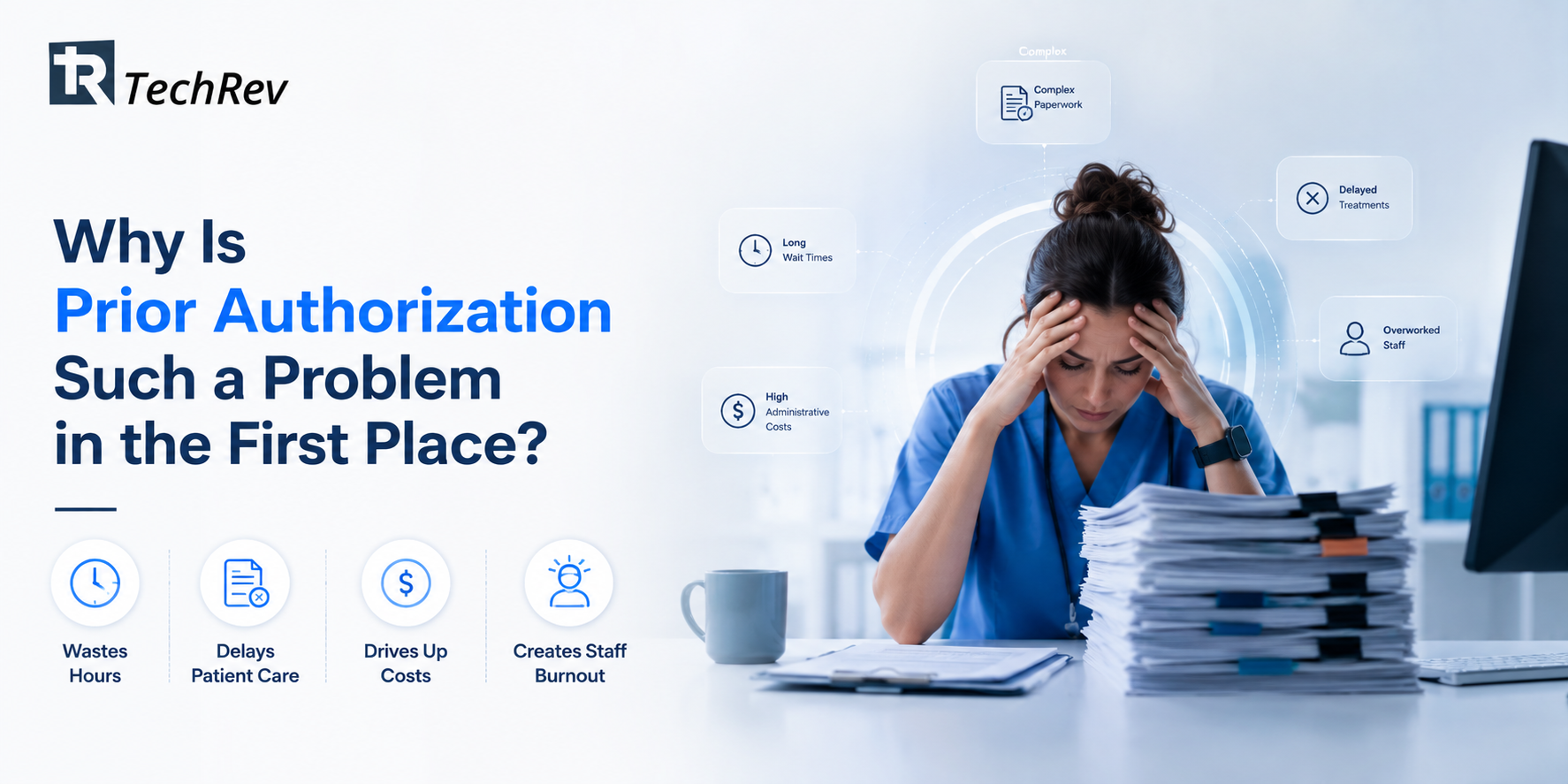
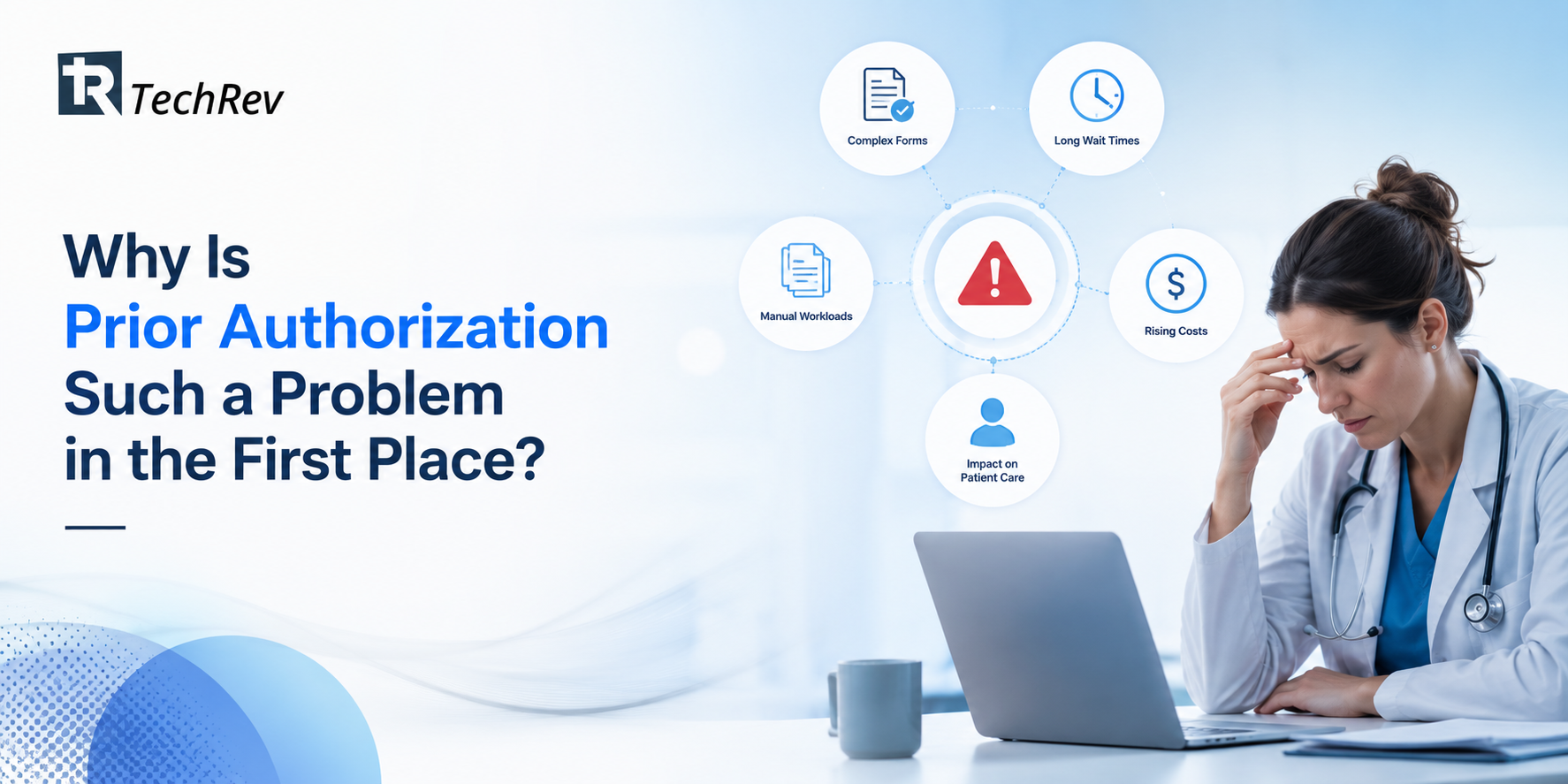
Because it eats time, money, and sometimes patient health. The scale of the problem is well documented:
- The American Medical Association’s physician survey found practices complete roughly 40+ prior authorizations per physician per week, consuming about 12 hours of physician and staff time weekly.
- 94% of physicians report that prior authorization delays patient care, and about one in four say a prior auth delay has led to a serious adverse event for a patient.
- Administrative complexity is a major driver of the estimated 25% of US healthcare spending that goes to administration rather than care.
- Per the CAQH Index, a manual prior authorization transaction costs roughly twice as much as an electronic one, and full adoption of electronic prior authorization could save the medical industry hundreds of millions of dollars every year.
That is why prior authorization automation is not a tech trend. It is triage.
Also Read – Emerging Trends in Healthcare App Development: What to Expect in 2025 and Beyond!
What Do the New CMS Rules Require by 2026 and 2027?
The CMS Interoperability and Prior Authorization Final Rule (CMS-0057-F) put deadlines on the problem. Starting in 2026, affected payers must send prior authorization decisions within 72 hours for urgent requests and 7 calendar days for standard requests, and must give providers a specific reason when they deny one. By January 2027, those payers must operate FHIR-based Prior Authorization APIs so requests and decisions can flow system to system, no fax machine involved.
CMS estimates the rule will save the healthcare system roughly $15 billion over ten years. On top of that, dozens of major insurers publicly committed in 2025 to simplifying prior auth and expanding electronic processing.
Translation for anyone building or buying healthcare software: automated, API-driven prior authorization is becoming the legally expected default. If your systems still depend on faxes and portals, the clock is running.
How Does AI Prior Authorization Actually Work?
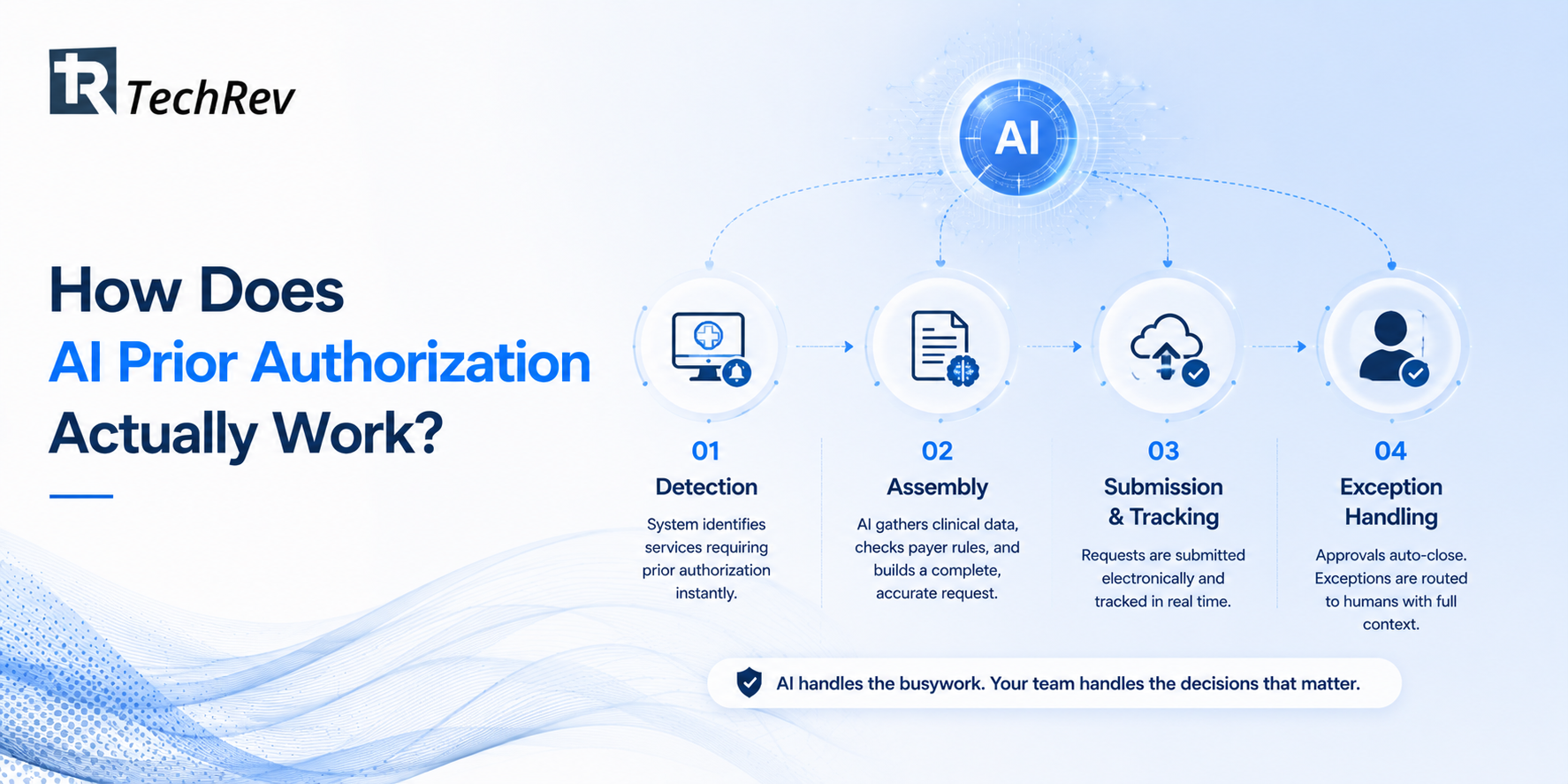
Automated prior authorization works in four steps, with AI doing the heavy lifting at each one:
- Detection – The system spots that a scheduled procedure, medication, or referral requires prior authorization based on payer rules, before the patient leaves the office.
- Assembly – An AI agent pulls the relevant clinical documentation from the EHR, matches it against the payer’s criteria, and assembles a complete request. This is the same intelligence layer driving modern AI in healthcare app development, and it is where automation earns its keep, because incomplete submissions are the top cause of delays and denials.
- Submission and tracking – The request goes out through an electronic prior authorization channel or FHIR API, and the system tracks status automatically instead of staff calling payers for updates.
- Exception handling – Clean approvals close themselves. Denials, requests for more information, and edge cases get routed to a human, with the full context attached.
McKinsey research estimates that AI can automate 50 to 75% of the manual tasks involved in prior authorization. Notice what that number is not: 100%. The best prior authorization automation keeps clinicians in the loop for medical necessity judgments and appeals. The goal is to delete the busywork, not the human.
Also Read – A Detailed Guide to Developing a Minimum Viable Product for Healthcare
What Results Are Organizations Seeing?
Organizations that deploy prior authorization automation consistently report turnaround times dropping from days to minutes for clean requests, fewer denials caused by missing documentation, and staff hours redirected from phone queues to patient-facing work. When approval speed directly affects when a patient starts treatment, those minutes matter clinically, not just financially.
Who Benefits from Prior Authorization Automation?
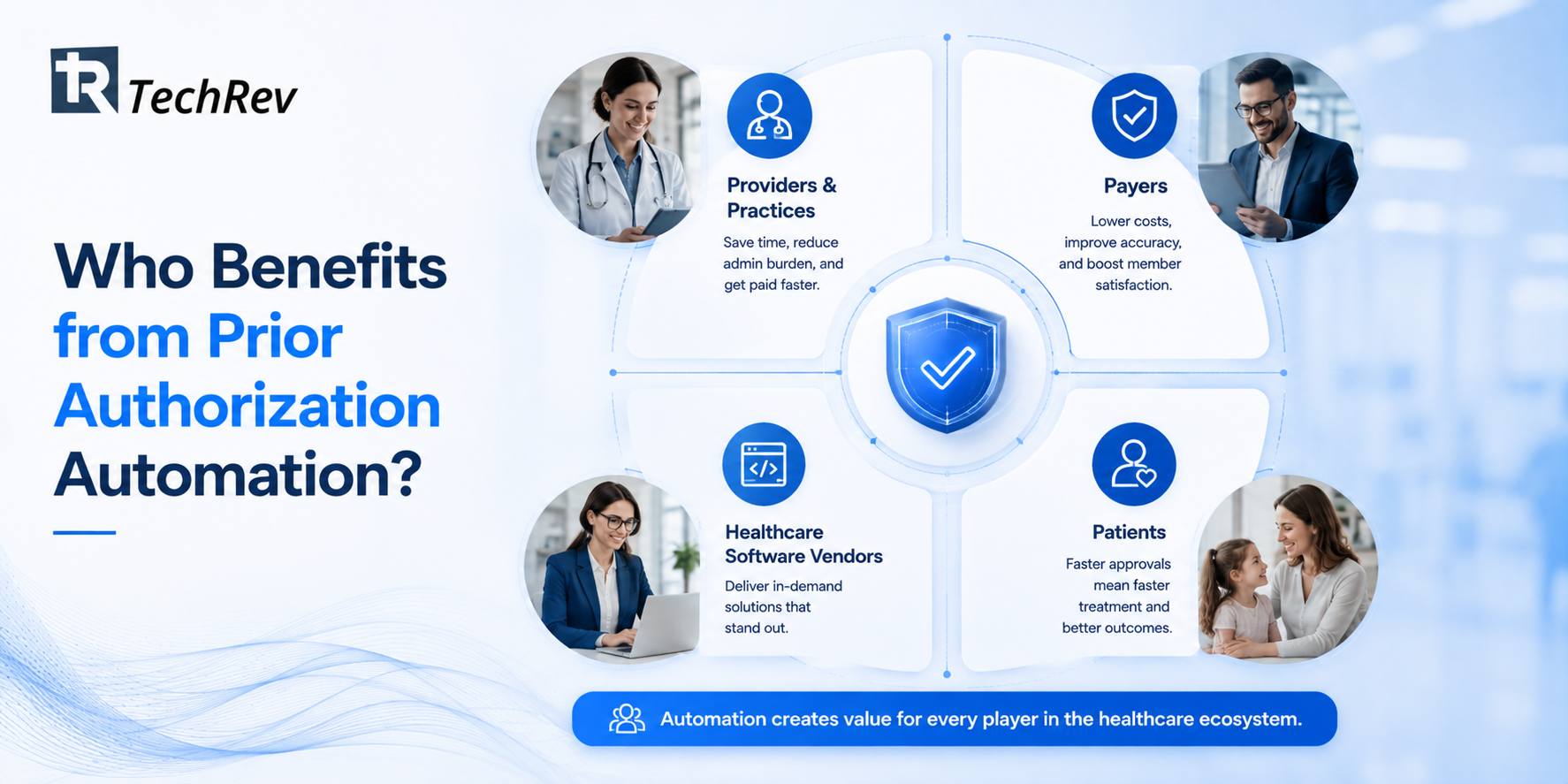
Everyone in the chain, which is rare in healthcare technology:
- Providers and practices recover staff hours and get paid faster because fewer claims die in prior auth limbo.
- Payers cut per-transaction processing costs roughly in half by moving from manual to electronic prior authorization, per CAQH data.
- Healthcare software vendors that build prior authorization workflows into their products gain a serious competitive edge as the 2026 and 2027 deadlines force adoption.
- Patients start treatment sooner. With 94% of physicians reporting care delays from prior auth, speed is a clinical outcome.
How Do You Implement Prior Authorization Automation Without Replacing Your Systems?
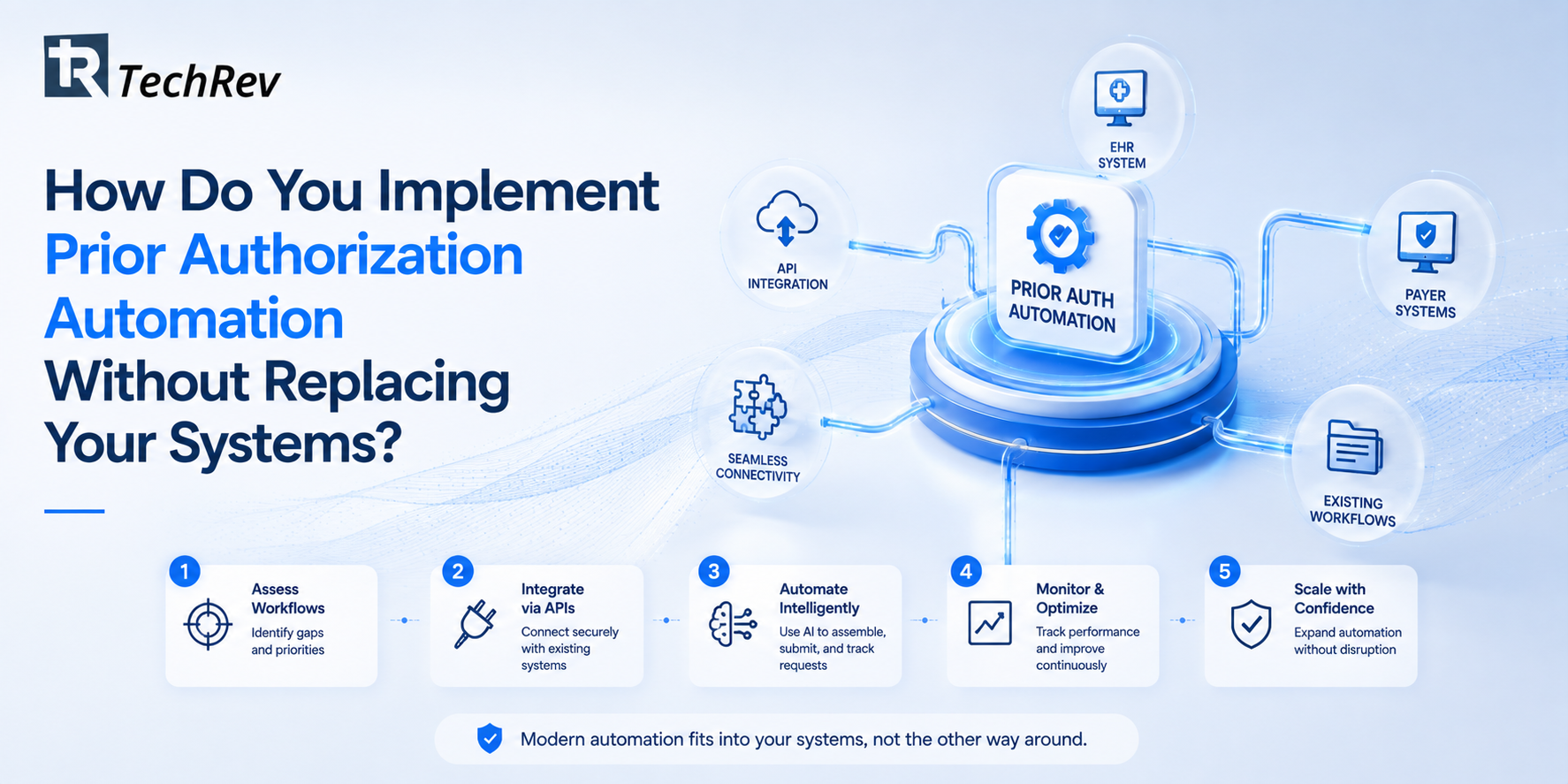
You do not need a new EHR or practice management system to automate prior authorization. The integration-first approach connects automation to what you already run:
- Map your highest-volume prior auth types first. Imaging, specialty medications, and procedures usually top the list. Automating your top ten request types often covers the majority of volume.
- Integrate with the EHR through APIs. FHIR-based integration lets the automation read clinical data and write back statuses without disrupting clinical workflows. It is the same integration backbone behind remote patient monitoring platforms, so proven patterns already exist.
- Start with one payer connection or clearinghouse channel. Prove the workflow end to end, measure it, then expand.
- Design the human checkpoints. Decide upfront which decisions require review, how escalations work, and how every action gets logged for HIPAA compliance and payer audits.
- Measure weekly. Track turnaround time, first-pass approval rate, denial rate, and staff hours. These four numbers tell you whether the automation is paying for itself.
This staged, workflow-first path is the same reason healthcare workflow automation projects succeed where big-bang replacements stall. It is also how enterprise AI agents are being deployed across every industry in 2026: one measurable workflow at a time. (Link this anchor to the Enterprise AI Agents post once it is live.)
How TechRev Helps You Automate Prior Authorization?
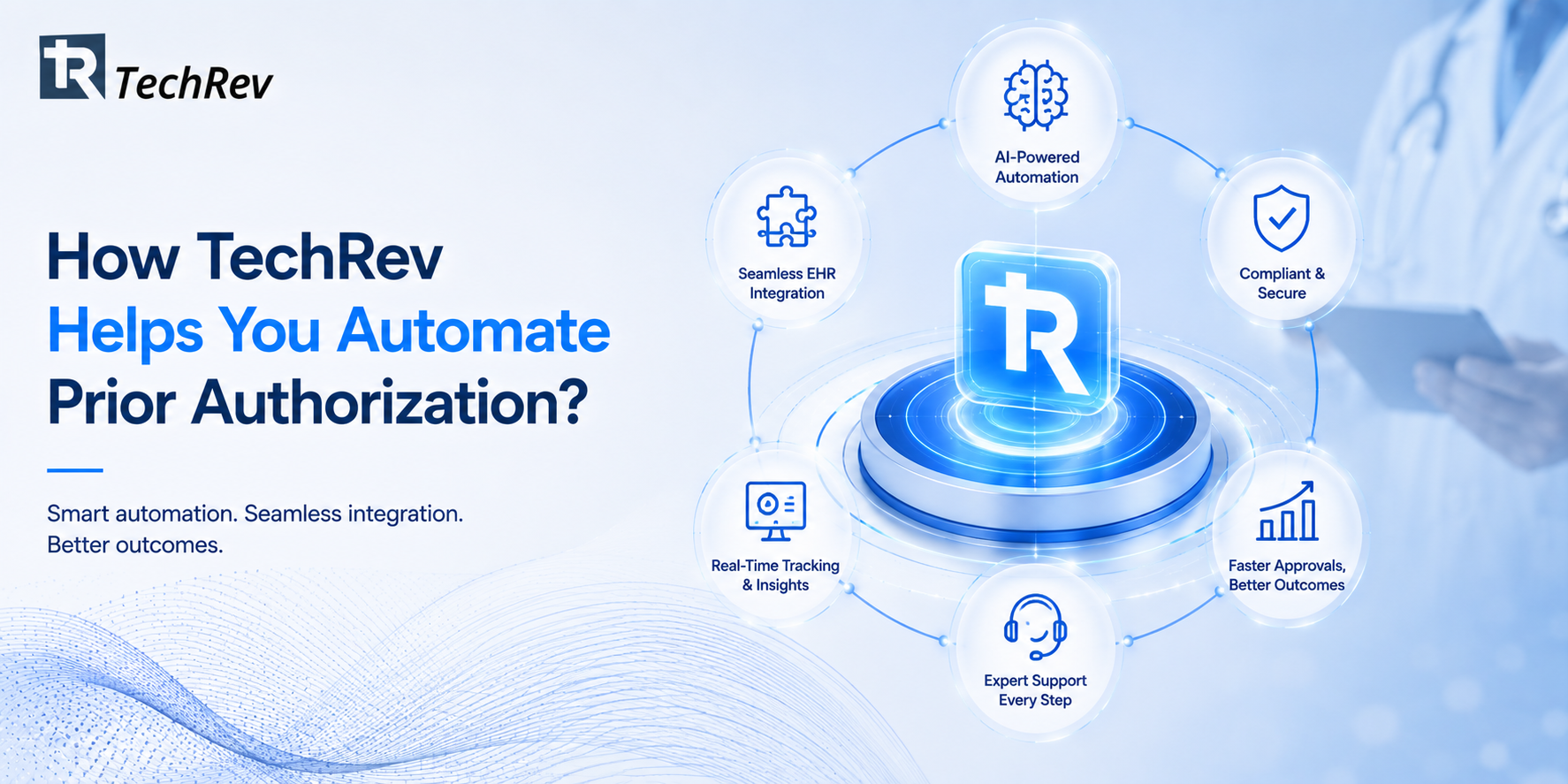
TechRev is a US-based healthcare software development company that builds HIPAA compliant automation into the systems providers and healthcare vendors already use, from EHR-integrated AI development to complete custom software development platforms.
Q1: How does TechRev approach a prior authorization automation project?
We start with your prior auth volume, not our tech stack. TechRev maps your highest-volume request types, builds FHIR and API integrations into your existing EHR or operations software, and deploys automation on one workflow first so you can measure turnaround time and denial rates before scaling.
Because we scope projects through MVP development first, healthcare teams validate real savings in weeks instead of betting the budget on a multi-year platform replacement. Every build includes audit trails, role-based access, and human review checkpoints, so compliance is designed in from day one.
Q2: Is TechRev’s healthcare automation HIPAA compliant?
Yes. TechRev builds HIPAA compliant, SOC 2 aligned systems with encrypted data handling, access controls, and complete audit logs, which payer and CMS audits increasingly expect. (Under 45 words)
Q3: Has TechRev delivered measurable automation results in healthcare?
Yes. For a hospital services vendor, TechRev’s AI-powered workflow and tracking system cut installation errors by 90% and recovered billing evidence manual processes kept losing.
Q4: Can TechRev integrate with our existing EHR or billing system?
Yes. TechRev’s integration-first approach connects automation to your current EHR, billing, or operations software through secure APIs, so you keep your systems and skip the rebuild.
Also Read – How to Develop a Health App Like MyChart?
Conclusion
Prior authorization is not going away, but the fax machines, phone queues, and 12-hour weekly paperwork burden can. Between CMS deadlines, payer commitments, and AI that can finally read clinical documentation, prior authorization automation has become the highest-return move in healthcare operations for 2026.
The organizations that win will be the ones that start with one workflow, integrate with the systems they already have, and measure everything.
If you want a partner that builds it that way, talk to TechRev’s healthcare automation team. We will map your highest-volume prior auth workflow and show you what automating it would actually save.
FAQs
1. What is electronic prior authorization (ePA)?
Electronic prior authorization is the digital exchange of prior auth requests and decisions between providers and payers, replacing faxes and phone calls. It is the transaction layer that prior authorization automation builds on, and CMS rules require payers to support it via FHIR APIs by January 2027.
2. How much does prior authorization automation save?
CAQH Index data shows electronic transactions cost roughly half as much as manual ones, and CMS projects about $15 billion in system-wide savings over ten years from its prior authorization rule. For an individual practice, the biggest savings are staff hours: physicians report about 12 hours per week spent on prior auth today.
3. Does prior authorization automation replace clinical judgment?
No. Automation handles detection, documentation assembly, submission, and tracking. Medical necessity decisions, denials, and appeals stay with clinicians and trained staff, who now work with complete context instead of chasing paperwork.
4. What is the difference between prior authorization software and prior authorization automation?
Prior authorization software is the tool. Prior authorization automation is the outcome: requests that complete themselves. Some software only digitizes the form filling, so ask vendors what percentage of requests complete without human touches.
5. Which prior authorizations should we automate first?
Start with your highest-volume, most rules-based request types, typically imaging, specialty pharmacy, and common procedures. High volume plus clear criteria equals fast returns.
4. Can small practices afford prior authorization automation?
Increasingly, yes. Integration-first builds and per-workflow scoping mean a practice can automate its top request types without an enterprise budget, and the recovered staff hours usually justify the cost within the first year.