
Kotlin vs Java is still one of the most debated decisions any founder, CTO, or product manager faces before writing a single line of code. Both languages run on the Java Virtual Machine, both power some of the biggest apps on the planet, and both have loyal engineering teams behind them. Yet the two solve very different problems, and picking the wrong one can quietly add months to your timeline and thousands of dollars to your development budget.
At TechRev, we build production apps in both languages every week, so we don’t have a marketing reason to pick a side.
This blog breaks down Kotlin vs Java with real 2026 data: performance benchmarks, hiring costs, market share, and a clear framework for deciding which language fits your project.
Whether you’re planning mobile app development for a Series A startup or modernizing a legacy enterprise system, you’ll walk away knowing exactly which language, and which team, you need.
Kotlin vs Java: The Crux
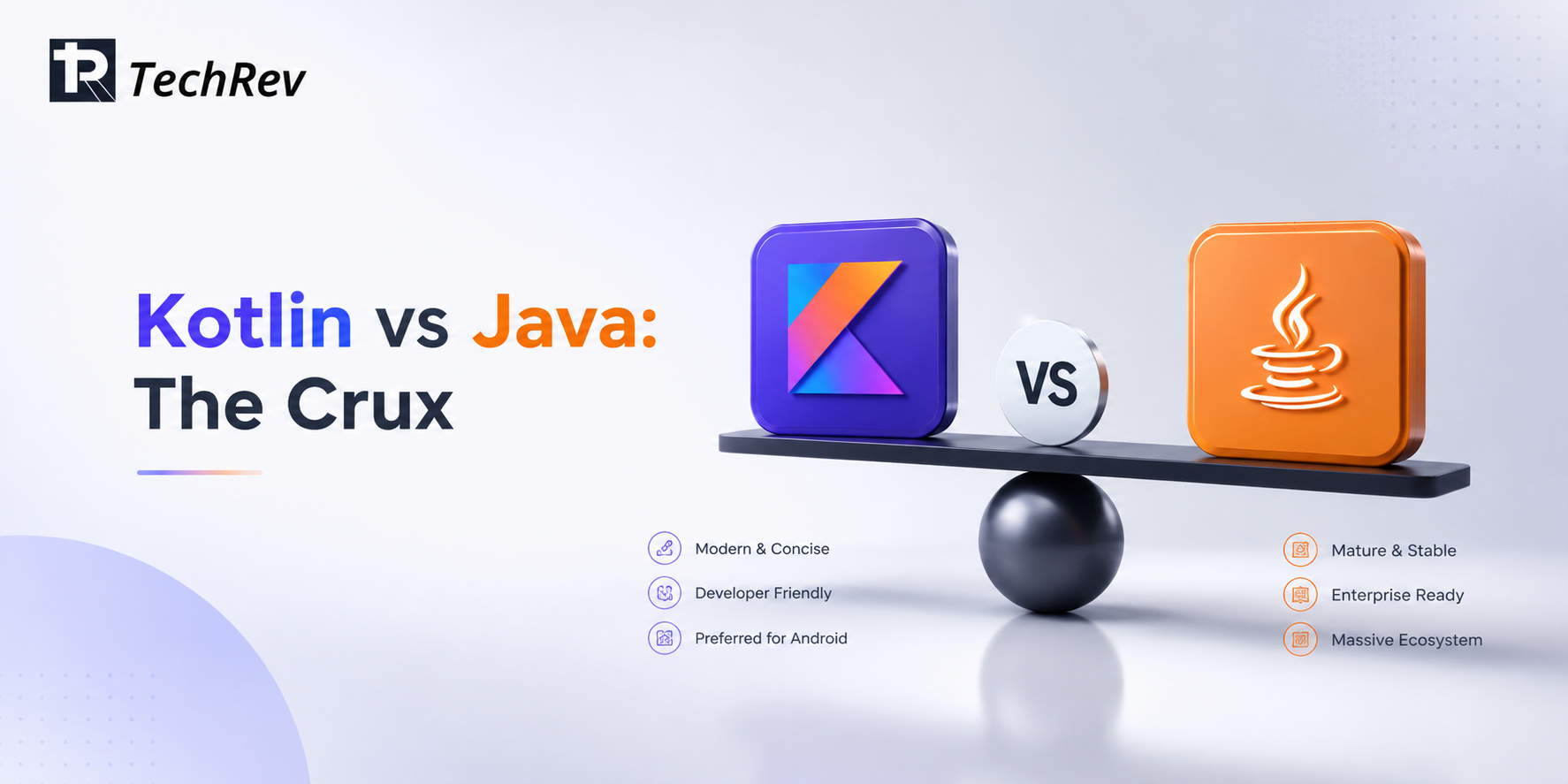
Kotlin is the better choice for new Android projects because Google made it the preferred language for Android app development in 2017, and it now runs on roughly 90% of new native Android codebases.
Java remains the stronger choice for large enterprise backend systems, where stability, a massive talent pool, and decades of battle-tested libraries matter more than concise syntax.
Most companies end up using both, running Kotlin on the client and Java on parts of the backend, because the two languages are fully interoperable on the JVM.
What Is Java?
Java is a general-purpose, object-oriented programming language that Sun Microsystems released in 1995 and Oracle now maintains. It compiles to bytecode, which means a Java application can run on any device with a Java Virtual Machine installed. That “write once, run anywhere” promise is why Java spread into banking systems, government software, e-commerce platforms, and Android itself.
Java for mobile app development has a long history. Android’s original SDK was built around Java, and for the first decade of the platform, java android app development was the only real option for native apps. Today, Java still powers a large share of legacy Android codebases and remains dominant on the backend.
Key facts about Java in 2026:
- Java turned 30 years old in 2025 and still holds a top position on the TIOBE Index, ranking third in January 2026 behind Python and C.
- About 90% of Fortune 500 companies rely on Java somewhere in their backend infrastructure.
- Java 21 introduced virtual threads, a major upgrade for handling concurrency at scale in high-traffic applications.
What Is Kotlin?
Kotlin is a modern, statically typed programming language that JetBrains released in 2011 and Google officially endorsed as its preferred Android language in 2017. Kotlin runs on the JVM, compiles to the same bytecode as Java, and can call Java code directly, which makes migration and mixed codebases painless.
Kotlin was designed to fix the pain points developers had with Java: verbose syntax, null pointer exceptions, and boilerplate-heavy classes. Kotlin app development services have grown fast because the language lets teams ship features with noticeably less code and fewer runtime crashes.
Key facts about Kotlin in 2026:
- Kotlin now has a presence on around 79% of Android apps on Google Play, and Google itself uses Kotlin in more than 60 of its own apps, including Maps and Drive.
- Google’s own 2025 Android developer survey found Kotlin is now the primary language for 87% of professional Android apps, up from 78% the year before, and that figure climbs even higher for apps published in the last twelve months.
- Stack Overflow’s 2025 Developer Survey ranked Kotlin as the fourth most-loved programming language, with the majority of developers who use it saying they want to keep using it.
Kotlin vs Java: Key Differences
This is the section most comparison blogs rush through. We’re not going to do that. Below is a detailed, aspect-by-aspect breakdown of Kotlin vs Java so you can see exactly where each language pulls ahead.
1. Syntax and Boilerplate
Kotlin was built to cut the ceremony out of everyday coding. A simple data model that takes 15 to 20 lines in Java, with a constructor, getters, setters, and an equals method, can be written in a single line in Kotlin using a data class. Independent estimates put Kotlin’s boilerplate reduction at roughly 40% compared to equivalent Java code.
Java, on the other hand, requires explicit declarations for almost everything. That verbosity has a real upside: it forces clarity in very large codebases where dozens of engineers touch the same files, which is exactly the environment java android app development still thrives in.
2. Null Safety
Null Pointer Exceptions have been called “the billion-dollar mistake” by the person who invented them. Java does not protect you from this at compile time, so a null reference can crash your app in production without warning.
Kotlin builds null safety directly into its type system. A variable in Kotlin is either nullable or non-nullable by declaration, and the compiler blocks unsafe operations before the app ever ships. This single feature is one of the biggest reasons product teams choose to hire kotlin developers for consumer-facing mobile apps where crashes directly hurt app store ratings and retention.
3. Performance and Compile Time
Both languages compile to the same JVM bytecode, so runtime performance is close in most real-world apps. Where they differ is compile speed and startup time.
| Metric | Java | Kotlin |
| Runtime speed | Fastest, optimized primitives | Comparable, near-identical on JVM |
| Startup time | Fastest | Similar, slightly heavier due to runtime library |
| Compile time (incremental builds) | Moderate | Faster with the K2 compiler |
| Memory usage | Efficient | Similar, marginal overhead |
| Build tooling maturity | Very mature | Modern, improving fast |
JetBrains’ K2 compiler, now standard in recent Kotlin releases, closed most of the historical gap in build speed. In practical terms, architecture and code quality affect performance far more than the choice between Kotlin vs Java itself.
4. Interoperability
Kotlin is 100% interoperable with Java. You can call Java code from a Kotlin file and Kotlin code from a Java file in the same project without a wrapper or adapter layer.
This is why so many companies introduce Kotlin gradually into an existing Java codebase instead of rewriting everything from scratch.
It also means a team that decides to hire java developers and hire kotlin developers for the same project can have both groups working in the same repository without friction.
5. Concurrency: Coroutines vs Virtual Threads
Kotlin’s coroutines let developers write asynchronous code that reads like simple, sequential steps, without the callback complexity that made older asynchronous Java code hard to follow.
Java has closed some of this gap with virtual threads, introduced in Java 21, which make it far cheaper to run large numbers of concurrent tasks. Kotlin still holds an edge in day-to-day developer experience here, but Java’s gap has narrowed significantly since 2023.
6. Extension Functions and Data Classes
Kotlin allows developers to add new functions to existing classes, including classes from external libraries, without touching the original source.
Java has no equivalent, so developers need to create a new class or a static utility method to achieve the same result. Kotlin’s data classes also auto-generate the constructor, getters, setters, and equals or hashCode methods, while Java developers write all of that by hand or lean on external libraries like Lombok.
7. Learning Curve
Java’s learning curve is well documented, and its massive volume of tutorials, documentation, and Stack Overflow answers makes it approachable for beginners.
Kotlin has a gentler day-to-day learning curve for anyone who already knows Java, since the syntax overlaps heavily and most developers become productive in Kotlin within two to three weeks.
Developers who are brand new to programming sometimes find Java’s explicit structure easier to reason about at first.
8. Community, Ecosystem, and Library Support
Java’s ecosystem is enormous. Frameworks like Spring Boot, Hibernate, and Jakarta EE have decades of production hardening behind them, and nearly every enterprise tool integrates with Java out of the box.
Kotlin’s ecosystem is smaller but growing quickly, and because of full interoperability, Kotlin projects can use almost the entire Java library catalog anyway.
9. Job Market and Hiring Costs
This is where the Kotlin vs Java decision becomes a business decision, not just a technical one.
| Factor | Java | Kotlin |
| Talent pool size | Much larger, easier to staff | Smaller, growing fast |
| Average US salary range | Competitive, wide availability | Often $115K to $160K+, trending higher for senior roles |
| Hiring difficulty | Lower | Higher for senior-level talent |
| Job posting volume | Dominant | Growing at a faster relative rate |
| Best for | Large teams, long-term projects | Lean teams, fast-moving product cycles |
If your priority is finding a large team quickly at a predictable cost, java developers are easier to source. If your priority is fewer bugs and faster iteration on a smaller, senior team, it often pays to hire kotlin developers even at a premium, because the productivity gains offset the higher hourly rate over the life of the project.
10. Enterprise Use vs Mobile-First Use
Java still anchors an estimated 90% of Fortune 500 backend systems, particularly in banking, insurance, healthcare, and government, where long-term support and backward compatibility outweigh developer convenience.
Kotlin has become the default for Android and is expanding into backend microservices at companies like Cash App, Revolut, and Atlassian, which increasingly treat Kotlin as a serious server-side option, not just a mobile language.
Some teams search for this exact comparison as Java vs Kotlin instead of Kotlin vs Java, but the order of the words changes nothing about the underlying decision. It still comes down to your project type, your team size, and your long-term maintenance plan.
Also Read – Swift vs Kotlin: Native App Development Compared (2026 Guide)
Kotlin vs Java: Is Kotlin Replacing Java in 2026?
No, and this is a common misconception. Kotlin has replaced Java for new native Android development, where the shift is nearly complete. Java has not gone anywhere on the backend, where it continues to power the majority of enterprise systems, and Oracle continues to release new LTS versions with meaningful performance upgrades.
The realistic picture is coexistence, not replacement, and any agency telling you otherwise is oversimplifying a business decision that should factor in your team, your timeline, and your budget.
Can Kotlin and Java Work Together in the Same Project?
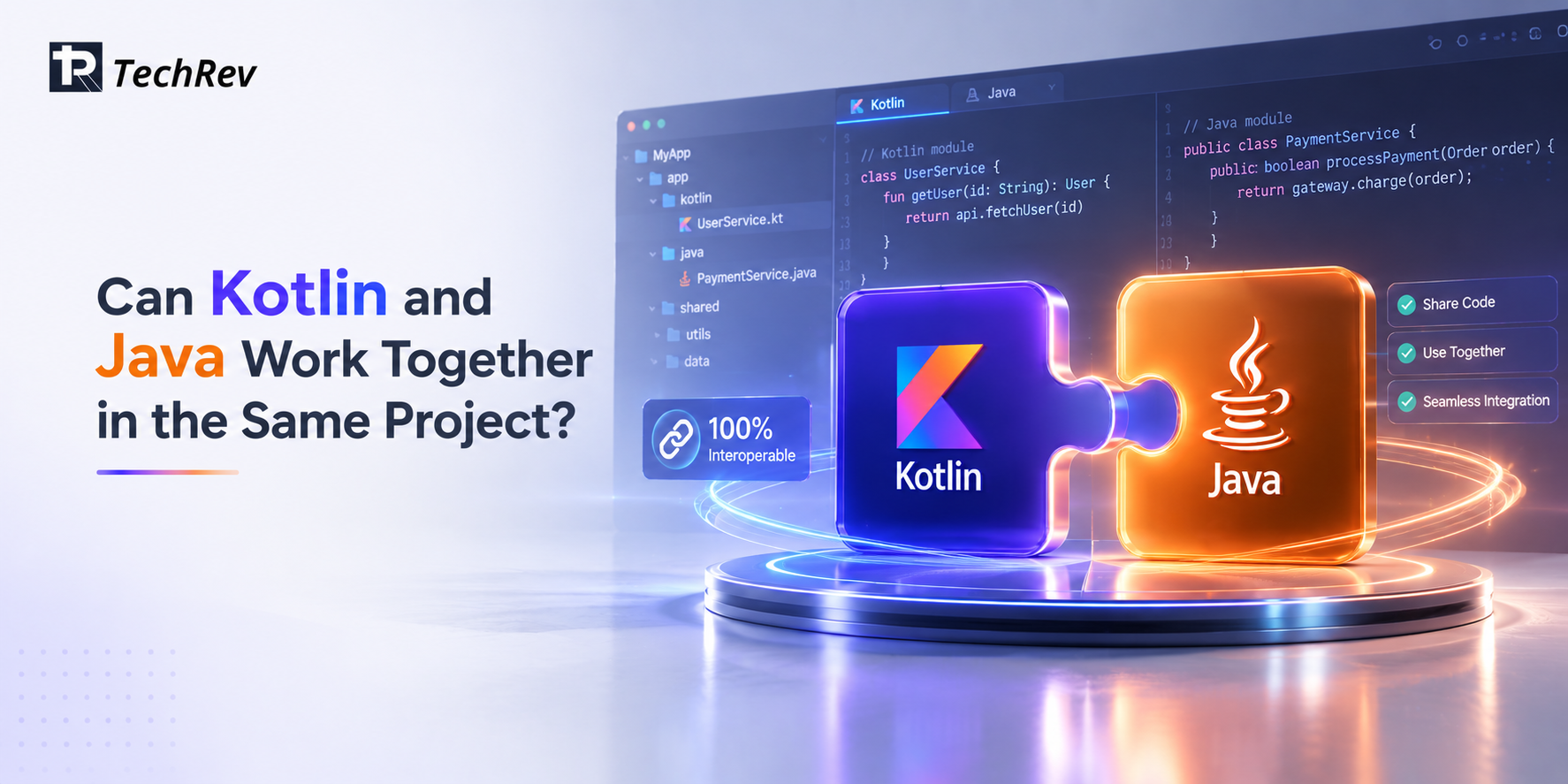
Yes. Because both compile to the same JVM bytecode, a single Android Studio project can contain both Kotlin and Java files, and they can call each other directly.
This is exactly how most large-scale Kotlin migrations happen: new features get written in Kotlin, existing Java code stays untouched until there’s a real reason to refactor it, and the two languages sit side by side for years without conflict.
Also Read – An Ultimate Guide on Custom Web Development Services in US
Kotlin vs Java: Market Data and Statistics That Matter in 2026
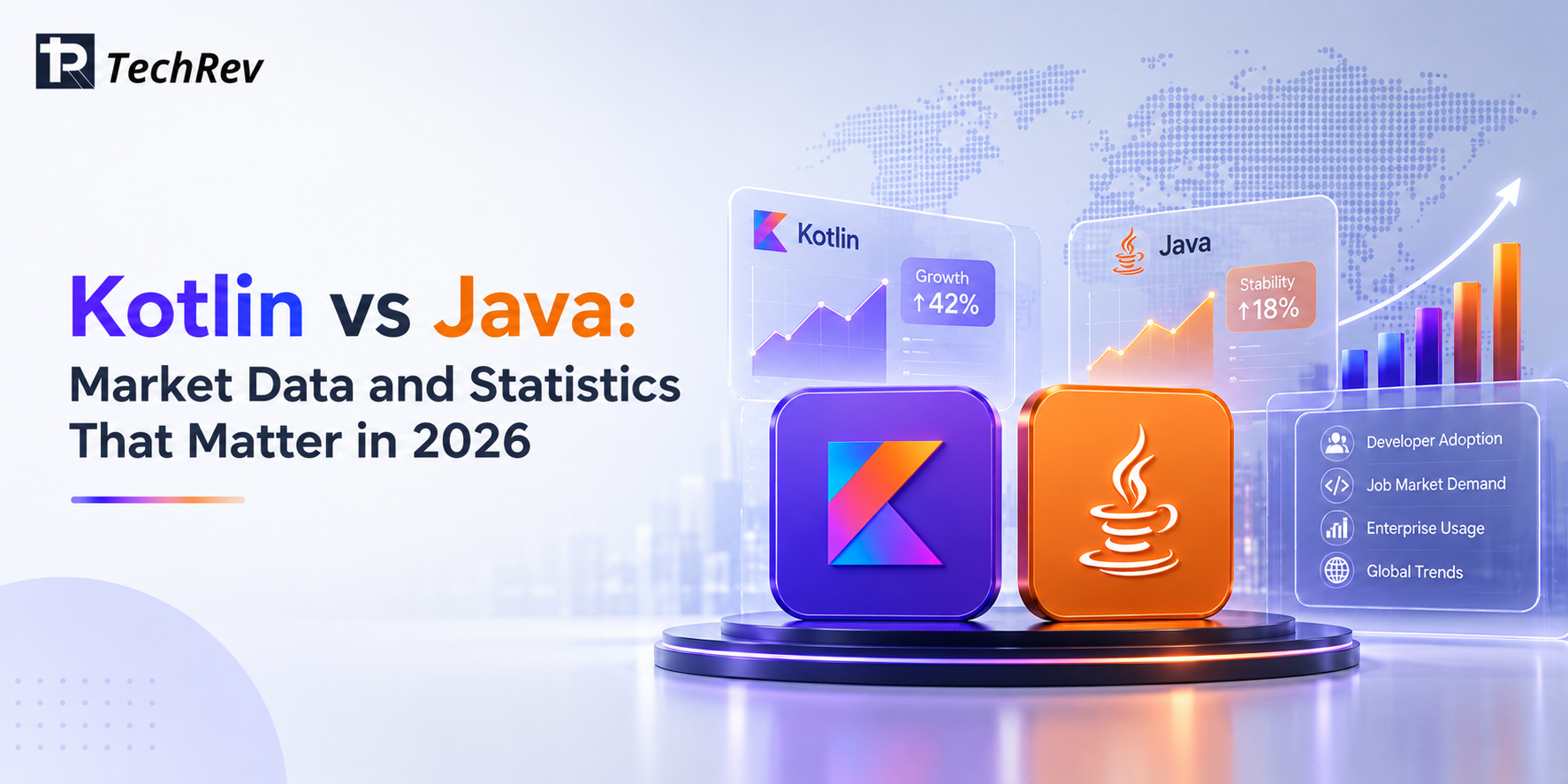
Numbers settle arguments better than opinions do. Here’s what the latest industry data shows about Kotlin vs Java heading into the rest of 2026.
- Kotlin has crossed 5.8 million developers worldwide, and its multiplatform framework, Kotlin Multiplatform, is growing at roughly 65% year over year in production adoption.
- Java entered 2026 ranked third on the TIOBE Index, and 62% of enterprises now use Java to support AI functionality inside existing applications.
- 81% of enterprises are migrating some or all of their Oracle Java environments to open-source OpenJDK distributions, largely driven by licensing cost concerns.
- Kotlin Multiplatform adoption has jumped from roughly 5,000 production apps in 2024 to more than 15,000 in 2026, with Netflix, Cash App, and Philips among the notable adopters.
- Google’s Android developer survey found Kotlin now serves as the primary language for 87% of professional Android apps, and that number jumps to the mid-90s for apps published within the last year.
The takeaway: Java isn’t shrinking, it’s consolidating around enterprise and AI-augmented backend systems, while Kotlin keeps tightening its grip on mobile.
Kotlin vs Java: When to Choose Which?
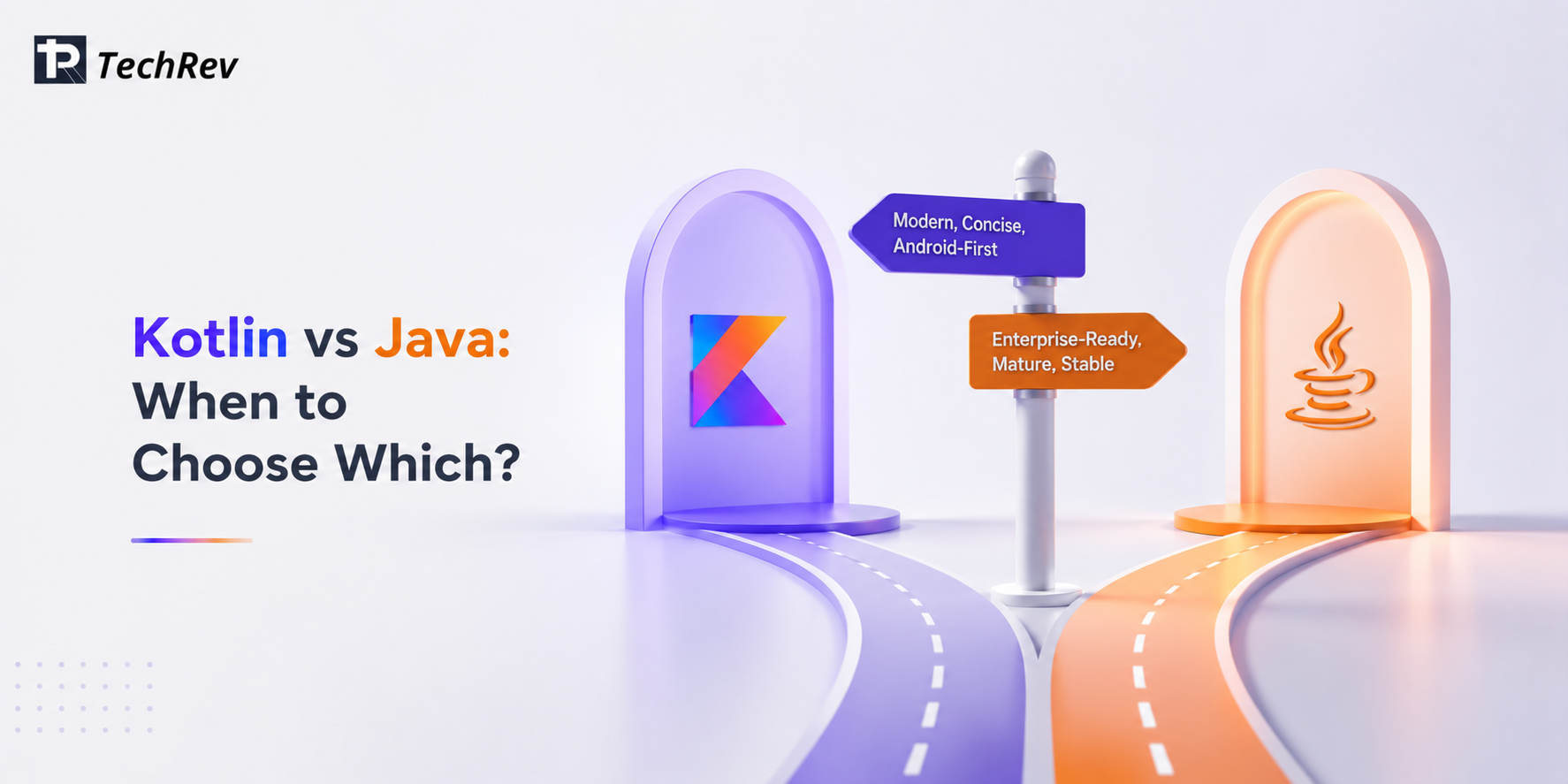
Use this as a practical checklist rather than a philosophical debate.
Choose Kotlin when:
- You’re starting a new native Android app from scratch
- Your team needs to ship fast without sacrificing crash stability
- You want to share business logic across Android and iOS using Kotlin Multiplatform
- You’re modernizing an old Java Android app incrementally
- Developer experience and retention matter for your engineering culture
Choose Java when:
- You’re building or maintaining a large enterprise backend system
- Your project needs the deepest possible talent pool for staffing at scale
- You depend on mature frameworks like Spring Boot or Jakarta EE
- Long-term stability and backward compatibility outweigh concise syntax
- Your existing codebase is already Java and a rewrite isn’t justified
Also Read – In-House Developers vs Mobile App Development Agency
Why Do Businesses Choose to Hire Kotlin Developers for Mobile App Development?
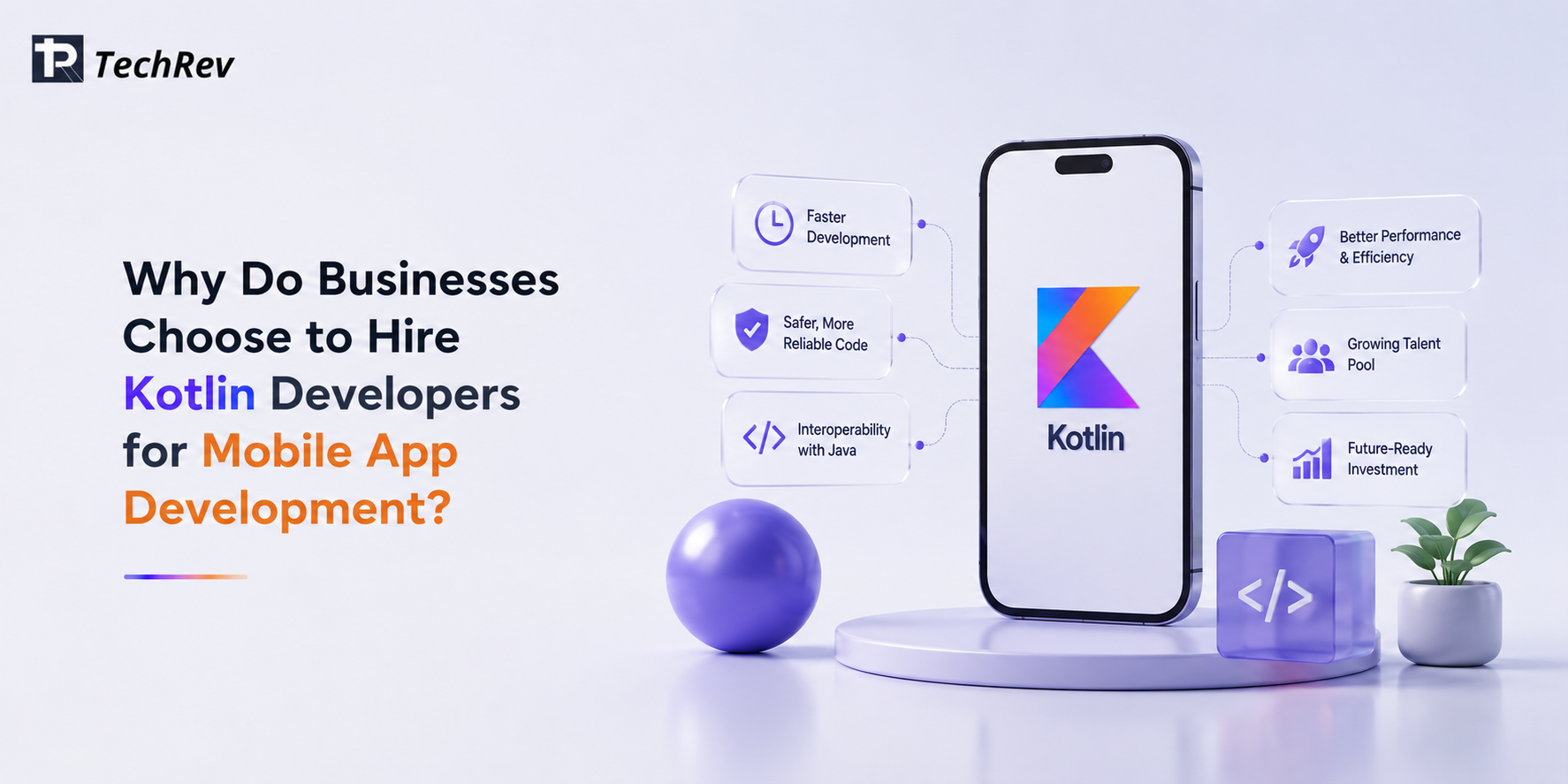
Companies that hire kotlin developers are usually optimizing for speed, safety, and long-term maintainability. Kotlin’s null safety alone eliminates an entire category of crashes that used to eat up QA cycles, and its concise syntax means fewer files, fewer merge conflicts, and faster onboarding for new team members.
TechRev’s kotlin app development services cover the full build cycle: architecture planning, Jetpack Compose UI development, Kotlin Multiplatform strategy for teams targeting both Android and iOS, and long-term maintenance.
If your roadmap includes a new Android app, or you’re finally ready to modernize an old java android app development project, our kotlin app development services are built to get you to market without the technical debt that rushed rewrites usually create.
Why Java Still Matters: Hire Java Developers for Enterprise and Legacy Systems!
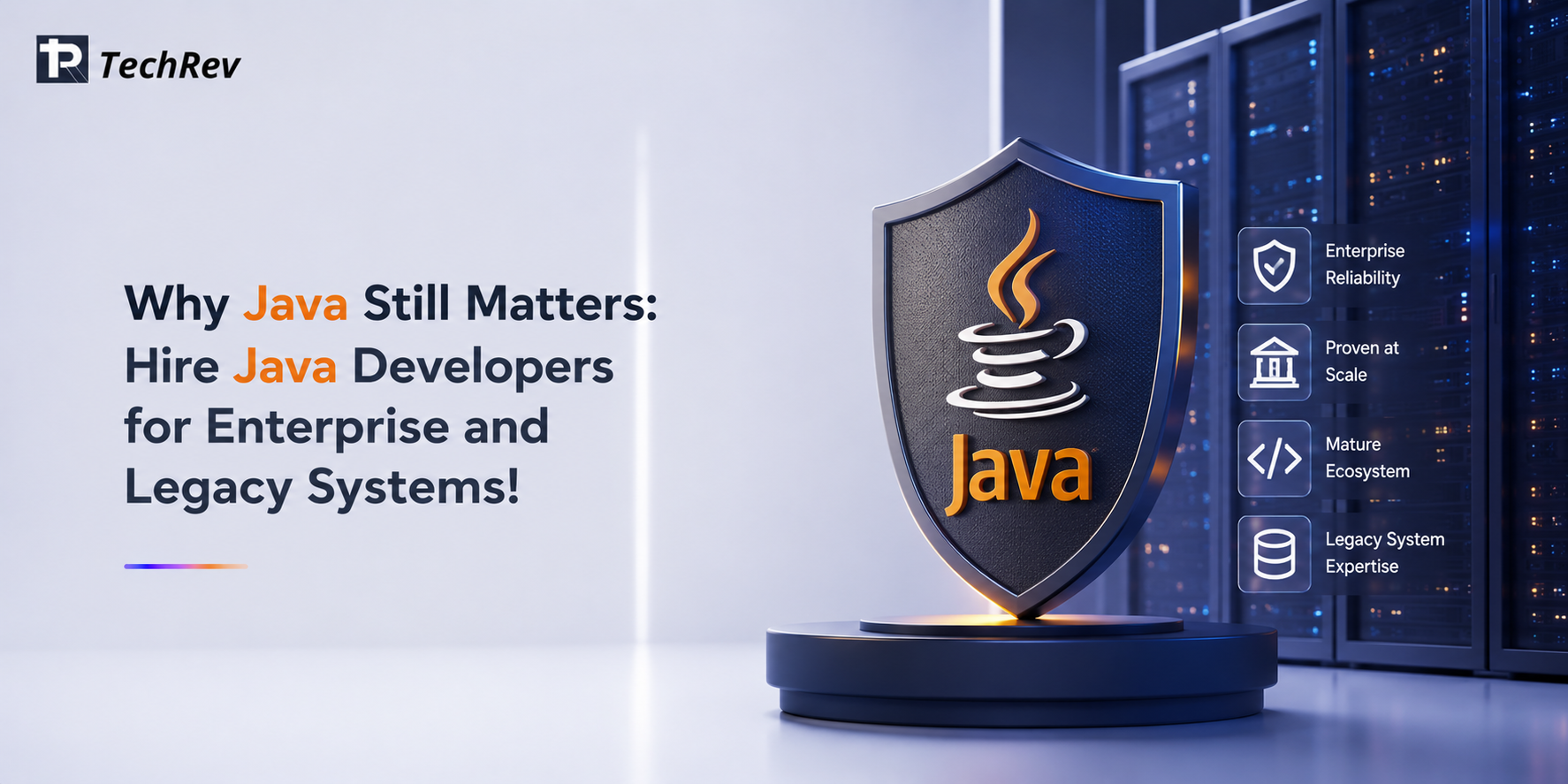
Not every project needs a rewrite. If you’re running a banking platform, a healthcare system, or any application where nine-figure transaction volumes depend on rock-solid stability, java for mobile app development and backend systems is still the safer bet. Java’s maturity, its checked exceptions, and its enormous ecosystem of production-hardened frameworks are exactly why 90% of Fortune 500 companies still trust it.
When you hire java developers through TechRev, you get engineers who understand both the language and the enterprise context it lives in: compliance requirements, legacy integrations, and the kind of long-term support contracts that Java’s ecosystem was built for.
Whether you need a dedicated team for java android app development on an existing app or backend engineers to scale a Spring Boot system, our java developers plug in without a learning curve.
Kotlin vs Java: Cost Comparison for Business Decision-Makers
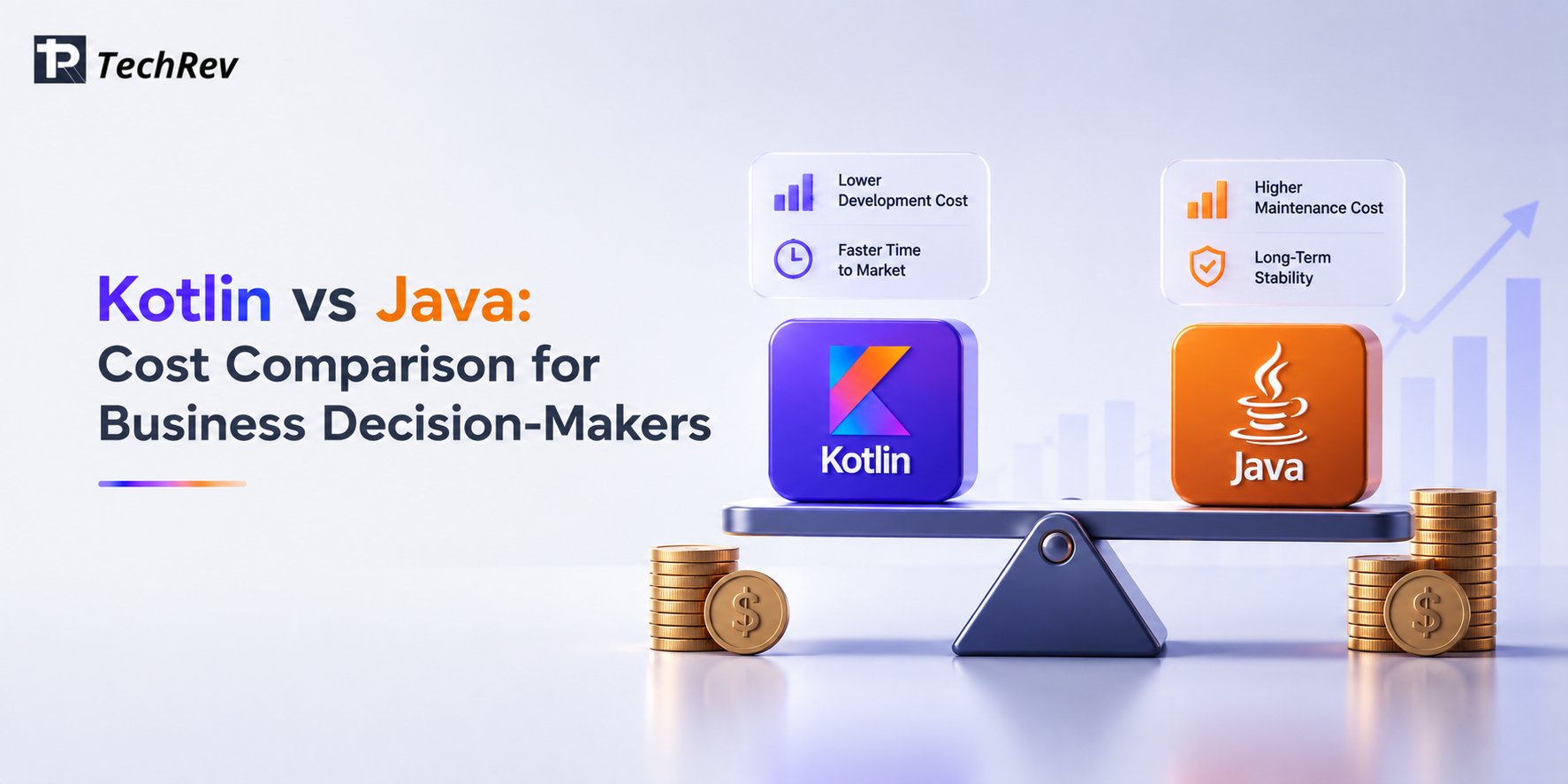
The language you pick affects three real cost drivers: migration cost, hiring cost, and the cost of choosing wrong.
- Migration cost: An incremental migration, where new features ship in Kotlin while legacy Java code stays in place, is almost always cheaper than a big-bang rewrite that pauses your roadmap for months.
- Hiring cost: Java developers are generally easier and cheaper to source at scale. Kotlin developers command a premium, particularly at the senior level, but that premium is often offset by faster development cycles and fewer post-launch bug fixes.
- Cost of being wrong: Choosing Java for a brand-new Android app in 2026 means inheriting technical debt from day one, since the entire Android tooling ecosystem, including Jetpack Compose, is built around Kotlin first.
TechRev helps you model these numbers against your specific codebase and team size before you commit, instead of guessing based on a generic industry average. When founders ask us to break down Java vs Kotlin purely on dollars and cents, this cost framework is where we always start.
Java for mobile app development still makes financial sense in one specific scenario: you already have a large Java Android codebase, your team is fluent in Java, and a full rewrite isn’t justified by the business case. Outside of that scenario, Kotlin is almost always the more cost-effective long-term choice for new mobile builds.
How TechRev Builds Your Mobile App Development Strategy Around the Right Language?
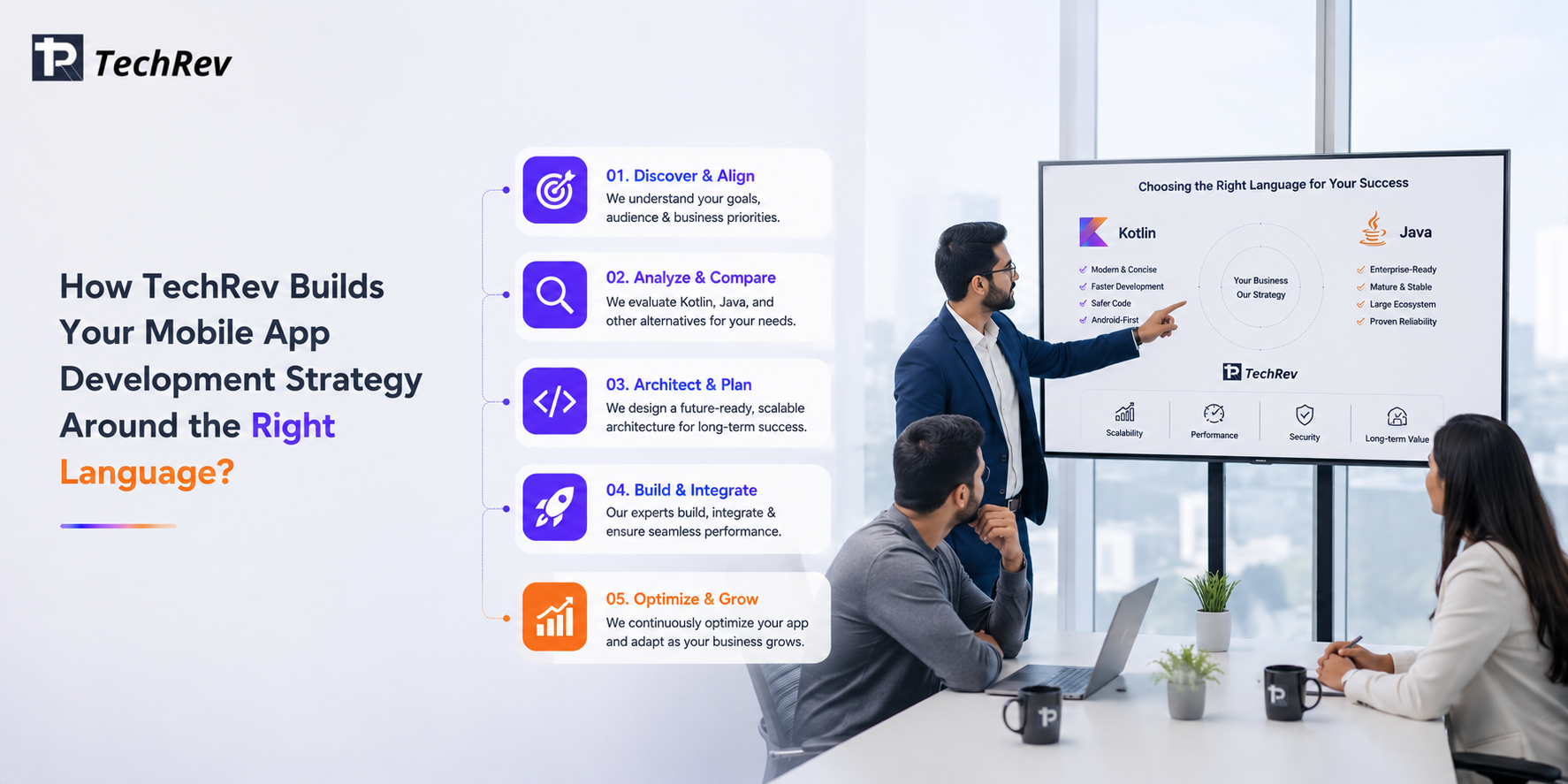
TechRev doesn’t push every client toward one language because it’s what our team happens to know best. We staff both Kotlin and Java specialists, and we start every mobile app development engagement with an honest assessment of your codebase, your timeline, and your long-term maintenance plan.
If you need to hire kotlin developers for a new Android build, a Kotlin Multiplatform strategy, or a modernization of an old java android app development project, our kotlin app development services team is ready to scope your project this week.
If your priority is enterprise stability and you need to hire java developers who understand large-scale backend architecture, we can staff that just as fast. Either way, you get a team that treats Kotlin vs Java as an engineering decision, not a sales pitch.
Conclusion
There is no universal winner in the Kotlin vs Java debate, only the right choice for your specific project. Kotlin wins decisively for new Android apps, cross-platform mobile strategies, and teams that want fewer crashes and faster shipping cycles. Java wins for large enterprise backends, systems that demand decades of stability, and teams that need the largest possible talent pool to scale quickly.
If you’re still weighing Java vs Kotlin for your next build, TechRev can walk you through your specific codebase, timeline, and budget on a free strategy call. Whether you need to hire Kotlin developers for a ground-up Android app or hire java developers for an enterprise backend overhaul, our team builds the roadmap around your business goals, not around which language we’d rather write in.
Ready to build your next app the right way?
Talk to TechRev’s mobile app development team today and get a project scope within 48 hours.
FAQs
1. Is Kotlin better than Java for Android app development?
Yes, for new native Android projects. Google made Kotlin the preferred language for Android in 2017, and it now serves as the primary language for the vast majority of professional Android apps published today. Java remains a valid choice only for legacy codebases that already rely on it heavily.
2. Is Java still worth learning in 2026?
Yes. Java still ranks among the top programming languages globally and remains the backbone of enterprise backend systems, banking software, and large-scale infrastructure. Developers with strong Java skills continue to have access to one of the largest job markets in software engineering.
3. Does Kotlin run slower than Java?
No, not in any way that matters for most applications. Both languages compile to the same JVM bytecode, so runtime performance is nearly identical. Minor differences in startup time and memory usage exist, but they rarely affect real-world app performance.
4. Can I hire a team that works in both Kotlin and Java?
Yes. Because the two languages are fully interoperable, most modern engineering teams, including TechRev’s, staff developers are skilled in both. This lets you modernize an old Java codebase with Kotlin gradually, without needing two separate vendors or a disruptive rewrite.
5. How much does it cost to hire Kotlin developers versus Java developers?
Kotlin developers typically command a modest premium over Java developers in the US market, largely due to a smaller talent pool. However, project costs often even out because Kotlin’s concise syntax and null safety reduce the hours spent on debugging and QA.
6. What does TechRev specialize in: Kotlin, Java, or both?
TechRev builds mobile app development and enterprise software in both Kotlin and Java, and we recommend the language that fits your project rather than the one that’s easiest for us to sell.
7. How long does it take TechRev to staff a Kotlin or Java development team?
Most TechRev engagements begin scoping within days of an initial call, and developer staffing typically completes within one to two weeks depending on project complexity and team size requirements.
8. Does TechRev support Kotlin Multiplatform projects for teams building on both Android and iOS?
Yes. TechRev’s kotlin app development services include Kotlin Multiplatform architecture, letting you share business logic across Android and iOS while keeping native UI performance on both platforms.