
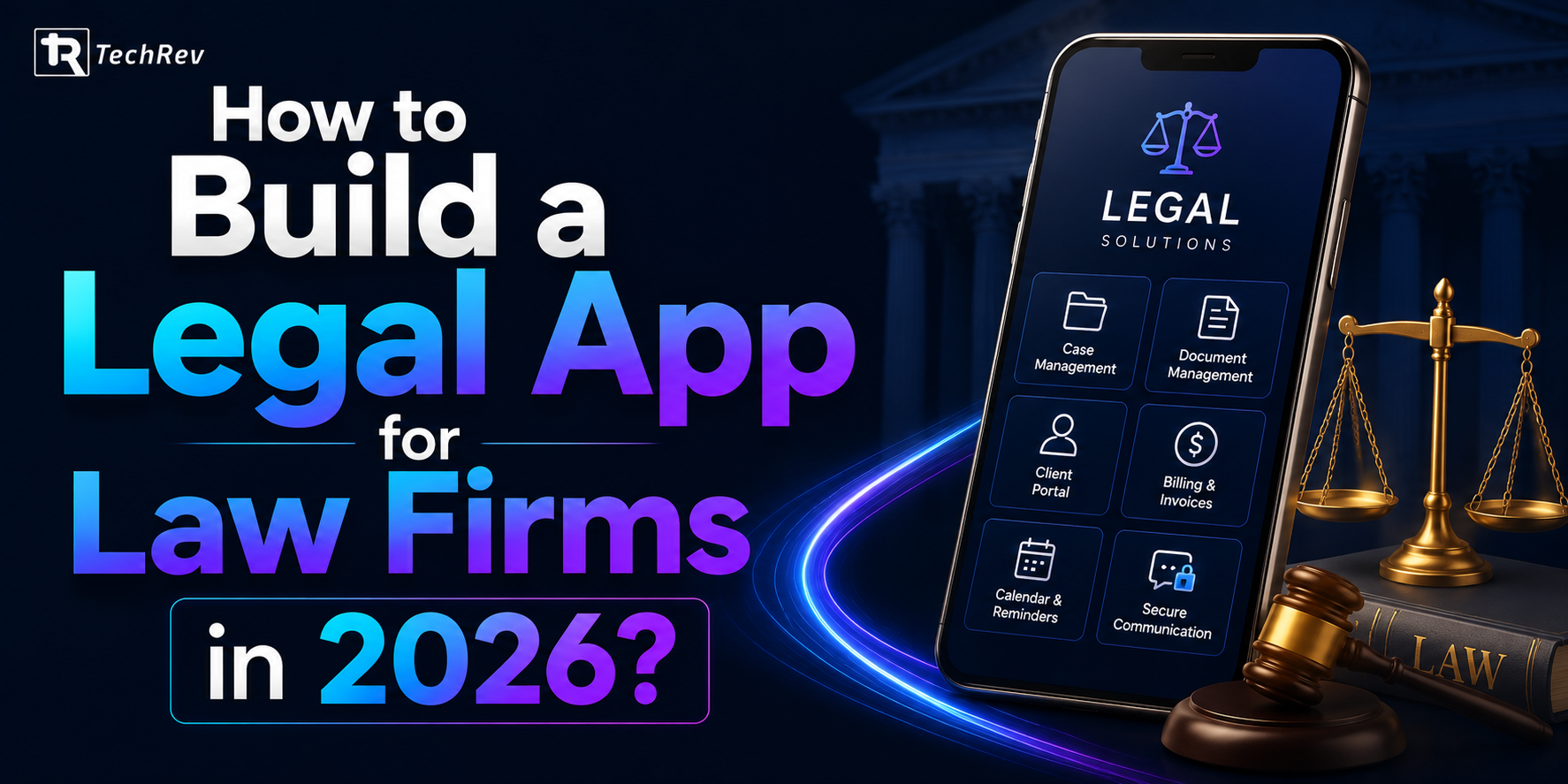
Are you tired of losing potential clients because your firm relies on clunky web portals and endless email chains? The legal industry is undergoing a massive digital overhaul. Today, clients expect the exact same seamless mobile experience from their attorney that they get from their banking app. If you are wondering How to Build a Legal App for Law Firms in 2026, you are making a critical strategic move to protect your market share.
In 2026, building a simple digital brochure for your firm is a complete waste of money. Modern law practices require smart custom software development that actually does the heavy lifting. We are talking about applications that can summarize case files, verify identities autonomously, and automate complex billing cycles.
In this blog, we will guide you through the mandatory features, the strict data security protocols, and the exact steps required for top tier legal application development.
The Tech Audit: Symptoms of a Failing System
Many managing partners believe their current software is “good enough.” However, holding onto legacy systems actively damages your firm’s reputation and your profit margins.
Are you experiencing any of these major friction points in your daily operations?
- Document Chaos: Your paralegals spend hours hunting for the correct version of a contract across different local hard drives.
- Client Frustration: Clients constantly call the office just to check their case status because they have no digital dashboard.
- Billing Leaks: Attorneys forget to log billable hours because the time tracking software is too difficult to use outside the office.
- Security Risks: Associates are accidentally emailing sensitive discovery documents through unencrypted, public channels.
If this sounds familiar, your firm is losing money every single day. A custom mobile app development solves these operational nightmares instantly.
The 2026 Legal App Feature Set
When investing in legal application development, your goal is not to build a single tool. Your goal is to build an ecosystem. Let us look at what a modern app must include compared to the outdated software of the past decade.
| Operational Workflow | Outdated Legal Software | The 2026 Legal Application |
| Client Intake | Manual PDF forms and wet signatures. | Digital onboarding with instant secure e-signatures. |
| Document Drafting | Searching for old files to copy and paste. | Secure generative AI development drafts custom clauses instantly. |
| Task Management | Sticky notes and disjointed email reminders. | Autonomous AI agent development schedules and alerts teams. |
| Platform Access | Web only platforms that break on phones. | Native mobile app development for flawless on the go access. |
The Core Technologies Driving Modern Legal Apps
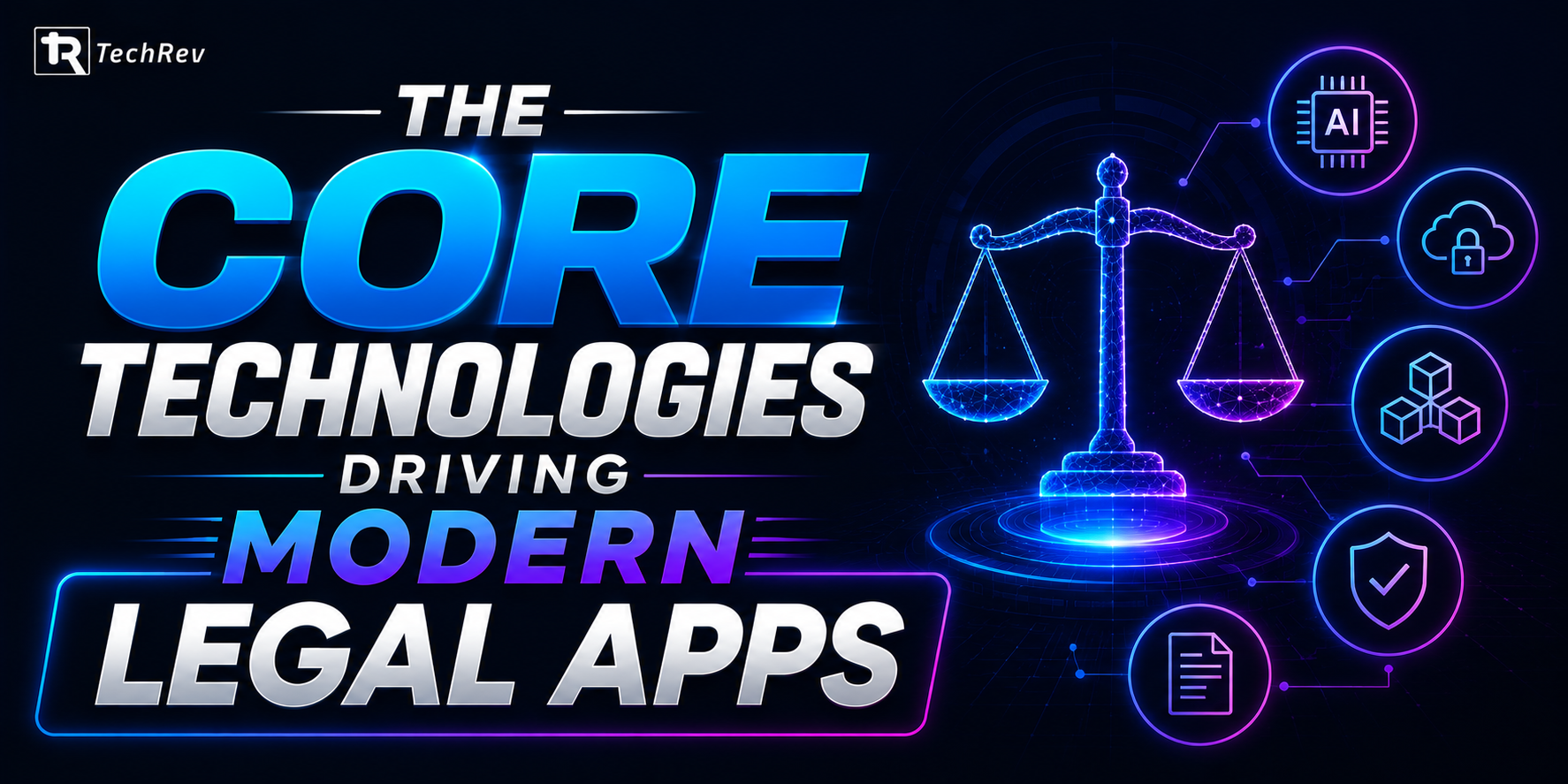
To build a system that actually works, you need to understand the technology stack. Here are the four pillars of modern legal software engineering.
1. Smart Client Portals
Your clients are always on their phones. A dedicated client portal allows them to upload photo evidence from an accident scene, sign retainers, and view upcoming court dates securely. To reach all your clients, you cannot just build for Apple.
You must prioritize cross platform mobile app development. Specifically, investing heavily in android app development ensures that clients without iPhones still receive a premium, flawless experience.
Ignoring android app development means alienating a massive segment of your potential market.
2. Autonomous Workflow Automation
The most expensive resource in your firm is attorney time. You can protect that time through expert AI agent development. These intelligent agents act as invisible paralegals.
When a new client submits an intake form, the AI agent automatically runs a conflict of interest check, creates a new secure folder, and schedules a consultation.
Proper AI agent development turns a multi step manual process into a zero click automated workflow.
3. Automated Document Drafting
Lawyers spend countless hours drafting routine correspondence and standard contracts.
By integrating generative AI development, your app can generate initial drafts in seconds. A secure language model is trained exclusively on your firm approved templates.
When an attorney needs a non disclosure agreement, the generative AI development engine produces a perfect first draft, saving hours of tedious typing.
4. Seamless System Connectivity
You likely already use software like Clio, MyCase, or DocuSign. You do not want to replace everything. This is where professional AI integration services come into play.
A top tier engineering team will use AI integration services to connect your brand new mobile app directly to your existing practice management software, ensuring data flows perfectly without any duplicate manual entry.
How do platforms like eNotary On Call manage legal security?
Applications dealing with notarization and legal compliance cannot afford a single mistake. Platforms like eNotary On Call utilize private cloud environments and encrypted video streaming.
They ensure that identity verification data is completely isolated. When building a legal app, you must mimic this level of enterprise security to maintain attorney client privilege.
Conclusion
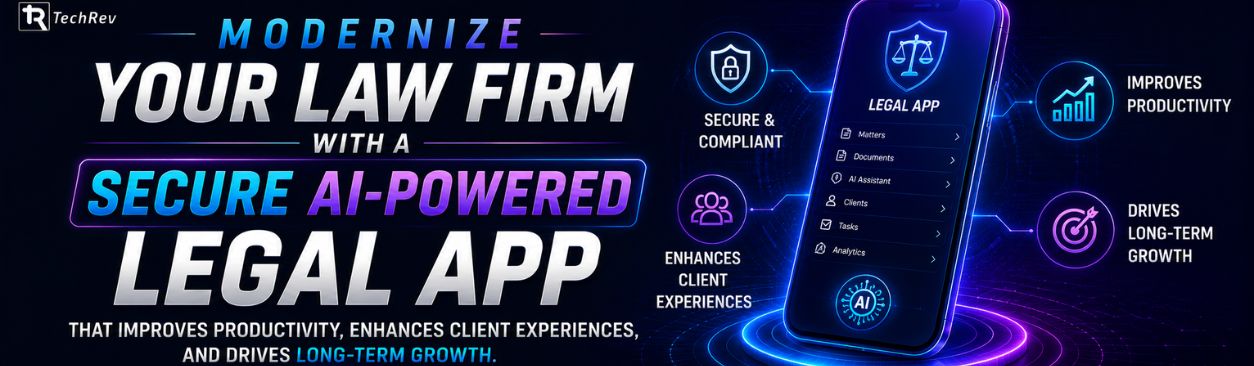
Figuring out How to Build a Legal App for Law Firms in 2026 is the absolute key to outperforming your competitors.
By automating client intake, drafting complex documents with artificial intelligence, and providing a flawless mobile experience, you empower your attorneys to focus entirely on winning cases.
Do not let outdated software hold your firm back. By choosing reliable legal application development services USA, you can launch a secure, powerful application that completely transforms your daily practice.
Ready to modernize your law firm? Contact TechRev today for a secure, confidential legal tech consultation!
FAQs
1. How much does legal application development cost?
The total cost depends heavily on the features you choose. A basic client portal app might start around $40,000, while a fully custom enterprise platform with advanced AI document generation could exceed $100,000.
2. Is android app development really necessary for law firms?
Yes, absolutely. A significant portion of the domestic market uses Android devices. Proper android app development ensures that every single client can access your portal, pay invoices, and upload evidence seamlessly, regardless of what phone they own.
3. How does AI agent development actually save attorney time?
Instead of a human paralegal manually checking the court docket every morning, an AI agent can monitor the docket autonomously. If a hearing date changes, the agent automatically updates the firm calendar and emails the client without any human intervention.
4. Is generative AI development safe for drafting real legal contracts?
Yes, as long as it is deployed securely on private servers. A private AI model is trained only on your firm approved templates. The AI generates the first draft rapidly, but a licensed attorney always reviews and approves the final document before it goes to the client.
5. Why are AI integration services important for existing firms?
Most law firms already use billing software and case management tools. Professional AI integration services ensure that your new custom app connects to these existing databases, meaning your team never has to enter the same client information twice.
6. Does mobile app development increase client satisfaction and retention?
Immensely. Clients feel anxious during legal proceedings. A custom application gives them a sense of control and transparency, allowing them to check their case status at midnight without leaving a frantic voicemail at your office.