

Legal case management software is where a law firm’s operational truth lives: every matter, deadline, document, contact, and billable minute, in one system or scattered across many. And the profession’s own data says scattered is still common. ABA legal technology survey research has consistently found only around six in ten lawyers reporting use of practice management software, which means a large share of firms still run matters on email, spreadsheets, and memory, while billing only about 2.9 hours of an 8-hour day per Clio’s Legal Trends research.
That gap is the opportunity. This blog covers what legal case management software development does, the market numbers, the features that matter, the case-management-versus-practice-management distinction, the honest build-vs-buy decision, and what a custom system costs in 2026.
What Is Legal Case Management Software?
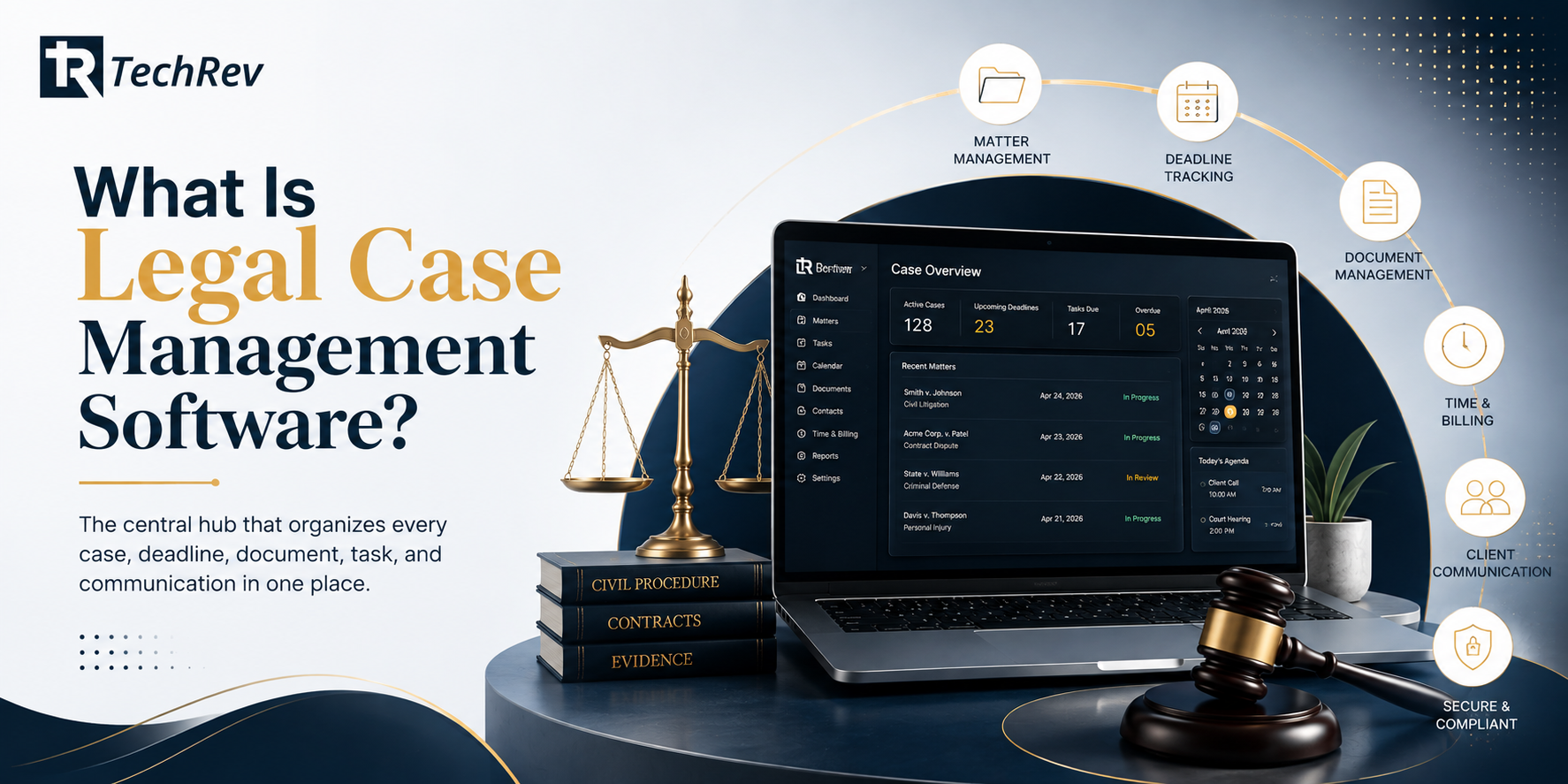
Legal case management software is the operational system of a law practice: it organizes matters from intake through resolution, tracking parties, deadlines, documents, communications, tasks, time, and billing in one place, so any authorized person can see a case’s complete state in seconds.
Where document tools manage files and calendars manage dates, a case management system manages the matter itself, the unit a firm actually sells.
The plain test: if answering “what is happening on the Ramirez matter?” takes opening four applications, the firm does not have case management software. It has software, and cases.
Legal Case Management Software Stats: The Market Numbers
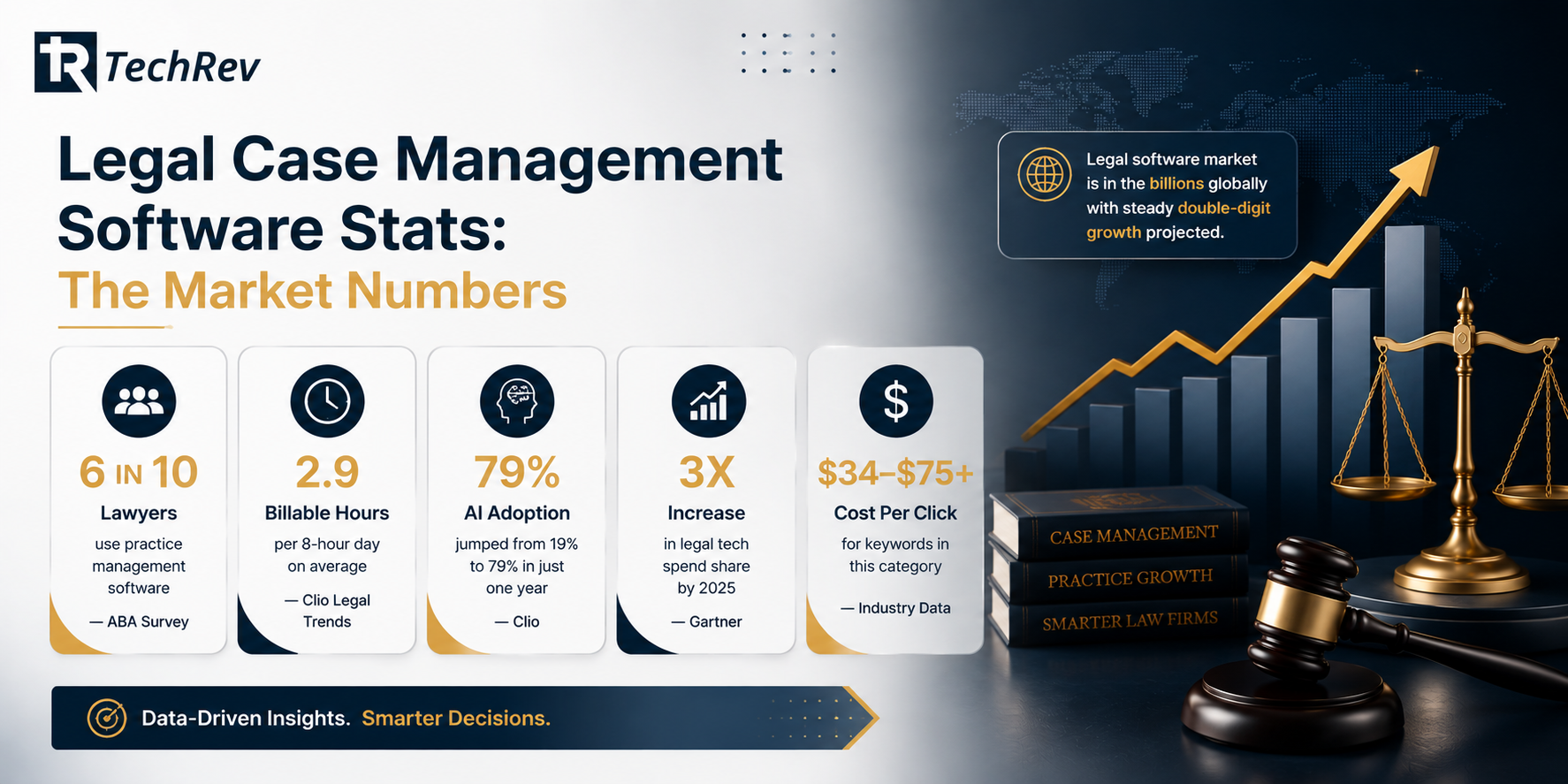
- Adoption is unfinished. Roughly six in ten lawyers report using practice management platforms per ABA survey research, leaving a durable minority, heavily solo and small firms, running matters manually.
- Utilization explains the urgency. With ~2.9 billable hours per 8-hour day (Clio) and Thomson Reuters finding small-firm lawyers spending about 40% of their time on administrative work, the matter-juggling overhead is exactly what this category exists to remove.
- AI adoption jumped from 19% to 79% in one year (Clio), and case management is where legal AI becomes practical, because the system holds the matter context AI needs.
- Budgets moved. Gartner projected legal tech spending roughly tripling its share of budgets by 2025, and the ad market agrees: keywords in this category carry costs per click from $34 to over $75, with matter management software near $59, pricing only sustained by buyers who convert.
- The legal software market overall is measured in the billions of dollars globally with steady double-digit growth projected, per industry analysts, as firms consolidate point tools into platforms.
What Features Should Legal Case Management Software Have?
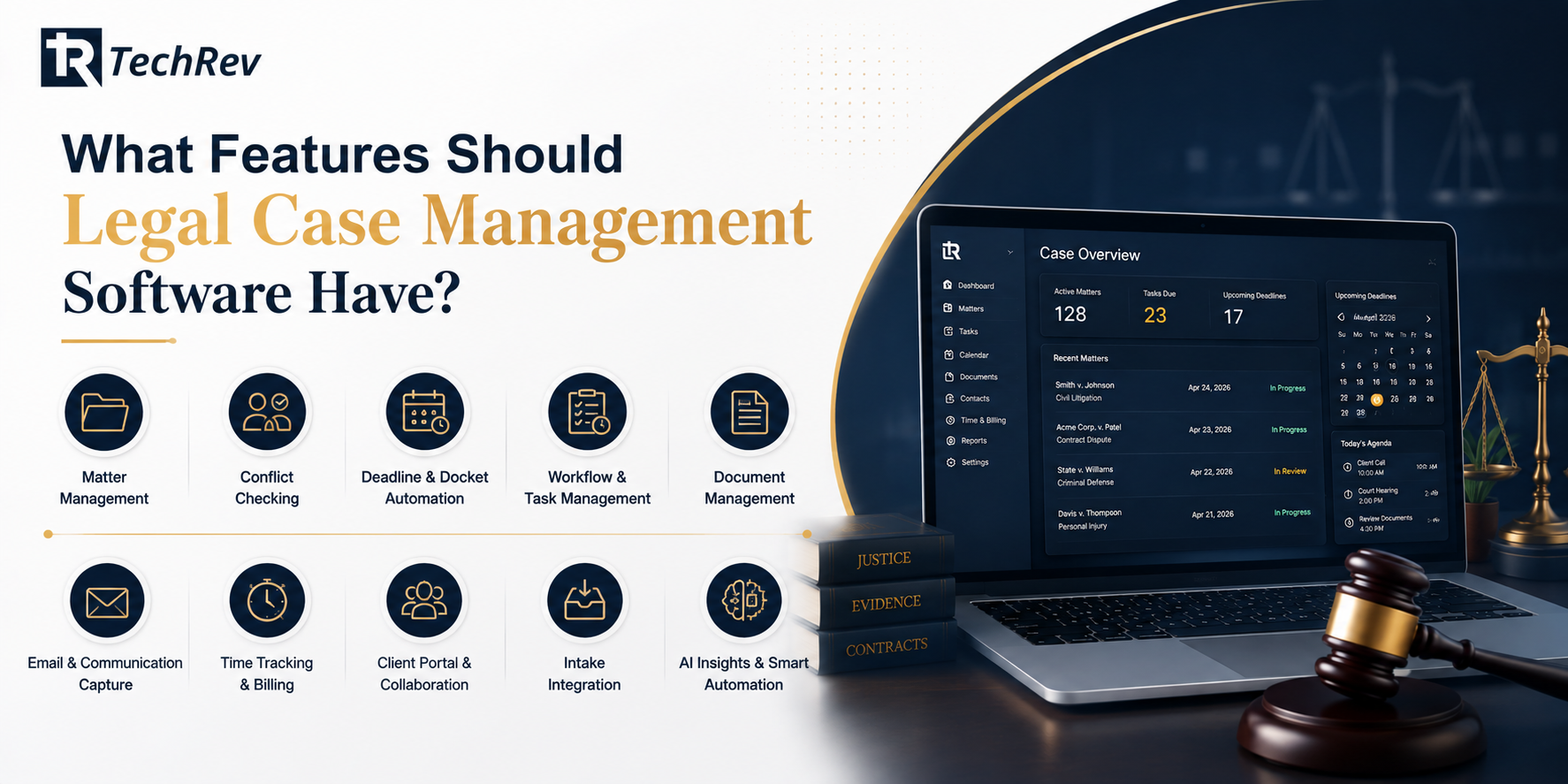
Matter core:
- Matter records unifying parties, facts, documents, notes, and status, with practice-area-specific fields
- Conflict checking across clients, adverse parties, and related entities at intake
- Deadline and docketing automation with court-rule date calculation and escalating reminders, the feature that directly attacks the missed-deadline malpractice category
Workflow:
- Practice-area playbooks: each matter type spawns its task sequence, owners, and milestones automatically, the discipline behind real law firm automation.
- Document management and assembly connected to matter data, so drafting pulls live facts, the pipeline detailed in our legal document automation software guide
- Email and communication capture filed to the matter, ending inbox archaeology
Money and clients:
- Time capture and billing tied to matters, with client portal visibility
- Intake integration, so a signed client’s data flows straight into a new matter without retyping, the handoff our legal intake software guide covers end to end
Intelligence (the 2026 layer):
- AI matter summaries, deadline risk flags, and drafting assistance grounded in the matter file, with attorney review checkpoints and full logging
Case Management vs Legal Practice Management Software
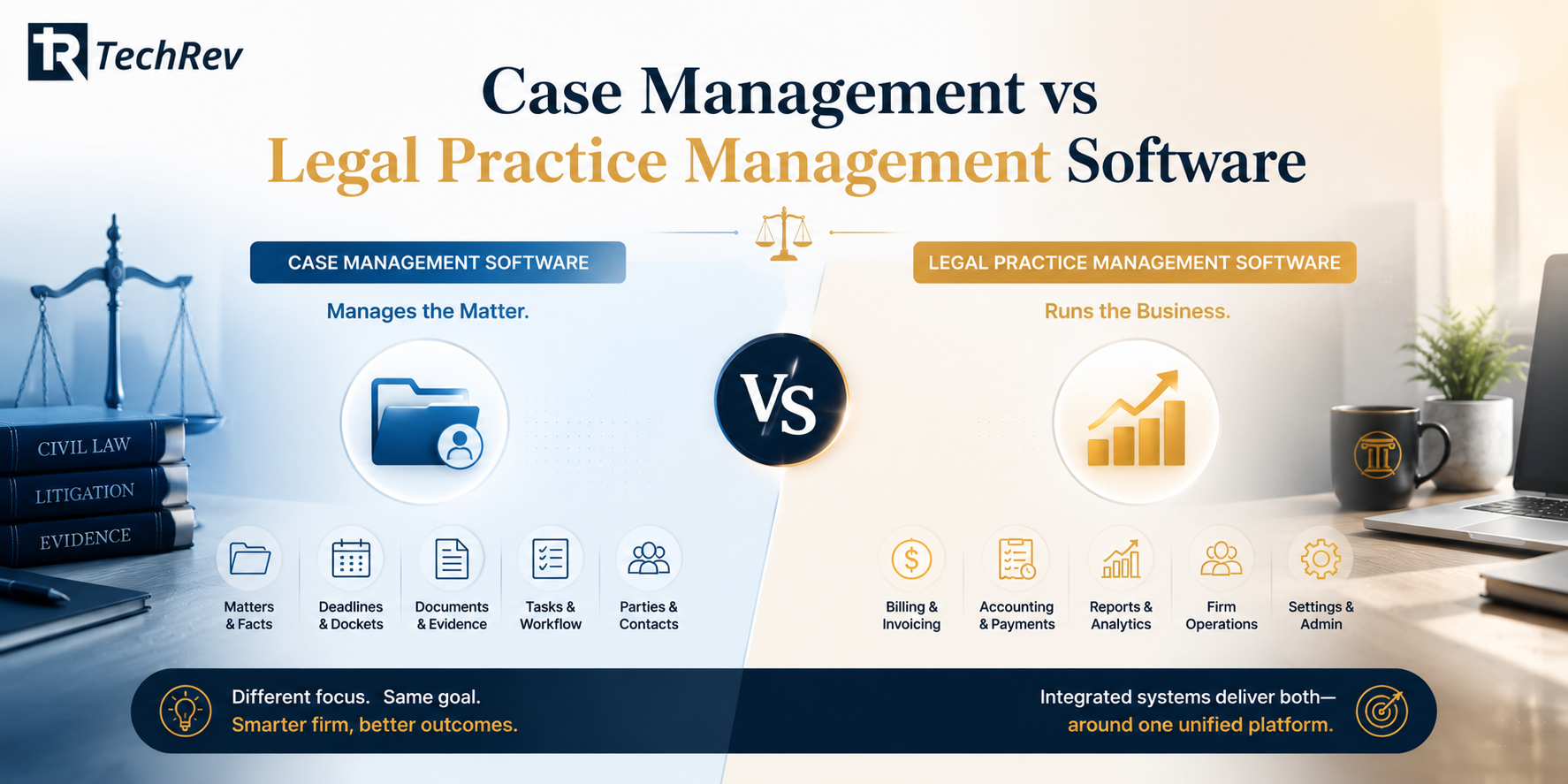
Legal practice management software is the broader business platform: billing, accounting, reporting, and firm operations. Legal case management software is the matter-centric core inside or alongside it: the case’s facts, documents, deadlines, and workflow.
Vendors blur the labels; the useful question is which the firm is weakest at. Firms losing money fix practice management first; firms losing track of matters fix case management first, and integrated builds deliver both around one data model.
Off-the-Shelf vs Custom Legal Case Management Software
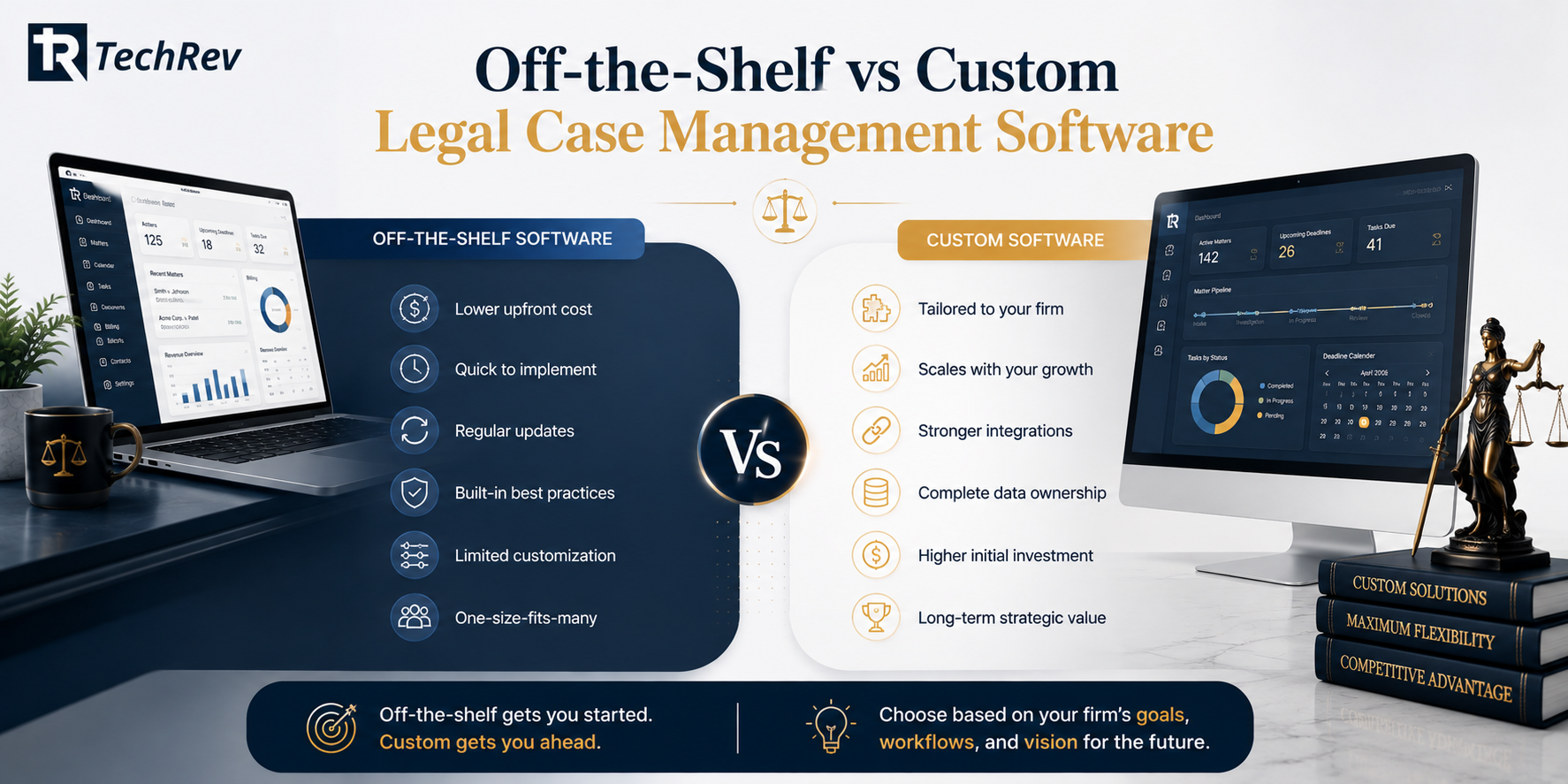
| Factor | Off-the-Shelf Platform | Custom Case Management System |
| Upfront cost | Low (subscription) | Higher (build) |
| Ongoing cost | Per user monthly, forever | Hosting and maintenance |
| Practice-area fit | Generic templates, some customization | Built around your matter types and playbooks |
| High-volume workflows | Strains at scale | Engineered for your volume |
| Integrations | Their marketplace list | Direct APIs to your exact stack |
| Data and confidentiality | Vendor’s architecture | Architecture you control |
| Ownership | Rented | Owned asset |
| Best for | Standard practices, smaller scale | High-volume, specialized, and process-driven firms |
When Should a Firm Build Custom Case Management Software?
Four signals, any two of which justify the analysis: matter volume high enough that per-user pricing outruns a build within one to two years; a practice area (personal injury, immigration, mass tort, lending) where matter workflow IS the competitive edge; integration needs the platform marketplaces cannot meet; or firm growth strategies, like legal service companies productizing their process, where owning the system is the business model.
Standard practices at modest scale should be bought, and the honest developer says so.
How to Build Custom Legal Case Management Software?
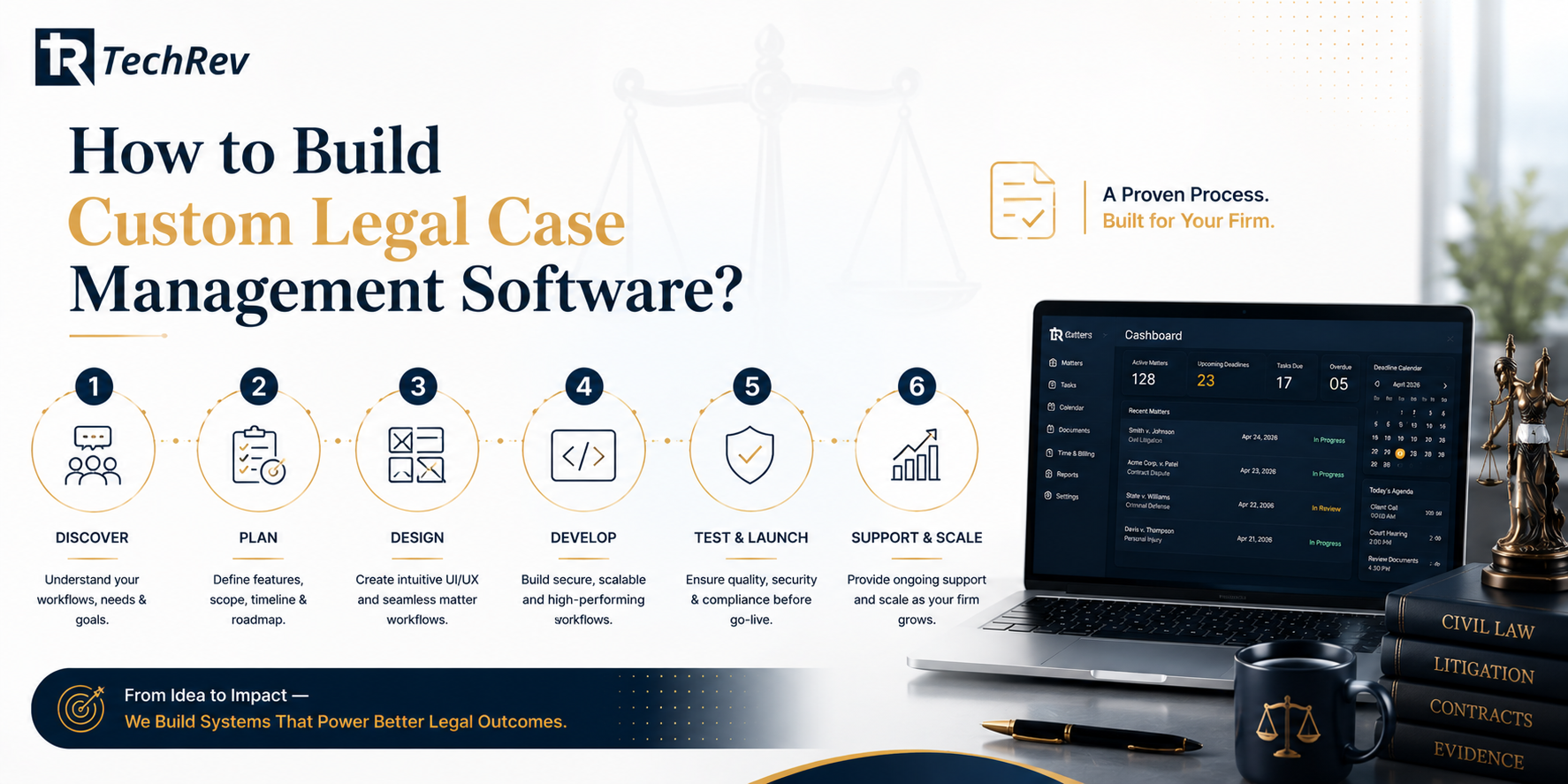
- Map matter lifecycles first. Chart each practice area’s real path from intake to resolution, including the exceptions; the playbooks become the system’s spine.
- Design the data model around the matter. Parties, deadlines, documents, tasks, and money all hang off the matter record; get this right and every feature after it gets cheaper.
- Integrate, then migrate. Connect intake, email, calendars, billing, and e-signature through APIs, and plan the data migration from legacy tools as its own scoped phase.
- Add the intelligence layer with guardrails. AI grounded in matter data, attorney review checkpoints, and complete audit logging, confidentiality-critical architecture, not a plugin.
- Launch one practice area, measure, expand. The MVP development rhythm: one matter type live in weeks, adoption and hours measured, and the roadmap funded by evidence.
How Much Does Legal Case Management Software Cost?
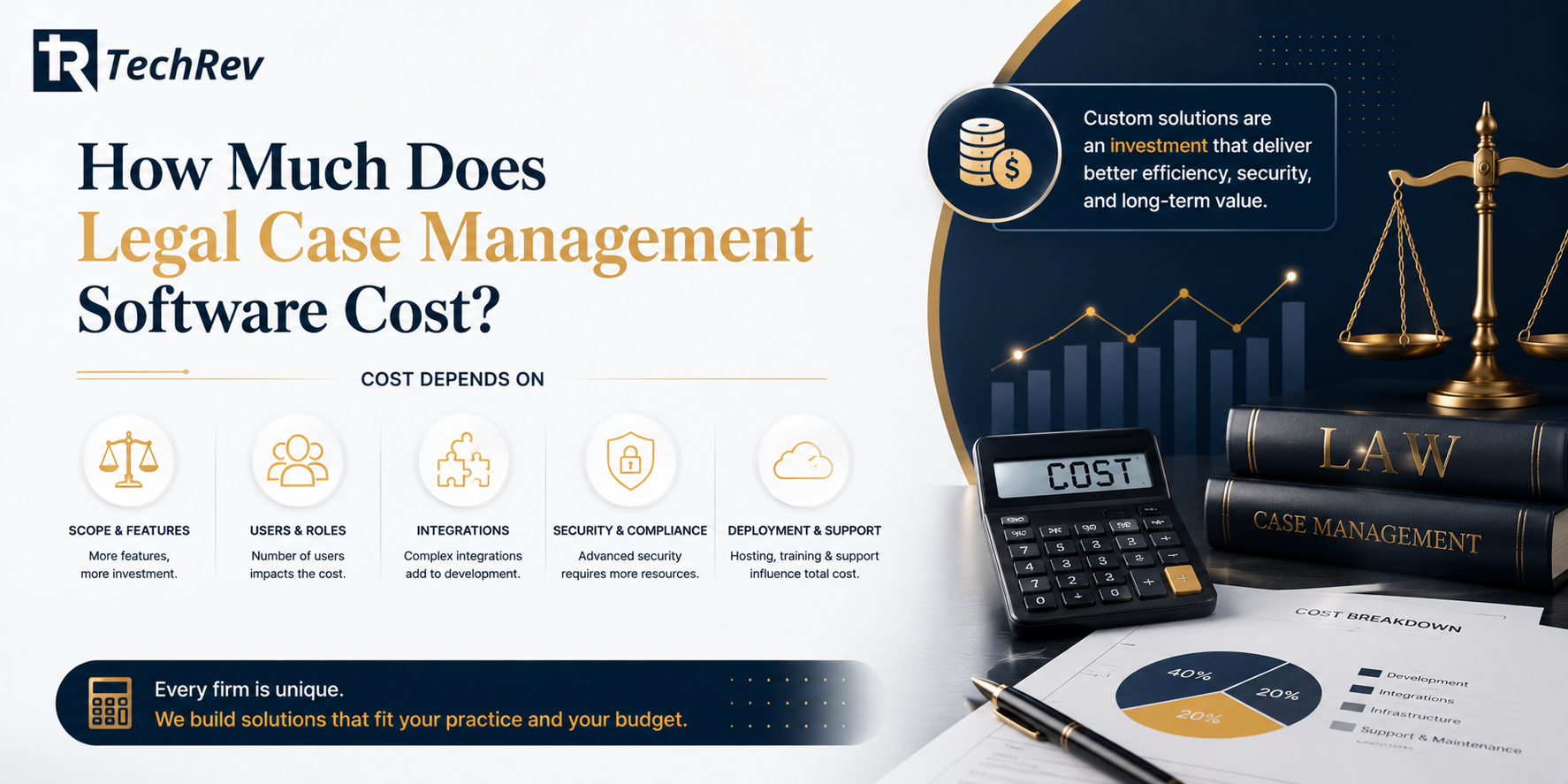
Off-the-shelf legal case management platforms typically run from roughly $40 to a few hundred dollars per user monthly depending on tier, with implementation, migration, and add-ons billed on top.
Custom legal case management software typically starts in the mid five figures for a focused single-practice-area build with intake and billing integrations, reaching low-to-mid six figures for multi-practice systems with AI capability, plus 15 to 20% of build cost annually in maintenance.
The firm math: total the subscription stack at your seat count over three years, add the hours lost to matter-juggling (recall the 40% admin figure), and compare. High-volume firms usually find the custom line crosses under the subscription line well inside that window, with an owned asset on the other side, the same rent-vs-own economics detailed in our AI automation agency vs custom development analysis.
How TechRev Builds Legal Case Management Systems?
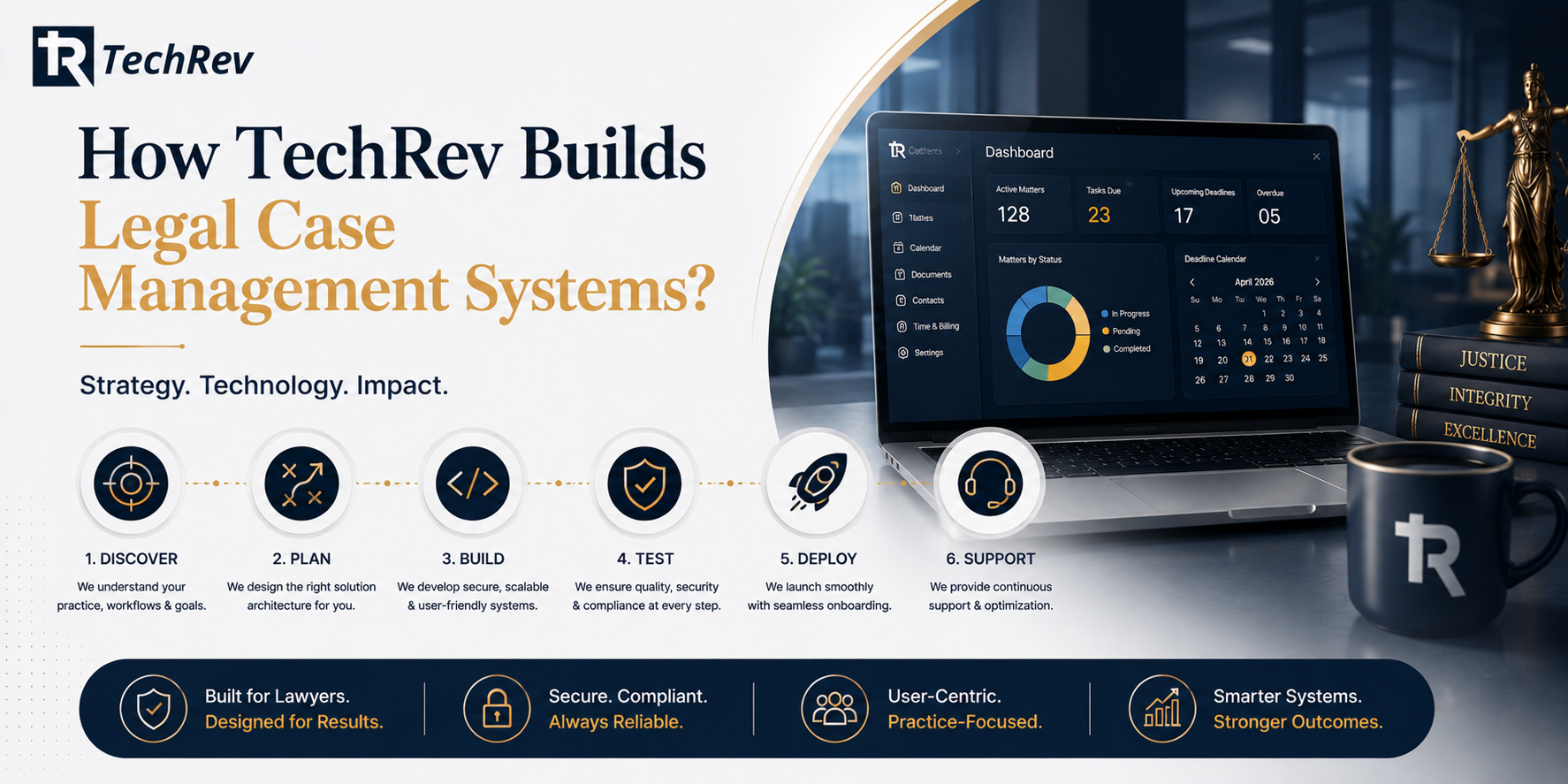
TechRev is a US-based software development company with a dedicated LegalTech practice, building custom case management, intake, and document automation as one integrated system, with the matter data model at the center and custom CRM development expertise behind the client-facing side.
Q1: What does a TechRev case management build include?
The complete matter spine: practice-area playbooks encoded as workflows, conflict checking, court-rule docketing, document assembly wired to matter data, email capture, time and billing integration, client portals, and an AI layer grounded in the matter file with attorney checkpoints and full logging.
We build around your matter lifecycles, mapped with your team before any code, and we launch one practice area first with adoption and hours measured, so the system earns its rollout.
Confidentiality is architectural: encryption, role-based access, and immutable audit trails, the same posture we bring from HIPAA and SOC 2 environments.
Q2: Can TechRev migrate our matters from existing tools?
Yes. Migration is scoped as its own phase: data mapped from your current platforms and spreadsheets, validated matter by matter, with parallel running before cutover.
Q3: Does TechRev integrate case management with intake and billing we already use?
Yes. Our integration-first approach connects the matter system to your existing intake, billing, calendar, and e-signature tools through APIs, replacing only what limits you.
Q4: What results has TechRev delivered building workflow systems?
For a hospital services vendor, TechRev’s workflow and tracking system cut installation errors by 90% and recovered billing evidence manual processes kept losing, the same matter-spine discipline applied to field operations.
The Final Words on Legal Case Management Software
Four in ten lawyers still managing matters manually, three billable hours a day, 40% of time on admin, and AI adoption at 79%: the firms compounding in 2026 are the ones whose matter data lives in one system that works the way they practice. Legal case management software is that system, and for high-volume and specialized firms, owning it beats renting it.
If your firm has outgrown its stack, talk to TechRev’s LegalTech team. We will map your matter lifecycles, show you the build-vs-buy math at your volume, and scope a first practice area that proves the system before you commit the firm to it.
FAQs About Legal Case Management Software
1. What is the best legal case management software for law firms?
The best system matches the firm’s matter reality: standard practices at modest scale do well on established platforms, while high-volume and specialized firms convert more matters per staff hour with custom systems built around their own playbooks and integrated with their exact stack.
2. What is the difference between case management and matter management software?
Largely vocabulary: law firms say cases, corporate legal departments say matters, and matter management software usually emphasizes in-house needs like spend and outside counsel management. The core discipline, one record unifying everything about the engagement, is identical.
3. Is there case management software for small law firms?
Yes, and small firms should usually start there: cloud platforms priced per user deliver the matter core in days. The switch point to custom arrives with volume, specialization, or when the subscription stack and its workarounds cost more than owning.
4. What does litigation management software add?
Litigation-specific depth: court-rule docketing across jurisdictions, discovery and evidence tracking, deposition and trial preparation workflows, and expense tracking per phase. Litigation-heavy firms often justify custom builds fastest because deadline risk and matter volume compound.
5. Can legal case management software be practice-area specific?
It should be. Personal injury case management software tracks treatment, liens, and settlements; immigration case management software tracks forms, priority dates, and government deadlines. Practice-area fields and playbooks are precisely where custom systems out-convert generic platforms.
6. How does AI work inside legal case management?
Grounded in the matter file: summaries of case state, deadline and risk flags, drafting assistance from matter facts, and intake-to-matter data flow, always with attorney review checkpoints and logged actions. The system’s matter data is what makes the AI accurate; ungrounded legal AI is where the risk lives.