
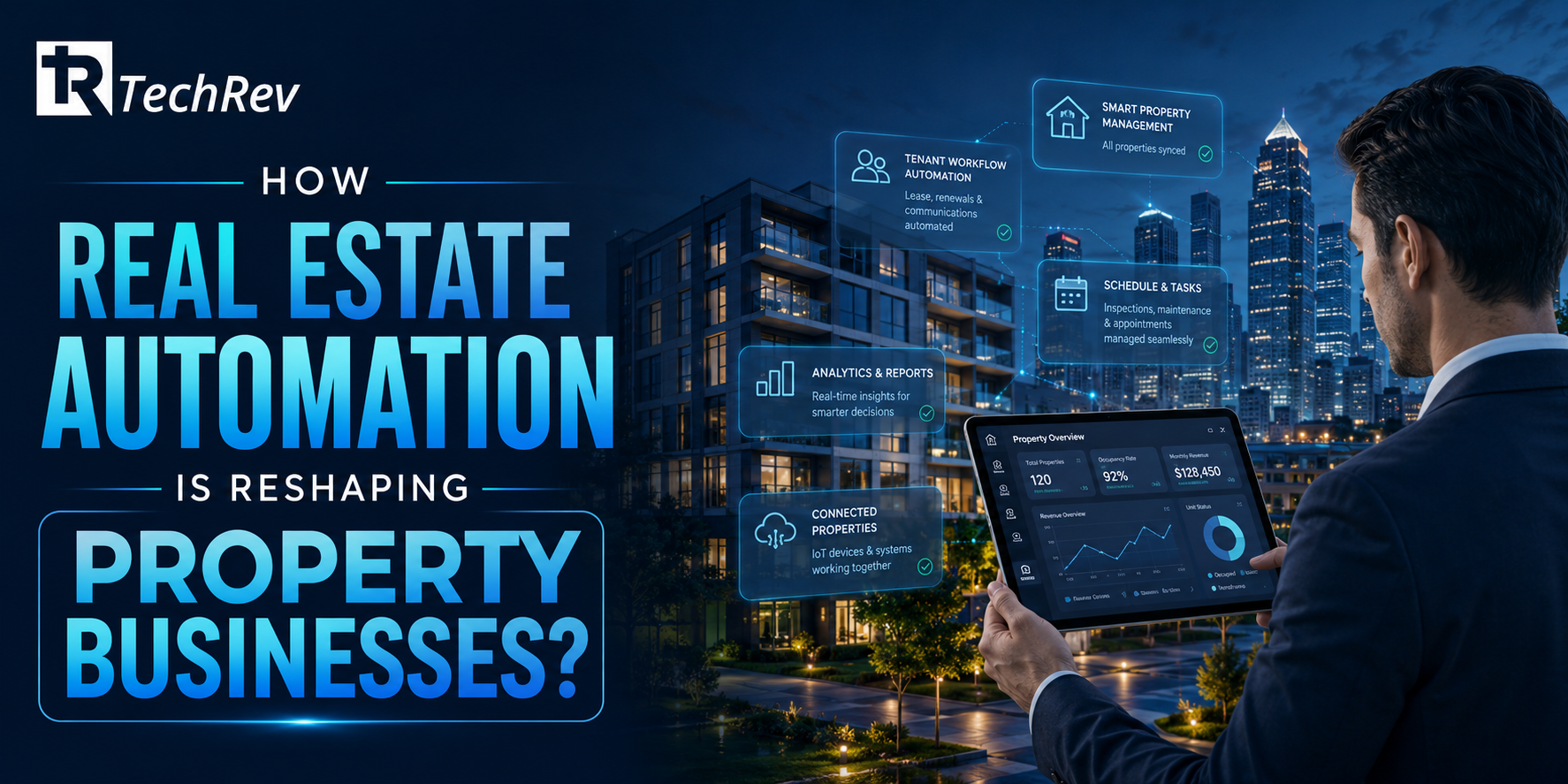
Still Running Your Real Estate Business on Spreadsheets and Sticky Notes?
Managing leads, following up with prospects, processing lease documents, scheduling property tours, sending payment reminders when you’re doing all of this manually, something always falls through the cracks. And in real estate, one missed follow-up can cost you a deal worth thousands of dollars.
Here’s the thing: your competitors are not sitting around waiting either.
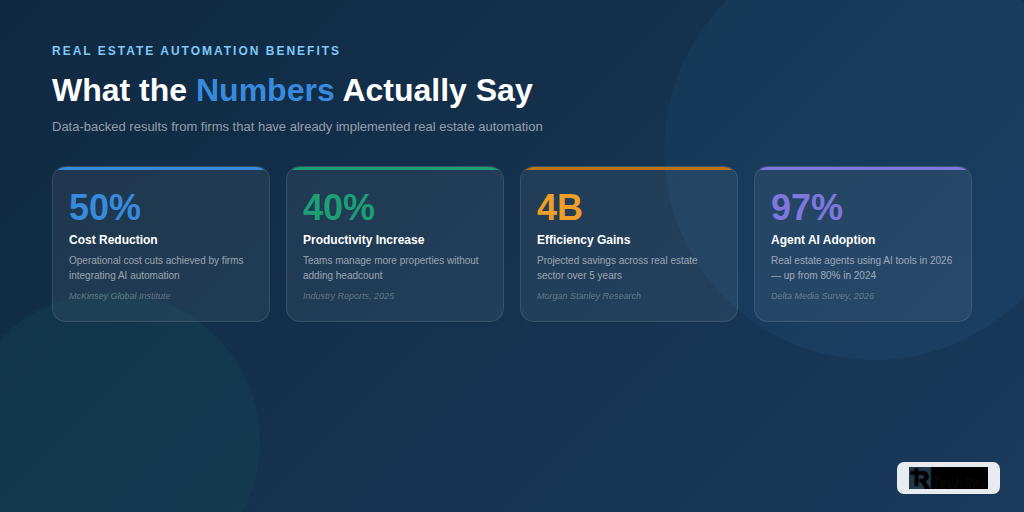
A 2026 Delta Media survey found that 97% of real estate agents have now adopted some form of AI-powered tools, up from 80% just two years ago.
Morgan Stanley estimates that AI-driven automation could deliver up to $34 billion in efficiency gains across the real estate sector over the next five years.
So the real question is not whether real estate automation works. The question is: where do you start, and how do you build it the right way?
This blog breaks it all down into the workflows you can automate today, the real business benefits backed by numbers, the essential features of a real estate mobile app, and how TechRev’s real estate app development and custom AI agents help property businesses grow without adding overhead.
What Is Real Estate Automation, and Why Does It Matter Right Now?
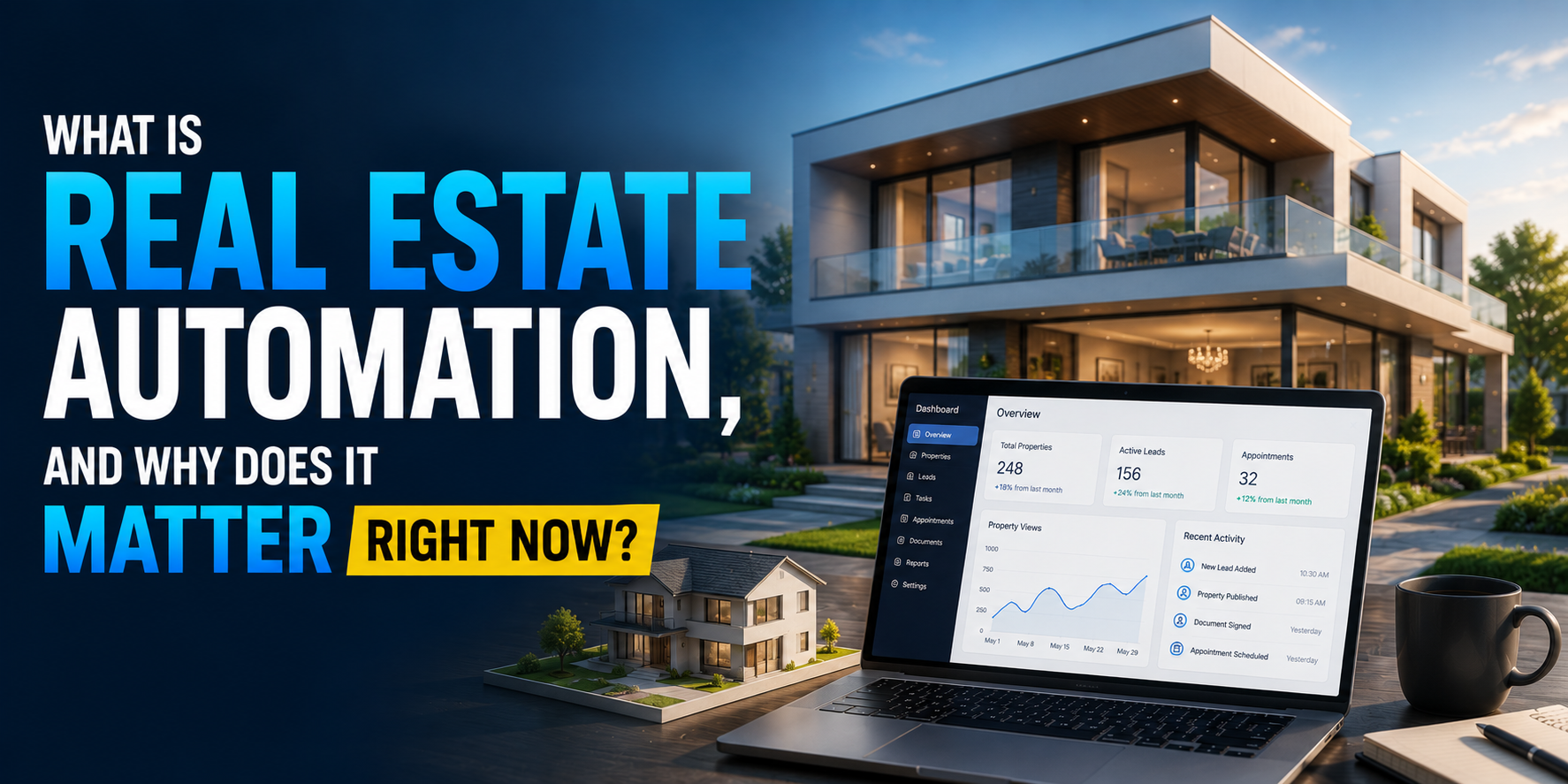
Real estate automation is the use of technology, particularly AI agents, custom software, and mobile platforms, to handle repetitive, time-consuming tasks in property management, sales, and client communication without constant human involvement.
Think of it as a system that never sleeps, never forgets, and never skips a follow-up.
The global AI in real estate market is projected to reach $988 billion by 2029, growing at a compound annual growth rate (CAGR) of over 30%.
These numbers reflect one clear reality: automation in real estate is not a trend. It is the new baseline for staying competitive.
Studies also show that businesses:
Leveraging AI in real estate witnessed a 7.3% increase in productivity, a 6.9% boost in customer interaction, and a 5.6% enhancement in operational effectiveness. Meanwhile, 52% of companies are already actively integrating AI assistants to streamline their processes.
The proptech market hit $47 billion in 2025 and is projected to reach $185 billion by 2034. But most of that spending still goes toward basic CRMs and listing portals.
The firms that will pull ahead are the ones building real workflows with custom AI agents and purpose-built real estate mobile apps, not just signing up for off-the-shelf tools.
Also Read – How Custom AI Agent Development Improves Enterprise Workflows?
What Can You Actually Automate? The Core Real Estate Workflows
This is where most business owners get confused. They hear automation and think it means replacing their entire team with robots. That is not what this is.
Real estate automation targets the repetitive, rule-based work that eats up hours every week, so your people can focus on what actually closes deals: client relationships, negotiations, and strategic decisions.
1. Lead Capture and Qualification
What happens manually?
Someone fills out a form on your website. It lands in your inbox. You notice it sometime later, respond, and realize the prospect went with another agent two days ago.
What automation does?
The moment a lead comes in, a custom AI agent development qualifies it based on budget, location, timeline, and property type.
- It sends a personalized response instantly and schedules a follow-up sequence.
- Speed-to-lead is the single biggest pain point in residential real estate, and automated lead management directly solves it.
Research consistently shows that automated follow-up systems generate significantly higher lead engagement compared to manual processes. In real terms, that means more conversations, more appointments, and more closed deals.
2. Document Processing and Lease Abstraction
Lease abstraction pulling key terms like rent amounts, renewal dates, and clauses from lengthy contracts used to take a paralegal three hours or more. AI-driven automation completes the same task in under ten minutes, with better accuracy and fewer errors.
Companies using AI for document processing have reported cutting abstraction costs by 50% or more, while reducing turnaround time for due diligence significantly. Errors go down.
Confidence in data goes up. And your legal team can focus on exceptions rather than routine extraction.
3. Property Listing Management
Managing listings across multiple platforms, keeping availability updated in real-time, and syncing price changes manually this is time that should be spent on clients.
Automated listing management handles updates across portals instantly, ensures data consistency, and even sends automated notifications to interested buyers when a property status changes.
4. Tenant Screening and Onboarding
AI-powered tenant screening analyzes credit scores, rental histories, employment records, and risk profiles in minutes. What used to take days of back-and-forth now happens before a prospect even finishes filling out their application form.
Smart screening filters out high-risk renters and gives landlords clean, data-backed recommendations.
5. Appointment Scheduling and Property Tours
Coordinating showings manually is one of the most frustrating parts of real estate operations.
With automation, prospects can book property tours directly from your website or real estate mobile app development, receive confirmation instantly, get reminders automatically, and reschedule without involving your team at all.
6. Rent Collection and Payment Reminders
Finance automation manages billing cycles, sends payment reminders before due dates, flags late payments, and processes collections, all without manual intervention.
This eliminates the awkward chase-up calls and keeps cash flow predictable.
7. Predictive Maintenance Alerts
For property management companies, maintenance is a constant drain. AI systems monitor property equipment in real-time and send predictive alerts before something breaks.
This prevents costly emergency repairs and reduces tenant complaints. Predictive alerts for repairs and renewals help owners avoid vacancies and costly emergencies.
8. Market Analytics and Reporting
Instead of pulling data from five different sources to create a weekly report, Generative AI development tools compile market data, property performance metrics, occupancy rates, and revenue trends into a single dashboard.
Investors and portfolio managers get real-time insights without waiting for someone to run a report manually.
The Real Business Benefits of Real Estate Mobile App Development: Numbers That Actually Matter
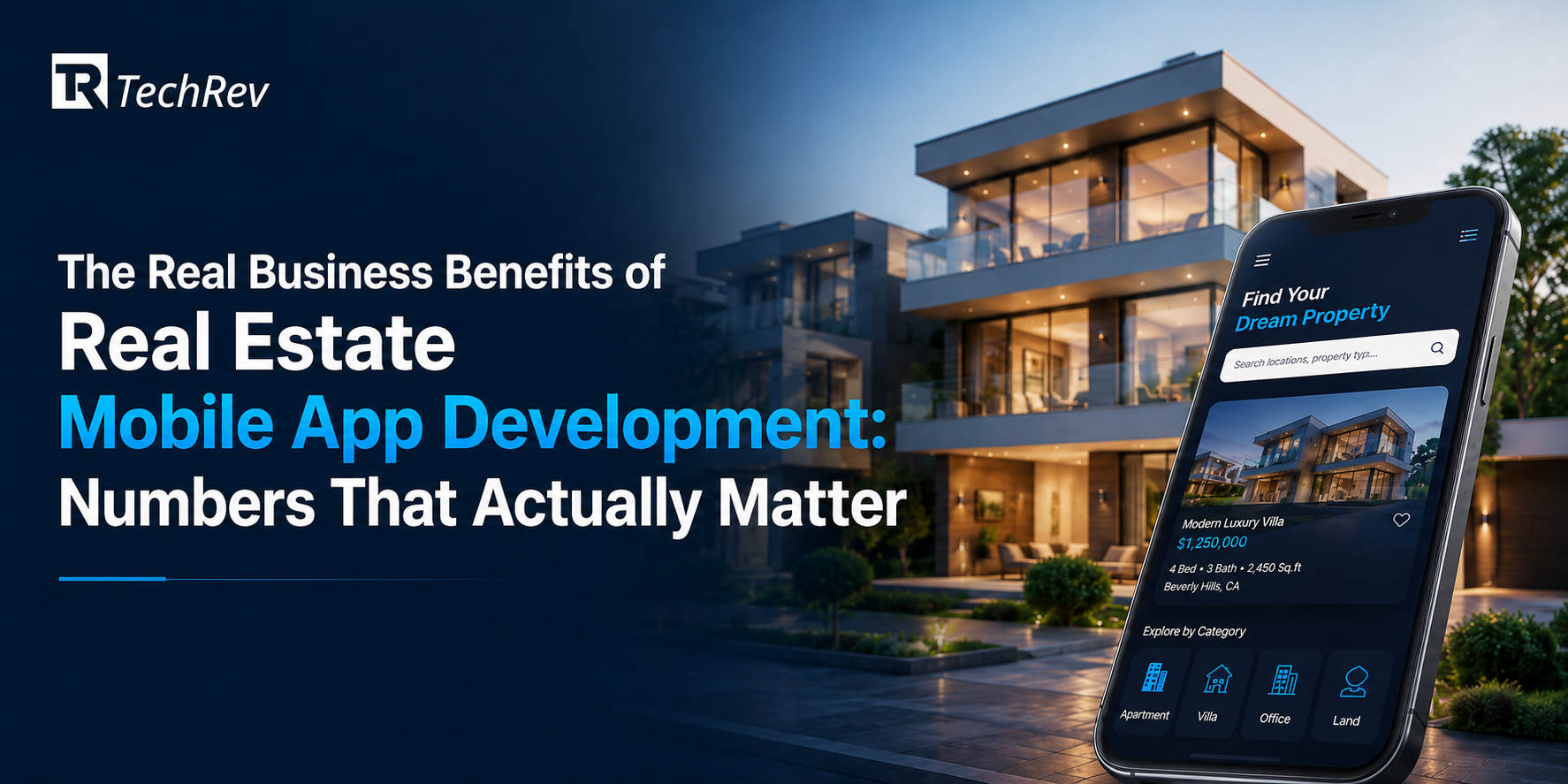
Let’s stop speaking in abstractions and look at what real estate automation actually delivers when implemented properly.
1. Increase in Productivity: Up to 40%
Real estate professionals who automate their core workflows report productivity gains ranging from 15% to 40%.
Teams can handle more properties, more clients, and more transactions without growing headcount proportionally.
One company in the residential sector reduced its full-time employee count by 15% since 2021 while productivity increased because of AI integration services. They reported higher satisfaction among both customers and their own teams.
2. Reduction in Operational Costs: 30 to 50%
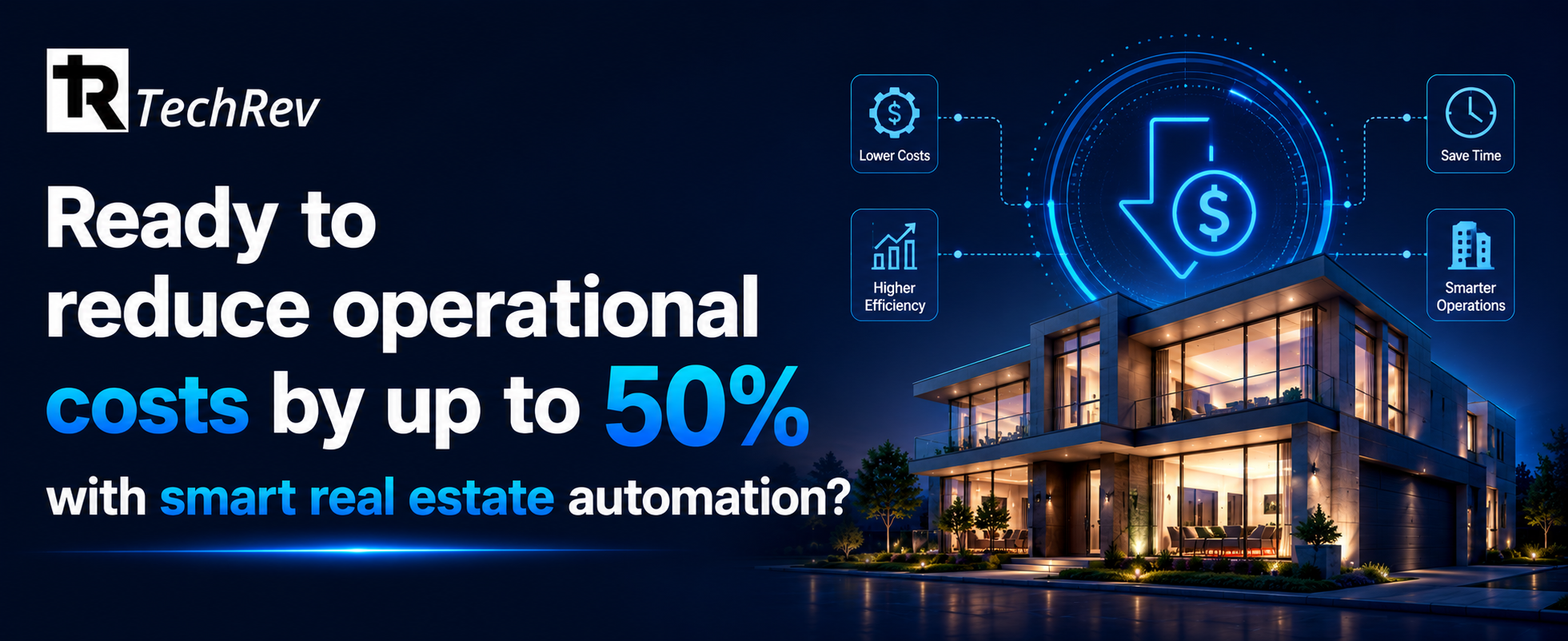
This is the number that gets executives’ attention. Real estate firms integrating automation technologies are achieving 30 to 50% reductions in operational costs, according to industry reports citing McKinsey Global Institute.
Enterprise RPA automation implementations specifically deliver 30 to 40% cost reductions and faster processing without proportional headcount growth.
A property management company using AI chatbot development for tenant inquiries can cut customer service costs by up to 40%, because bots handle routine queries instantly, around the clock.
3. Increase in Efficiency: Order-of-Magnitude Improvements
When lease abstraction drops from three hours to seven minutes, that is not a 20% efficiency gain.
That is a 95% reduction in time spent on a single task. These are not small improvements.
We are talking about order-of-magnitude gains in speed and accuracy across core workflows.
4. Growth in Sales and Lead Conversion
Real estate apps that integrate AI-based property recommendations and instant communication tools see measurable gains in lead conversion.
One real estate agency reported a 40% increase in user engagement within six months of launching a custom real estate mobile app.
Faster response times, personalized recommendations, and seamless communication directly drive conversion rates up.
How to Develop a Real Estate Mobile App: Key Development Steps You Cannot Skip!

Building a real estate automation system or a real estate mobile app is not something you do over a weekend with a template.
Getting it right requires a structured android app development approach that balances technical depth with business outcomes.
Here is how TechRev approaches real estate software development for property businesses.
1. Discovery and Business Analysis
Before writing a single line of code, TechRev’s team maps your existing workflows, identifies the highest-value automation opportunities, and defines what success looks like in measurable terms. Leads responded to within X minutes, lease processing time reduced to Y hours, cost per transaction dropped to Z.
This phase also includes competitive analysis, user research, and a technical architecture plan. Skipping this step is how most automation projects fail. They automate the wrong things, or they automate well but miss the integration with existing systems.
2. Architecture and System Design
Real estate software development requires decisions that have long-term consequences: which cloud infrastructure to use (AWS, Azure, or GCP), how to structure your database, which APIs to connect for property listings and payment processing, and how to ensure the system scales as transaction volume grows.
TechRev designs systems with scalability built in from the start, so your platform does not need a complete rebuild when you go from 50 properties to 500.
3. Custom AI Agents Development
This is where Generative AI development and AI agents development come into the picture. TechRev builds custom AI agents tailored to your specific workflows, not generic bots that answer FAQs.
These custom AI agents can qualify leads using your specific criteria, extract lease terms from your document formats, generate property reports using your data sources, and communicate with tenants in your brand voice.
The difference between a generic automation tool and a purpose-built custom AI agent is the difference between a template and a solution.
4. Real Estate Mobile App Development
A real estate mobile app is now table stakes. Buyers search properties online before ever contacting an agent. Tenants expect to pay rent, submit maintenance requests, and communicate with property managers from their phones.
TechRev’s mobile app development team builds real estate mobile apps for both iOS and Android platforms, or cross-platform solutions using Flutter vs React Native when a single codebase serves the business better.
As an experienced android app development company with deep expertise in iOS as well, TechRev delivers apps that perform reliably across devices and user scenarios.
5. Integration With Existing Systems
A real estate mobile app or automation platform that does not talk to your CRM, accounting software, listing portals, and communication tools creates more work than it saves.
TechRev’s API development and integration services ensure your new system connects seamlessly with what you already use, without disrupting ongoing operations.
6. Testing, Launch, and Ongoing Support
TechRev tests performance, security, and usability across devices and real-world scenarios before any launch.
After deployment, the team provides ongoing maintenance, updates, and performance improvements. Real estate technology has to work when you need it most, which is every day.
Key Trending Features Your Real Estate Mobile App Needs in 2026
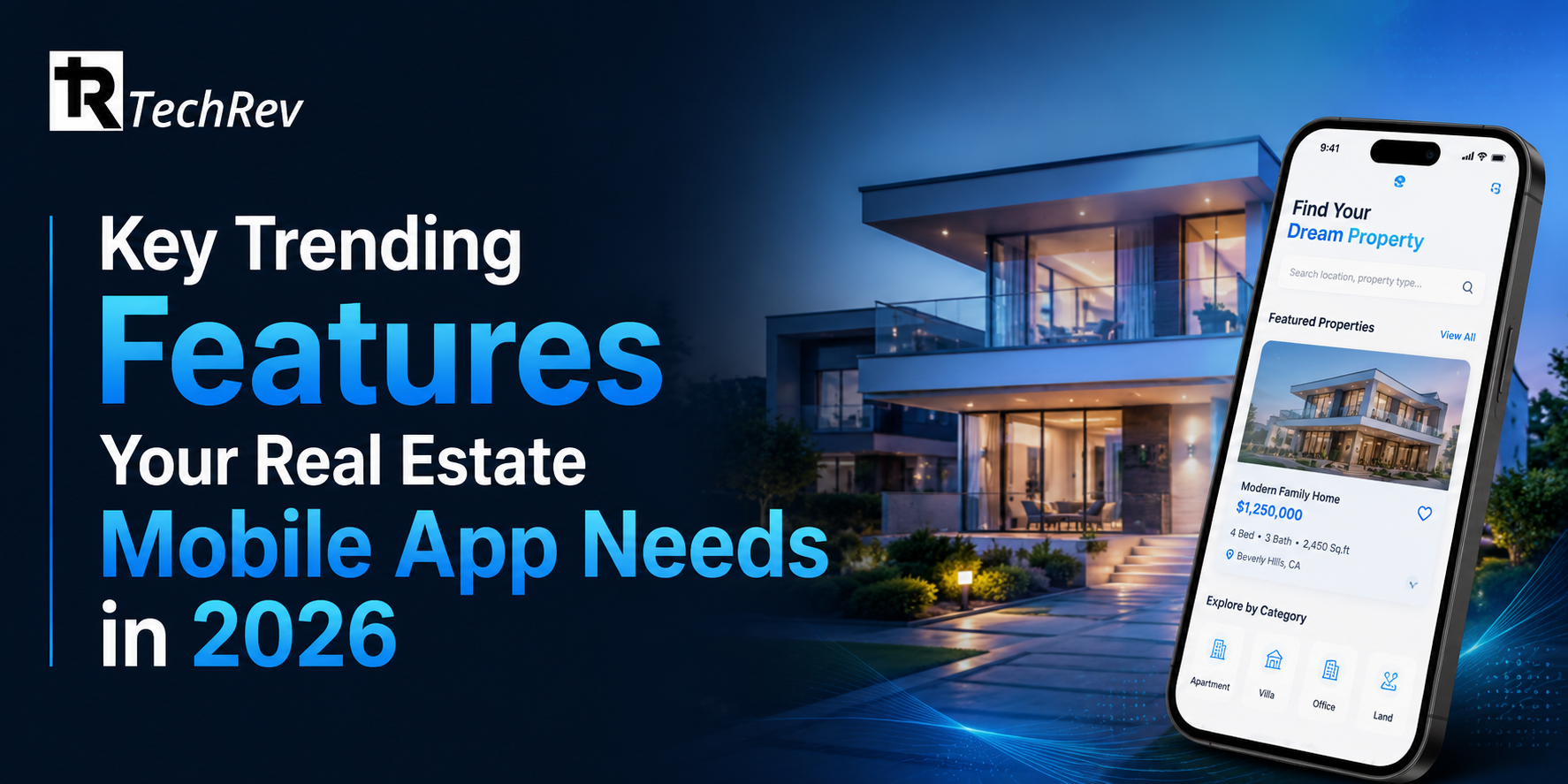
What separates a real estate mobile app that drives business growth from one that collects dust? The features.
Here are the features that real estate businesses are investing in right now, and that TechRev builds into every real estate mobile app project.
1. AI-Based Property Recommendations
Using machine learning, the app learns buyer preferences from their search behavior and surfaces properties that match, even before the buyer articulates what they want. This reduces time spent browsing and improves the chances of a successful match.
2. Virtual Tours and 3D Walkthroughs
Virtual tours allow buyers to explore properties remotely. This feature became essential during the pandemic and is now a standard expectation.
Buyers who can tour a property virtually before scheduling an in-person visit are further along in the decision process and more likely to convert.
3. AR-Enabled Property Visualization
Augmented reality allows prospective buyers to visualize how a space would look with their furniture, or in different interior styles, directly from their phone.
This reduces buyer hesitation and shortens the decision timeline.
4. In-App Messaging and Agent Communication
Buyers can communicate directly with agents, ask questions, and negotiate without switching between email, text, and phone. Keeping communication within the app creates a cleaner record and a better experience for both sides.
5. Secure Payment and Transaction Management
From rental payments to property deposits, in-app payment processing with secure gateways eliminates the friction of external transfers and gives both landlords and tenants a clean transaction history.
7. Analytics and Reporting Dashboard
Property managers and investors get real-time data on occupancy rates, revenue performance, market trends, and portfolio health in a single view. Data-driven decisions replace gut-based ones.
8. Interactive Maps and Location Intelligence
Map integration showing nearby schools, transit, hospitals, and commercial areas helps buyers evaluate a property in context, not just in isolation.
9. Voice Search and NLP Integration
Voice assistants and NLP are becoming an integral part of real estate apps. Buyers can search for properties using natural language, and the system understands intent even when the query is conversational.
How Does TechRev Help Real Estate Businesses Build This?

TechRev has been building custom software solutions, mobile apps, and AI-powered platforms since 2015.
For real estate businesses, the approach combines real estate custom software development expertise with deep generative AI development capabilities to deliver systems that actually move business metrics.
What TechRev Brings to Real Estate Projects?
The following are some ways:
1. Custom AI Agents for Real Estate Workflows
TechRev builds custom AI agents that integrate directly into real estate CRMs, property management systems, and communication tools.
These are not off-the-shelf chatbots. They are purpose-built systems trained on real estate data and workflows, capable of qualifying leads, processing documents, generating reports, and communicating with clients at scale.
2. Real Estate Mobile App Development That Performs
As both an android app development company and an iOS development partner, TechRev delivers real estate mobile apps that are fast, reliable, and built for long-term use.
The development process includes mobile app consultation, UI/UX design, native and cross-platform development, rigorous testing, and post-launch support. Every custom mobile app TechRev builds is designed around your users and your workflows, not a generic template.
3. Generative AI Development for Real Estate
TechRev’s generative AI development services enable real estate businesses to add intelligent features to existing platforms or build new AI-native products from scratch. From AI-powered lease abstraction to predictive market analytics,
TechRev’s generative AI developers USA fine-tune models for domain-specific real estate use cases, so the output is accurate, actionable, and aligned with business goals.
4. Custom Software Development Aligned With ROI
Every custom software development project at TechRev starts with a business outcome in mind, not a feature list. The team maps technical decisions back to real metrics: lead response time, cost per transaction, occupancy rate, customer satisfaction.
This is how TechRev ensures that what gets built actually delivers the growth and efficiency gains the business is investing for.
5. End-to-End IT Services
From UI/UX design and cloud services to digital marketing and managed IT, TechRev covers the full stack. Real estate businesses do not need to coordinate five different vendors.
One team handles everything from design to deployment to ongoing support.
What Real Estate Clients Have Seen Working With TechRev?
Real estate businesses that have worked with TechRev on custom software development and iOS app development projects have reported:
- Significant reductions in time spent on document processing and administrative tasks
- Faster lead response cycles, which directly improved conversion rates
- Better client communication through automated, personalized outreach
- Scalable mobile platforms that handled growing user bases without performance issues
- Custom AI agents that reduced the need for manual intervention in routine workflows
The goal in every engagement is not just a working product. It is a product that changes how the business operates and how it grows.
Thinking about automating your real estate workflows? TechRev’s team will map your current processes, identify the highest-impact automation opportunities, and give you a clear starting point. Talk to an expert.
Questions to Ask Before Hiring a Real Estate App Development Partner
Choosing the right development partner for your real estate automation project is as important as the technology itself. Here are the questions that matter:
- Do they have experience with real estate software development specifically, or are they a generalist agency?
- Can they show examples of custom AI agents or automation systems they have built for property businesses?
- Do they handle both mobile app development and backend integration, or will you need multiple vendors?
- What is their discovery and scoping process before they begin building?
- How do they measure success, and what KPIs will they track?
- Do they provide post-launch support and ongoing optimization?
TechRev’s answers to all of these are straightforward: real estate is one of the core verticals TechRev has built solutions for.
The team handles end-to-end delivery, from discovery and design through development, deployment, and ongoing support. And every engagement is measured against the business outcomes agreed upon at the start.
Conclusion
The gap between real estate businesses that have automated their operations and those still running on spreadsheets and manual follow-up is growing every quarter.
The numbers make this clear: 30 to 50% cost reductions, up to 40% productivity gains, and order-of-magnitude improvements in processing speed are not hypothetical. They are what businesses already implementing real estate automation are reporting.
The proptech market is on a trajectory from $47 billion in 2025 to $185 billion by 2034. The AI in real estate market is heading toward $988 billion by 2029.
The businesses that will own meaningful positions in those markets are the ones that are building their operational infrastructure today, not waiting until automation becomes unavoidable.
Real estate automation through custom AI agents, generative AI development, purpose-built real estate mobile apps, and smart real estate software development is how property businesses close the gap between where they are and where the market is going.
TechRev has been building these systems since 2015. The team knows what works, what does not, and how to get from idea to working product without wasting time on the wrong priorities.
If you are ready to stop managing your real estate business manually and start scaling it intelligently, the conversation starts here.
Contact TechRev to start your real estate automation journey.