
Are you struggling to choose the right framework for your next artificial intelligence project? You are definitely not the only one. For years, founders and technical leads have debated the merits of the top two frontend frameworks. But as artificial intelligence completely reshapes the tech industry, the Flutter vs React Native 2026 conversation has taken a massive turn.
Today, mobile applications are no longer just static screens. They are intelligent ecosystems. Modern users expect real-time image recognition, on-device machine learning, and conversational AI agent development right in their pockets. Because of this shift, standard mobile app development requires a framework that can handle heavy computational loads without draining the user’s battery or causing screen lag.
If you want to dominate the market this year, you need the right technology stack. In this blog, we will break down the Flutter vs React Native 2026 landscape, analyze their capabilities for AI integration, and give you a step-by-step roadmap for your next launch.
The Shift in Cross-Platform App Development
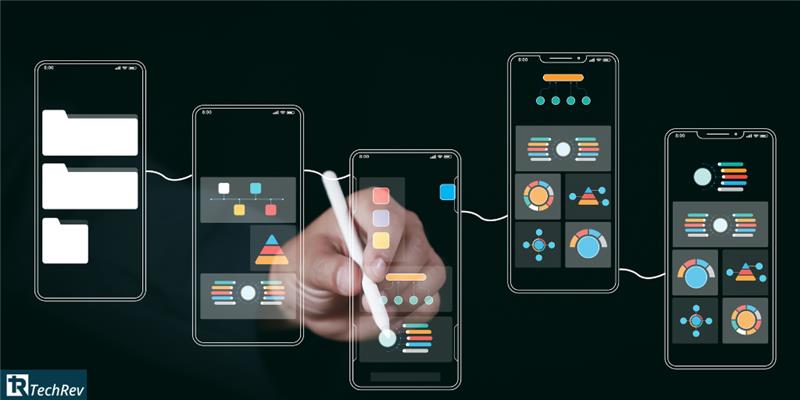
In the past, building a high-performance app meant writing native code twice. You had one team for iOS and another team for Android. This was incredibly expensive.
Cross-platform app development solved this problem by allowing engineers to write one single codebase that works on both operating systems. However, integrating AI models directly into a mobile application puts immense stress on the frontend development layer.
The framework you choose must be able to communicate flawlessly with native device hardware like the camera and the microphone. Let us see how the two giants compare when pushed to their limits.
React Native: The JavaScript Giant
Backed by Meta, React Native has a massive community. Because it relies on JavaScript, finding talent is generally easier.
Pros for AI Integration:
- Massive Ecosystem: React Native has countless pre-built libraries for integrating external AI APIs like OpenAI or Anthropic.
- Over-the-Air Updates: You can push minor updates to your AI models without requiring users to download a new version from the app store.
- Web Compatibility: If your frontend development team already uses React for your website, transitioning to React Native is incredibly smooth.
Cons for AI Integration:
- The Bridge Bottleneck: Historically, React Native used a “bridge” to communicate with native hardware. While the new architecture has improved this, heavy on-device AI tasks like real-time video processing can still experience slight latency.
Flutter: The Performance Powerhouse
Backed by Google, Flutter uses the Dart programming language. It is famous for creating beautiful, highly customized user interfaces.
Pros for AI Integration:
- Native-Like Performance: Flutter compiles directly to native machine code. There is no JavaScript bridge. This means on-device machine learning models like TensorFlow Lite run significantly faster.
- The Impeller Engine: Flutter’s new rendering engine makes complex UI animations completely smooth, which is perfect for apps that use AI-generated 3D graphics or augmented reality.
- Consistent UI: The app will look exactly the same on an older Android device as it does on the newest iPhone.
Cons for AI Integration:
- Larger App Size: Flutter apps tend to have a larger file size, which can be an issue if your AI models are also very large.
Also Read – Top Skills to Look for When Hiring Flutter App Developers!
Which framework is cheaper for startups?

Both frameworks significantly reduce costs compared to native development. However, because the JavaScript talent pool is larger, it is sometimes slightly cheaper and faster to hire app developers for React Native.
Flutter vs React Native 2026: The Comparison
To help you make an executive decision, here is how they stack up specifically for artificial intelligence projects.
| Feature | React Native | Flutter |
| Best For | Cloud-based AI via APIs (ChatGPT, Claude) | On-device AI (TensorFlow Lite, Vision AI) |
| Performance | High, but heavy tasks may drop frame rates | Near-native, flawless 60fps animations |
| Developer Pool | Massive (JavaScript ecosystem) | Growing rapidly (Dart ecosystem) |
| UI Customization | Relies on native UI components | Pixel-perfect custom canvas rendering |
| Winner for AI | Best for quick API integrations | Best for complex, on-device AI processing |
Step-by-Step Roadmap for AI Mobile App Development
Knowing the winner of the Flutter vs React Native 2026 debate is only half the battle. You need a solid execution plan. Here is the exact roadmap top agencies use to build intelligent platforms.
1: Define the AI Architecture
Decide if your AI will run in the cloud or on the device. Cloud AI is easier to build but requires internet access. On-device AI works offline and is far more secure for private data.
2: UI/UX Prototyping
Your frontend development team must design an interface that makes the AI feel natural. If you are building an AI chatbot, the typing animations and speech-to-text buttons must be perfectly placed.
3: Choose the Framework and Build
Select your framework based on your architecture. If you are building a heavy augmented reality app, choose Flutter. This is the stage where you must hire app developers who have specific experience bridging mobile apps with machine learning models.
4: Hardware Integration and Testing
AI apps heavily rely on cameras and microphones. Your Quality Assurance team must test the app on dozens of different physical devices to ensure the AI does not drain the battery or overheat the phone.
5: Deployment and Continuous Learning
Launch the app on the iOS App Store and Google Play. Because AI models improve over time, you must continuously monitor user interactions and push updates to refine the artificial intelligence.
Also Read – Where to Find and Hire App Developers in 2026?
Why Choose TechRev for Cross-Platform App Development?
Building a smart application requires a partner who understands the deep technical nuances of modern software. You cannot rely on generic coders to integrate complex neural networks into a mobile interface.
At TechRev, we are pioneers in cross-platform app development. We have a deep bench of engineering talent. Whether your project demands the vast library ecosystem of React Native or the unmatched rendering speed of Flutter, our team has the exact expertise you need.
When you hire app developers from TechRev, you get specialists in both frontend development and AI integration services. We architect your mobile software to ensure your artificial intelligence features run lightning fast, keeping your users highly engaged and thoroughly impressed.
Conclusion
The Flutter vs React Native 2026 debate proves that both frameworks are incredibly powerful. Your final choice depends entirely on your specific business goals. If your app relies on cloud-based APIs and you want to leverage a massive JavaScript talent pool, React Native is a fantastic choice. If your app requires heavy on-device machine learning and complex, customized graphics, Flutter is the absolute winner.
Success in mobile app development comes down to partnering with a team that knows how to execute your vision flawlessly.
Are you ready to build a high-performance AI mobile app? Contact TechRev today to start your digital transformation!
Also Read – How to Build a Q&A Platform: The Quora App Development Guide!
FAQs
1. Who wins the Flutter vs React Native 2026 debate for general apps?
For general applications, it is a tie. However, Flutter is rapidly gaining ground due to its superior rendering engine and incredibly consistent UI performance across all devices.
2. Is cross-platform app development suitable for complex AI projects?
Yes. Modern cross-platform frameworks have advanced so much that they can handle complex AI tasks just as well as native code, saving startups massive amounts of time and money.
3. How does eNotary On Call benefit from these frameworks?
For a secure application like eNotary On Call, a cross-platform framework ensures that both iOS and Android users get the exact same secure document scanning and identity verification experience simultaneously.
4. What should I look for when I hire app developers for an AI project?
You should look for engineers who understand both traditional mobile app development and modern AI tools. They must know how to optimize API calls so the app remains fast and responsive.
5. Why is frontend development so critical for AI apps?
If the frontend is clunky, users will not trust the AI. A smooth, highly responsive user interface builds trust. The user needs to feel like they are interacting with a polished, professional intelligence.
6. Can TechRev upgrade my existing native app to a cross-platform framework?
Absolutely. We specialize in code modernization. We can rebuild your legacy iOS and Android apps into a single, unified codebase using Flutter or React Native to drastically reduce your future maintenance costs.
7. Does running AI on mobile phones drain the battery?
It can if it is poorly optimized. This is why partnering with an expert agency is critical. We optimize the algorithms to ensure the AI performs efficiently without rapidly depleting the user’s device battery.