
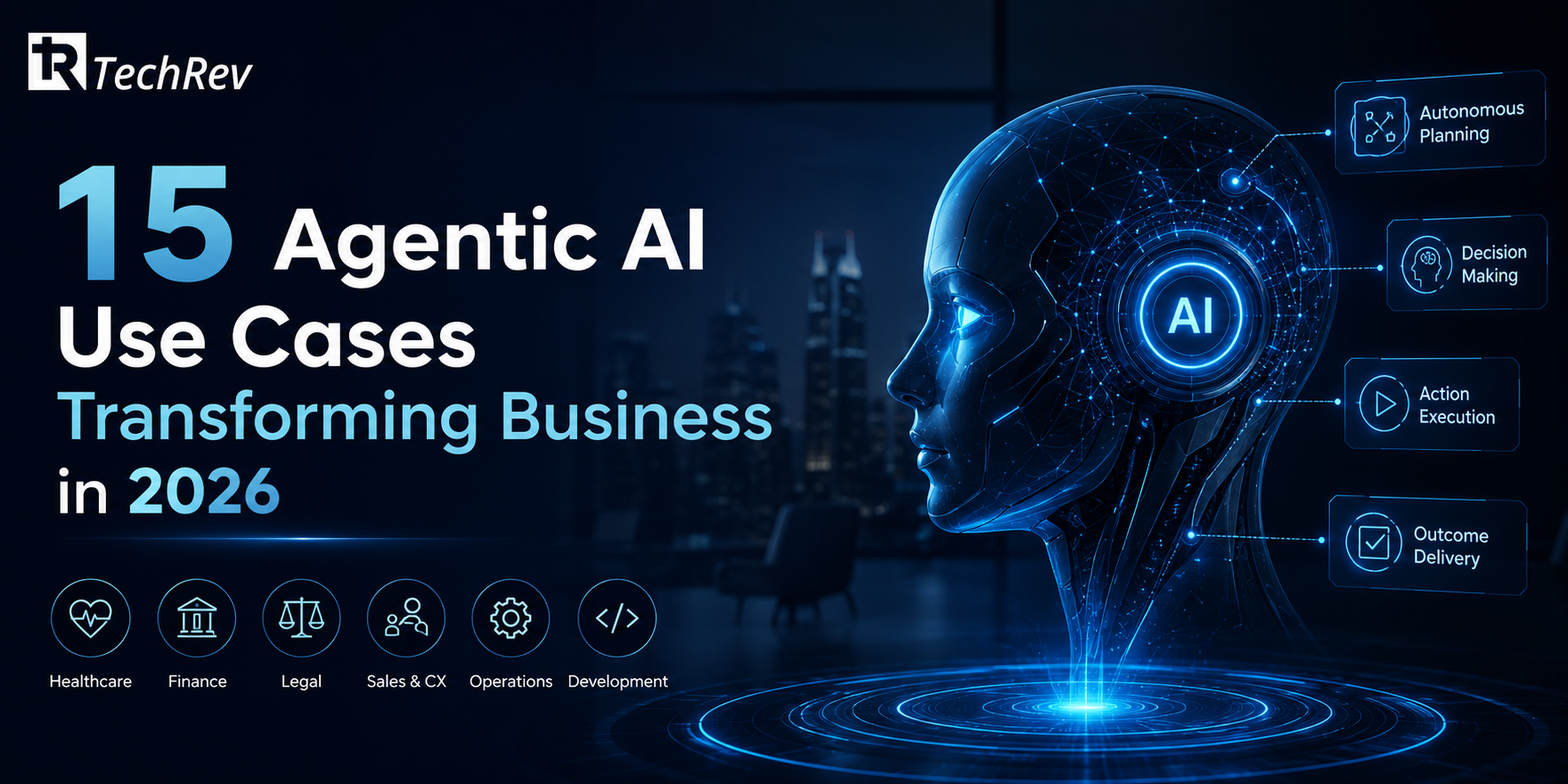
Agentic AI use cases have moved from conference slides to production systems faster than almost any enterprise technology before them. Two years ago, “AI agents” meant demos. Today, Gartner projects that by 2028, 33% of enterprise software will include agentic AI, up from less than 1% in 2024, and Capgemini’s research found more than 8 in 10 organizations planning to integrate AI agents within three years.
But here is the filter this blog applies that most lists skip: a use case only made the cut if it automates work that is high-volume, rules-heavy, and measurable, because those are the agentic AI use cases that survive contact with production. The rest is theater.
Fifteen use cases, organized by industry, with the market data and the selection framework to pick your first one.
What Is Agentic AI?
Agentic AI is artificial intelligence that pursues goals autonomously: it plans multi-step tasks, makes decisions within defined rules, takes actions across business systems, and escalates exceptions to humans. Where generative AI creates content when prompted, agentic AI completes outcomes, such as resolving a ticket, filing a request, or reconciling a record, with humans supervising rather than operating.
The one-line test: if the software waits for your next instruction, it is a tool. If it works toward a goal while you do something else, it is an agent.
Agentic AI Market Stats: Why Use Cases Matter Now?
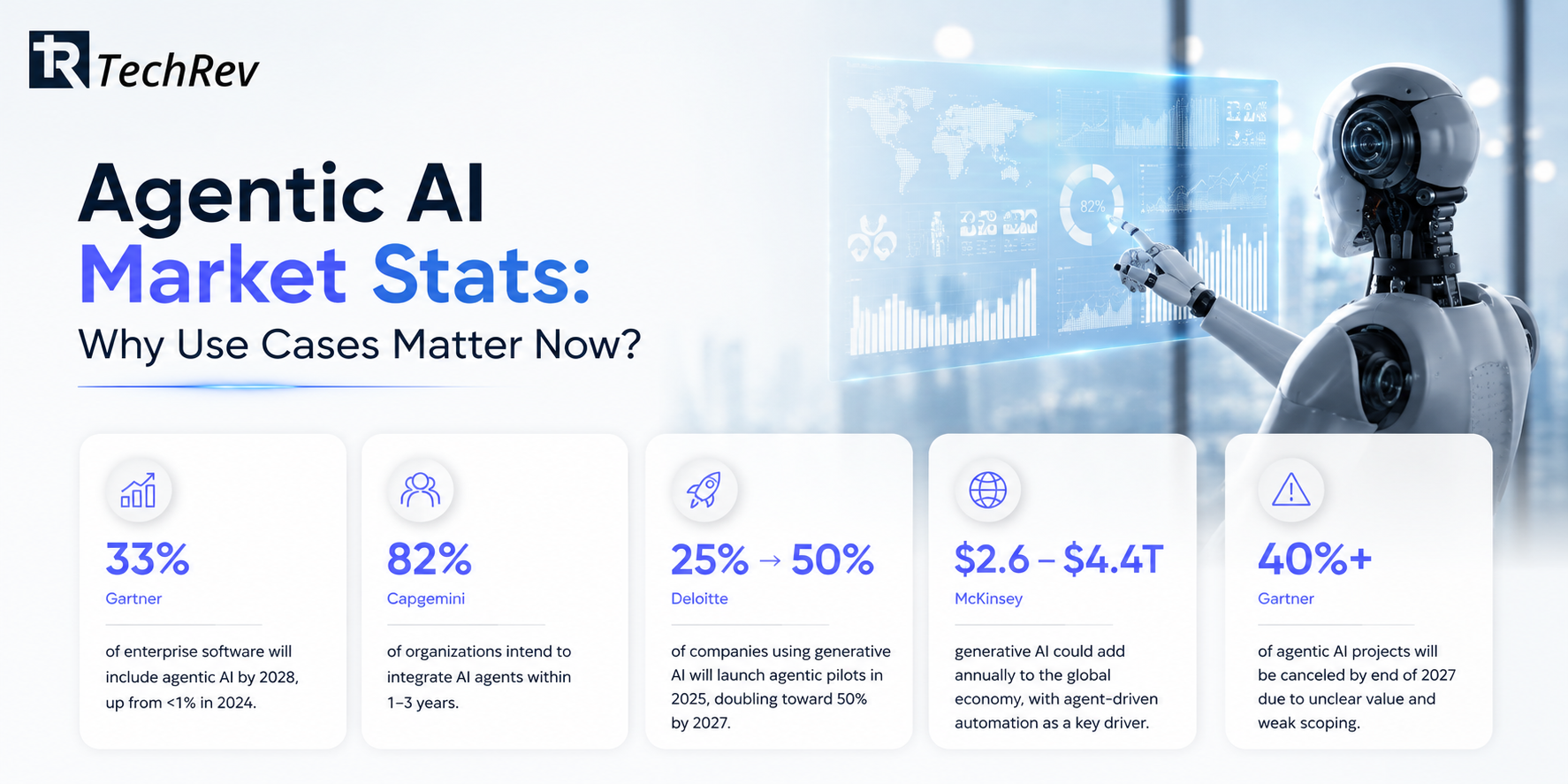
The adoption numbers are steep, and so is the failure rate, which is exactly why choosing the right agentic AI use cases matters:
- Gartner: 33% of enterprise software will include agentic AI by 2028 (under 1% in 2024), and 15% of day-to-day work decisions will be made autonomously.
- Capgemini Research Institute: 82% of organizations surveyed intend to integrate AI agents within one to three years.
- Deloitte predicted 25% of companies using generative AI would launch agentic pilots in 2025, doubling toward 50% by 2027.
- McKinsey: 78% of organizations already use AI in at least one function, and generative AI could add $2.6 to $4.4 trillion annually to the global economy, with agent-driven automation as a primary unlock.
- The counterweight: Gartner also predicts over 40% of agentic AI projects will be canceled by end of 2027, mostly from unclear value and weak scoping.
Read the last stat as instruction, not discouragement. The canceled projects picked vague use cases. The survivors picked from lists like the one below.
Agentic AI Use Cases in Healthcare
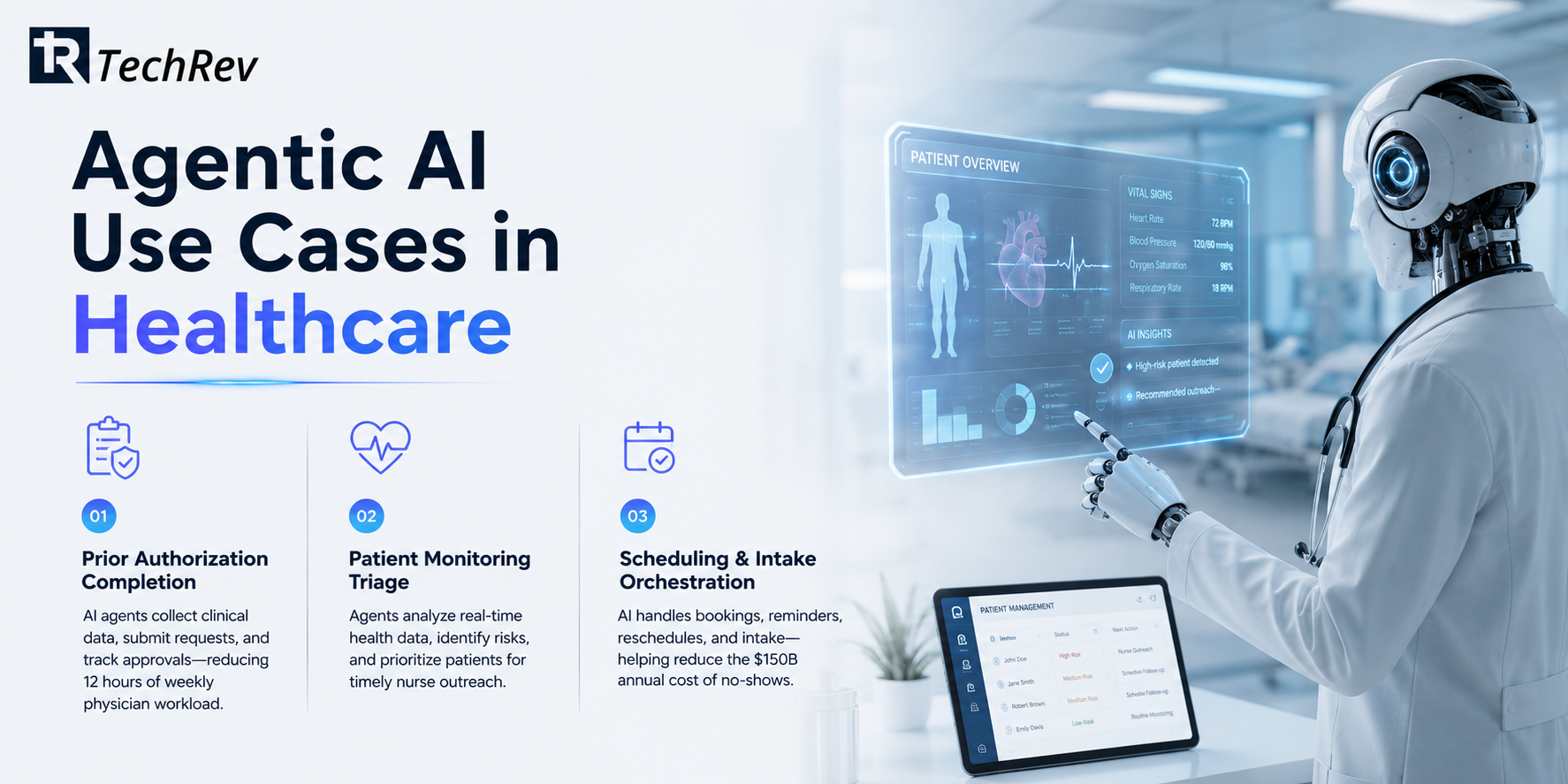
Healthcare’s administrative burden makes it the densest target for AI agents in healthcare operations:
1. Prior authorization completion
Agents detect when authorization is needed, assemble clinical documentation from the EHR, submit electronically, and track status, attacking a process physicians report consumes about 12 hours of practice time weekly.
2. Patient monitoring triage
Agents watch remote patient monitoring data streams, rank patients by deterioration risk, and queue the right ones for nurse outreach, turning thousands of daily readings into a short priority list.
3. Scheduling and intake orchestration
Conversational agents book, remind, reschedule, and complete intake before arrival, directly reducing the no-show leakage that industry estimates put at roughly $150 billion annually across US healthcare.
Agentic AI Use Cases in Finance and Fintech
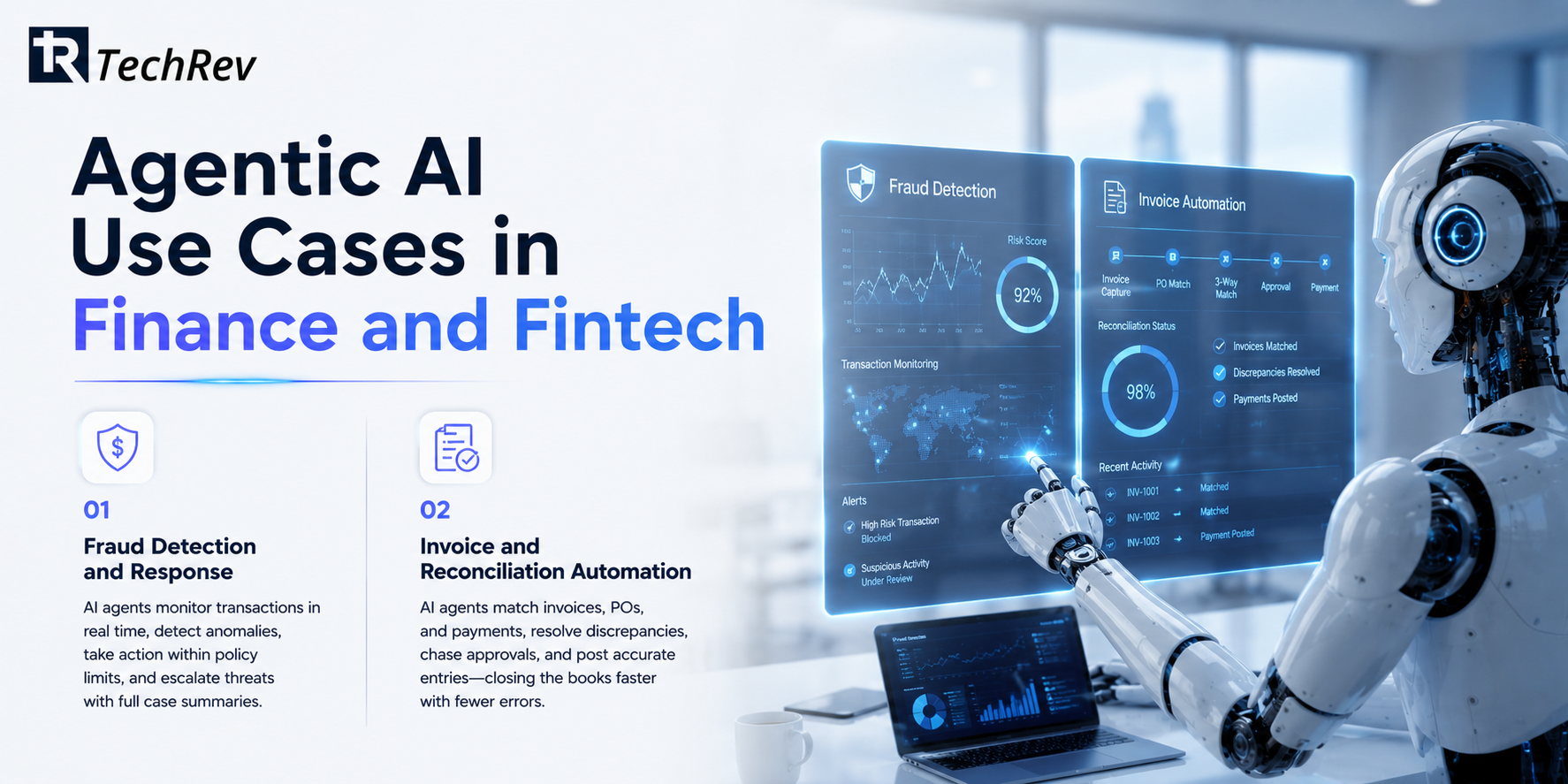
4. Fraud detection and response
Agents monitor transactions continuously, correlate signals a rules engine misses, freeze suspicious activity within policy limits, and package cases for human investigators.
5. Invoice and reconciliation automation
Agents match invoices to purchase orders and payments, chase discrepancies by email, and post clean entries, closing books in days instead of weeks.
Agentic AI Use Cases in Legal
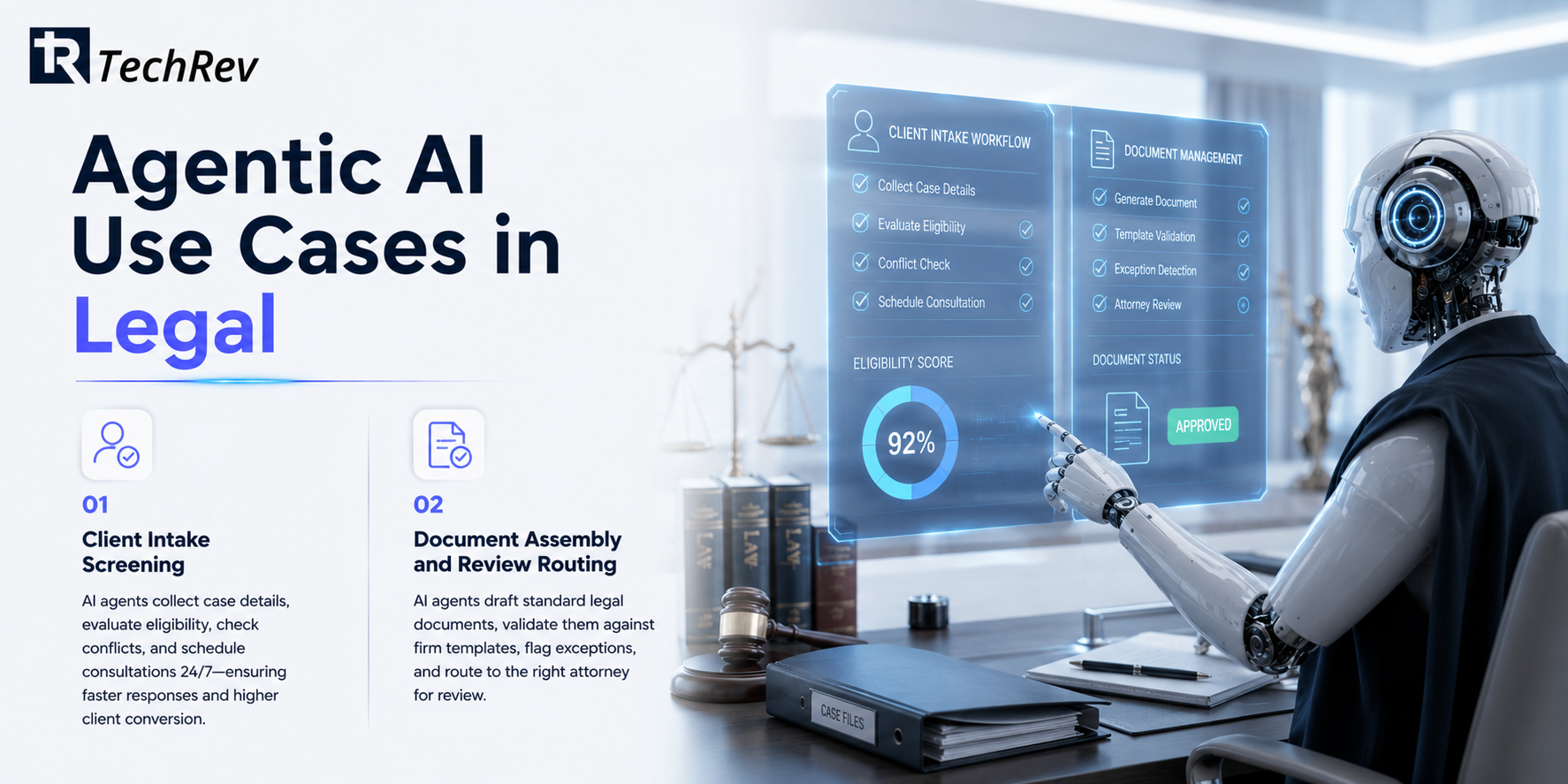
6. Client intake screening
Agents run the first conversation: collecting case facts, screening against practice criteria, checking conflicts, and booking consultations around the clock, which matters when response speed is the biggest controllable factor in signing clients.
7. Document assembly and review routing
Agents draft standard legal documents from matter data, flag deviations from firm standards, and route the exceptions to attorneys.
Agentic AI Use Cases in Sales and Customer Experience
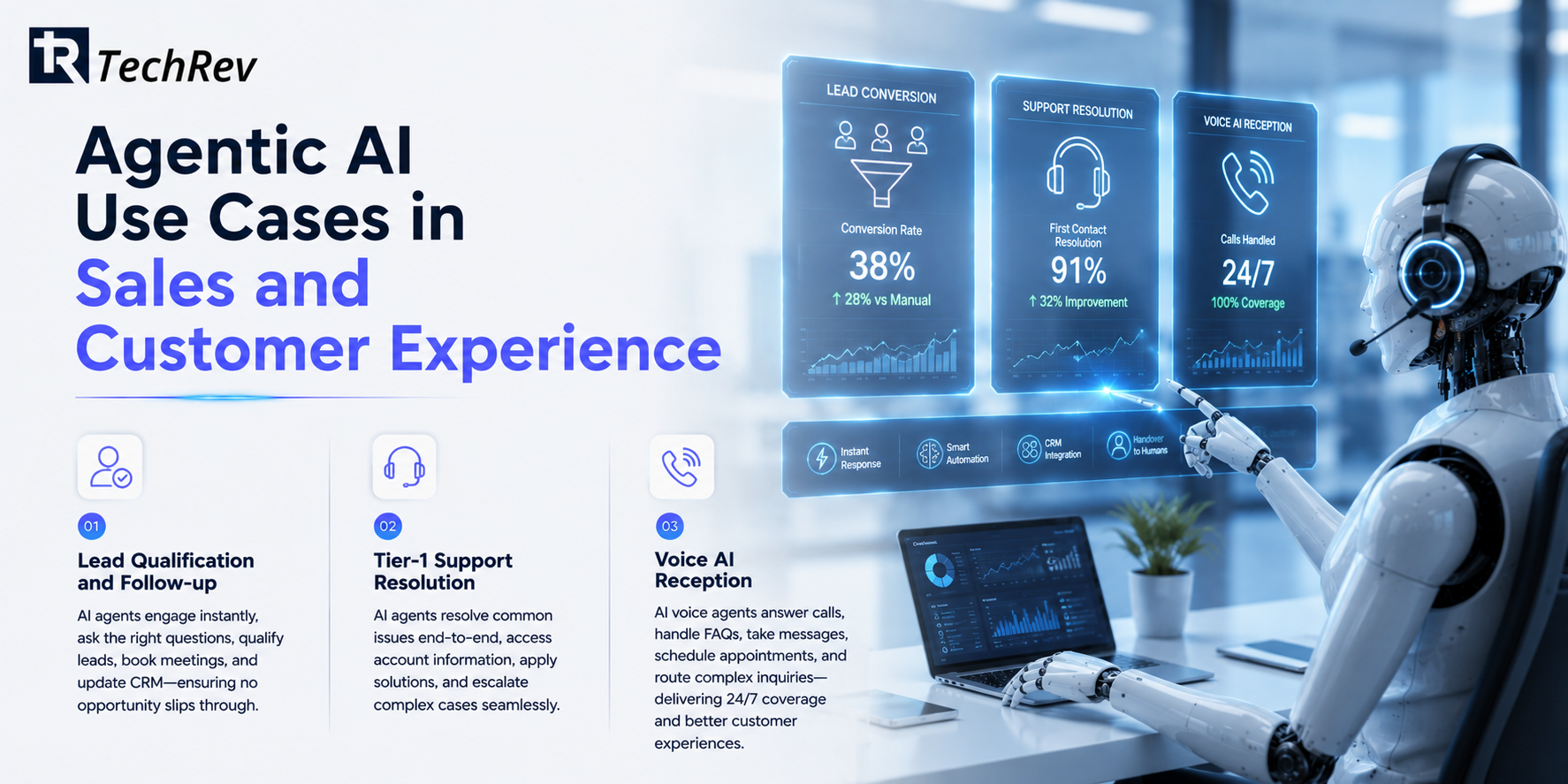
8. Lead qualification and follow-up
An AI sales agent engages inbound leads instantly, qualifies against your criteria, books meetings, and updates the CRM, closing the response-time gap that decides conversions.
9. Tier-1 support resolution
Agents resolve routine tickets end to end: reading the issue, checking account data, executing the fix, and documenting it, with clean handoffs on everything else.
10. Voice AI reception
Autonomous AI agents answer calls, handle scheduling and FAQs, and route complex callers, giving smaller organizations 24/7 coverage without 24/7 payroll.
Agentic AI Use Cases in Enterprise Operations
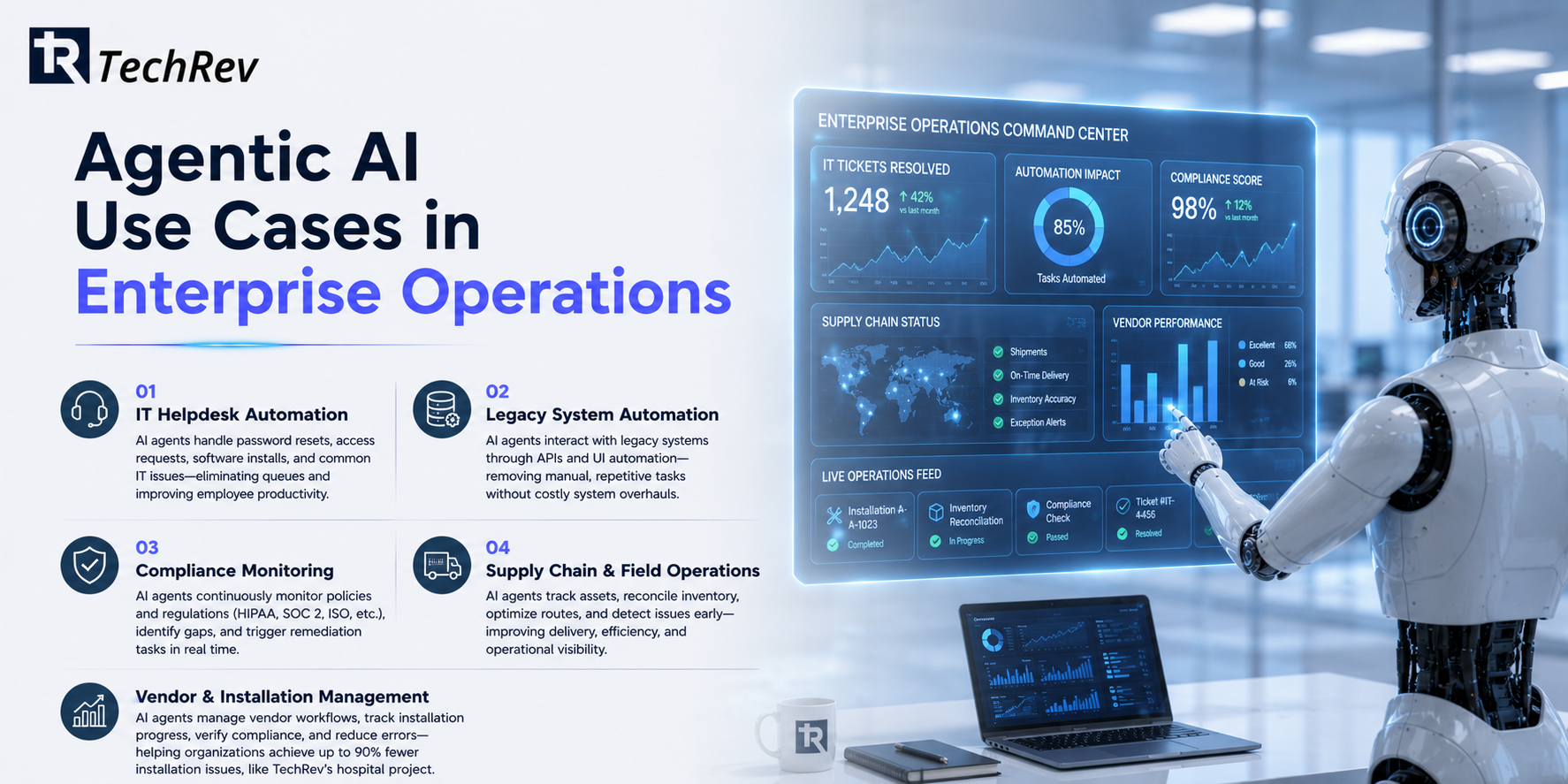
11. IT helpdesk automation
Password resets, access provisioning, and routine requests handled without a queue, the classic first win because volume is high and rules are explicit.
12. Legacy system automation
Agents work through APIs layered on legacy systems, performing the swivel-chair work humans do between old screens, which delivers modernization value without a rebuild.
13. Compliance monitoring
Agents continuously check records and workflows against HIPAA, SOC 2, or industry rules and open remediation tasks, replacing the annual audit scramble with daily hygiene.
14. Supply chain and field operations
Agents track assets, reconcile inventory counts, schedule service visits, and flag exceptions, the pattern behind TechRev’s hospital vendor deployment that cut installation errors by 90%.
Agentic AI Use Cases in Software Development
15. Agentic coding workflows
Development agents draft code, run tests, fix failures, and prepare pull requests for human review, compressing routine engineering work and freeing senior developers for architecture, an agentic workflow now standard across leading engineering teams.
How Do You Choose the Right Agentic AI Use Case First?
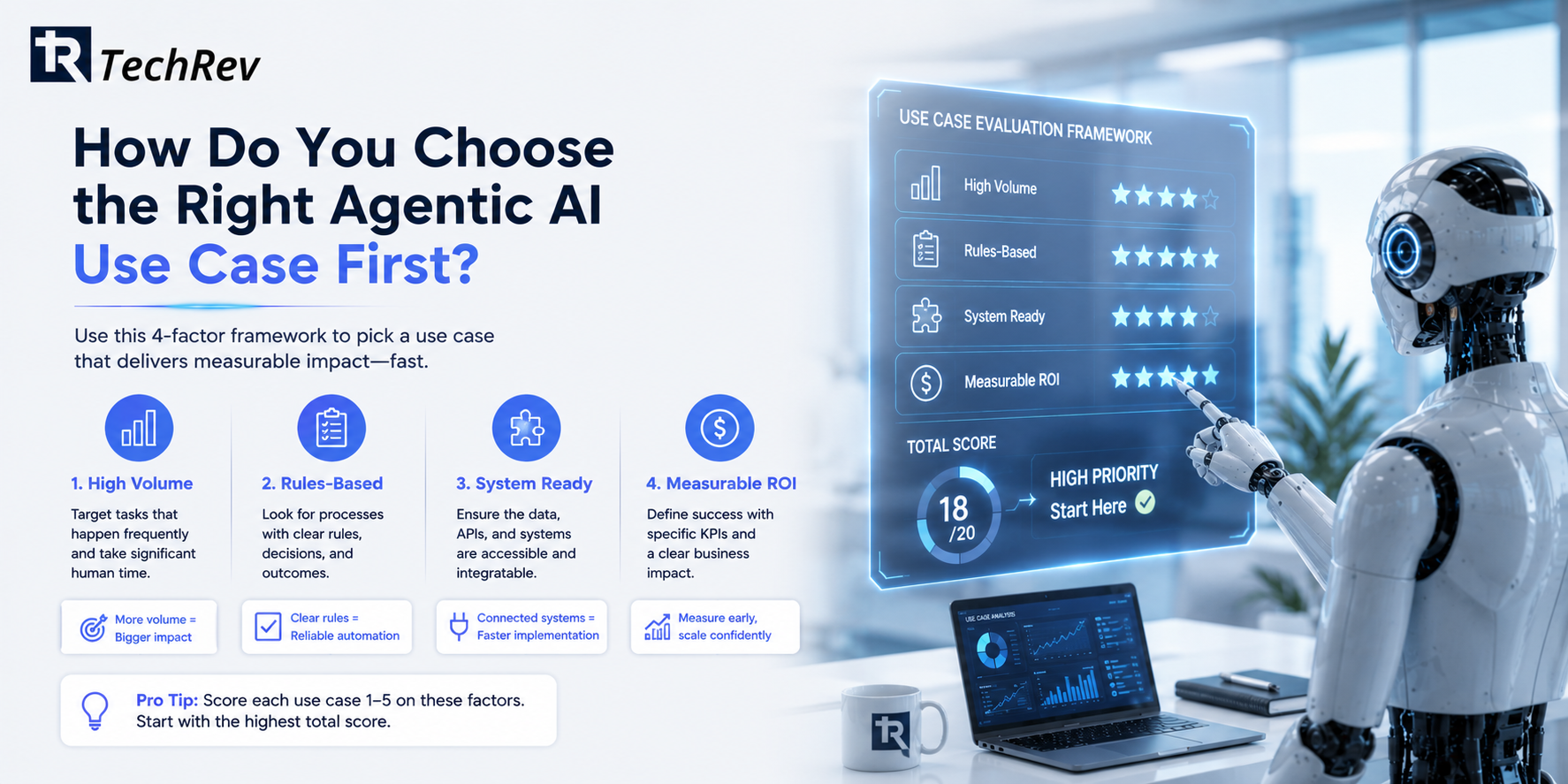
Score candidates on four factors, and be ruthless:
- Volume: daily or hourly work, not monthly
- Rules: decisions mostly follow definable logic, with exceptions escalated
- System access: the data lives in software with APIs
- Measurability: a number (tickets, hours, errors, dollars) will prove success or failure within 90 days
A use case scoring high on all four is a pilot. Anything else is a research project, and research projects are what fill Gartner’s 40% cancellation statistic.
Which Agentic AI Use Cases Fail Most Often?
The vague ones: “an agent for productivity,” open-ended assistants with no owned outcome, and moonshots requiring judgment the organization cannot even define for humans. Failure is rarely the model; it is scoping without a metric, skipping integration depth, and starting with ten agents instead of one.
What Does Implementing Agentic AI Cost?
A single, well-scoped agentic workflow with real system integration typically starts in the mid five figures; multi-agent deployments with compliance requirements reach six figures.
The comparison that matters is the workflow’s current cost in labor and errors: if it consumes more than one salary per year, an agent usually pays back within the first year. For the full rent-vs-own economics, see our breakdown of AI automation agencies vs custom development.
How TechRev Builds Agentic AI Use Cases That Ship?
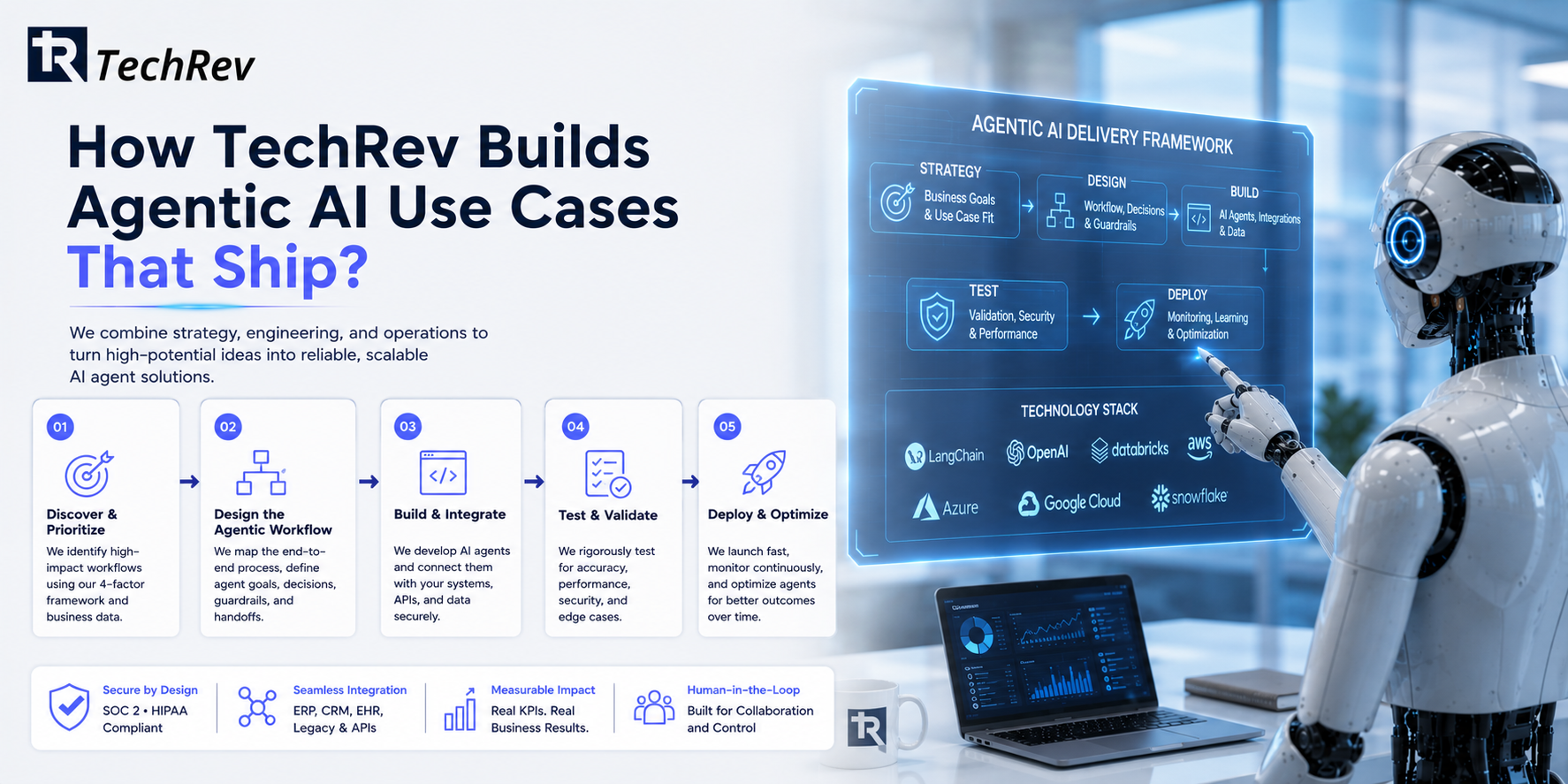
TechRev is a US-based AI development company specializing in integration-first agentic AI: agents built into the CRM, EHR, and operational systems businesses already run, through generative AI development engineered for regulated, high-volume environments.
Q1: How does TechRev turn an agentic AI use case into a working system?
We run your candidate use cases through the same four-factor filter in this article, pick the one with the strongest volume, rules, system access, and metric, then build the agent directly into your existing systems through APIs. Human-in-the-loop checkpoints, audit trails, and escalation paths are designed in, which is what makes agents deployable in HIPAA and SOC 2 environments.
We scope MVP-first: one workflow, success metrics agreed upfront, measured weekly. That discipline is why our agentic deployments land in the surviving 60%, not the canceled 40%.
Q2: Can TechRev build agentic AI into our existing software?
Yes. Integration-first is our default: agents connect to your current CRM, EHR, or custom systems through secure APIs, so you gain autonomous workflows without migrations or rebuilds.
Q3: Which industries does TechRev build AI agents for?
Primarily healthcare, legal, and operations-heavy businesses, where our HIPAA and SOC 2 experience matters most, plus sales and support automation across industries. (Under 45 words)
Q4: What results has TechRev delivered with agentic automation?
For a hospital services vendor, TechRev’s AI-powered tracking and workflow agents cut installation errors by 90% and recovered billing evidence manual processes kept losing.
Conclusion
The market data says agentic AI is inevitable; the cancellation data says most first attempts are avoidable failures. The difference between the two outcomes is nothing more exotic than use case selection: high volume, clear rules, real integration, and a number that proves it worked.
If one of these fifteen agentic AI use cases matches a workflow currently burning your team’s hours, talk to TechRev’s AI team. We will run it through the four-factor filter with you, scope the first agent, and define the numbers it has to hit before you fund the next one.
FAQs
1. What are the most common agentic AI use cases today?
Customer support resolution, IT helpdesk automation, lead qualification, invoice reconciliation, and healthcare administrative work such as prior authorization lead adoption, because all five combine high volume, explicit rules, and easy measurement.
2. What is the difference between agentic AI and generative AI use cases?
Generative AI use cases produce content: drafts, summaries, images, code suggestions. Agentic AI use cases complete outcomes: the ticket resolved, the request filed, the record reconciled. Agents typically use generative models as their reasoning engine, then add planning, tool access, and autonomy.
3. What are agentic workflows?
Agentic workflows are multi-step business processes executed by AI agents: detect the trigger, gather data, act across systems, verify, and escalate exceptions. They differ from traditional automation by handling variation and judgment within rules rather than breaking on the first exception.
4. Are autonomous AI agents safe for regulated industries?
Yes, when engineered with guardrails: scoped permissions, human approval for sensitive actions, complete audit logs, and compliance frameworks designed in from the start. Regulated deployments fail on missing controls far more often than on model capability.
5. What are examples of agentic AI in healthcare?
Prior authorization completion, remote monitoring triage, scheduling and intake orchestration, and compliance monitoring are the proven agentic AI examples in healthcare, all targeting the administrative load rather than clinical judgment, which stays with licensed professionals.
6. How many AI agents should a business start with?
One. A single agent on one measurable workflow, reviewed weekly for 90 days, teaches you more than a fleet of pilots, and its numbers fund the expansion. Portfolio-scale agent programs are built one proven workflow at a time.